Roasted chickpeas are one of the simplest crunchy snacks to make at home in the UK. They start with ordinary chickpeas, usually tinned or cooked from dried, then go into the oven or air fryer until the outside turns crisp and nutty. Done well, they are savoury, toasty, easy to portion, and handy to keep in the cupboard for lunches, desk snacking, and quick toppings.
If you are looking into roasted chickpeas in the UK, the main thing to know is that crispness depends less on fancy ingredients and more on method. Dry them properly, do not overcrowd the tray, and season at the right moment. Most disappointing batches go chewy for very ordinary reasons, and those are easy to fix.
What roasted chickpeas are and why people in the UK buy into them
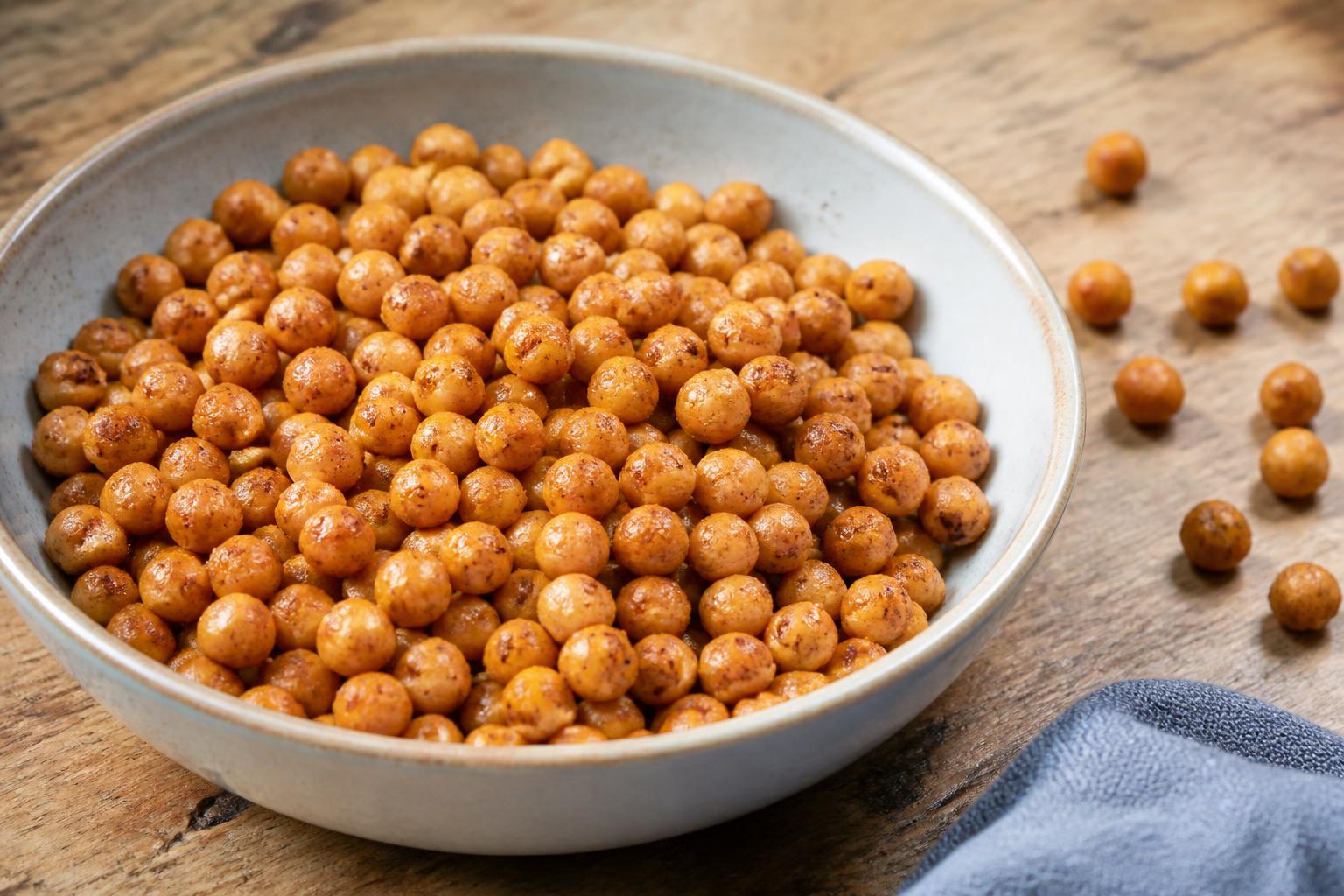
Roasted chickpeas are simply chickpeas cooked until the surface dries out and firms up into a crisp shell. Inside, they can stay slightly nutty or a touch softer, depending on how long you roast them. They are not the same as fried snacks, and they are not trying to be. Their appeal is that they turn a familiar cupboard ingredient into something with real crunch.
That matters in everyday UK eating habits because we tend to want snacks that fit around work, commuting, lunchboxes, and the vague 4 pm feeling that a biscuit will not quite sort out. Roasted chickpeas are practical. A tin lives in the cupboard. The seasoning can be as plain or bold as you like. They travel well enough for the day, and they work in portions that feel deliberate rather than accidental.
They also suit the way many of us already cook. If you are roasting vegetables for dinner, the oven is on anyway. If you use an air fryer for quick evening bits and pieces, a batch of chickpeas can be done while something else rests. They fit the British habit of making a little extra for later, then using it in lunches, grain bowls, soups, or salads.
Part of the appeal is sensory. A good roasted chickpea has a dry, crisp shell, a warm toasted aroma, and enough seasoning to feel snacky rather than worthy. That is why they have moved beyond the health-food-shelf image. They are now firmly in the category of things people actually want to eat.
If you want a broader look at why they have become such a regular cupboard snack, we cover that in more detail in why roasted chickpeas work so well for everyday snacking.
How to get roasted chickpeas properly crisp at home
The crispest batches come from a very plain method.
Start by draining your chickpeas well. If you are using tinned chickpeas, tip them into a sieve, rinse if you like, then let the water drain away fully. Spread them on a clean tea towel or kitchen paper and dry them thoroughly. This is the step people rush, and it makes a real difference. Surface moisture turns into steam in the oven, and steam is the enemy of crunch.
If some skins loosen while drying, that is fine. You can rub a few off if you want a neater finish, but there is no need to fuss over every chickpea.
Once dry, toss them with a small amount of oil. You want enough to coat lightly, not enough to leave them glossy or sitting in puddles. Too much oil can stop them drying properly. Add them to a baking tray in a single layer with space around them. Crowding causes steaming.
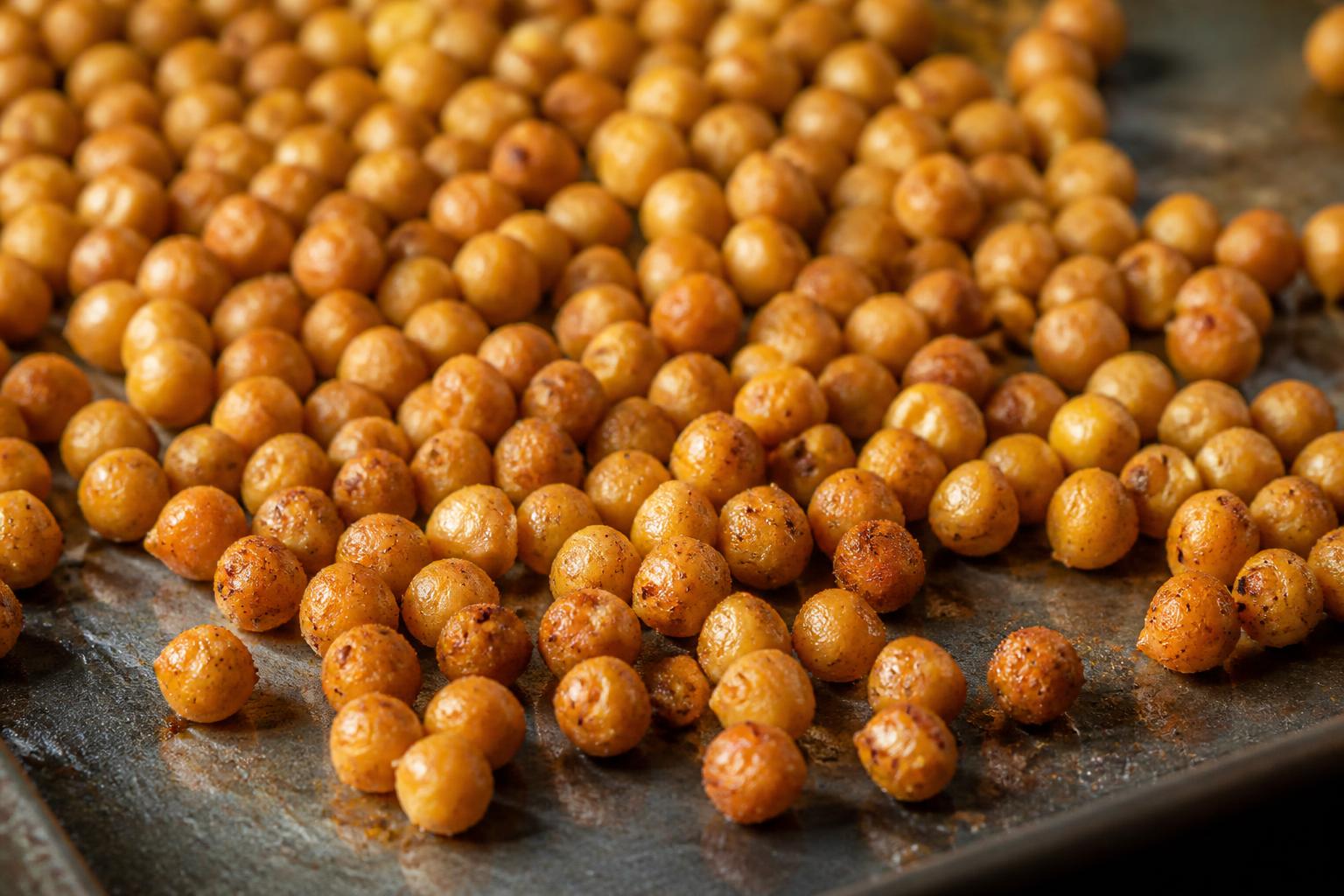
For the oven, roast at a fairly high heat until the chickpeas are crisp outside and deepened in colour. Shake the tray once or twice during cooking so they roast evenly. Exact timing varies because ovens vary, tray material varies, and chickpeas vary. The reliable test is not the clock, it is the texture. Bite one only after it has cooled for a minute or two, because it will firm up slightly as it loses heat.
For the air fryer, the same rules apply. Dry first, oil lightly, and cook in a layer that still allows hot air to move around. Shake the basket regularly. Air fryers can crisp them very well, but they can also brown the outside fast while leaving the centre less dry, so keep checking rather than setting one long cycle and walking off. We have a fuller method for air fryer roasted chickpeas that stay crisp for longer.
Why do batches stay chewy? Usually one of five reasons.
First, the chickpeas were still damp before roasting.
Second, there was too much oil.
Third, the tray or basket was crowded.
Fourth, the seasoning included wet ingredients too early, such as lemon juice, soy sauce, honey, or a paste.
Fifth, they were taken out when merely hot and firm, not actually crisp. A chickpea can feel promising straight from the oven and then soften as it cools if it did not lose enough moisture.
If a batch is close but not quite there, put it back in for a bit longer at a moderate to fairly high heat, then cool it fully before judging. Crispness is a cooling issue as much as a roasting one.
Tinned or dried chickpeas: which works better?
Both work, but they behave differently.
Tinned chickpeas are the easy weeknight option. They are already cooked, widely available in UK supermarkets, and consistent enough for most home roasting. Drain, dry, season, roast. That convenience is why most people start there. If you want a quick cupboard snack without planning ahead, tinned wins.
Dried chickpeas take longer because they need soaking and cooking first. In the UK, most dried chickpeas are sold as a dried pulse that benefits from an overnight soak, then simmering until tender. Some packs include their own instructions, and it is worth following them because age and variety affect cooking time. Once cooked and drained well, they can roast beautifully.
Texture is where the choice gets interesting. Tinned chickpeas can be slightly softer from the start, so they are convenient but sometimes less predictable if one brand is wetter or more tender than another. Dried chickpeas that you cook yourself can give you more control. If you cook them until just tender rather than very soft, they often roast with a firmer bite and a drier finish.
Prep time is the obvious trade-off. Tinned chickpeas can go from cupboard to snack in under an hour. Dried chickpeas ask for planning, soaking, cooking, draining, and cooling before you even begin roasting. For many readers, that alone settles the matter.
Consistency depends on your routine. Tinned chickpeas are consistent in convenience. Dried chickpeas are consistent if you are the sort of cook who likes controlling each step. Neither is universally better. If you are making roasted chickpeas occasionally for lunchboxes or a film-night nibble, tins are usually the practical answer. If you batch-cook pulses and want to fine-tune the texture, dried can be worth the effort.
One sensible middle ground is to test both, then decide based on the result you actually like eating. Some people want a very dry, crisp shell. Others prefer a slightly fuller centre. Roasted chickpeas are forgiving enough to support either.
How to season them without losing crunch
Seasoning is where a crisp batch can suddenly go soft, so timing matters.
The safest approach is to roast the chickpeas with just oil first, then add dry seasonings while they are still hot. Fine salt, smoked paprika, cumin, curry powder, garlic powder, onion powder, black pepper, chilli powder, and ground coriander all work well. The heat helps the seasonings cling without adding moisture.
You can also add some dry spices before roasting, but keep an eye on them. Certain powders, especially garlic powder and spice blends with fine sugars, can darken quickly. If your oven runs hot, post-roast seasoning is often easier to control.
Salt deserves a separate mention. A little salt before roasting is fine, but if you want the cleanest crunch, salting after roasting often works better because it does not draw surface moisture in the same way while they cook. Toss while hot so the grains stick.
What softens the surface? Anything wet or sticky. Lemon juice, lime juice, vinegar-heavy dressings, maple syrup, honey, soy sauce, hot sauce, mustard, tahini, and yoghurt-based coatings all make the shell less crisp. That does not mean you cannot use them. It means you should think of them as serving flavours rather than roasting flavours.
For example, if you want a lemony finish, use finely grated zest rather than juice. If you want sweetness, a dry spice profile such as cinnamon and a little sugar is easier to manage than a syrup glaze. If you want a deeper savoury note, choose smoked paprika, nutritional yeast, or a touch of finely ground spice rather than a wet marinade.
Coatings also matter. Flour, gram flour, cornflour, and starch-based coatings can create an interesting shell, but they are easy to overdo and can go dusty or patchy if the chickpeas are too wet. For most home cooks, plain roasting with dry seasoning is simpler and more reliable.
A good rule is this. If the ingredient pours, squeezes, or drips, add it after roasting and accept that the crunch will be shorter-lived. If the ingredient sprinkles, it is usually friendlier to crispness. We go deeper into spice timing and texture in our guide to roasting spiced chickpeas so they stay crisp longer.
How to store roasted chickpeas and when to eat them
Let roasted chickpeas cool completely before you store them. This is not just a texture point. Warm chickpeas trapped in a container create condensation, and condensation sends crispness downhill very quickly.
Once cool, transfer them to a container that is clean and fully dry. A jar or food tub with a loose-fitting lid can work for the first day if you find a sealed box softens them. Some people prefer a container that is not completely airtight, because a tiny bit of airflow helps stop trapped moisture. If your kitchen is humid, however, too much airflow can also make them stale. In practice, the best container is the one that keeps them dry in your kitchen, so it is worth testing.
For food safety, treat them as you would any cooked pulse-based food. Use clean hands or a clean spoon when serving. Do not mix a fresh batch with an older one. If they pick up moisture from a dip or a lunchbox, they are best eaten that day.
Realistically, roasted chickpeas are at their best on the day they are made. That is the honest answer. Many batches are still pleasant the next day, and some stay crunchy for longer if they were roasted very dry and stored well, but they rarely improve with age. If they soften slightly, you can often revive them with a short spell in the oven or air fryer, then cool them again before eating.
For packed lunches, it helps to keep them separate from anything damp. Do not scatter them over salad in the morning and expect them to stay crisp by lunch. Pack them in a small pot and add them just before eating. The same goes for soup toppings and grain bowls.
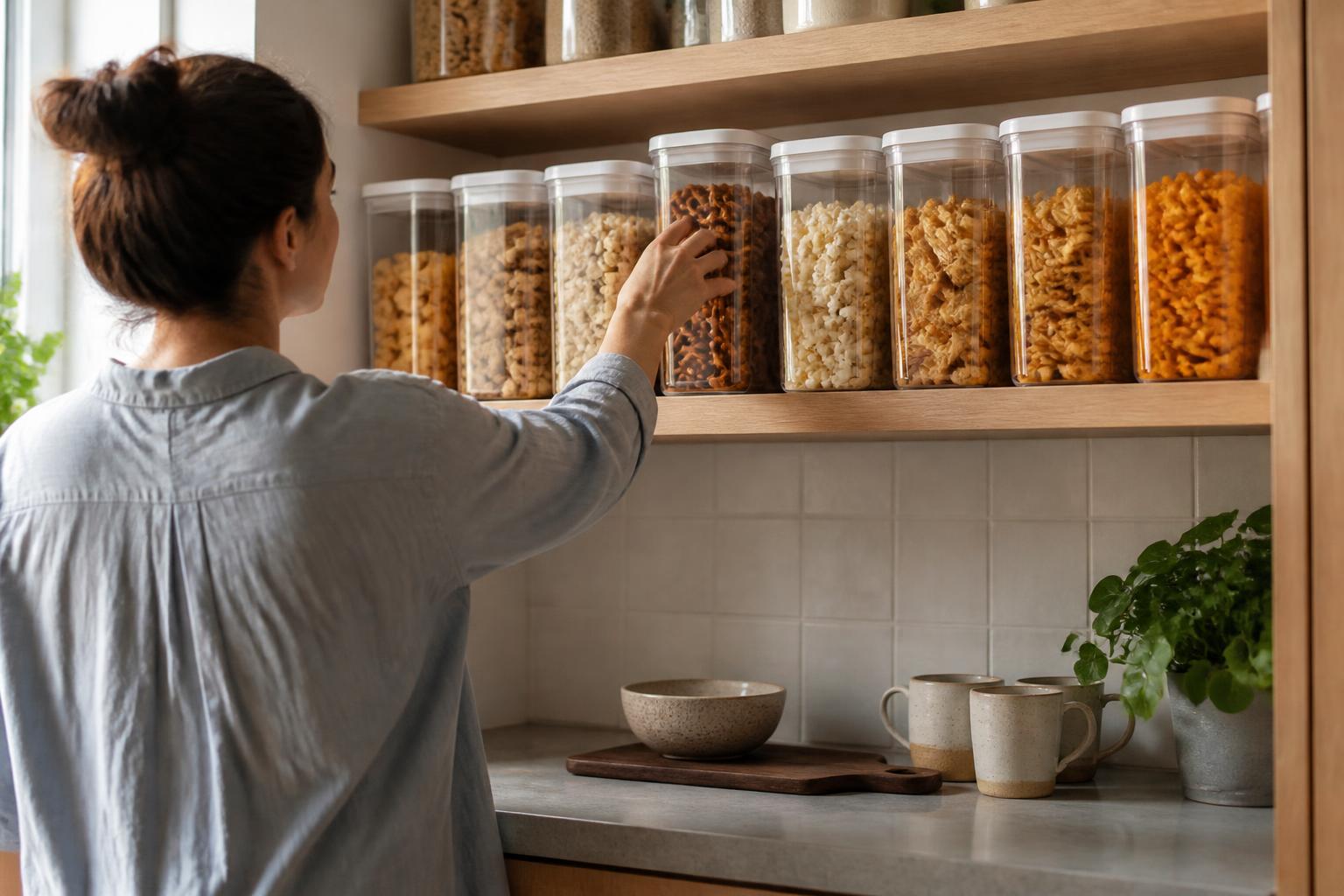
If you are trying to make your snack cupboard easier to use, our piece on snack storage that keeps boxes tidy and easy to reach is useful for the practical side of the habit.
Where roasted chickpeas fit in practical everyday snacking
Roasted chickpeas work best when you think of them as a format rather than a one-off recipe. Once you know how to make a crisp batch, they slot into ordinary days very easily.
For desk snacks, portion them into small tubs rather than carrying the whole batch. That keeps the habit tidy and stops mindless handfuls turning a planned snack into a disappearing act. A plain salted batch is easy to live with, while a spiced batch can feel more satisfying in smaller amounts because the flavour lands quickly.
For lunches, they are useful where crisps might usually appear. Add them alongside a sandwich, soup, or wrap for crunch. They also work well as a topping that you add at the last minute. That is especially true for salads. If they sit in dressing for hours, they soften, so keep them separate until the moment you eat. If that is your usual lunch pattern, our guide to building a roasted chickpeas salad that stays crisp shows the easiest way to structure it.
At home, use them to finish simple meals. Scatter them over roasted vegetables, tomato soup, hummus, or a tray of cauliflower for contrast. They are particularly good where the rest of the plate is soft and needs a bit of bite. They also make sense on grazing boards, tucked next to nuts, olives, and chopped veg, where they bring a different kind of crunch.
They are handy for people who like to cook once and use ingredients in several ways. A batch made in the evening can become tomorrow’s lunch topping, a mid-morning nibble, and a last-minute crunchy element on dinner. That flexibility is a big part of why roasted chickpeas in the UK have become more than a niche idea. They suit how we actually eat, which is often in bits and pieces across the day rather than in perfectly staged snack moments.
If you are curious about the cupboard-snack side of things, our article on dry roasted chickpeas for everyday crunchy snacking covers the format in more detail.
The simplest way to make roasted chickpeas a regular habit is not to overcomplicate them. Start with a tin, dry them properly, season with something dry and punchy, and eat them while they are at their crispest. That is the version most likely to earn a repeat place in the cupboard.

Questions about this article or a correction to suggest? Get in touch. Read more about our editorial approach.