A tidy snack setup is less about buying lots of matching tubs and more about making everyday choices easy. The best snack box storage keeps packets visible, easy to grab, and simple to put back. If people have to rummage through a deep cupboard, lift three baskets, or decant every crisp into a separate tub, the system will last about a week.
In real kitchens, the sweet spot is straightforward. Keep snacks near where they are packed or eaten, sort them by how your household actually reaches for them, and use organisers only where they remove friction. A good setup should help with lunch prep, after-school hunger, and those moments when everyone is peering into the cupboard at once.
What makes snack storage work in real kitchens
Good snack storage works because it respects how kitchens are really used. Mornings are rushed. Lunchboxes are packed with one hand while the kettle boils. Children want something they can spot instantly. Adults want a quick option that does not involve excavating the back of a cupboard.
That means the first rule is visibility. If the snacks disappear into a dark shelf behind flour, pasta and spare tea bags, they may as well not be there. We get better results when packets are front facing, labels can be seen, and the whole category lives in one obvious place.
The second rule is access. A proper snack area should be reachable without moving six other things first. If you use a cupboard, the most useful zone is usually between waist and eye level. If you use a drawer, it needs enough depth for packets to lie flat or stand neatly without catching when the drawer shuts.
The third rule is limits. Snack supplies expand to fill whatever space they are given. One basket becomes two, then a side pile appears, then half-open cracker sleeves start rolling around loose. Giving snacks a defined footprint keeps the category under control. One shelf, one drawer, or two clearly assigned bins is often enough.
The fourth rule is maintenance. The best system is the one you will reset in under two minutes. That usually means keeping snacks in their original packaging unless there is a clear reason not to, such as a torn multipack or an opened item that needs sealing. It also means choosing organisers that are easy to lift out and wipe, because crumbs will happen.
Finally, snack storage should match the household, not an idealised kitchen on a mood board. A home with young children may need lower baskets with approved grab-and-go options. A flat with one tall larder cupboard may need stackable bins with pull handles. A household that packs lunches daily may want a dedicated lunchbox section. A household that snacks mostly in the evening may prefer a single easy-reach basket near mugs and tea.
Where should you keep a snack box?
The best place for a snack box is cool, dry, and away from direct sunlight. Heat softens chocolate, turns coated snacks sticky, and shortens the life of anything with fats or oils. Bright light is not ideal either, especially for clear containers, because it warms the contents and makes packaging look tired more quickly. Moisture is the real nuisance, though. It steals crunch from crackers, crisps and cereal bars and can leave cardboard outer boxes limp.
In most UK kitchens, the best spot is a mid-level cupboard away from the oven, hob, kettle steam, toaster, dishwasher vent and radiator. If your kitchen gets warm in the afternoon sun, avoid the cupboard nearest the window. If you have a larder unit, use a shelf that does not require crouching or stretching. Snacks are high traffic items, so convenience matters as much as conditions.
Drawers can work brilliantly for snack box storage if they are deep enough and stay dry. They are especially useful for lunchbox bits, cereal bars, fruit pouches, rice cakes and small cracker packets. A drawer gives a clear top-down view, which cuts down on duplicate buying and half-forgotten packets. The downside is that very bulky bags can bunch up and make the drawer feel messy fast.
Open shelving is usually the least forgiving option unless you use opaque baskets. It exposes snacks to light, visual clutter and the general drift of kitchen dust and grease. It can work in a pantry or utility-style cupboard, but in an open kitchen it often looks busier than people expect.
If snacks are mainly for packed lunches, keep them close to lunch prep essentials such as wraps, sandwich bags, reusable tubs and water bottles. That turns one cupboard into a proper assembly point. If the main pressure point is the after-school hour, place the everyday options where children can reach them safely without dragging a chair across the floor. Our guide to after-school snacks that keep kids going till tea pairs well with that sort of setup.
A final point on location, do not store snacks in a garage, shed or damp utility corner unless the space is genuinely dry and temperature-stable. UK homes vary a lot, and those spaces can swing from chilly and damp to stuffy and warm. That is bad news for crispness, chocolate coatings and cardboard packaging.
How to sort snacks so people actually use the system
The easiest way to sort snacks is by occasion, not by perfect food taxonomy. In other words, group them according to when and why people reach for them.
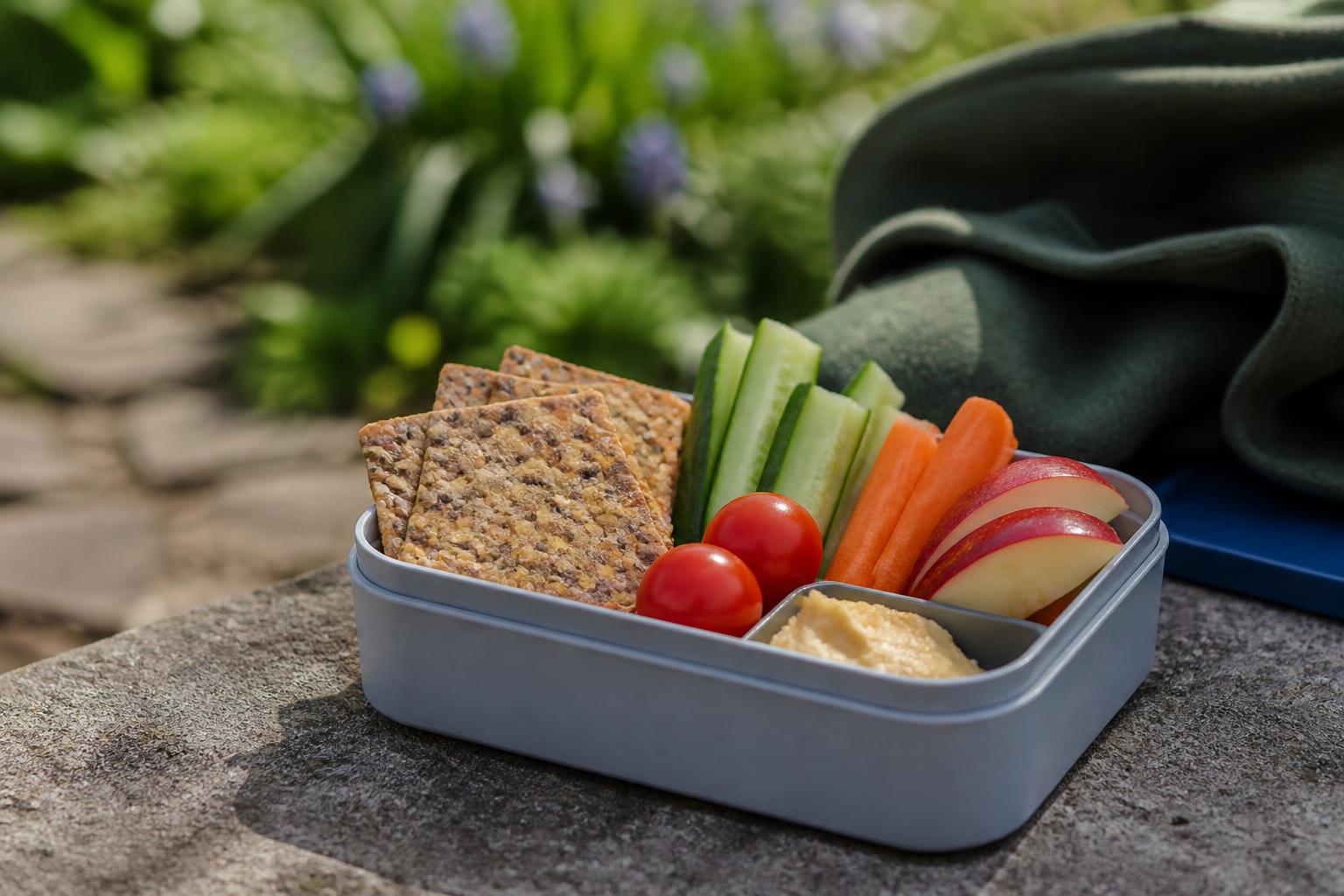
One useful category is lunchbox snacks. This might include cereal bars, mini cracker packs, fruit leather, raisins, rice cakes, oat bars and small biscuit portions. Keeping all of these together makes weekday packing much quicker. If you are rethinking what goes into packed lunches generally, our piece on building a healthy lunch box that still feels like a treat is a practical next step.
Another category is grab-and-go everyday snacks. Think nuts, popcorn, plain crackers, baked crisps, snack bars or dried fruit that adults and older children reach for between meals. These are the items that benefit most from being visible and easy to lift out in one motion. If nuts feature regularly, it helps to think about portions and routine rather than just health halos, which we cover in whether nuts are a healthy snack for everyday eating.
A third category is treat snacks. This can include chocolate biscuits, sharing crisps, coated snacks and the sort of things you might save for film night or the weekend. Keeping these in a separate basket stops them becoming the first thing everyone sees when they open the cupboard.
You can also sort by user if that reflects your household more accurately. One bin for children’s lunchbox items, one for adult desk snacks, one for sports or on-the-go bits. This works especially well when dietary needs differ, for example if one person needs nut-free options or another prefers higher-protein snacks.
What tends not to work is sorting by brand, by packet colour, or by highly specific sub-groups such as “round crackers” and “square crackers”. It looks neat on day one and becomes fiddly by day five. The system should be obvious enough that anybody in the house can put a packet back in the right place without thinking.
A simple label can help, but only if the categories are broad. “Lunchbox”, “Everyday”, “Treats”, and “Opened packs” are clear. Labels such as “Savoury baked grain snacks” are not.
Which containers and organisers are worth using?
Not every snack needs a container. In fact, too many organisers can make cupboards harder to use. We find the most useful tools are the ones that create order without hiding what you have.
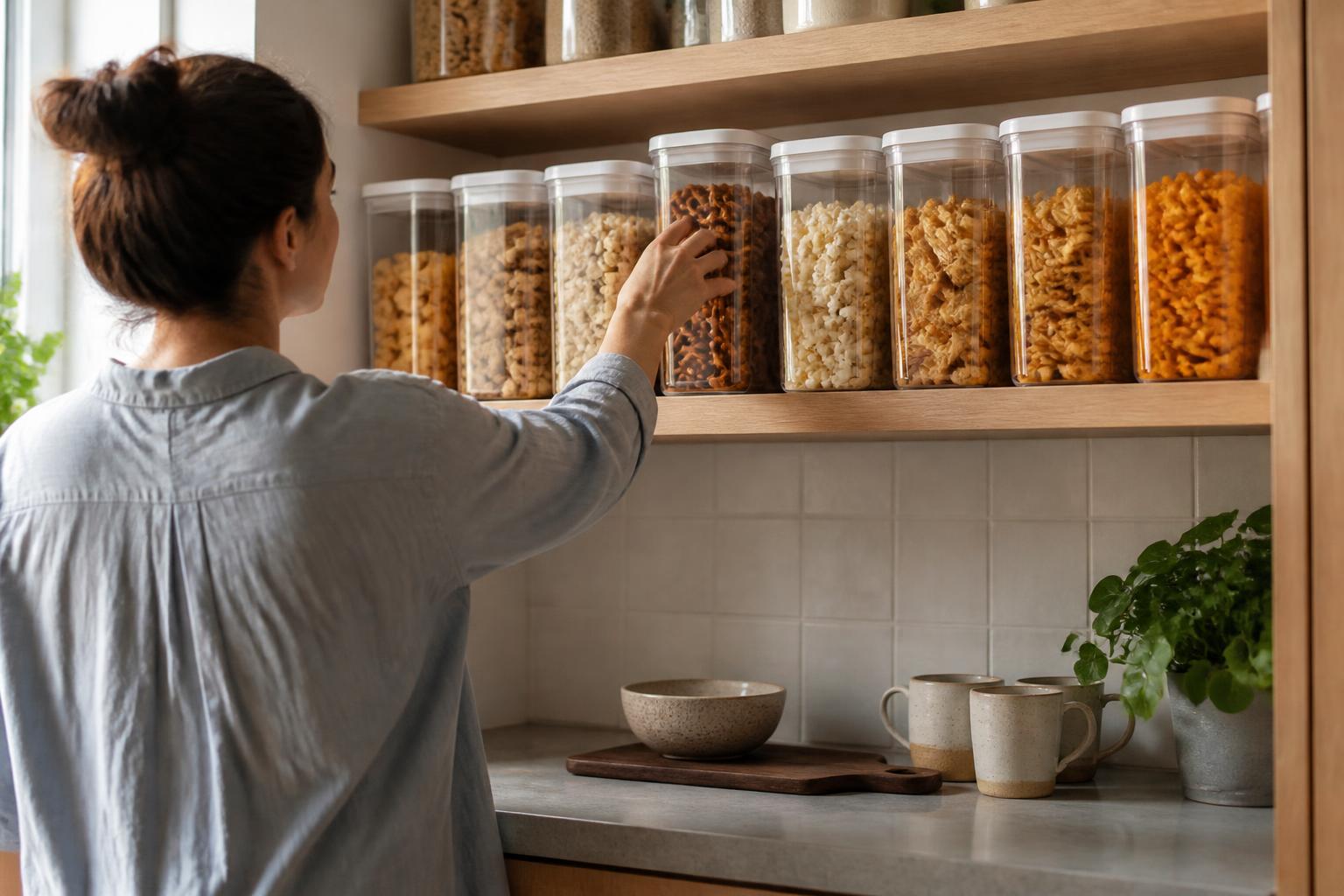
Open bins are often the best all-rounder for snack box storage. They corral loose packets, can be lifted out in one go, and make shelf space feel intentional rather than chaotic. Choose bins with straight sides and a cut-out handle if the shelf is deep. Clear plastic can work well in dark cupboards because you can see the contents immediately. Wire baskets look smart but can snag soft packets and let crumbs fall through.
Lidded boxes are best kept for specific jobs. They help with items that go stale quickly once opened, such as crackers, breadsticks or rice cakes, especially if the original inner wrap has been torn. They are also useful where you want a bit more protection from humidity. But lidded containers are less helpful for sealed multipack snacks, because taking lids on and off adds a step and slows everyone down.
Small baskets are good for pouches, mini bars and lunchbox items that otherwise spread everywhere. They are less useful for large sharing bags, which tend to flop over the sides and look untidy no matter how nicely you arrange them.
Shelf risers can be excellent in tall cupboards where a lot of air space is going to waste. They work best for boxes and short packets that can stand upright. They are less effective for floppy bags of crisps, which can slump and hide whatever is behind them.
Drawer dividers are worth using if you already know a drawer is the right location. They stop bars and small packets sliding into a jumble. Adjustable dividers are usually better than fixed inserts because snack formats change. One month it is flapjacks and popcorn, the next it is crackers and fruit pouches.
Lazy Susans are usually unnecessary for snacks unless you are storing them in a corner cupboard. Even then, they suit jars and bottles better than soft packets.
As for decanting, use restraint. Taking every cereal bar or crisp out of its wrapper and into a matching tub may look calm, but it often removes useful information such as flavour, ingredients and best before date. In the UK, food sold to consumers must carry key labelling details, and once outer packaging is discarded it is easy to lose allergen and date information for individual items. Keeping snacks in their original packs, or at least keeping the label to hand until the contents are used up, is the safer and more practical approach.
How do you keep snacks fresh and avoid waste?
Freshness starts with buying and storing sensible amounts. It is tempting to overstock when multipacks are on offer, but a packed cupboard makes rotation harder and increases the chance of crushed boxes and forgotten packets. Buy enough for your actual routine, not for an imaginary month of perfect lunch prep.
The simplest freshness habit is first in, first out. Put newer purchases at the back and older ones at the front. This matters most for crackers, cereal bars, popcorn and anything with nuts or seeds, where texture and flavour can fade before the date becomes an obvious problem. A quick reset after the weekly shop is usually enough.
Check dates lightly but regularly. You do not need a clipboard. Once a fortnight, pull the snack bin out, glance through, and bring anything approaching its best before date to the front. In the UK, many shelf-stable snacks carry a best before date rather than a use by date. Best before is about quality, not safety, so a packet may still be fine shortly after that date if the packaging is intact and the food looks and smells normal. Use by is different and is about safety, though it is far less common on dry snack foods.
Opened packets need their own plan. If a sharing bag of crisps has been clipped shut properly and eaten within a day or two, that is usually enough. For crackers, breadsticks and similar dry items, transfer leftovers to an airtight container if the original inner wrap no longer seals. Squeezing air out before clipping can help a little, but a decent seal matters more.
Texture is often the first thing to go. A cracker that should snap but bends, or popcorn that tastes chewy rather than crisp, has usually picked up moisture. Once that happens, the pleasure is gone even if the food is technically still edible. This is another reason to keep snacks away from steam and damp cupboards.
It also helps to maintain an “opened first” basket or small tray. This is where half-used cracker sleeves, open popcorn bags, and broken multipacks go. It gives those items a clear home and reminds everyone to finish them before tearing into a fresh packet. Without that step, half-eaten snacks have a habit of drifting to odd corners of the kitchen.
For families, a regular tidy-up linked to another routine works best. Do it when unpacking the weekly shop, before school on Sunday evening, or during the usual fridge check. We like systems that piggyback on habits you already have rather than demanding a separate organising session. If that approach appeals, our round-up of healthy habits that make family food easier builds on the same idea.
The goal is not a picture-perfect cupboard. It is a snack area that stays neat enough to use, protects crunch, and makes everyday choices feel easy. When the boxes are tidy, the packets are visible, and the opened bits are dealt with properly, snack storage stops being a small daily annoyance and starts quietly doing its job.

Questions about this article or a correction to suggest? Get in touch. Read more about our editorial approach.