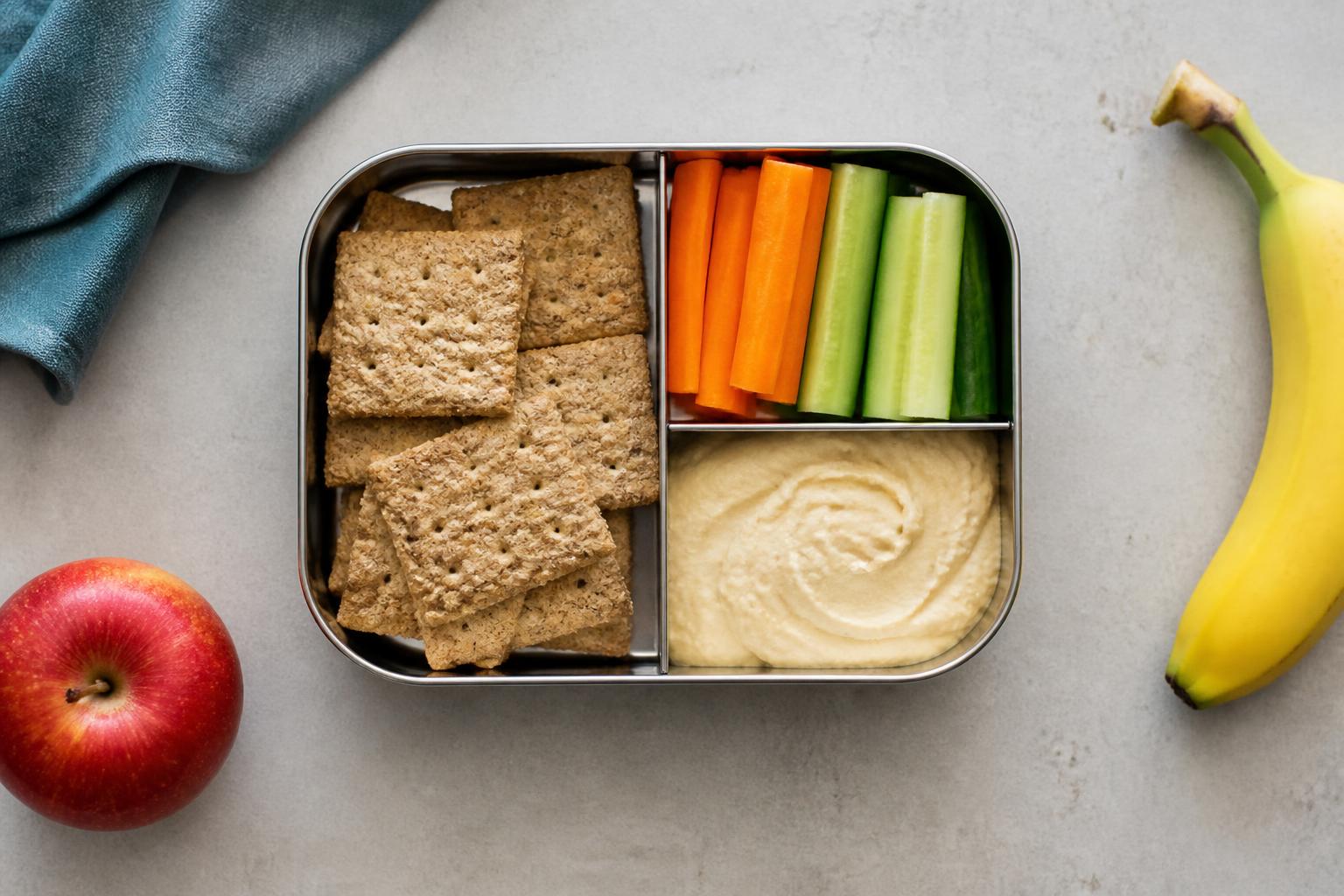
A healthy lunch box that still feels like a treat is not about squeezing in the “perfect” ingredients or stripping out everything fun. It is about building something you will actually look forward to eating at your desk, on the train, or between meetings. The best packed lunches do two jobs at once. They give you enough substance to stay comfortable through the afternoon, and they include a few textures and flavours that make lunch feel like a proper break rather than a duty.
If you have ever searched for ideas for my very healthy snacks lunch box, what you are usually after is a simple formula that works in real life. You want something balanced, easy to pack, pleasant to eat cold or at room temperature, and sturdy enough to survive a commute. That is exactly where a little structure helps.
What makes a lunch box feel healthy and satisfying
A practical healthy lunch box starts with balance, not perfection. We find it helps to think in terms of what belongs in the box, rather than what must be banned from it. A lunch that keeps you going usually includes a source of protein or slow-release carbohydrate, at least one portion of vegetables, some fruit, something crunchy, and a drink that does not leave you feeling sluggish an hour later.
Satisfaction matters just as much as nutrition. If your lunch is technically virtuous but leaves you prowling for biscuits at 3 pm, it has not really done its job. This is why variety and texture are so useful. Soft fillings, crisp vegetables, juicy fruit, and a crunchy extra all make the meal feel more complete.
It also helps to be realistic about portion sizes. A lunch box should feel enough, not enormous. For most adults, that means one main item you can finish comfortably, a couple of simple sides, and a snack element that adds interest without taking over the whole meal. We do not need every lunch to look like a wellness photoshoot. We need it to fit into an ordinary Wednesday.
A healthy lunch box also tends to be easy to eat. If something requires a knife and fork, several pots, and ten minutes of assembly at your desk, it is less likely to become a habit. Foods that hold their shape, travel well, and still taste good after a morning in a cool bag are often the smartest choices.
If you are working on steadier habits overall, our guide to healthy habits that make everyday eating feel easier pairs well with lunch box planning. Small routines matter more than grand resets.
How to build one from five simple parts
The easiest way to make lunch boxes repeatable is to use the same five-part structure each time. Once you know the shape of the meal, you can swap ingredients according to what is in the fridge, what is on offer, or what you fancy that week.
1. A main item
This is the part that gives the lunch some staying power. Good options include:
- A wholemeal wrap with chicken, hummus, and salad
- A thick sandwich on seeded bread with egg mayo and watercress
- A pasta or grain salad with beans, lentils, tuna, or cheese
- Leftover frittata
- A pot of couscous with roasted vegetables and chickpeas
- Rice salad with edamame, cucumber, and cooked salmon
Aim for something that contains protein, carbohydrate, or ideally both. That combination tends to feel more substantial than a box made entirely of nibbles.
2. A vegetable portion
Vegetables do not have to be elaborate. In fact, simple is often better for packed lunches. Think cucumber batons, cherry tomatoes, sugar snap peas, pepper strips, radishes, or carrot sticks. If you prefer cooked veg, roasted courgettes, broccoli, or butternut squash can work well in grain salads.
Try to choose vegetables that keep their bite. A lunch box feels fresher when at least one part still has a bit of snap to it.
3. A fruit portion
Fruit adds sweetness and moisture, which can stop the whole lunch tasting beige. Apples, satsumas, grapes, pears, berries, melon, or a sliced kiwi in a sealed pot all work well. If you are packing banana, it is usually best eaten the same day rather than prepared too far in advance.
This is also where dried or freeze-dried fruit can be useful in small amounts, especially when you want something portable with a little crunch. The key is to treat it as part of the mix, not the entire lunch.
4. A crunchy snack
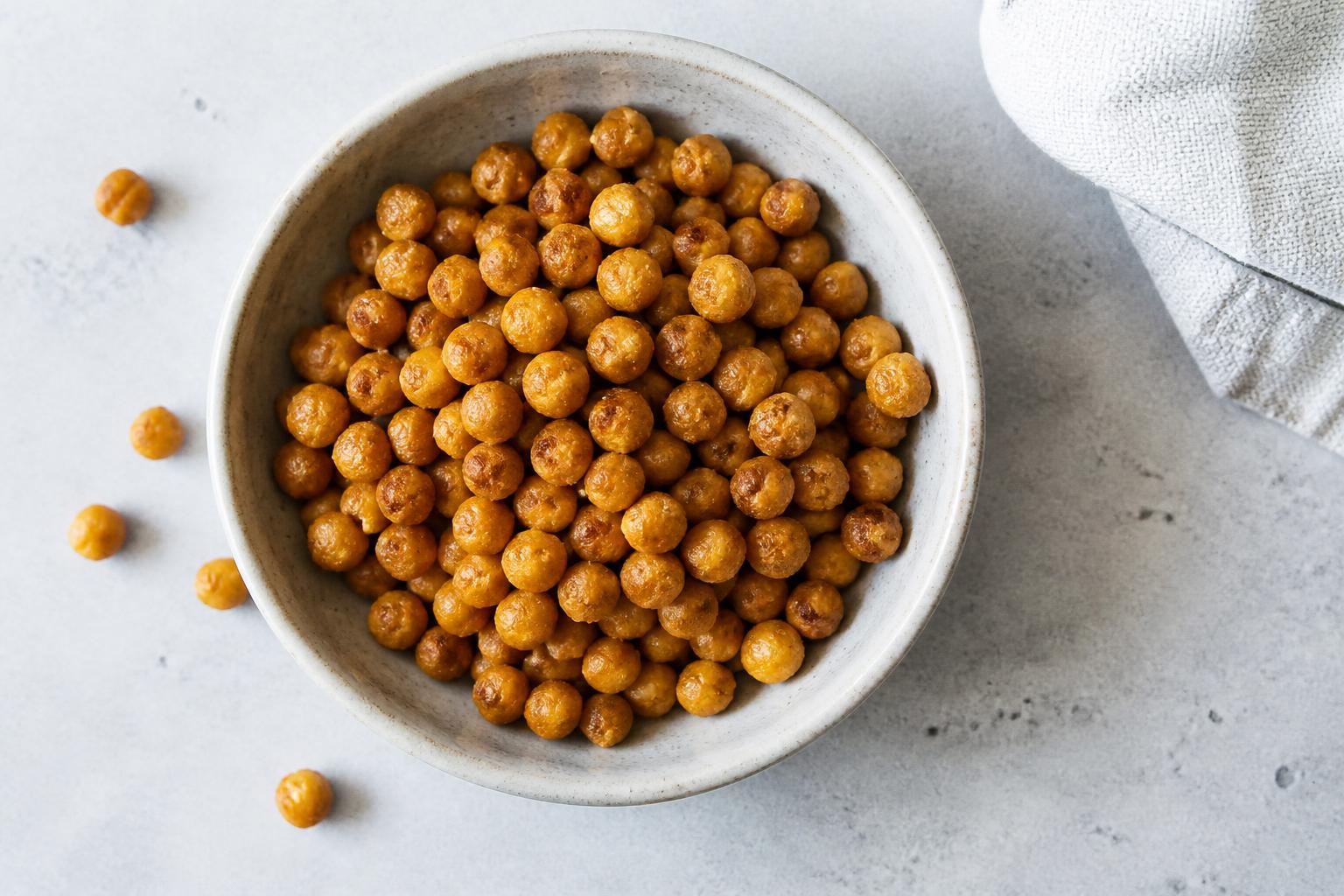
This is the element that often makes the lunch feel like a treat. It might be a small handful of dry roasted chickpeas, a few crackers, crispbread, roasted broad beans, or a modest portion of nuts and seeds. The crunch wakes up the whole meal.
We have covered how crunchy snacks fit into everyday eating in more detail, because they are often the difference between a lunch box you tolerate and one you genuinely enjoy.
5. A drink
Water is the obvious staple, but a healthy lunch box can also include sparkling water, unsweetened tea, or a flask of tea or coffee if that suits your routine. If you like juice, keep it as one part of lunch rather than the only thing you drink all afternoon.
A simple five-part formula keeps things flexible. You do not need a different concept every day. You need one dependable pattern that you can repeat without getting bored.
Which crunchy snacks fit best
Crunchy snacks earn their place in a lunch box when they add enjoyment and convenience without elbowing out the rest of the meal. This is where a little restraint helps. The crunchy part should complement the lunch, not become a family-sized side quest.
The best choices are easy to portion, sturdy enough to stay crisp, and satisfying in a relatively small amount. That often means foods such as:
- Wholegrain crackers
- Seeded crispbreads
- Dry roasted chickpeas
- Roasted broad beans
- Plain or lightly salted nuts
- Rice cakes broken into smaller pieces
- Baked savoury snacks with a short ingredient list
A good rule is to ask what the crunchy snack is doing in the box. If it adds contrast to a soft wrap or salad, great. If it is there because the main lunch is too skimpy to satisfy, it may be worth strengthening the main item instead.
Nuts can work particularly well, especially when you want something compact and filling. If you are weighing up portions and everyday use, our piece on whether nuts are a healthy snack for everyday eating breaks down where they fit best.
For a lunch box, we generally prefer crunchy snacks that are savoury or only lightly sweet. They sit more naturally alongside sandwiches, wraps, eggs, and salads. Sweet biscuits can still have their place, of course, but if the whole lunch tips heavily sweet, it can feel less balanced and less sustaining.
Texture matters too. A lunch made entirely of soft foods can feel oddly unsatisfying, even when it is generous enough. Crunch gives a sense of freshness and contrast. It slows you down a little. It also makes packed lunches more interesting when you are eating them in a rushed setting.
If you enjoy pulse-based snacks, dry roasted chickpeas for everyday crunchy snacking are particularly handy for lunch boxes because they travel well and pair neatly with salads, wraps, and chopped veg.
Easy lunch box combinations for busy UK adults
The easiest packed lunches are the ones you can assemble from familiar supermarket ingredients without much ceremony. Here are combinations that work well for office days, commuting, and ordinary UK routines.
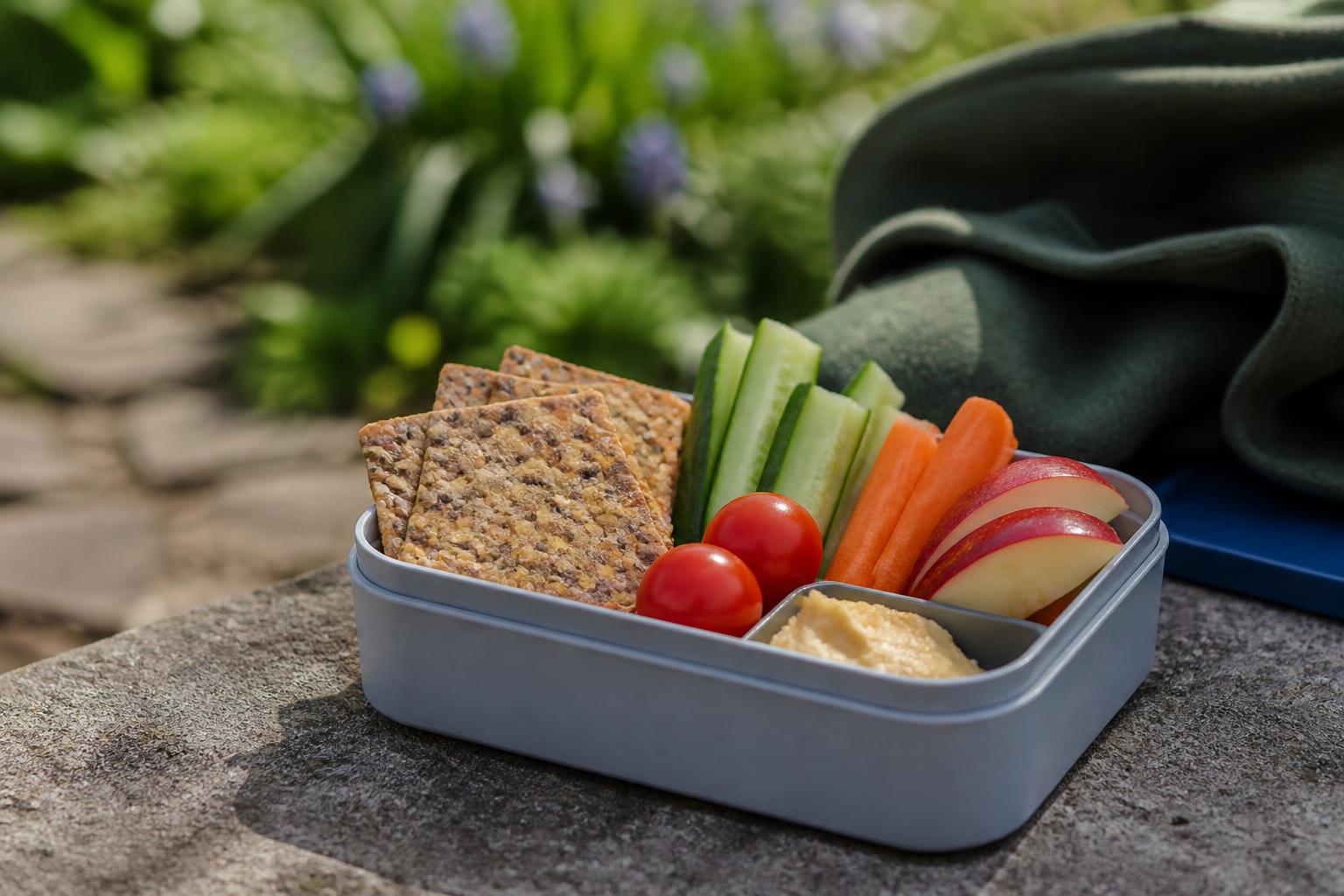
The desk-friendly classic
- Wholemeal chicken salad sandwich
- Cherry tomatoes
- Apple slices
- Small portion of poppy seed crackers
- Water or sparkling water
This is simple, sturdy, and easy to eat between calls. If you want more richness, add a little mayo or soft cheese to the sandwich rather than relying on extra snacks later.
The train commute box
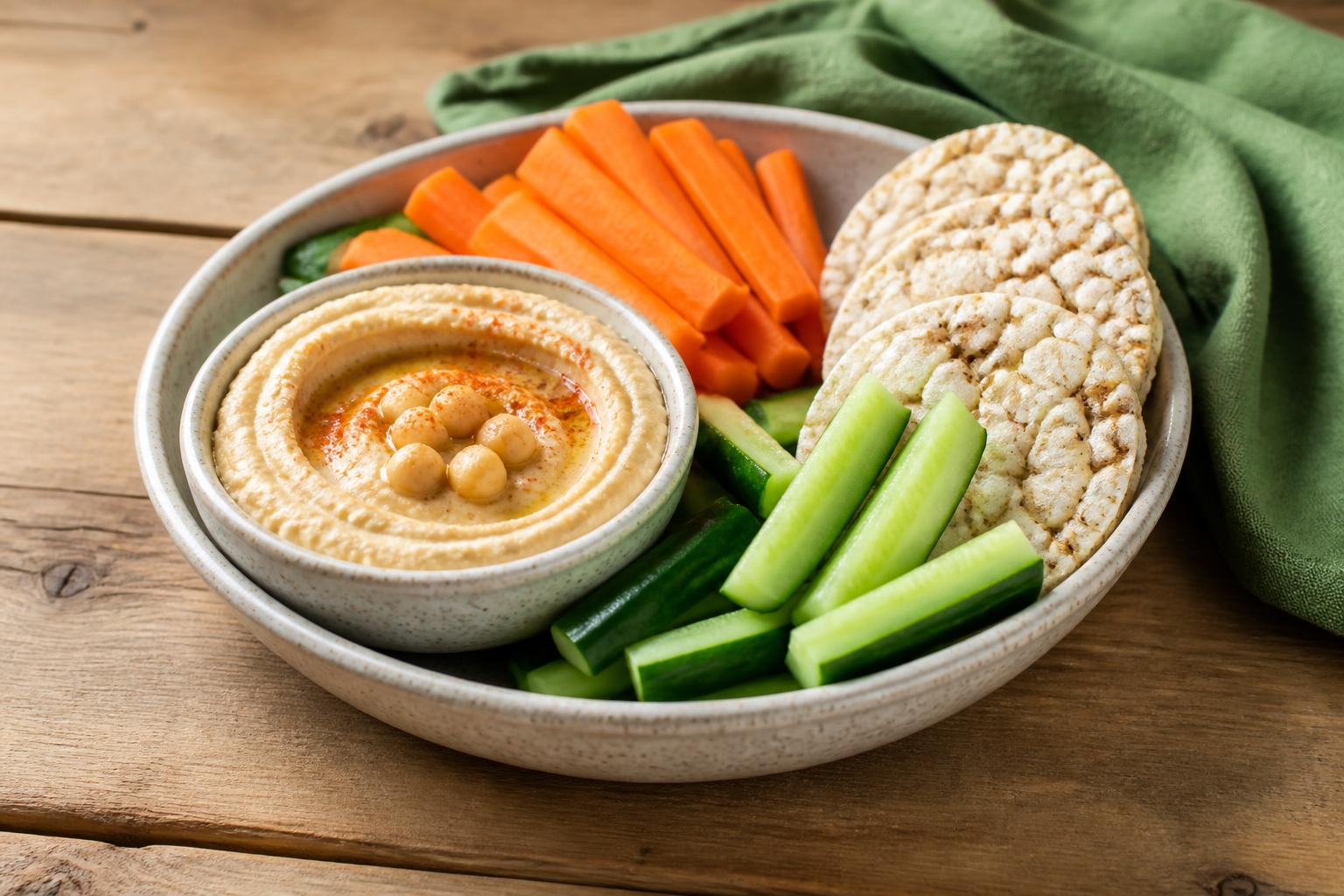
- Hummus and roasted veg wrap
- Carrot and cucumber batons
- Grapes
- Dry roasted chickpeas
- Refillable water bottle
This one travels well because nothing leaks too badly and the wrap is easy to eat one-handed if needed. Pack the vegetables in a separate compartment so they stay crisp.
The no-microwave work lunch
- Pasta salad with tuna, sweetcorn, spinach, and a light yoghurt dressing
- Sugar snap peas
- Satsuma
- Seeded crispbread
- Chilled water
Cold pasta salads are useful because they can be made in advance and portioned for two or three days. Keep the dressing light enough that the pasta does not turn heavy and claggy by lunchtime.
The hearty afternoon-meeting lunch
- Egg and watercress roll on wholegrain bread
- Pepper strips
- Pear
- Small handful of mixed nuts
- Tea in a flask
This combination has enough substance to carry you through a long afternoon. It is also easy to find in UK shops if you need to top up ingredients midweek.
The meat-free prep-ahead box
- Couscous with chickpeas, roasted courgette, and feta
- Radishes and cucumber
- Blueberries
- Roasted broad beans
- Water with lemon
This is a good option when you want a lunch that feels fresh but still satisfying. Keep the crunchy element separate until you are ready to eat so it does not soften.
The Friday treat-that-is-still-balanced box
- Mini bagel with smoked salmon and soft cheese
- Celery and tomato salad
- Strawberries
- A few plain crisps or baked savoury bites
- Sparkling water
Not every lunch box needs to feel austere to be healthy. A treat element works perfectly well when the rest of the box is doing the balancing.
The supermarket-assembly lunch
- Pre-cooked lentil salad pot
- Boiled eggs
- Pack of prepared carrot sticks
- Easy-peeler
- Small pack of crackers
- Bottle of water
This is ideal for days when you have not prepped anything at home. A healthy lunch box can absolutely be assembled from convenience foods, as long as they work together.
For UK adults, the real test is not whether a lunch box is aspirational. It is whether it survives a packed commute, a shared office fridge, and the point in the week when the salad drawer is looking sparse.
How to keep a packed lunch safe and fresh
Food safety matters just as much as flavour, especially if you are preparing lunch ahead. In the UK, the broad principle is simple. Keep cold foods cold, keep lunch boxes clean, and do not leave perishable items hanging about for hours in warm conditions.
If your lunch contains meat, fish, eggs, dairy, cooked rice, or anything with mayonnaise or yoghurt, store it in the fridge until you leave the house. If you can, use an insulated lunch bag with a frozen gel pack. That is especially useful in warmer weather or if your commute is long.
At work, put your lunch in the fridge if one is available. If there is no fridge, an insulated bag with a chilled pack is your best option, and it is wise to eat the most perishable items earlier rather than later.
A few practical points make a big difference:
- Cool cooked ingredients before packing them, then refrigerate promptly.
- Use sealed containers to prevent leaks and cross-contamination.
- Keep crunchy items in a separate pot or packet so they stay crisp.
- Wash reusable lunch boxes thoroughly between uses.
- If fruit is cut, keep it chilled where possible.
- If you are batch-prepping, label containers mentally or physically so older lunches get eaten first.
For rice and pasta salads, the key point is cooling and storage. Cooked rice should be cooled quickly, chilled, and not left sitting at room temperature. The same common-sense approach applies to pasta dishes with dairy or protein-rich add-ins.
If you are packing lunch the night before, most sandwiches, wraps, chopped vegetables, and grain salads will be fine by the next day when stored in the fridge. To keep bread from going soggy, place wetter ingredients such as tomato or pickle in the centre of the filling, with drier layers around them. Leafy salad also helps create a barrier.
Some ingredients are better packed on the day if possible. Avocado can brown, cut apple can soften unless treated with a little lemon juice, and crisp snacks lose their appeal if they sit against moisture. A two-minute morning finish often improves the whole box.
Where rules differ between the UK and the EU generally, labelling and food business guidance can vary, but for a packed lunch at home the practical standard is the same, keep perishable foods properly chilled and do not rely on room temperature storage for long periods.
The best lunch box is one you can make again without fuss. Build it from a dependable main, add vegetables and fruit, include a crunchy extra that earns its place, and pack it so it stays fresh until you are ready to eat. When that balance is right, healthy and treat-like stop being opposites. They become the same lunch.

Questions about this article or a correction to suggest? Get in touch. Read more about our editorial approach.