Dry roasted chickpeas are exactly what they sound like, chickpeas that have been dried down and roasted until they turn crisp enough to snack on by the handful. They sit in a very useful middle ground. They are more substantial than crisps, far less oily than many fried pulse snacks, and a good deal more convenient than trying to keep home-roasted beans crunchy in a lunch bag all day.
That everyday usefulness is the real point. If you want something savoury, crunchy and easy to recognise from the ingredients list, roasted chickpeas make a lot of sense. The trick is knowing what gives them that snap, what the pack is actually telling you, and how to choose one that still tastes good when you open it on the train, at your desk or halfway through the school run.
What dry roasted chickpeas actually are
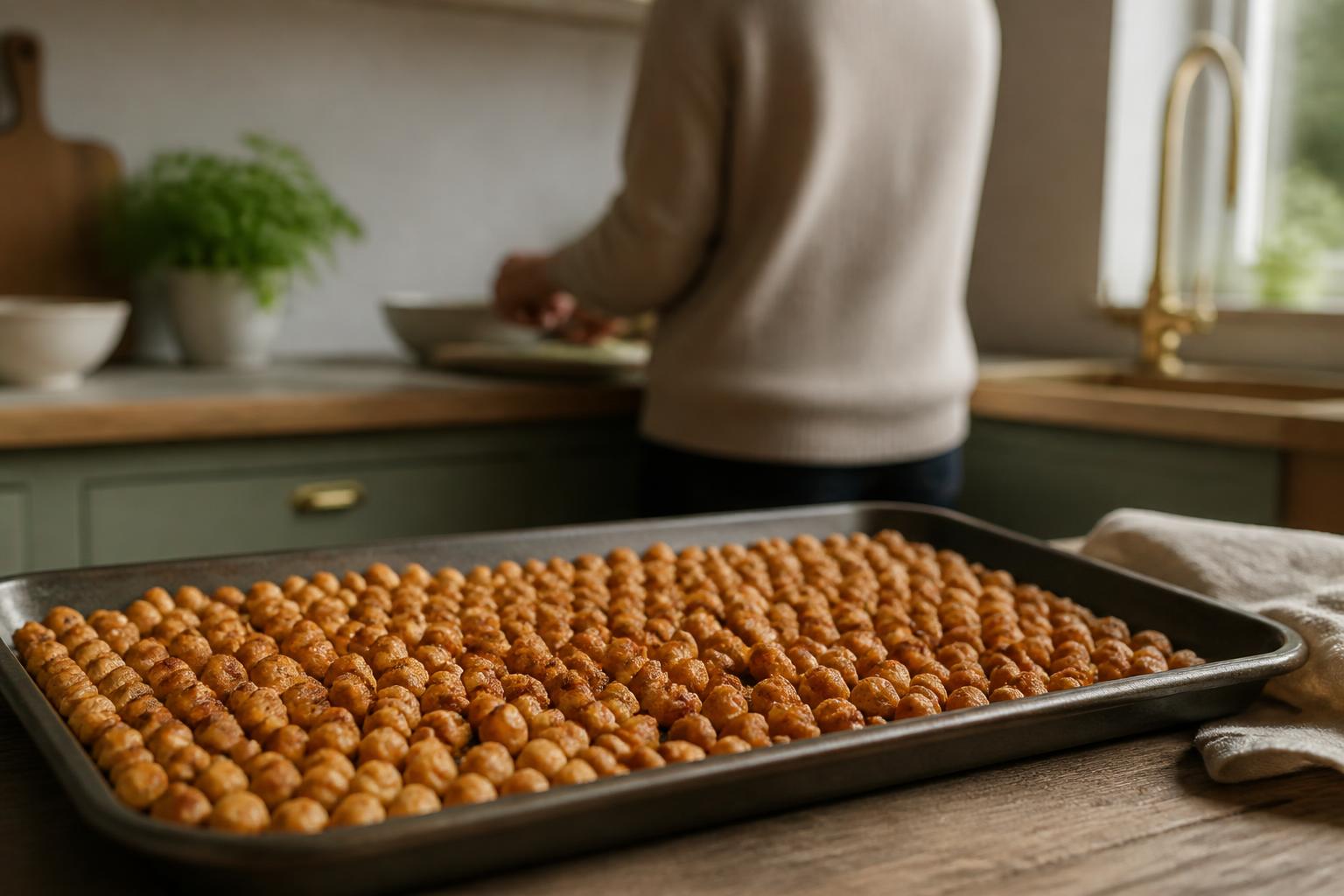
Dry roasted chickpeas start with cooked chickpeas, usually the same type you would recognise from tins or jars, but they do not stay in that soft, spoonable state. To become a crisp snack, the chickpeas have to lose a lot of moisture. That is what roasting does. Heat drives off water from the surface and, with the right timing, enough from the inside to create a firm shell and a brittle bite.
That matters because plain cooked chickpeas and roasted chickpeas are not remotely the same eating experience. Cooked chickpeas are soft, creamy and slightly floury. They work in curries, stews and hummus. Roasted ones are built for crunch. If you have ever tried to roast chickpeas at home and ended up with something chewy in the middle by the next morning, you have already met the main challenge, moisture control.
Commercial packs usually get a more even finish because the process is tightly controlled. The chickpeas are dried more consistently, roasted more evenly, and often coated lightly with seasoning or a small amount of oil to help flavour stick and browning develop. Some are simply salted. Others are dusted with spices, herbs, yeast extracts or savoury flavourings.
The phrase "dry roasted" is also useful because it tells you what the snack is not. It is not the same as a fried pulse snack, where the crunch comes largely from frying in oil. Fried snacks can be delicious, but they tend to have a different texture, often puffier, richer and more overtly oily. Dry roasted chickpeas usually feel denser and nuttier, with a crunch that comes from dehydration and roasting rather than immersion in hot fat.
That texture can vary more than people expect. Some packs are properly crisp all the way through. Some have a slightly crumbly centre. Some are more toothsome than crunchy, especially if the chickpeas are larger or the seasoning coating has pulled in a bit of moisture. None of that is automatically a fault, but if what you want is a sharp, clean crunch, it is worth paying attention to how the product is described and how it has been packed.
Why people choose them over other crunchy snacks
The appeal of dry roasted chickpeas is practical first, and that is why they keep turning up in desk drawers, gloveboxes and kitchen cupboards. They satisfy the urge for something crunchy without needing refrigeration, a plate or much planning. Open the pack, pour some into a bowl if you are feeling civilised, and you are done.
Texture is a big part of it. Crunchy snacks are not interchangeable. A crisp shatters. A cracker snaps. A roasted chickpea has a smaller, firmer bite and often a slightly nutty finish. That gives it more presence than very airy snacks, so a portion can feel more deliberate and less like something that vanishes before you have properly noticed it.
Satiety matters too, although it is best talked about sensibly. We would not claim that one snack magically keeps everybody full for hours, because appetites vary, portion sizes vary, and so does the rest of the day’s eating. What we can say is that many people choose roasted chickpeas because they feel like a more substantial nibble than very light crisps or extruded snacks. You chew them more. They take longer to eat. They often feel more like food than like background munching.
Ingredient familiarity is another reason. For plenty of shoppers, "chickpeas, oil, salt, seasoning" is easier to get on with than a long list of starches, gums and flavour compounds. That does not make every chickpea snack automatically simple or superior, but it does mean the starting ingredient is familiar and recognisable.
Convenience is where they really earn their keep. They travel well, they cope with a cupboard better than many fresh snacks, and they work in more than one setting. A small pack suits commuting. A larger resealable pouch can live in the office. A plain version can cross over from snacking to topping soups and salads. If you are interested in the broader place crunchy foods can have in a normal week, our guide to how crunchy snacks fit into everyday eating goes into that balance in more detail.
They also offer variety. When people get bored of the same salted crisps or rice cakes, roasted chickpeas give a different shape, a different chew, and a different way of carrying flavour. Smoky paprika, sea salt, chilli, garlic, black pepper, curry spices, even sweeter spice blends all behave differently on a roasted chickpea than they do on a potato crisp.
What nutrition labels can and cannot tell you
A nutrition label is useful, but only if you read it for what it is. On a pack of roasted chickpeas, the numbers can help you compare products, but they do not tell you whether you will enjoy the texture, whether the seasoning tastes balanced, or whether the portion will suit how you actually snack.
Start with the two columns that matter most, per 100g and per portion. In the UK, both are commonly shown. Per 100g lets you compare one brand with another on a level basis. Per portion tells you what the maker considers a serving, but that serving may or may not match what you eat. If the bag is small enough to finish in one go, the practical portion may be the whole pack, not the neat little serving size on the back.
Fibre is one of the first things people look for with chickpeas, and fairly so. Chickpeas are pulses, and pulses naturally contain fibre. The label will tell you how much is in the finished snack. That is useful for comparison, especially if one product has added coatings or ingredients that change the balance. What the label cannot tell you is how that fibre will fit with the rest of your day unless you look at your overall eating pattern.
Protein gets plenty of attention too. Again, compare like with like. A roasted chickpea snack may contain a decent amount of protein for a snack, but that does not make it the same thing as a meal component. Marketing on the front of pack can make this sound grander than it is. The back of pack gives the actual numbers.
Salt deserves a careful look, especially with flavoured versions. In the UK, labels often show salt rather than sodium, which is helpful because it is the figure most people recognise. A punchy seasoning can push salt up quickly. If you are choosing between plain and heavily flavoured packs, the difference can be substantial enough to matter if you eat them often.
Fat is where context helps. Dry roasting usually suggests less oiliness than frying, but "not fried" does not mean "no fat". Some products use oil to help with roasting or seasoning adhesion. That is not a problem in itself. It is simply part of how the snack is made. Check saturated fat as well as total fat if that is something you monitor.
Front-of-pack claims need the most caution. "High in protein", "source of fibre", "gluten free" or "vegan" can all be accurate and still not tell you the whole story. A product can be high in protein and also very salty. It can be vegan and still not suit your taste or your routine. In the UK, nutrition and health claims are regulated, and manufacturers need to meet set conditions to use them. Since Brexit, the UK runs its own framework rather than following the EU system directly, although the rules remain broadly familiar to shoppers. The practical point is simple, use the claim as a signpost, then turn the pack over and read the table and ingredients list.
If calories are one of the things you compare across snack options, do it in a realistic way. Compare the amount you are likely to eat, not an abstract serving. We cover that balancing act in our piece on how to pick crunchy snacks that keep calories in check.
How to pick a good pack for your routine
The best pack is not always the one with the loudest flavour or the cleanest looking front label. It is the one that fits how you will actually use it.
Start with plain versus flavoured. Plain or lightly salted roasted chickpeas are the most versatile. They work as a snack, but they also slide easily into lunches, soups and salads. If you want one product to do several jobs, plain is usually the safe bet. Flavoured packs are more about direct snacking. Smoky, spicy or tangy seasonings can be brilliant on their own, but less useful if you also want to scatter the chickpeas over tomato soup or fold them into a grain bowl.
Then read the ingredients list properly. The first ingredient should be chickpeas. After that, you are looking for the usual support cast, oil, salt, spices, flavourings, starches or coatings. A longer list is not automatically bad, but it often tells you the flavour is more engineered and the texture may rely on extra coating. If you prefer a cleaner, more bean-forward crunch, simpler tends to be better.
Check whether the pack is resealable. For desk snacking or cupboard use, this makes a genuine difference. Once opened, roasted chickpeas can lose their edge if left exposed to air. A zip closure is not glamorous, but it is practical. If the pack is not resealable and you are unlikely to finish it in one sitting, be ready to decant it into an airtight container.
Think about pack size in relation to where you eat. For commuting, a small single-serve bag is tidy and easy to manage. For a work drawer, a larger pouch can be more economical and gives you control over portions. For lunchboxes, especially if children are involved, plain or mildly seasoned versions usually travel better in mixed company than anything aggressively spicy. If school snacks are on your mind more generally, our round-up of school snacks that actually get eaten looks at what survives both packing and real-world preferences.
Texture clues are worth watching for too. Words like "crunchy", "crispy" and "lightly roasted" are not legally precise, but they can hint at style. A heavily coated, boldly flavoured chickpea may be crunchier at first bite because of the seasoning shell, or it may be a touch harder. A more simply roasted one may taste more of the chickpea itself.
Finally, match the flavour to the setting. Garlic and onion heavy seasonings are fine at home, maybe less ideal before a meeting. Chilli is excellent if you want a sharper snack, less excellent if you are eating one-handed in traffic. It sounds obvious, but the right snack is often the one that suits the moment rather than the one that sounds most exciting on the shelf.
How to keep them crisp and use them well
Crispness is the whole game with roasted chickpeas, and air is the enemy once the pack is open. If you do not finish them, seal the bag tightly or move them into an airtight container straight away. A cool, dry cupboard is the right place. Not the fridge. Refrigeration introduces moisture and tends to make crunchy snacks stale faster, not better.
If they have softened slightly, all is not necessarily lost. A short spell in a low oven can bring back some crunch, provided the product is plain enough to tolerate reheating and you keep an eye on the seasoning. Let them cool fully before judging the texture, because roasted chickpeas crisp up as they cool. If they have gone truly stale or chewy from prolonged exposure, reheating will only do so much.
The most common texture problem is sogginess after adding them to other foods too early. Roasted chickpeas absorb moisture from dressings, soups and steamy dishes surprisingly quickly. If you are using them as a topping, add them at the last minute. Scatter over soup just before serving. Toss onto salads after the leaves are dressed and plated. Spoon over grain bowls when everything else is ready to eat.
For salads in particular, timing makes the difference between proper crunch and disappointment. If you want ideas that hold up better, our guide to a roasted chickpeas salad that stays crisp is built around exactly that problem.
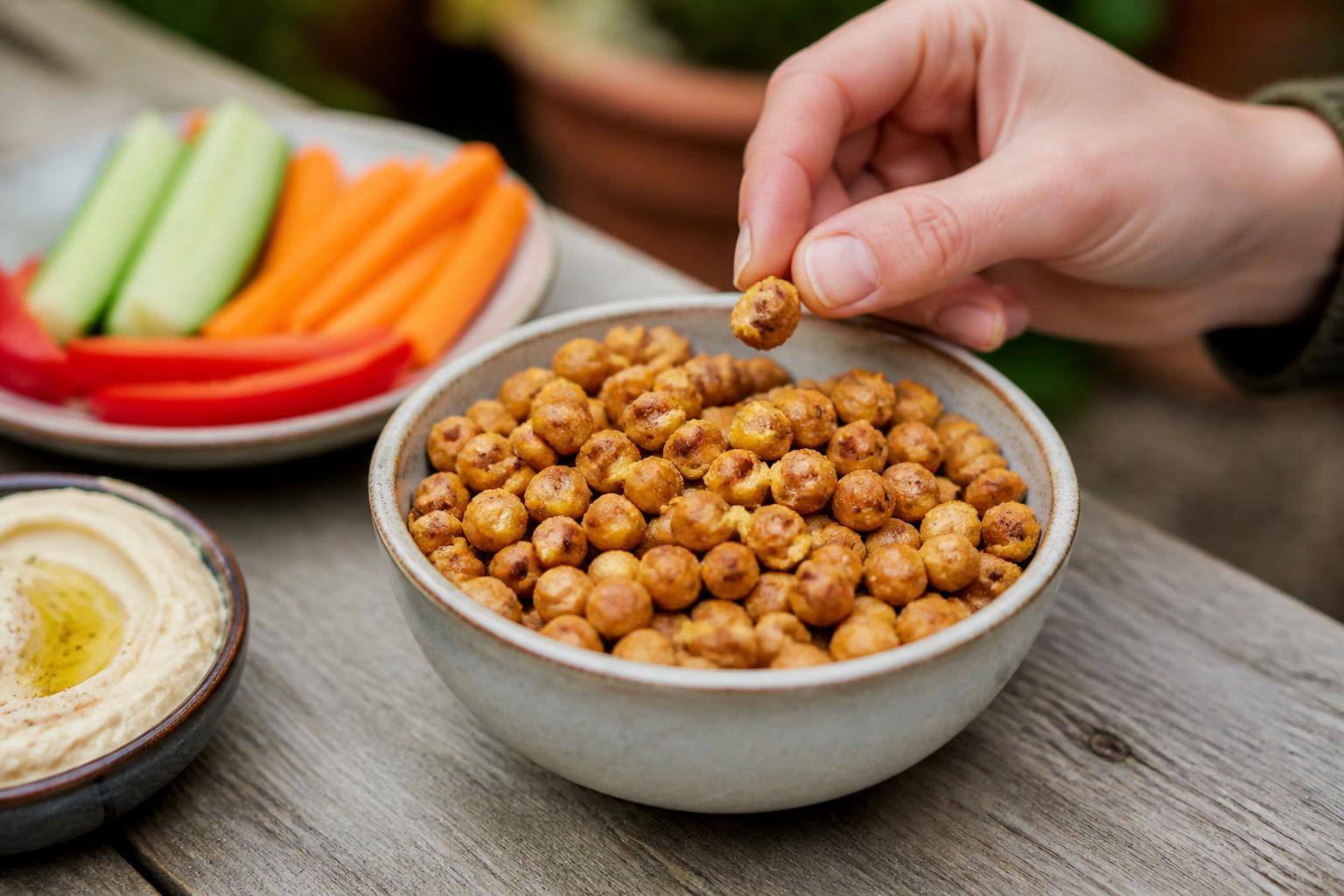
Serving-wise, keep it simple. A handful in a small bowl works better than eating absent-mindedly from a large pouch if you are trying to notice what you are eating. Pair them with something fresh if you want contrast, cucumber, cherry tomatoes, apple slices or a piece of cheese all work well depending on the flavouring. Plain roasted chickpeas can also stand in for croutons, adding crunch to soups without turning to mush quite as quickly.
They are useful in meals too, as long as you respect the moisture issue. Sprinkle them over roasted vegetables after cooking, not before. Fold them through wraps at the point of eating. Use them as a finishing element on hummus, where you get a pleasant contrast between creamy and crisp. If you are making your own versions and want to improve the texture, our piece on air fryer roasted chickpeas that stay crisp for longer covers the key details.
Dry roasted chickpeas are not trying to replace every crunchy snack, and they do not need to. Their strength is that they offer a distinct kind of crunch, familiar ingredients, and enough versatility to move from snack cupboard to lunch topping without fuss. Pick a pack with the right flavour, salt level and format for your routine, keep it sealed once opened, and they earn their place very quickly.

Questions about this article or a correction to suggest? Get in touch. Read more about our editorial approach.