Picking crunchy snacks that keep calories in check comes down to three things. Look at how energy-dense the food is, check what a normal portion actually looks like, and pay attention to what has been added to make it taste richer, sweeter or more moreish. The crunch itself is not the problem. It is usually the frying oil, heavy seasoning, sugar coatings, or oversized handfuls that quietly push the numbers up.
In practice, some of the easiest lower-calorie options are air-popped popcorn, plain or lightly topped crispbreads, simple rice cakes, roasted pulses in sensible portions, and raw vegetables that genuinely stay crisp. If you want low calorie crunchy snacks that work in real life, the best choice is usually the one you will enjoy eating slowly, without needing a creamy dip, a chocolate drizzle or a second packet.
What counts as a lower-calorie crunchy snack?
There is no single official UK definition of a "lower-calorie" snack. You will not find a legal threshold that says a crunchy snack becomes low calorie at a precise number. That is why label reading matters more than front-of-pack claims.
For UK shoppers, the most useful starting point is to judge snacks in two ways at once. First, look at calories per portion, because that tells you what you are likely to eat in one sitting. Second, look at calories per 100g, because that lets you compare different products fairly, even when one packet is tiny and another is generous.
The per 100g figure is especially helpful with crunchy foods because they vary so much in weight. Popcorn, for example, can look voluminous while weighing very little. Nuts, seeds and crisps can look modest but pack much more energy into a small bowl. A snack that seems light in the hand is not always light on calories.
As a rough practical guide, foods lower in water and higher in fat tend to have a higher calorie density. Foods with more air, more water, or less added fat often come in lower. That does not make one food morally good and another bad. It simply helps us understand why a large tub of cucumber batons and a small handful of fried crisps do not land in the same place nutritionally.
Portion size matters just as much as the per 100g number. A snack at 450 kcal per 100g might still fit your day perfectly if the normal serving is small and satisfying. Equally, a snack at 350 kcal per 100g can creep up if you eat straight from the bag and lose track. When we compare crunchy snacks, we always ask, "How much are we actually likely to eat?"
This is also where UK labelling conventions help. Most packaged foods sold here must show energy in kJ and kcal, along with fat, saturates, carbohydrate, sugars, protein and salt, usually per 100g and often per portion too. Some products also carry traffic light colours on the front, but those are a quick guide, not the whole story. For crunchy snacks, the full nutrition panel tells you much more.
Why crunchy snacks can feel satisfying
Crunch has a practical appeal that goes beyond flavour. Crispy and crunchy foods tend to be noisy, textured and slower to chew than soft foods. That can make a modest portion feel more noticeable and more snack-like, which is often exactly what people want.
A crunchy snack also creates a clearer sense of eating. You hear it, you feel it, and you usually need to bite through it rather than absent-mindedly swallowing it. That does not mean crunch magically changes appetite, but it can make the snacking experience feel more complete. A bowl of something with snap and crackle often feels more deliberate than a few spoonfuls of something smooth.
Texture helps with variety too. If your meals are mostly soft, think porridge, sandwiches, pasta, yoghurt, soups, a crunchy element can feel especially welcome. That is one reason people reach for crisps in the first place. The trick is not to avoid crunch, but to choose formats where the texture comes without too many calorie-heavy extras attached.
Eating pace matters as well. Some crunchy foods naturally slow you down because they need more chewing or because they come in individual pieces. Popcorn, roasted chickpeas and crispbread with a topping can take longer to eat than a soft cereal bar. Again, that is not a miracle effect. It is simply a practical feature that can help a smaller snack still feel like a proper pause.
There is also the matter of expectation. When people want a snack, they often want contrast, not just fuel. They want cool, crisp cucumber. A brittle rice cake. A crackly handful of popcorn. If the texture is right, you may be less tempted to keep rummaging for "something else". That is why the best lower-calorie crunchy snacks are not the ones that feel dutiful. They are the ones that actually scratch the crunchy itch.
Which snack formats are often lighter?
Some crunchy formats are often lighter because of how they are made. Others become calorie-dense because of oil absorption, coatings, or a naturally high fat content. A quick format-by-format comparison makes shopping much easier.
Popcorn is one of the most useful examples. Plain air-popped popcorn is usually quite light for its volume because the kernels expand dramatically and do not need much added fat. The catch is obvious. Cinema-style butter flavourings, sugar coatings, toffee glazes and generous oil can turn it into something very different. When comparing popcorn, check whether you are buying plain, lightly salted, sweetened, or fully coated.
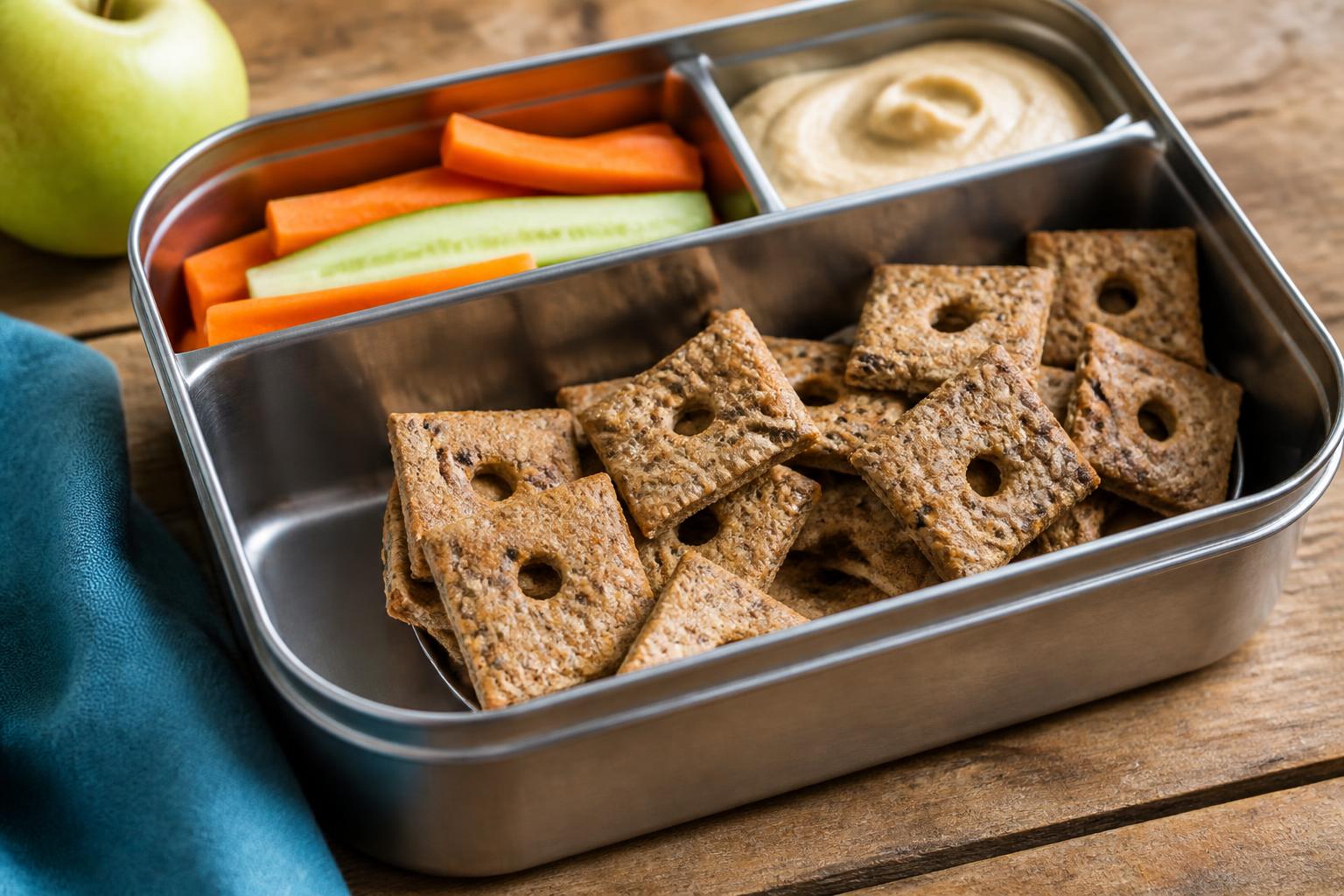
Crispbreads can also be a good option. Rye crispbreads and similar baked crackers are often fairly modest in calories per piece, and they bring a proper dry crunch. What pushes them up is usually what goes on top. A thin layer of cottage cheese, salsa or sliced tomato is one thing. Butter, cream cheese, mayonnaise and thick nut butter are another. With crispbreads, the base is often the easy part.
Rice cakes are similar. They look almost comically light because most of the structure is air. Plain ones are often low in calories per cake, which makes them useful for portion control. Flavoured versions can still be reasonable, but chocolate-coated or heavily drizzled versions move into dessert territory quickly. A rice cake is only as light as its topping or coating.
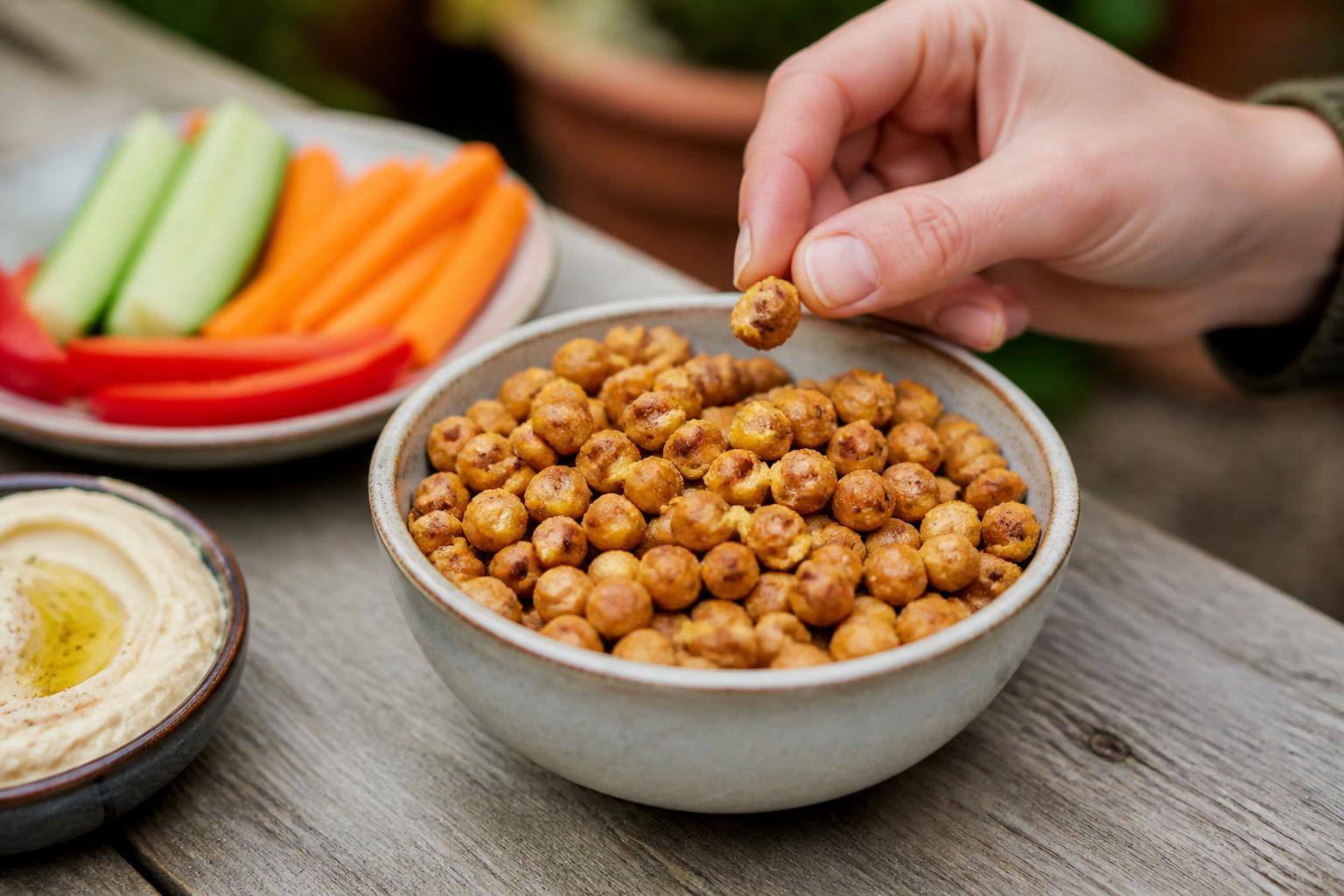
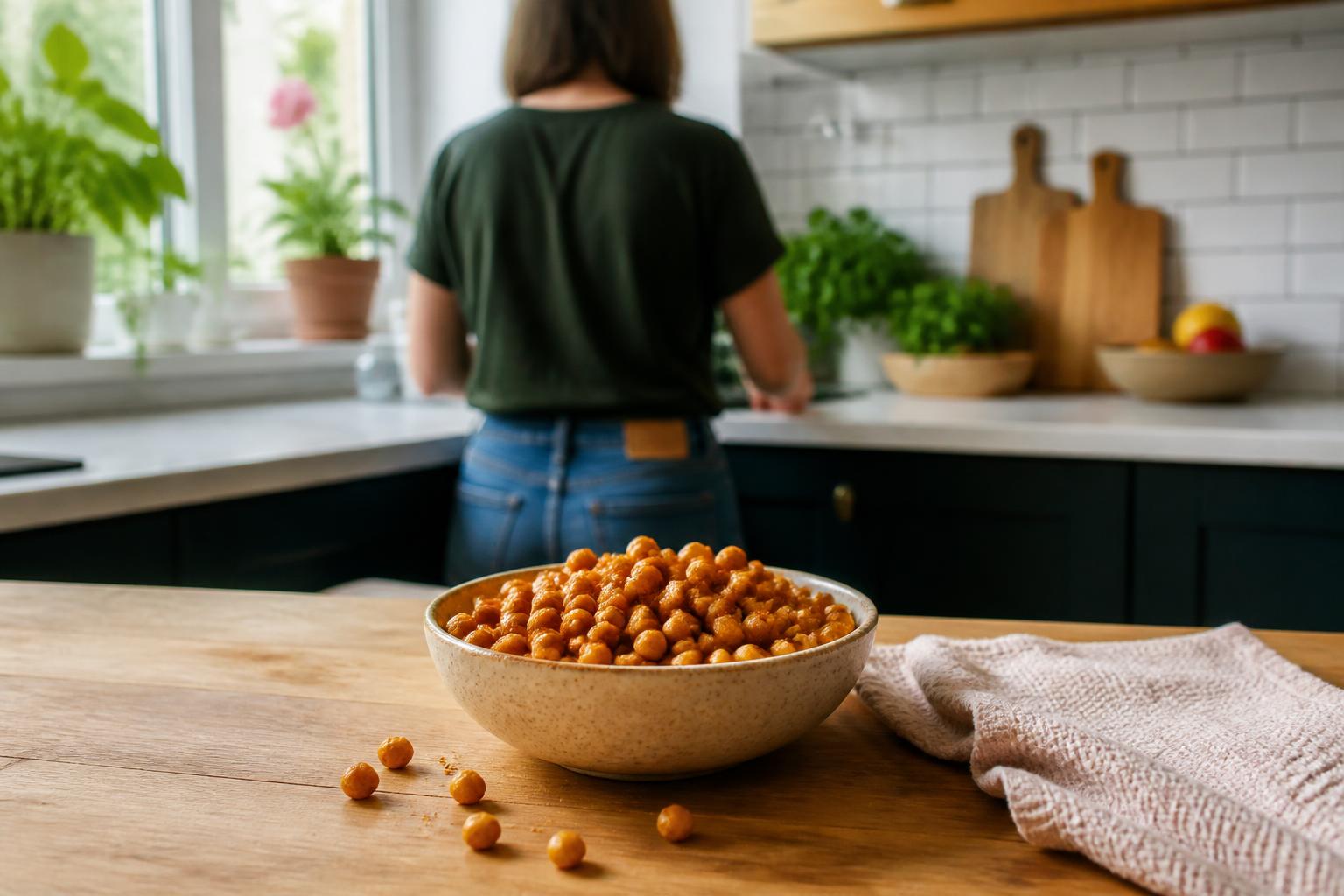
Roasted pulses, such as chickpeas, broad beans and peas, sit in a slightly different category. They can offer a satisfying crunch with more fibre and protein than many standard crisps. But they are denser than popcorn or raw veg, so portion size matters more. Oil, starch coatings and strong flavour dustings can also shift the numbers. They are often a better choice than fried crisps, but they are not automatically "free foods".
Raw vegetables are hard to beat when you want maximum crunch for relatively few calories. Carrot sticks, cucumber, peppers, radishes, celery and sugar snap peas all bring bite and freshness. The issue here is not the veg itself. It is the dip. Hummus can fit well in a measured portion. So can salsa or a yoghurt-based dip. But large amounts of aioli, creamy dressings and cheese-based dips can overtake the vegetables very quickly.
Baked crisps and vegetable crisps deserve a closer look. "Baked" does not always mean low in calories, and "vegetable" does not always mean especially light. Beetroot, parsnip and sweet potato crisps can still be fried and still be energy-dense. The ingredients list and nutrition panel matter more than the wholesome-looking packet.
Seed crackers and nut-based crackers can be delicious and crunchy, but they are usually more calorie-dense because seeds and nuts are naturally rich in fat. That does not make them poor choices. It simply means they work best when you want a smaller, richer snack rather than a big bowlful.
If you want more ideas for practical portions, our guide to 100-calorie crunchy snacks that actually keep you going is a useful next step.
How to read the label without getting misled
The front of the pack is designed to sell. The back is where the truth lives.
Start with calories, but read them properly. Check the kcal per portion and per 100g. If the packet says "only 98 calories" but contains two servings and you know you will eat the lot, count the whole pack. This sounds obvious, yet it is where many apparently sensible snack choices go sideways.
Then look at serving size. Manufacturers sometimes set very small suggested portions, especially for calorie-dense snacks. If a roasted pulse snack lists a serving as 20g, ask yourself whether that is realistic for you. If not, do the maths for the amount you would actually pour into a bowl.
Fat matters because it drives calorie density, especially in crunchy snacks. Foods higher in fat are not off-limits, but they tend to deliver more calories in less volume. Saturates are worth checking too, particularly if you are comparing buttery crackers, cheese snacks or coconut-based crisps.
Fibre and protein can help you sort one crunchy option from another. A snack with some fibre or protein may feel more substantial than one made mostly from refined starch. Roasted chickpeas may therefore suit some people better than plain puffs, even if the calories are not dramatically lower. It is not about chasing a perfect number. It is about choosing a snack that earns its place.
Salt deserves attention because many savoury crunchy snacks lean heavily on it. In the UK, labels show salt rather than sodium, which makes comparison easier. If you snack on crunchy foods often, especially at work or while driving, choosing lower-salt options where possible is sensible.
Ingredients lists tell you what is really doing the work. If the first few ingredients are potato, maize or chickpeas, that is straightforward enough. If the list quickly moves into palm oil, sugar, glucose syrup, starches, flavour enhancers and multiple coatings, you are looking at a more engineered product. Sometimes that is fine. But if your goal is to keep calories in check, simpler products are often easier to manage.
Be careful with health halos. "Gluten-free", "vegan", "high protein", "natural" and "made with vegetables" can all be true while the snack is still quite calorie-dense. None of those claims tells you the whole story. The same goes for "oven baked". Better than what, and by how much? The label will tell you.
UK readers should also note that traffic light labels are voluntary, not mandatory across all foods, though many major brands use them. They can be handy for a quick scan, especially for fat, saturates, sugars and salt, but they do not replace checking the actual calorie figure and portion size.
If you rely on snacks away from home, our round-up of crunchy work snacks that cope without a fridge covers formats that travel well without turning into crumbs or temptation bait.
Easy ways to keep crunch and avoid accidental extras
The easiest way to keep a crunchy snack lighter is to portion it before you start. A small bowl beats a family bag every time. This is not joyless policing. It is simple visibility. Once the portion is in front of you, you know what you are eating, and you can actually enjoy it.
Pairing matters too. If your crunchy base is light, keep the add-ons measured. Raw veg with a spoonful of hummus works well. Crispbread with sliced tomato and black pepper keeps the crunch front and centre. Popcorn with a dusting of smoked paprika or nutritional yeast adds flavour without turning it into a sticky, buttery project.
Watch for stealth calories from coatings. Chocolate, yoghurt, caramel, honey roasting and thick savoury glazes all change the picture fast. A plain rice cake and a chocolate-coated rice cake are not in the same category just because they share a shape.
Choose snacks that are naturally self-limiting. Individual crispbreads, single rice cakes, mini tubs of veg sticks, or pre-portioned roasted pulses can be easier to handle than loose snacks from a large multipack. If you buy a bigger bag for value, split it into smaller containers as soon as you get home.
Preserve crunch properly, because stale snacks invite overcompensation. When a crispbread goes leathery or popcorn goes chewy, people tend to add more toppings or simply keep eating in search of satisfaction. Airtight storage helps, and so does packing components separately. For packed lunches, we share practical ideas in crunchy lunch boxes that stay crisp until you eat.
Think about what your snack is replacing. If you want a crunchy bridge between meals, a bowl of cucumber, carrots and peppers with a measured dip may be plenty. If you need something more substantial on a long afternoon, crispbread with a protein topping or a small portion of roasted pulses may make more sense. "Lower-calorie" does not have to mean flimsy.
Finally, slow the whole thing down. Put the snack on a plate. Sit down if you can. Keep the packet out of reach. Crunch is one of the pleasures of eating, and it works best when you can hear it, feel it and notice it. That is often the difference between a snack that satisfies and one that vanishes without trace.
The best low calorie crunchy snacks are not the ones with the loudest claims on the packet. They are the ones with sensible calorie density, realistic portions, and enough texture to feel worth eating. Once you know how to compare formats and read labels properly, finding them becomes much less of a guessing game.

Questions about this article or a correction to suggest? Get in touch. Read more about our editorial approach.