A 100 calorie snack can absolutely take the edge off hunger, but the number on its own does not tell you whether it will feel worthwhile. Some small snacks disappear in three bites and leave you rummaging in the cupboard ten minutes later. Others have enough crunch, fibre, protein or sheer volume to make a modest portion feel surprisingly steadying.
That is why the best healthy 100 calorie snacks are not just the lightest things on the shelf. They are the ones that suit the moment. A juicy apple on a train platform, a pot of yoghurt at your desk, a handful of roasted chickpeas before the school run, or a few crispbreads with something savoury on top can all do the job well, if the portion and timing make sense.
What makes a 100-calorie snack feel genuinely satisfying?
Calories matter, but they are only part of the story. If we are trying to choose a snack that keeps us going rather than simply gives us something to chew, four things usually make the biggest difference.
First, fibre. Foods with fibre tend to take longer to eat and can feel more substantial in the stomach. Think apples, pears, berries, oatcakes, crispbreads made with whole grains, veg sticks, or roasted pulses. A 100 calorie snack with a decent amount of fibre often feels less flimsy than a very refined one with the same energy value.
Second, protein. We do not need every snack to be a miniature gym meal, but a little protein can make a small portion feel more complete. Greek-style yoghurt, skyr, edamame, roasted broad beans, a boiled egg, or a measured spoonful of nut butter with apple slices can all punch above their calorie weight. If you are choosing between two snacks with similar calories, the one with a bit of protein often has more staying power.
Third, water content. Foods that naturally contain plenty of water can give more volume for the calories. Fruit and raw vegetables are the obvious examples. Grapes, melon, cucumber, tomatoes and oranges can all make a snack box look generous without racing past the 100 calorie mark. Soup can do this too, although that is more of a mini-meal than a grab-and-go snack.
Fourth, crunch. This one is easy to dismiss, but it matters. Crisp textures slow us down, create a stronger sense of eating, and can scratch that snacky itch better than something soft and forgettable. Popcorn, crisp apples, carrots, radishes, crispbreads and roasted pulses all have that audible, bitey satisfaction. If what you really want is something crunchy, a low-calorie soft snack may leave you unconvinced, even if it is nutritionally tidy.
There is also the question of pace. A snack that takes a few minutes to eat often feels more satisfying than one that vanishes instantly. Compare a small packet of raisins with a bowl of air-popped popcorn, or a few spoonfuls of yoghurt with an apple you have to bite through. The calories may be similar, but the experience is not.
In practice, the most useful healthy 100 calorie snacks usually combine at least two of these qualities. An apple gives water and crunch. Roasted chickpeas bring fibre and crunch. A small yoghurt offers protein and volume. A couple of rye crispbreads with cottage cheese tick protein, crunch and a sense of proper structure.
How to spot a healthier option without overthinking the label
UK food labels can be helpful, but they are also very good at making us stare at tiny numbers while standing in a shop aisle with no signal and no patience. For quick snack decisions, we focus on five things.
1. Portion size
Start here, because everything else depends on it. The front of pack may say a product is 95 calories, but check whether that is per pack, per bar, per serving, or per 100g. In the UK, both per 100g and per portion information are commonly shown. For snacks, portion size is often where the surprises hide.
A bag that looks single-serve may contain two portions. A nut mix may look modest but be very dense. A yoghurt pouch may be neatly around 100 calories, while a granola pot beside it is much more. If we are aiming for a small snack, the easiest win is to know what the manufacturer means by one serving, then decide whether that serving is realistic.
2. Fibre
Fibre is not always front and centre on packaging, but on the back of pack nutrition panel it is worth a quick glance. If a snack is based on whole grains, pulses, fruit or veg, it often gives more back in terms of staying power. We do not need to chase perfection. We simply use fibre as a clue that the snack may feel less flimsy.
This is especially useful when comparing crackers, popcorn, cereal bars or pulse snacks. Two products can have similar calories, but the one with more fibre may leave you less likely to go hunting for biscuits half an hour later.
3. Free sugars
In the UK, labels usually list total sugars, not free sugars, so this needs a little common sense. Free sugars include sugars added to food, plus those in honey, syrups and unsweetened fruit juice. The nutrition panel cannot always tell you exactly how much of the sugar is naturally occurring and how much is free sugar, so the ingredients list helps.
A plain yoghurt with fruit stirred in at home is different from a heavily sweetened dessert-style yoghurt. An apple is different from apple juice. A date bar made mostly from blended dried fruit may still be a perfectly decent option, but it is worth recognising that it is concentrated and easy to eat quickly.
For a fast decision, we ask: is this mostly whole food, or is it mainly sweeteners and syrups held together in a convenient shape?
4. Salt
Salt matters most in savoury crunchy snacks, where it can creep up fast. Crisps, crackers, popcorn, roasted pulses and rice cakes vary wildly by brand and flavour. A lightly salted version can be very different from a cheese-and-something powder-coated version.
You do not need to memorise thresholds, but UK traffic light labels are useful when they are present. Green and amber are generally easier everyday territory than red, especially if the snack is something you eat often rather than occasionally. If you are comparing similar products, salt is one of the quickest tie-breakers.
5. Ingredient list
The ingredient list tells you what the snack really is. Ingredients are listed in descending order by weight. That means the first few entries matter most.
If a popcorn says corn, rapeseed oil and salt, you know where you are. If a cereal bar starts with glucose syrup, sugar and palm fat, you also know where you are. Neither needs moral drama, but the label makes the difference clear.
For everyday healthy 100 calorie snacks, we generally prefer options where the main ingredients look like the food itself. Oats. Chickpeas. Peanuts. Apples. Rye. Yoghurt. That does not mean every ingredient list has to be saintly short. It means the product should still resemble something you might plausibly make in your own kitchen, even if you would not bother.
Everyday 100-calorie snack ideas for real UK routines
Exact calories vary by brand and portion, so treat these as practical ballpark ideas rather than fixed commandments. A kitchen scale helps at home. In the real world, eyeballing and checking the pack once is often enough.
Fruit that feels like a proper snack
A medium apple is usually around the 100 calorie mark and gives crunch, fibre and a bit of chewing time. Pears do much the same, with a softer bite. Clementines and satsumas are lower, so two can work well if one feels too meagre. Grapes are easy to over-pour, so they are a good one to portion into a small tub rather than eating from the bag.
Bananas are often more filling than people expect, but size matters. A small banana may land near 100 calories, while a large one will not. That is not a problem unless the number is the whole point.
Yoghurt pots and dairy options
A small pot of plain or lower-sugar Greek-style yoghurt can sit around 100 calories and brings useful protein. Skyr often works well too. If plain feels too austere, add a few berries or a sprinkle of cinnamon rather than automatically reaching for the dessert-style versions.
Cottage cheese on a couple of cucumber rounds or tomato slices can be a surprisingly tidy little savoury snack. Babybel-style cheeses can also fit, though on their own they may feel a bit blink-and-it's-gone unless paired with something crunchy.
Popcorn that earns its place
Plain or lightly salted popcorn is one of the best examples of volume helping a small calorie budget. Air-popped popcorn at home is especially handy, but many ready-portioned bags also land near 100 calories. The key is flavour creep. Sweet coatings, toffee drizzles and heavily seasoned versions can change the picture quickly.
If you love that crisp, rustly, handful-by-handful feel, popcorn is often far more satisfying than a tiny packet of crisps for similar calories.
Crispbreads, oatcakes and crackers
A couple of rye crispbreads or small oatcakes can make a good base for something more satisfying. On their own, they are fine. With a little cottage cheese, hummus, soft cheese or peanut butter, they become much more useful.
This is also where label reading pays off. Some crackers that look wholesome are basically tiny buttery biscuits in disguise. Others are straightforward wholegrain options with decent fibre and simple ingredients.
Vegetables that do not feel like punishment
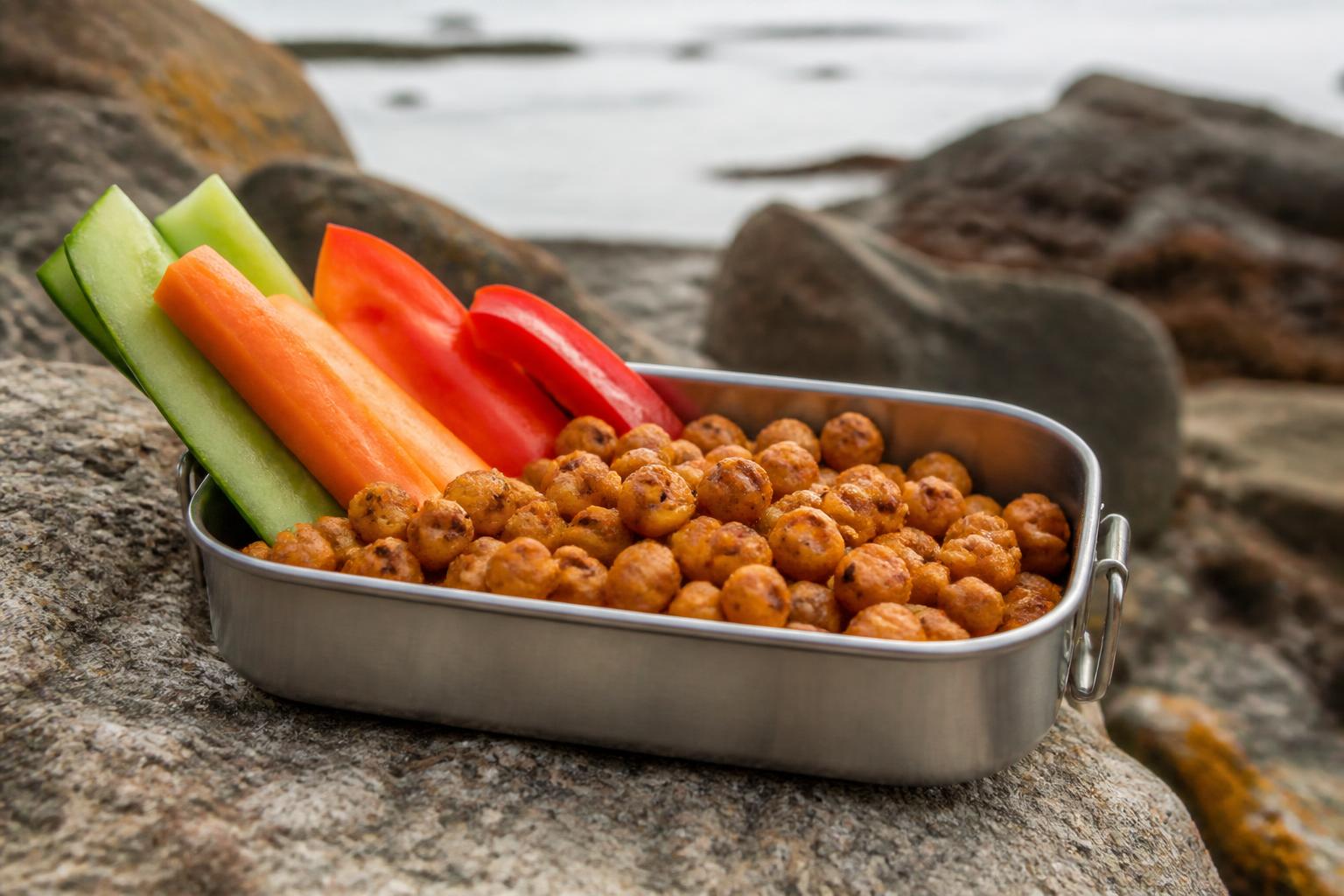
Carrot batons, cucumber, sugar snap peas, cherry tomatoes, radishes and pepper strips can all bulk out a snack box for very few calories. On their own, they are crisp and refreshing, but a small measured spoonful of hummus can make them feel much less worthy and much more snack-like.
If you need ideas that hold up at work, we have a guide to crunchy work snacks that cope without a fridge.
Pulses that bring crunch and substance
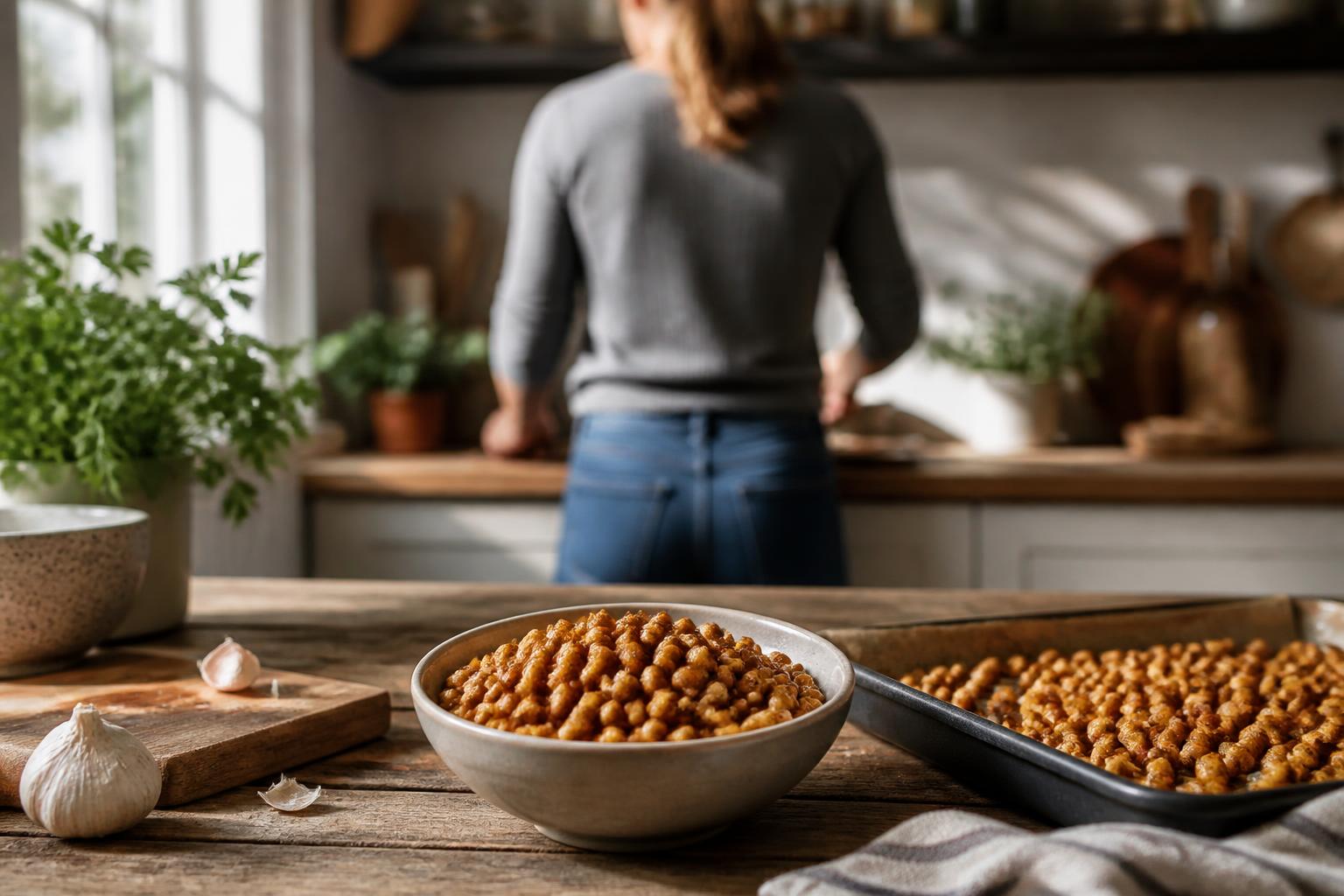
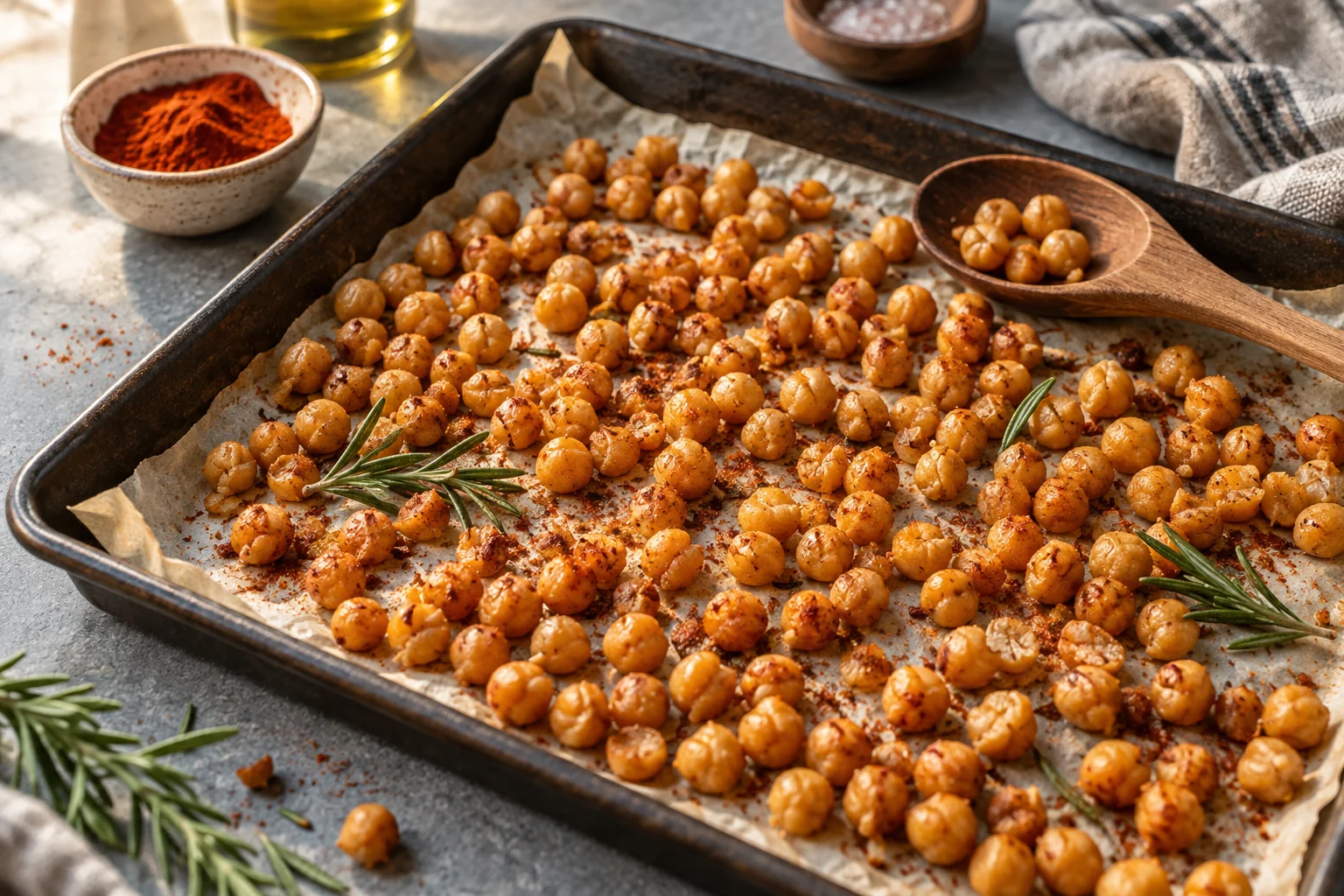
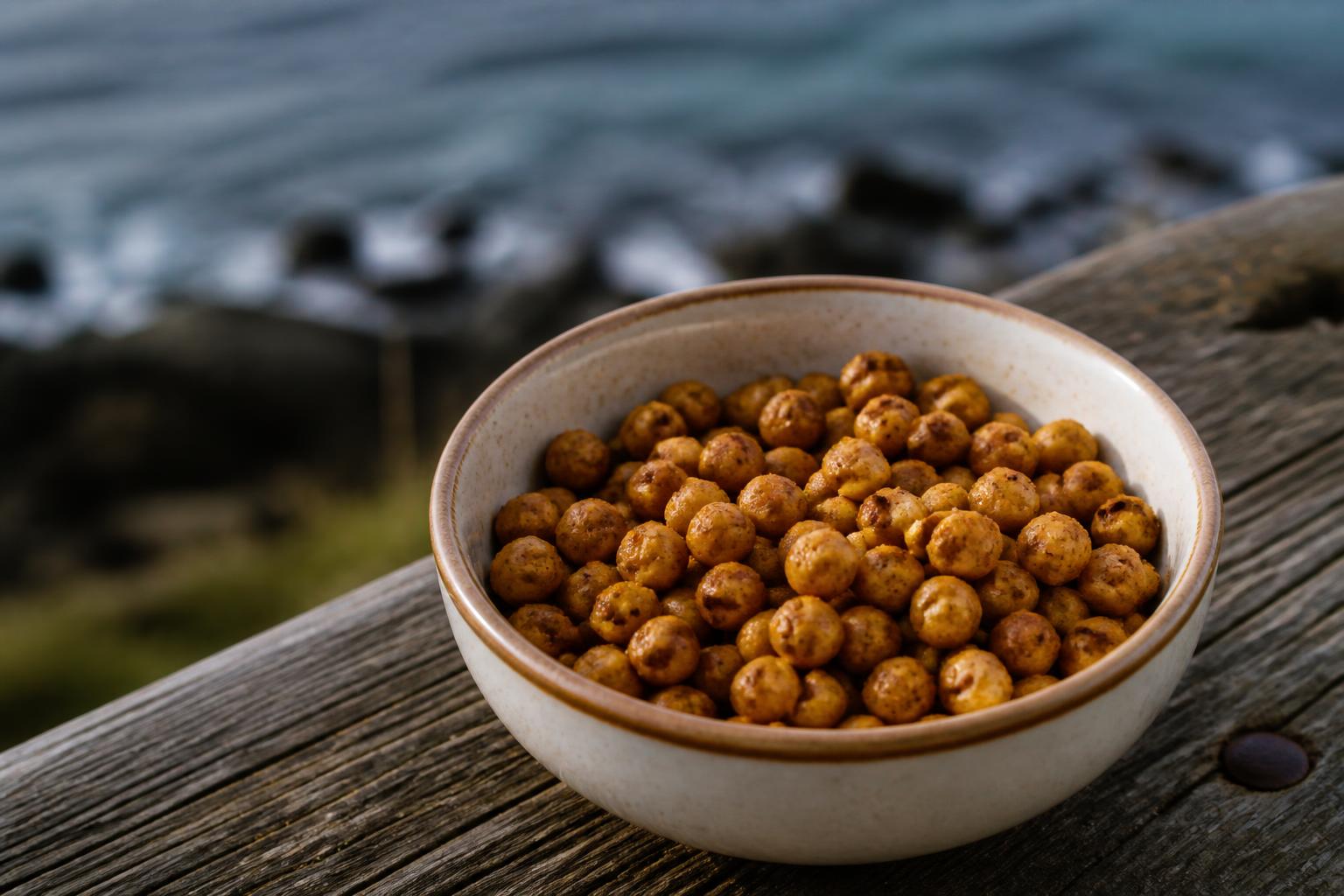
Roasted chickpeas, broad beans and edamame are excellent for people who want a savoury snack that actually bites back. They tend to offer fibre and some protein, and they travel well. The watch-out is portion creep, because they are easy to eat like crisps. A small bowl or mini tub solves most of that.
Nuts and seeds, used with a steady hand
Nuts are nutritious, but they are also calorie-dense. That does not rule them out. It just means 100 calories looks like a small handful, not half a packet. Almonds, pistachios and peanuts can all work well when pre-portioned. Pistachios in shells have the added bonus of slowing you down.
Seeds are similar. A tablespoon of pumpkin seeds or mixed seeds can add crunch to yoghurt or fruit, but they are best used as part of a snack rather than treated as a casual scatter.
When 100 calories is enough and when it probably is not
A 100 calorie snack is often enough for a gap-bridging moment. Mid-morning, if breakfast was decent and lunch is not far away, something small can do the job nicely. The same goes for a late-afternoon nibble when dinner is already on the horizon.
It can also work well for a commute snack, especially if the aim is to stop arriving home ravenous. An apple, a yoghurt pouch, a mini bag of popcorn or a portion of roasted chickpeas can take the edge off without becoming a second lunch.
Where 100 calories may feel a bit flimsy is after exercise, during a very long desk day, or when the previous meal was light or rushed. If you have walked out of the gym, spent hours in meetings, or accidentally had toast and coffee for breakfast and nothing else, a tiny snack may simply not match the moment.
That does not mean you have failed the snack brief. It means the context changed. A more substantial snack, or an earlier proper meal, may be the sensible answer. Sometimes the best choice is not to force everything into a neat 100 calorie box.
A useful rule of thumb is to ask what the snack needs to do. Is it there to tide you over for half an hour, satisfy a crunchy craving, and stop you picking at office sweets? Then 100 calories may be plenty. Is it there to carry you through a delayed lunch, a train journey, or the foggy patch after a hard workout? You may want something bigger, or something with more protein and carbohydrate together.
Simple ways to make crunchy snacks work harder
Crunchy snacks become much more helpful when we give them a bit of structure.
Pair one crunchy thing with one grounding thing
A crisp element plus a protein or fibre-rich element is often the sweet spot. Think apple slices with peanut butter, crispbreads with cottage cheese, popcorn with a yoghurt, or carrot sticks with hummus. The crunchy part keeps the snack fun. The second part makes it last.
This works especially well if you tend to feel underwhelmed by low-calorie snacks. The answer is often not more of the same crunchy thing. It is a better pairing.
Pre-portion before you are hungry
Eating from a family bag is how a 100 calorie snack quietly becomes a much larger one. We are not against large portions when they are genuinely wanted, but accidental overeating is rarely that satisfying. It is just absent-minded.
Portion nuts, popcorn, roasted pulses or crackers into small tubs or sandwich bags once, then forget about it. If you buy multipacks, check whether each pack is actually the size you think it is.
Time it earlier than your willpower dip
A snack works best when it arrives just before the point where everything in the kitchen starts looking persuasive. If you know 4pm is your crunchy danger zone, waiting until 4.30pm rarely improves the decision-making. A planned snack at 3.45pm is often more satisfying than a heroic attempt to hold out followed by random cupboard grazing.
Build in texture
If a snack seems sensible but never quite hits the spot, texture may be the missing piece. Add sliced apple to yoghurt. Choose a seeded cracker instead of a very plain rice cake. Pair softer foods with something crisp and cool. Texture is not frivolous. It is often the difference between feeling fed and feeling mildly irritated.
Keep shelf-stable options where life happens
The best snack is the one that is there when you need it. A bowl of clementines on the counter, oatcakes in a desk drawer, mini popcorn bags in the car, or roasted chickpeas in a work bag all make good choices easier. If your routine is busy, crunchy work snacks that cope without a fridge can save a lot of last-minute rummaging.
Healthy 100 calorie snacks are most useful when we stop treating 100 as a magic number and start treating it as a tool. Sometimes that tool is exactly right. Sometimes it needs a crunchy companion, a bit more protein, or a larger portion because the day has asked more of you. If the snack is simple, satisfying and realistic for an ordinary UK routine, it is already doing its job well.

Questions about this article or a correction to suggest? Get in touch. Read more about our editorial approach.