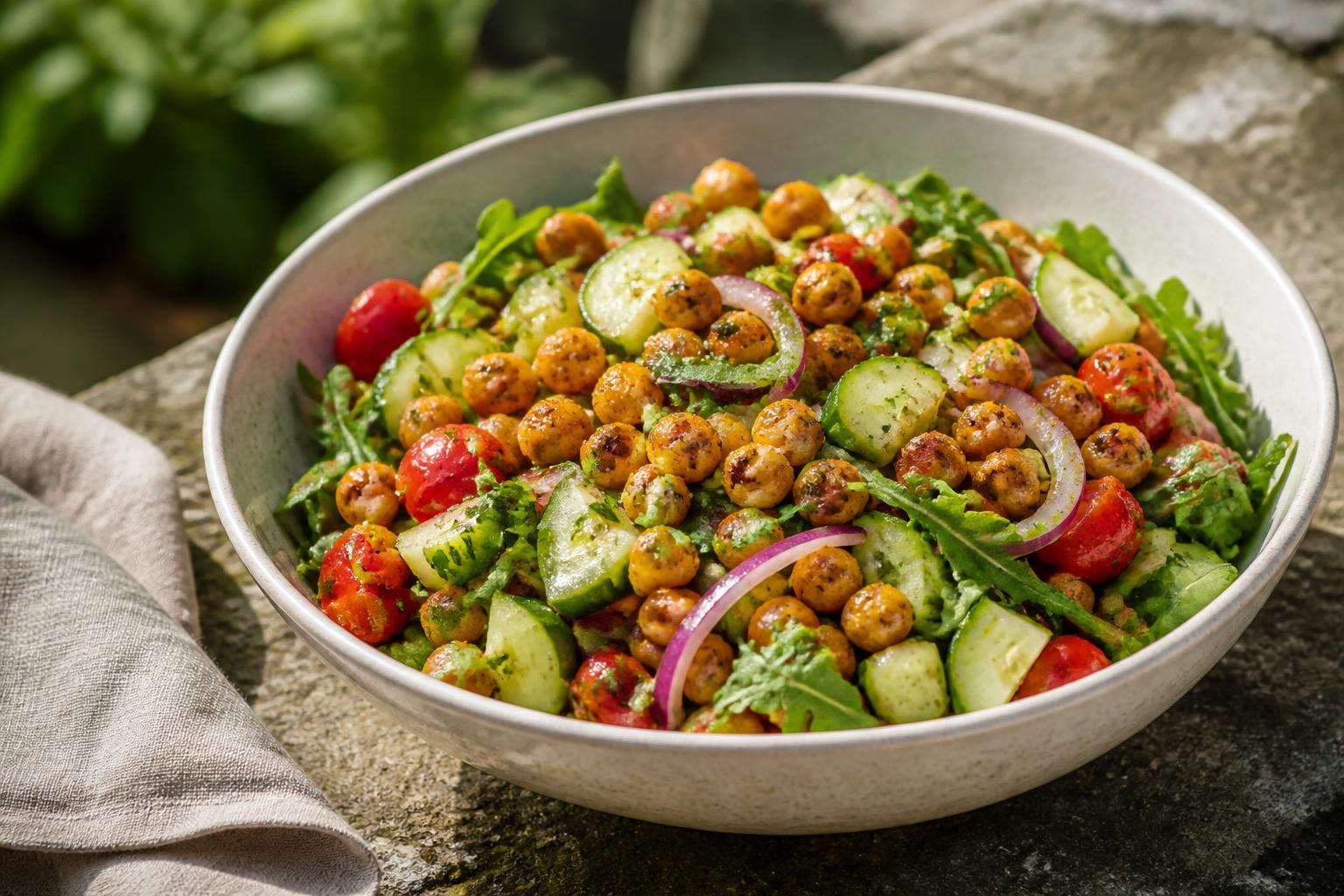
A good roasted chickpeas salad lives or dies on texture. The chickpeas need a proper shell-like crunch, the leaves need to stay lively, and the dressing has to coat rather than drown. If you get that balance right, you do not need a rigid recipe. You need a method.
The short version is this: roast the chickpeas until genuinely crisp, cool them before combining, keep wet ingredients separate for as long as possible, and build the salad with contrast in mind. That is what stops a promising lunch turning into a soft, steamy bowl by half past one.
What makes a roasted chickpeas salad work
The best version of this salad is not simply “salad plus chickpeas”. It works because every part brings something different. Roasted chickpeas give crunch and a savoury, nutty edge. Leaves bring freshness and bitterness. Raw vegetables add snap and water. Grains or roasted roots make it more substantial. Herbs lift the whole thing so it does not feel heavy.
That is why texture matters more than any fixed list of ingredients. If everything in the bowl is soft, the chickpeas feel out of place for about five minutes and then go chewy. If everything is hard and dry, the salad becomes worthy rather than enjoyable. We want contrast, not conflict.
A useful way to build one is to think in layers:
- a crisp element, the roasted chickpeas
- a fresh element, such as lettuce, rocket, watercress or cucumber
- a sweet or juicy element, such as tomatoes, roasted peppers or grated carrot
- a grounding element, such as bulgur wheat, brown rice or quinoa
- a sharp element, such as lemon, pickled onion or a yoghurt dressing
- a fragrant finish, such as parsley, mint, coriander or dill
That framework gives you room to use what you already have. It also helps explain why some combinations feel naturally satisfying. Chickpeas are earthy and savoury once roasted, so they benefit from ingredients that either brighten them or echo that toasted flavour. Lemon, tahini, cumin, parsley, radishes, roasted aubergine, fennel, cherry tomatoes and toasted seeds all make sense for that reason.
It is also worth deciding what role the chickpeas are playing. In some salads they replace croutons, adding crunch on top. In others they act as the main protein-rich ingredient, with grains and vegetables underneath. Those are different jobs, and the rest of the bowl should adjust accordingly. If the chickpeas are the main event, the dressing can be fuller and the vegetables more varied. If they are the crunchy topper, keep the rest simple so that crunch still stands out.
For readers who like chickpeas in other crisp formats too, we have covered why roasted chickpeas suit everyday snacking in more detail elsewhere.
How to get chickpeas crisp enough for salad
This is the part most likely to go wrong, because “roasted” and “crisp” are not the same thing. Plenty of home-roasted chickpeas taste fine but never become properly crunchy. For salad, that difference matters.
Start with cooked chickpeas, usually from a tin or jar for convenience. Drain them well, rinse if you like, and dry them thoroughly. That last step is not fussy, it is essential. Spread them on a clean tea towel or kitchen paper and rub them dry. If a few skins come loose, that is helpful rather than harmful. Those loose skins can trap steam and interfere with crisping, so remove them if you have the patience, but do not hold up lunch for it.
The main things that affect texture are:
- how dry the chickpeas are before roasting
- how crowded the tray is
- how much oil you use
- how long you roast them
- whether you season before or after roasting
- how much steam they meet once cooked
Use only a light coating of oil. Too much oil can make them roast unevenly and stay a little dense. A teaspoon or two for a drained tin is usually enough, just enough to help browning and carry seasoning.
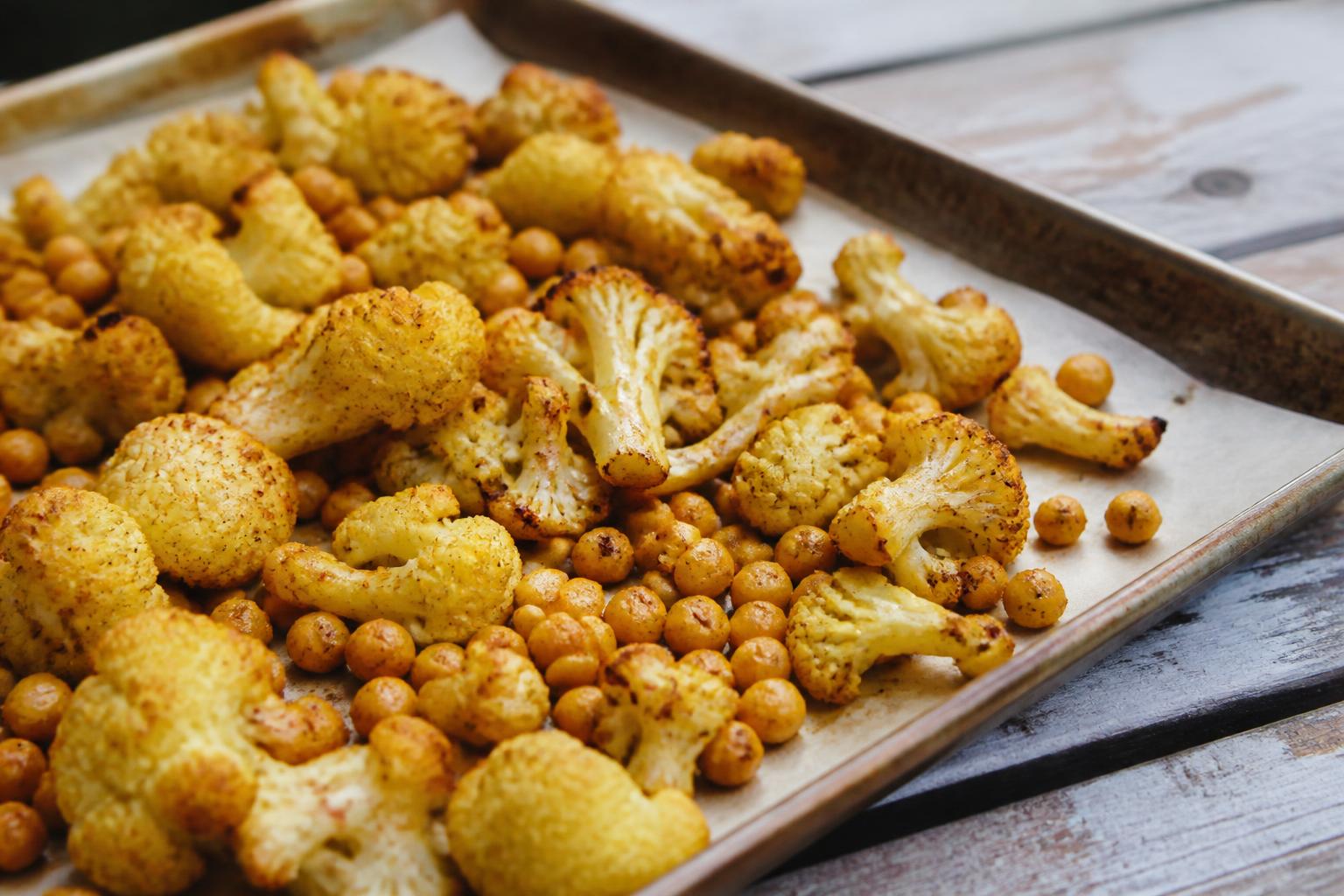
Roast them on a large tray in a single layer. If they are piled up, they steam. A hot oven helps, and so does giving them enough time. The exact timing varies by oven and by how moist the chickpeas were to begin with, so colour alone is not a reliable guide. You are looking for a dry outer shell and a chickpea that feels light rather than plush when you bite into it.
If you are using spices, there are two good approaches. Either roast the chickpeas plain or with oil and salt, then toss with dry spices while still warm, or add robust spices partway through roasting. Delicate spice mixes can catch and turn bitter if they spend too long in a hot oven. Salt is also worth thinking about. Salting before roasting is convenient, but a final light seasoning after roasting can preserve a crisper finish.
Then comes the crucial step people skip. Cool them completely before they go anywhere near the salad. Warm chickpeas throw off steam. Steam softens crusts. If you put hot roasted chickpeas straight on leaves or into a lunchbox, you create the exact damp environment you were trying to avoid.
Even perfectly roasted chickpeas will soften after dressing. That is normal. They are dry, the dressing is wet, and moisture always starts moving. The aim is not to keep them identical to the second they left the oven. The aim is to give them enough structural crunch that they still feel crisp when eaten. That is why truly roasting them matters.
If you prefer an air fryer, the same principles apply, and we have a fuller guide to air fryer roasted chickpeas that stay crisp for longer. For spice-heavy batches, our piece on roasting spiced chickpeas so they stay crisp longer is useful too.
Which ingredients pair best with roasted chickpeas
Because roasted chickpeas are dry, savoury and nutty, they work best with ingredients that either refresh the palate or reinforce those toasted notes.
For leaves, choose sturdier options if the salad needs to sit for a while. Romaine, little gem, chicory, kale, cavolo nero, spinach and shredded cabbage all hold up better than very delicate mixed leaves. Rocket and watercress are lovely for flavour, especially with lemony dressings, but they wilt faster. If you want a lunchbox salad that still feels perky later on, use them in smaller amounts or combine them with tougher leaves.
For grains, go for ones that stay separate rather than claggy. Bulgur wheat is particularly good because it is light and fluffy, and it drinks in dressing without turning stodgy. Quinoa works well too, especially with herbs and citrus. Brown rice is a sturdier option for a more filling lunch. Pearl couscous can work, but only if you keep it well cooled and not overcooked, otherwise the whole salad starts leaning soft.
Vegetables are where you can create contrast. Good raw options include:
- cucumber, for cool crunch
- radishes, for peppery bite
- fennel, thinly sliced, for freshness
- carrots, grated or ribboned
- red cabbage, finely shredded
- celery, for savoury crispness
Roasted vegetables can also be excellent, but choose them carefully. Soft roasted courgettes plus soft grains plus dressed leaves can flatten the texture. Better options are roasted cauliflower, squash done until caramelised at the edges, or peppers that bring sweetness without collapsing into the bowl. If you are combining two roasted elements, think about moisture management even more carefully.
Herbs make a bigger difference than many people expect. Parsley gives lift without taking over. Mint is brilliant with lemon, cucumber and yoghurt. Coriander works well with chilli, lime and cumin. Dill suits cucumber, beetroot and yoghurt-based dressings. A handful of fresh herbs often does more for balance than extra salt.
Dressings should be punchy but controlled. Roasted chickpeas can stand up to strong flavours, but the dressing needs to cling rather than pool. Good options include:
- lemon and olive oil with a little Dijon mustard
- tahini loosened with lemon juice and water
- Greek yoghurt with garlic, lemon and herbs
- sherry vinegar with olive oil and a touch of honey
- pomegranate molasses with lemon and sumac
Very sugary dressings can make the salad feel oddly snack-like, while heavy creamy dressings can quickly blunt the crispness you worked for. A sharper dressing usually keeps the whole bowl feeling brighter.
Cheese can work too, in moderation. Feta brings salt and tang. Halloumi adds chew if served freshly cooked, though it is best in a same-day salad rather than a packed lunch. Hard cheeses shaved over the top can add savoury depth without making the salad heavy.
Nuts and seeds are optional, but if you use them, do it with intention. Roasted chickpeas already bring crunch, so extra crunchy elements should add a different flavour or shape. Pumpkin seeds, flaked almonds and sesame seeds all fit well.
How to stop the salad going soggy
If we are making a roasted chickpeas salad for immediate eating, the rule is simple. Dress the leaves lightly, add the chickpeas at the end, and serve straight away.
For lunchboxes and make-ahead meals, assembly matters more. The easiest way to keep everything pleasant is to pack the components separately whenever possible. Put the dressing in a small leakproof pot. Keep the roasted chickpeas in their own dry container or paper-lined compartment. Combine just before eating.
If you need to assemble the whole thing in advance, build from wettest to driest. Start with grains or firm vegetables at the bottom, then sturdier leaves, then herbs, then the chickpeas on top. Keep tomatoes, cucumber and any pickled ingredients away from the chickpeas as much as you can. Their moisture migrates quickly.
A few practical steps help a lot:
- cool every cooked ingredient fully before packing
- dry washed leaves properly in a spinner or with a clean tea towel
- use less dressing than you think, then add more at the table if needed
- salt watery vegetables just before serving, not hours ahead
- avoid sealing warm food in a container, which traps condensation
- store chickpeas at room temperature for short periods if they are fully dry, rather than refrigerating them and making them lose crunch
That last point needs a bit of judgement. If the chickpeas are plain roasted and you are using them the same day, a loosely covered container at cool room temperature usually preserves texture better than the fridge. Once they are mixed into the salad, though, the whole dish should be chilled if it is being stored for later. For food safety, do not leave dressed salads sitting out for long, especially if they contain dairy dressings, cooked grains, or cut ingredients that have been standing around in a warm kitchen.
For same-day meal prep, a layered jar or box can work well. Put dressing at the bottom, then grains or beans, then robust vegetables, then leaves, and keep the chickpeas completely separate until eating. Shake the salad, then scatter the chickpeas over the top.
If your chickpeas have softened a little but are otherwise fine, you can often rescue them with a short return to a hot oven or air fryer, then cool them again before serving. They will not always come back to their first-day best, but they can regain enough crunch to do the job.
We use the same anti-sogginess logic in other crunchy vegetable dishes too. If that is your sort of kitchen problem, our guide to making roasted cauliflower and chickpeas stay crisp follows the same principles.
Is roasted chickpeas salad a healthy lunch
In broad terms, yes, it can be a healthy lunch. But that depends on what goes into it, how much dressing and salt you use, and what else you eat across the day.
Chickpeas are pulses, and pulses are widely encouraged in UK healthy eating guidance. They provide fibre and contribute to a balanced diet. They can also help make a salad more filling than leaves alone, which is often the difference between a satisfying lunch and a desk-drawer biscuit hunt at three o’clock.
A few points are worth keeping clear.
First, roasting chickpeas does not make them unhealthy by default. It usually means adding some oil and seasoning, and those choices affect the final dish. A modest amount of oil can fit perfectly well into a balanced meal. Heavy oil, lots of salt, and sweet glazes push the salad in a different direction.
Second, fibre is one of the strongest nutritional arguments for a chickpea-based lunch, but it is best seen in context. A salad with chickpeas, vegetables, herbs and a wholegrain base is generally doing several useful things at once. It is not only about protein or only about calories. It is about the overall pattern of eating.
Third, salt matters. Tinned chickpeas can already contain salt, and then we season them again for roasting, and then perhaps add feta, olives or a salty dressing. If you are watching salt intake, it is worth checking labels and tasting before automatically adding more. In the UK, public health advice continues to support keeping salt intake in check, and salads can become surprisingly salty without seeming so.
Fourth, balance matters more than the health halo of any one ingredient. A bowl of heavily dressed leaves with a few chickpeas sprinkled on top is still mostly a light salad. A bowl with chickpeas, grains, vegetables and a measured dressing is more likely to keep you going through the afternoon. Whether that is right for you depends on appetite, activity, and what the rest of your day looks like.
If you are trying to make lunch more practical as well as more nourishing, consistency usually beats perfection. A roasted chickpeas salad is useful because it can be built from cupboard ingredients, adapted around leftovers, and packed for work without much fuss, provided you keep the wet and dry elements under control. That makes it easier to repeat, and repeatable meals are often where healthy habits actually stick. We have more on that in our piece about healthy habits that fit a busy UK day.
One final note on public-health language. It is reasonable to say that chickpeas contribute fibre, that pulses are a helpful part of a balanced diet, and that oil and salt are worth keeping an eye on. It is less useful to talk as if one salad can guarantee specific health outcomes. Food does not work like a switch. What we can say with confidence is that a well-built roasted chickpeas salad can be a satisfying, practical lunch, and a much crunchier one than most.
If you treat crispness as part of the recipe rather than an afterthought, the whole dish improves. Roast the chickpeas properly. Let them cool. Pair them with sturdy, lively ingredients. Add dressing with restraint. Then your salad keeps the thing that made you want it in the first place, that toasted, savoury crunch.

Questions about this article or a correction to suggest? Get in touch. Read more about our editorial approach.