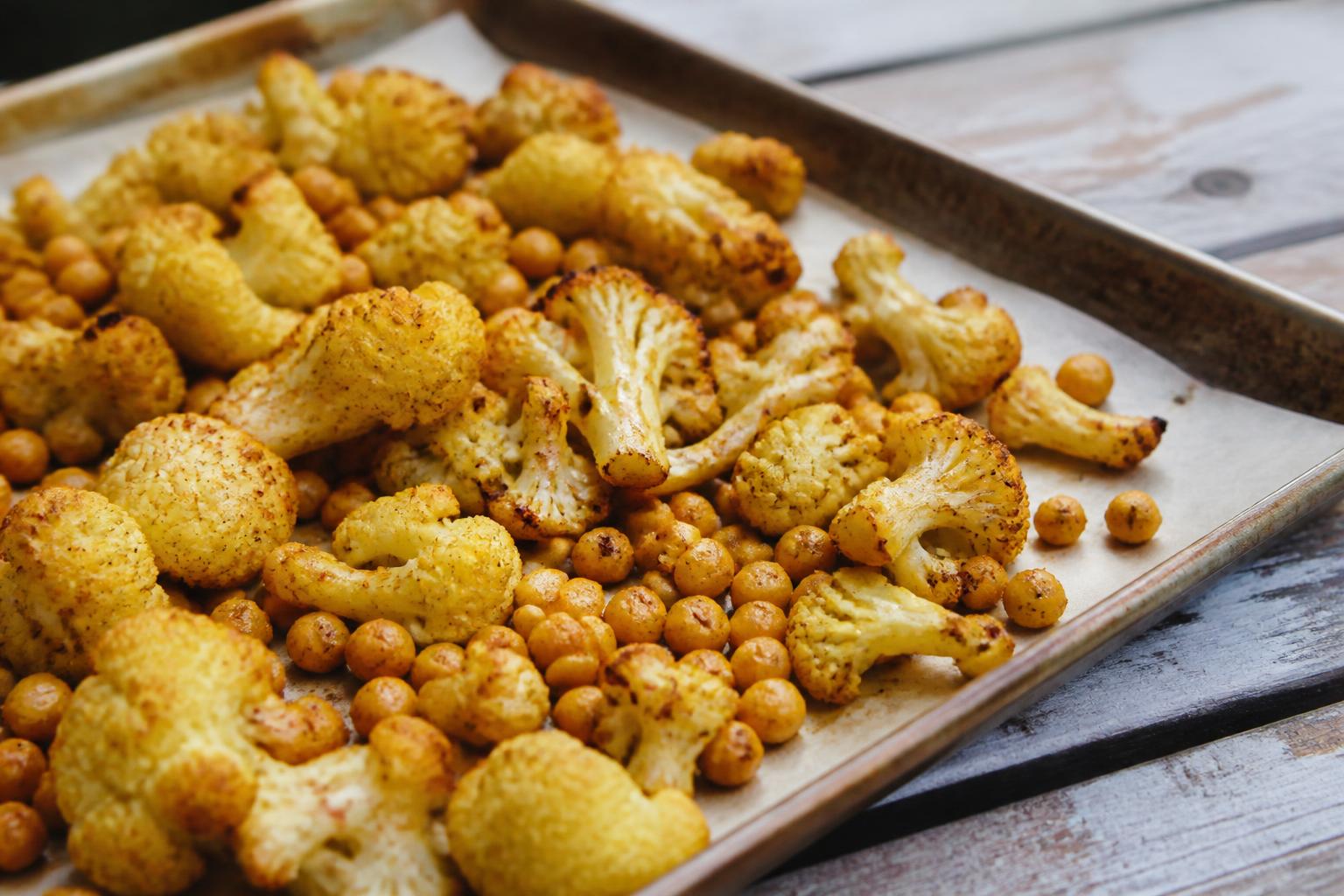
If you want roasted cauliflower and chickpeas to stay crisp, the main job is getting rid of surface moisture before they ever go into the oven, then roasting them hot enough and with enough space that they brown rather than steam. Cauliflower needs dry florets, a light coating of oil, and a tray that is not overcrowded. Chickpeas need even more drying, restrained seasoning at the start, and a little cooling time after roasting so their shells firm up properly.
The other useful trick is to treat them as two ingredients with different needs, not one single tray bake that must behave the same way throughout. Cauliflower wants tenderness in the middle and caramelised edges. Chickpeas want a dry, crackly shell. Once you roast each with that in mind, roasted cauliflower and chickpeas become one of the easiest crunchy, savoury combinations to keep in regular rotation.
Why this pairing works so well
Cauliflower and chickpeas work together because they bring different kinds of texture to the same plate. Cauliflower gives you broad, browned surfaces, soft centres, and those nutty, almost toasted notes that come out when the edges catch a little. Chickpeas bring the pop and bite. When they are roasted well, they add a proper crunchy contrast rather than just filling space.
Flavour-wise, both are excellent at taking on seasoning without becoming fussy. Cauliflower has a mild, slightly sweet brassica flavour that works with warm spices, herbs, citrus, chilli, garlic, and cheese. Chickpeas are earthy and savoury, and can lean in almost any direction. Put them together and you get a base that can go Mediterranean, Indian-inspired, Middle Eastern, smoky, sharp, or plainly salty with black pepper.
For UK home cooks, this pairing is also practical. Cauliflower is easy to find year-round in supermarkets and greengrocers, and tinned chickpeas are one of the handiest cupboard ingredients going. You can turn them into a tray of something substantial without much prep, and they fit all sorts of everyday meals. They can become a warm lunch with grains, a side for roast chicken or fish, a topping for soup, or a snacky bowl eaten standing at the kitchen counter while supper finishes.
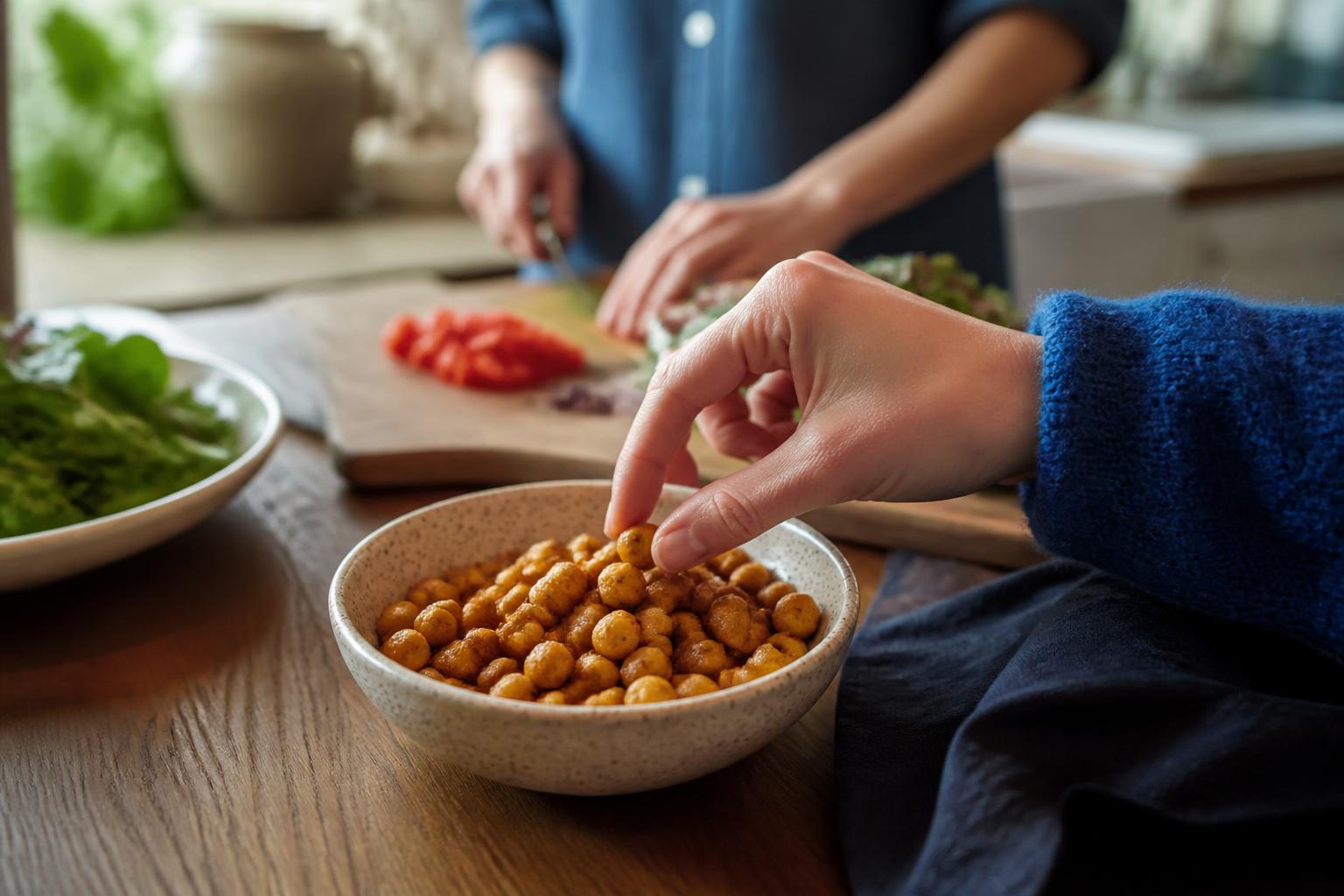
It also helps that both ingredients feel satisfying without being heavy. If you are trying to build more crunch into everyday meals without reaching straight for crisps or crackers, roasted cauliflower and chickpeas do a lot of work. We have covered the chickpea side in more detail in our guide to why roasted chickpeas make such a useful everyday snack, and the same logic applies here, you get texture, flavour, and convenience from ingredients many people already keep at home.
How to get crisp cauliflower without drying it out
The best roasted cauliflower starts with the cut. Aim for medium florets with at least one flat side where possible. Tiny bits burn before the thicker pieces are tender, and very large florets can steam in the middle before the outside colours. If a head gives you a mix of sizes, halve the largest florets and keep the smallest whole.
Next comes drying, and this matters more than many recipes admit. After washing, or if the cauliflower is at all damp from packaging, dry it thoroughly with a clean tea towel or kitchen paper. Water clinging to the florets turns into steam in the oven, and steam is the enemy of crisp edges. If you have time, leave the florets spread out on a tray or board for 10 to 15 minutes before oiling.
Use enough oil to coat, but not enough to soak. For one medium cauliflower, 1 to 2 tablespoons of oil is usually plenty. Toss until the florets look lightly glossy rather than wet. Too little oil and the surfaces can turn dry and papery before they brown. Too much and they fry softly on the tray instead of roasting cleanly.
Season simply at first. Salt, pepper, and perhaps a little garlic granules or ground cumin are fine. If you add sugary ingredients, wet marinades, or lots of fresh garlic from the start, they can catch before the cauliflower is done. Save delicate or sticky flavourings for later.
Roast at a high heat, usually 220C in a conventional oven, or 200C fan in most UK ovens. If your oven runs hot, 190C to 200C fan may suit better, but the general idea is the same, you need enough heat for browning. A preheated tray helps. If you slide cauliflower onto a hot metal tray, the side in contact with the surface starts roasting immediately instead of sitting there sweating.
Turn only once, or at most twice. Constant stirring interrupts browning. Give the first side time to colour, usually 15 to 20 minutes, then turn and finish until the edges are deep golden and the stems are tender. Total roasting time is often 25 to 35 minutes depending on floret size and oven behaviour.
If your cauliflower browns too fast before it softens, the florets are probably too small, the tray too low in the oven, or the heat too fierce for that batch. If it softens but never crisps, it is usually too damp, too crowded, or too heavily oiled.
How to roast chickpeas so they stay crunchy longer
Chickpeas ask for a slightly fussier method, but it is worth it. Start with tinned chickpeas, drain them well, and rinse if you like. Then dry them properly. Tip them onto a clean tea towel or layers of kitchen paper and rub gently. You are not trying to mash them, just remove moisture and loosen any skins.
Those loose skins are worth discarding where practical. You do not need to obsess over every one, but removing the obvious papery skins helps the chickpeas roast more evenly and crisp more cleanly. After drying, let them air dry for another 10 to 20 minutes if you can. This small pause often makes a noticeable difference.
Use less oil than people expect. For a standard 400g tin, once drained, 1 to 2 teaspoons is often enough. Too much oil can make chickpeas feel heavy and leathery rather than crisp. Toss them until lightly coated, then season with salt and dry spices. If your spice mix includes a lot of fine powder, such as smoked paprika, curry powder, or ground coriander, keep the coating light. A thick spice paste traps moisture.
Roast chickpeas hot, but not so hot that the outside hardens before the middle dries. Around 200C fan works well in many ovens. Roast for 25 to 35 minutes, shaking once or twice. They should look slightly smaller, feel dry on the outside, and sound a little rattly on the tray.
One detail many people miss is the cooling stage. Chickpeas continue to crisp as they cool. If you judge them only while they are piping hot, you may pull them too early. Let them cool on the tray or on a wire rack for 10 minutes and test one then. If they still feel soft in the shell, return them to the oven for another 5 to 10 minutes.
To keep them crunchy longer, avoid adding lemon juice, vinegar, honey, or maple syrup before roasting. These are lovely flavours, but they shorten the crisp window. Add them only if you plan to serve and eat straight away. For spice-led versions, our guide on roasting spiced chickpeas so they stay crisp for longer goes deeper into how dry seasoning behaves during roasting.
The tray setup that stops everything steaming
Tray setup is where crispness is won or lost. The right oven temperature matters, but so does the metal under the food and the amount of space around it.
Choose a large, shallow metal baking tray rather than a deep roasting tin. Deep-sided tins trap more steam. Heavy metal trays brown better than thin, flimsy ones, and dark trays often colour food faster than pale aluminium. Lining with baking parchment can make cleanup easier, but bare metal generally gives the best direct contact for browning. If you use parchment, do not let it wrinkle up into little walls that trap moisture.
Spacing matters more than most people think. Every piece should have room around it. If the cauliflower or chickpeas are piled too close, their released moisture has nowhere to go. Instead of roasting, they sweat. If needed, use two trays. It is better to wash an extra tray than to spend half an hour producing soft vegetables.
As for whether cauliflower and chickpeas should share a tray, usually no, not if crispness is the goal. Cauliflower releases more moisture than chickpeas and often needs a different timing and a different amount of oil. Roasting them separately gives you much more control. You can always combine them for the last few minutes if you want the flavours to mingle.
If you do want to use one tray, keep them in distinct zones with clear space between them, and add the chickpeas later. Put the cauliflower in first, let it roast until it has started to dry and colour, then add the chickpeas for the last 15 to 20 minutes. This is still a compromise, but it works better than starting both together.
Shelf position helps too. The middle shelf is usually safest for even roasting. Too low and the bottoms may overbrown before the tops dry. Too high and spices can catch quickly. If your oven has hot spots, rotate the tray once during cooking.
Do not cover the tray, and do not stack hot roasted ingredients in a bowl straight from the oven if you want to preserve crispness. Steam trapped in the bowl will soften the lot within minutes.
Seasonings and serving ideas that keep the texture
The most texture-friendly seasonings are dry ones added before roasting, then fresh finishing touches added just before serving. Think ground cumin, coriander, smoked paprika, chilli flakes, black pepper, mustard powder, garlic granules, onion granules, dried oregano, za'atar, or a little curry powder. Finely grated Parmesan can work too, but add it late so it toasts rather than burns.
A few combinations that work especially well are:
- Cumin, coriander, black pepper, and lemon zest added after roasting
- Smoked paprika, garlic granules, and a pinch of chilli flakes
- Mild curry powder and turmeric, with fresh coriander added at the table
- Za'atar, then a spoonful of thick yoghurt on the side rather than poured over
- Parmesan, black pepper, and a squeeze of lemon served separately
The key is keeping wet ingredients under control until the last moment. Lemon juice, tahini dressing, yoghurt, hot sauce, chutney, and vinaigrette all taste good, but they soften crisp surfaces quickly. Serve them alongside, drizzle lightly at the table, or spoon them underneath rather than over the top.
For meals, try the mix over couscous or bulgur with herbs, tucked into flatbreads with crunchy lettuce, or scattered over a thick soup just before serving. It also works well as part of a snack plate with hummus, but keep the chickpeas and cauliflower separate from the dip until you eat them.
If crisp textures are your thing generally, our pieces on making vegetable crisps that stay crisp and healthy habits that fit a busy UK day both touch on the same principle, texture holds up better when moisture is managed from the start.
Storage, reheating and food safety basics
Fresh from the oven is when roasted cauliflower and chickpeas are at their best. Chickpeas may stay crunchy for a few hours if kept uncovered and dry. Cauliflower holds its crisp edges for less time, because its interior moisture gradually softens the crust.
If you have leftovers, cool them promptly. In UK food safety guidance, the practical rule at home is not to leave cooked food sitting out for hours. Once steam has stopped rising, transfer leftovers to the fridge in a covered container and eat within 2 days for best quality. If the dish includes added dairy sauces or other perishable toppings, be more cautious and refrigerate promptly.
Do not seal piping hot food in a container, because trapped condensation will soften everything. Let it cool enough that it is no longer steaming heavily, then store. Better still, store cauliflower and chickpeas separately if possible. Chickpeas keep their texture better that way.
For reheating, the oven is better than the microwave. Spread leftovers on a tray and heat at about 200C, or 180C fan, until hot through and re-crisped, usually 8 to 12 minutes depending on quantity. An air fryer also works well for small amounts. The microwave will warm them, but it softens rather than revives crispness.
Be realistic about what comes back. Chickpeas can regain a fair amount of crunch. Cauliflower can recover some browned edges, but it rarely returns to that first-day balance of crisp outside and tender centre. It is still good, just different.
If anything smells off, feels slimy, or has been left out too long, do not try to rescue it by reheating. Reheating improves temperature, not freshness or safety. And if you are batch cooking, only reheat the portion you plan to eat, rather than repeatedly warming and cooling the same container.
The short version is simple. Dry both ingredients well, roast them hot with space around them, and do not drown them in wet seasoning too early. Do that, and roasted cauliflower and chickpeas will give you exactly what you wanted, crisp edges, crunchy bites, and a tray that tastes far bigger than the effort it took.

Questions about this article or a correction to suggest? Get in touch. Read more about our editorial approach.