Healthy habits do not need a sunrise workout, a fridge full of matching tubs, or the willpower of a saint. In a busy UK day, they usually look much less dramatic. They are the ordinary things that happen often enough to support how you feel, eat, move and rest, even when work runs late, the school run shifts, or dinner ends up being assembled rather than cooked.
What matters most is not building a perfect routine, but building one you can repeat on a Tuesday in February as easily as on a motivated Sunday in June. That means meals that keep you steady, snacks that serve a purpose, enough water, enough sleep when possible, and a few cues that make the better choice the easier one. Those are the healthy habits that tend to last.
What healthy habits really look like in everyday life
When people picture healthy habits, they often imagine an ideal version of daily life. Plenty of time, uninterrupted mornings, fresh lunches packed in glass containers, and a long evening walk before an early bedtime. Lovely, if available. Not especially useful if your real day involves commuting, meetings, caring responsibilities, late shifts, or simply mental clutter.
In practice, healthy habits are repeatable actions that support your wellbeing without needing constant decision-making. They are small enough to survive a busy week and solid enough to make a difference over time.
That might mean:
- eating breakfast because you know skipping it leaves you raiding the biscuit tin at 10.30
- keeping a bottle of water on your desk because otherwise the whole morning disappears
- having a planned afternoon snack so you arrive at dinner pleasantly hungry, not absolutely ravenous
- going to bed at a roughly similar time on work nights
- adding a ten minute walk after lunch because it clears your head as much as it moves your legs
The useful test is simple. Can you do it regularly in your actual life? If yes, it has more value than a grand routine you manage twice a month.
This is also why all-or-nothing thinking gets in the way. One takeaway, one skipped workout, or one chaotic day does not cancel out your efforts. Healthy habits are not fragile. They work because they are flexible. We do not need every choice to be perfect. We need enough decent choices, often enough, that the overall pattern looks after us.
There is also a difference between habits that look healthy and habits that feel supportive. A lunch that is technically virtuous but leaves you hungry an hour later is not doing much for your afternoon. A snack that tastes good, travels well and stops the 4 pm slump may be far more helpful. Real life counts.
How to build better eating habits without overthinking food
Better eating habits usually begin with rhythm, not restriction. In the UK, the Eatwell Guide remains a practical place to start. It points towards meals built around vegetables and fruit, higher fibre starchy carbohydrates, beans, pulses, fish, eggs, leaner proteins, dairy or fortified alternatives, and unsaturated oils in small amounts. You do not need to memorise a wheel chart at lunchtime, but the principle is useful. Aim for meals that combine fibre, protein and enough substance to keep you going.
A balanced breakfast could be porridge with fruit and seeds, wholemeal toast with eggs, or yoghurt with oats and berries. A balanced lunch might be soup and a sandwich with some salad, a rice bowl with chicken or beans, or leftovers that include a carbohydrate source, vegetables and protein. Dinner can be just as straightforward, jacket potatoes with tuna and sweetcorn, pasta with lentils and tomato sauce, or a stir fry with veg and tofu.
Regular eating patterns help more than many people realise. If you routinely go long stretches without eating, hunger can swing from background hum to full brass band. That is when sensible portions become harder to judge and convenience starts shouting louder than intention. For many adults, three meals a day with one or two planned snacks works well. Others prefer smaller, more frequent meals. The exact shape matters less than finding a pattern that keeps energy and appetite reasonably steady.
Portion size does not need to become a maths exercise. A practical approach is to notice whether meals are satisfying for a useful length of time. If lunch leaves you peering into cupboards at 3 pm, it may need more protein, more fibre, or simply more food. If dinner regularly feels uncomfortably heavy, you may be eating too fast or serving more than you need. The goal is comfortable fullness, not stuffed, not still hungry.
A few simple habits make everyday eating easier:
- include a source of protein in meals, such as eggs, yoghurt, fish, chicken, tofu, beans or lentils
- choose higher fibre carbs often, such as porridge oats, wholemeal bread, brown rice, wholewheat pasta or potatoes with skins
- add fruit or vegetables where it fits naturally, not as a punishment side quest
- keep regular meal times when possible, especially on workdays
- avoid saving all your food for the evening if it leaves you low on energy earlier in the day
In the UK, food labelling can also help when you are choosing packaged items quickly. Front-of-pack traffic light labels give a rough guide to fat, saturates, sugars and salt per serving or per 100g. They are not a moral verdict, but they can help you compare similar products on a supermarket shelf. If you are choosing between two soups, wraps or snack pots, they are handy.
One point where UK guidance can differ from broader EU habits is fortification and labelling culture. UK shoppers will often see stronger public messaging around the Eatwell Guide and traffic light labels, while parts of the EU may lean more on different front-of-pack systems or country-specific dietary patterns. If you are reading advice from a general European source, it is worth translating it back into what is common and clearly labelled here.
Where snacks fit into a healthy routine
Snacks are not a dietary flaw. They are tools. Used well, they can bridge long gaps between meals, prevent the late afternoon nosedive, and stop hunger from building to the point where dinner becomes a speed event.
The key is purpose. A snack works best when it answers a real need. Are you genuinely hungry? Do you need something portable before a train home? Are you about to exercise? Did lunch happen at your desk in seven distracted minutes and now your stomach is filing a complaint?
Good snacks usually do one or more of three things. They take the edge off hunger, provide steady energy, or help you hold out comfortably until the next meal. That often means combining carbohydrate for quick usefulness with protein, fibre or fat for staying power.
Examples include:
- an apple with peanut butter
- yoghurt with fruit
- oatcakes with hummus
- a banana and a handful of nuts
- cheese with wholegrain crackers
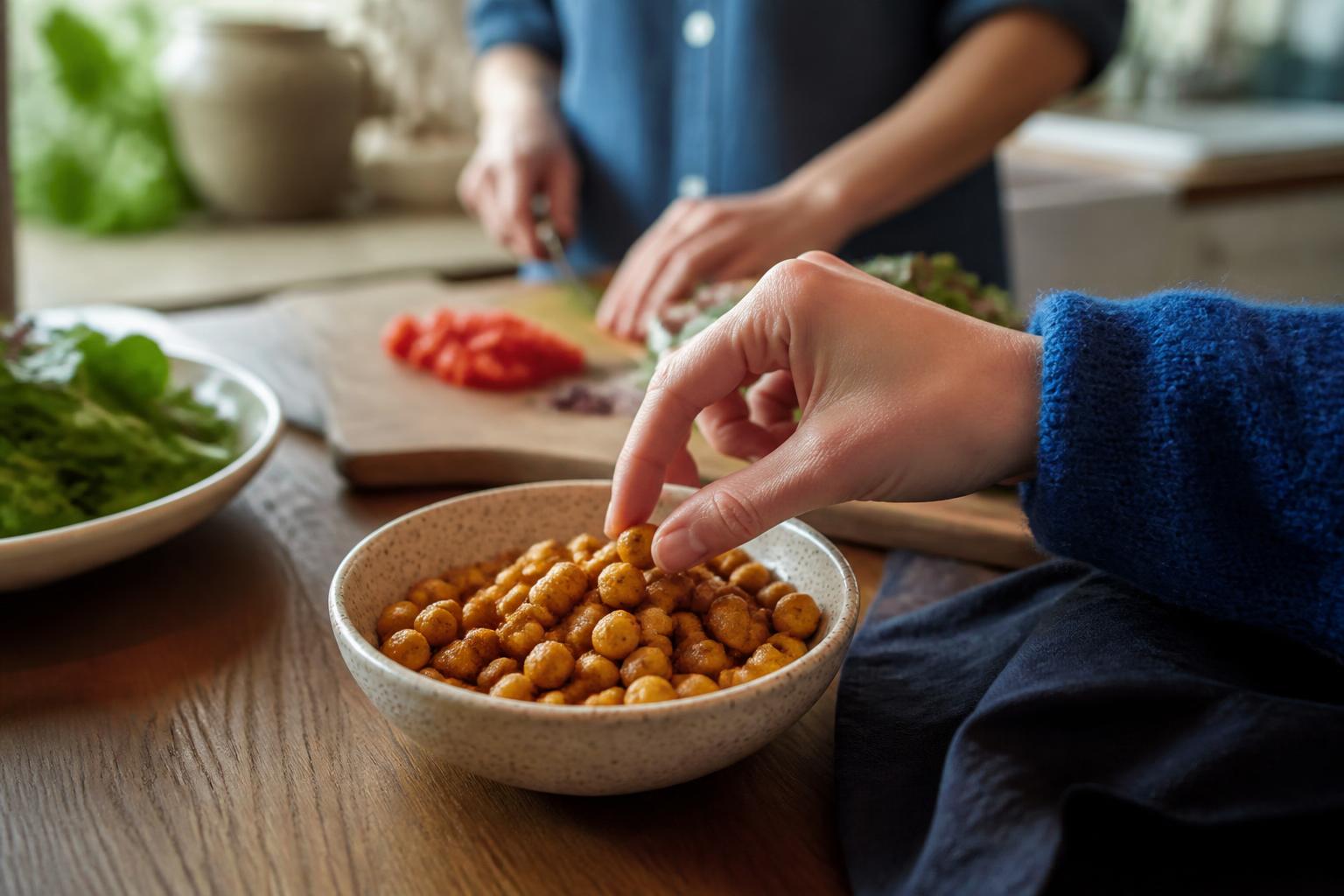
- roasted chickpeas
- a small pot of cottage cheese with cherry tomatoes
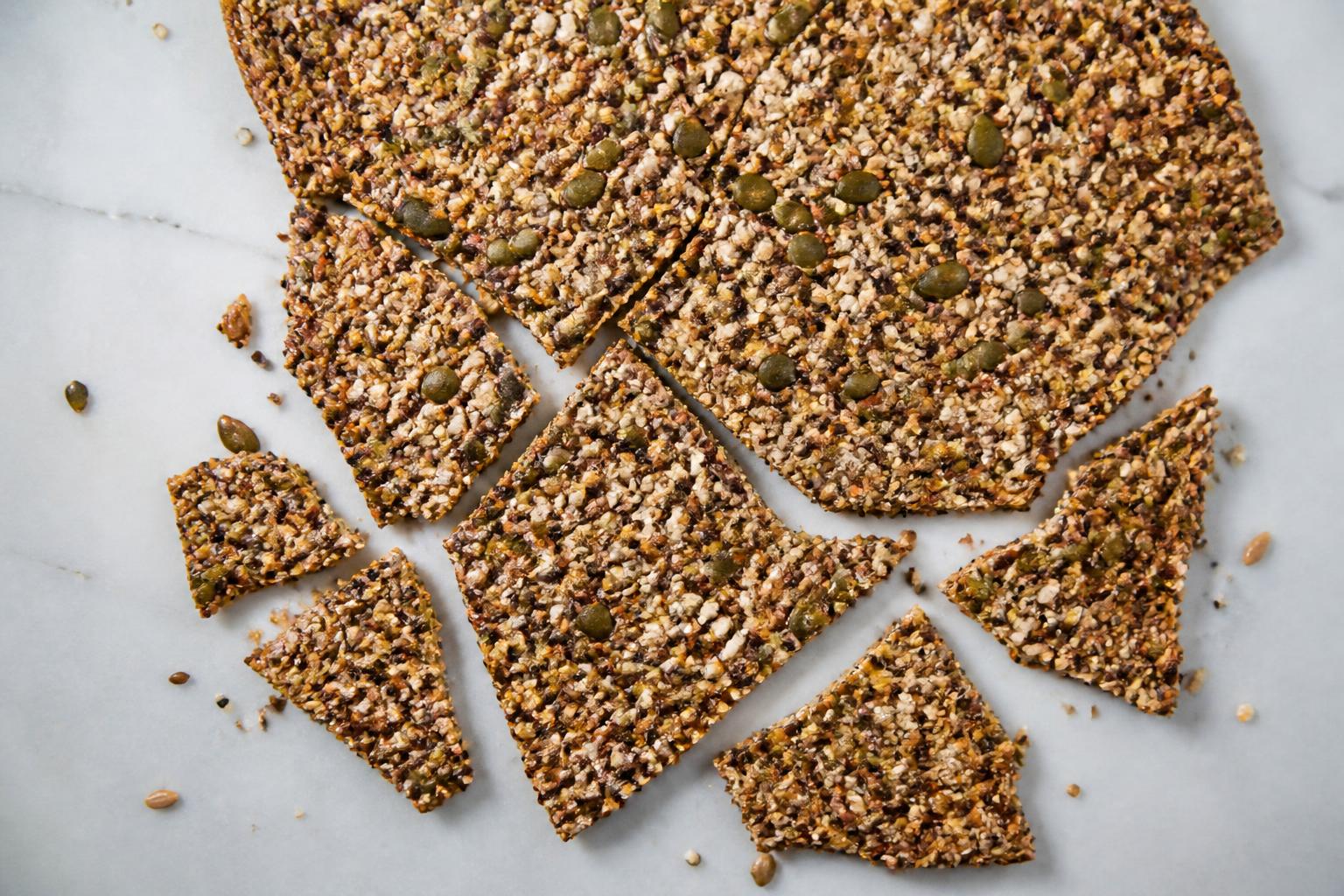
Texture matters too. Crisp, crunchy foods can be especially satisfying because they feel substantial and snack-like in the best sense. If you enjoy savoury options, our guide to healthy savoury snacks that keep everyday choices simple is a useful place to start. If you need ideas that travel well and suit real workdays, we have also pulled together healthy snack ideas for adults that actually fit real days.
Timing makes a difference. A planned mid-morning or mid-afternoon snack can be genuinely helpful if meals are far apart. Constant grazing, on the other hand, can leave you oddly unsatisfied because eating never quite begins or ends. We tend to do better when snacks are deliberate. Put them on a plate or in a portion you can see, sit down if possible, and notice that you are eating them.
It is also worth dropping the idea that snacks must be either saintly or silly. A healthy routine can include foods that feel enjoyable. The better question is whether the snack matches the moment. A chocolate bar might be exactly what you fancy, but if you need something to keep you going through a long meeting, a more balanced option may serve you better first. Pleasure and practicality can coexist.
If you are curious about snacks with more staying power, our piece on healthy high-protein snacks that actually fit real life covers options that work without turning snack time into a gym brochure.
Which daily habits support energy beyond food?
Food matters, but it is only one part of the energy picture. Many people chase better meals when what they also need is more sleep, more movement, more water, or a more predictable rhythm to the day.
Movement is one of the quickest ways to support energy, mood and concentration. That does not have to mean formal exercise. Walking part of the commute, taking the stairs, stretching while the kettle boils, or stepping outside for ten minutes after lunch all count. In the UK, adults are generally advised to aim for at least 150 minutes of moderate intensity activity a week, or 75 minutes of vigorous activity, plus strength work on two or more days. Useful target, yes. But for everyday life, the more immediate win is reducing long stretches of sitting where you can.
Sleep is another quiet giant. If sleep is patchy, appetite can feel louder, cravings can feel sharper, and patience for planning tends to evaporate. Most adults need roughly seven to nine hours, though individual needs vary. The habit piece is not just total hours, but regularity. Going to bed and getting up at broadly similar times helps more than dramatic catch-up attempts at the weekend.
Hydration is easy to overlook because the signs can be vague. Tiredness, headaches, poor concentration and that slightly stale feeling can all be made worse by not drinking enough. In UK guidance, around six to eight cups or glasses of fluid a day is often used as a general benchmark, more in hot weather or with exercise. Water, lower fat milk, tea, coffee and sugar-free drinks all contribute. If you drink caffeine, notice your own cut-off time. For some people, a late afternoon coffee is perfectly manageable. For others, it quietly wrecks bedtime.
Routine cues can also shape energy more than we think. Light in the morning helps tell the body it is daytime. A proper lunch break helps separate one part of the day from the next. Laying out trainers by the door makes a walk more likely. Putting a water bottle in your line of sight makes drinking feel automatic rather than effortful.
Some of the most effective habits are almost laughably ordinary:
- opening the curtains as soon as you get up
- filling a water bottle before checking emails
- standing during one phone call a day
- taking a screen break before bed
- keeping a consistent wind-down routine on weeknights
These are not glamorous, but they are often the gears that keep everything else turning.
How to make healthy habits stick when life gets busy
A habit that only works in a calm week is not much of a habit. The real trick is making healthy habits robust enough to survive deadlines, traffic, poor sleep, family logistics and the general crisp packet rustle of modern life.
Planning helps, but it needs to be light enough that you will actually do it. Instead of writing an ambitious weekly manifesto, try a ten minute reset once or twice a week. Check what meals are covered, where the long gaps are, and what snacks would make those gaps easier. Add a few basics to the shop, fruit, yoghurt, eggs, hummus, crackers, nuts, soup, bread, easy veg. The point is not culinary theatre. The point is reducing friction.
Habit stacking is useful because it attaches a new behaviour to one that already happens. After I make my morning tea, I fill my water bottle. After I put lunch away, I take a five minute walk. After I brush my teeth, I put tomorrow's snack in my bag. Tiny links are easier to remember than abstract intentions.
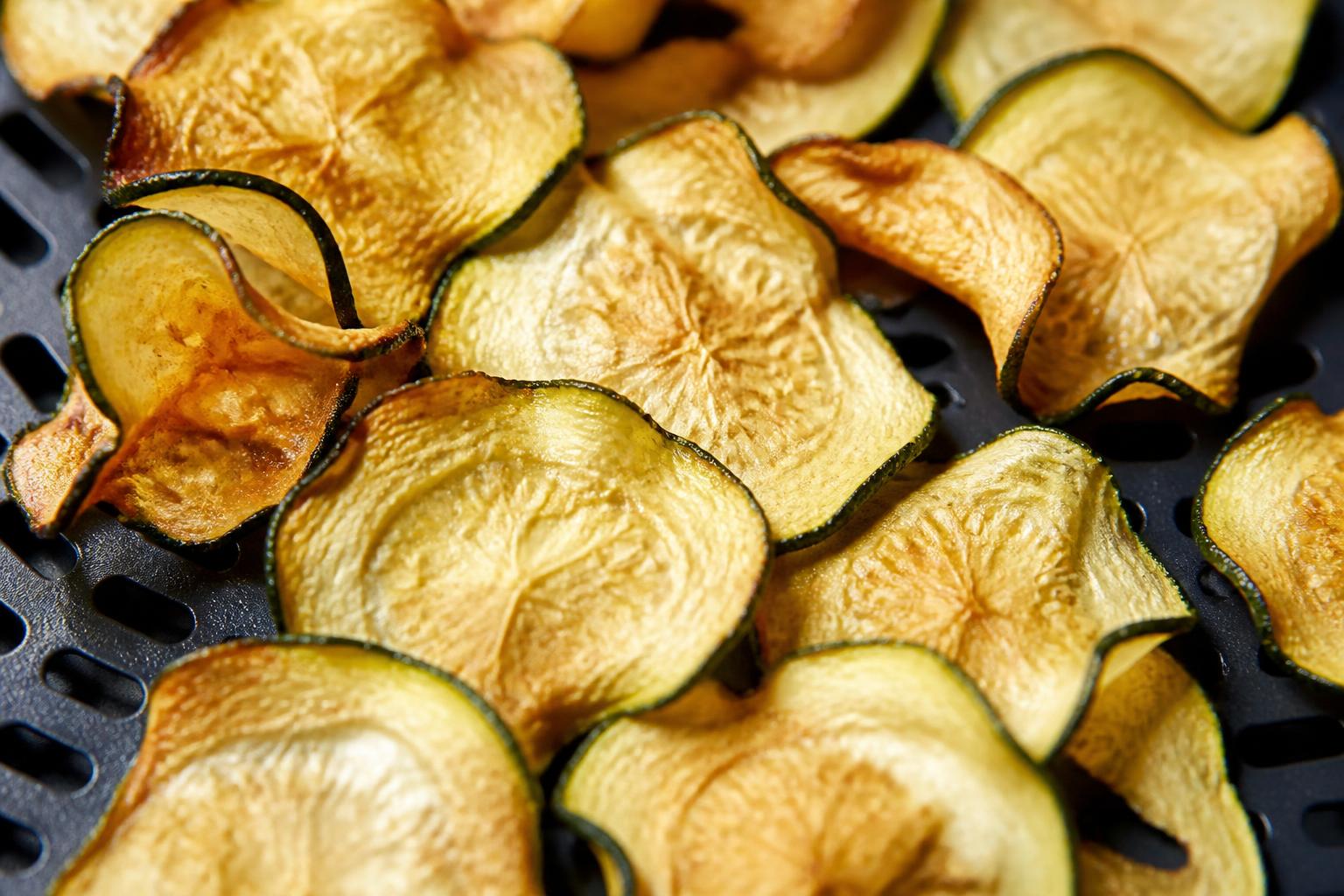
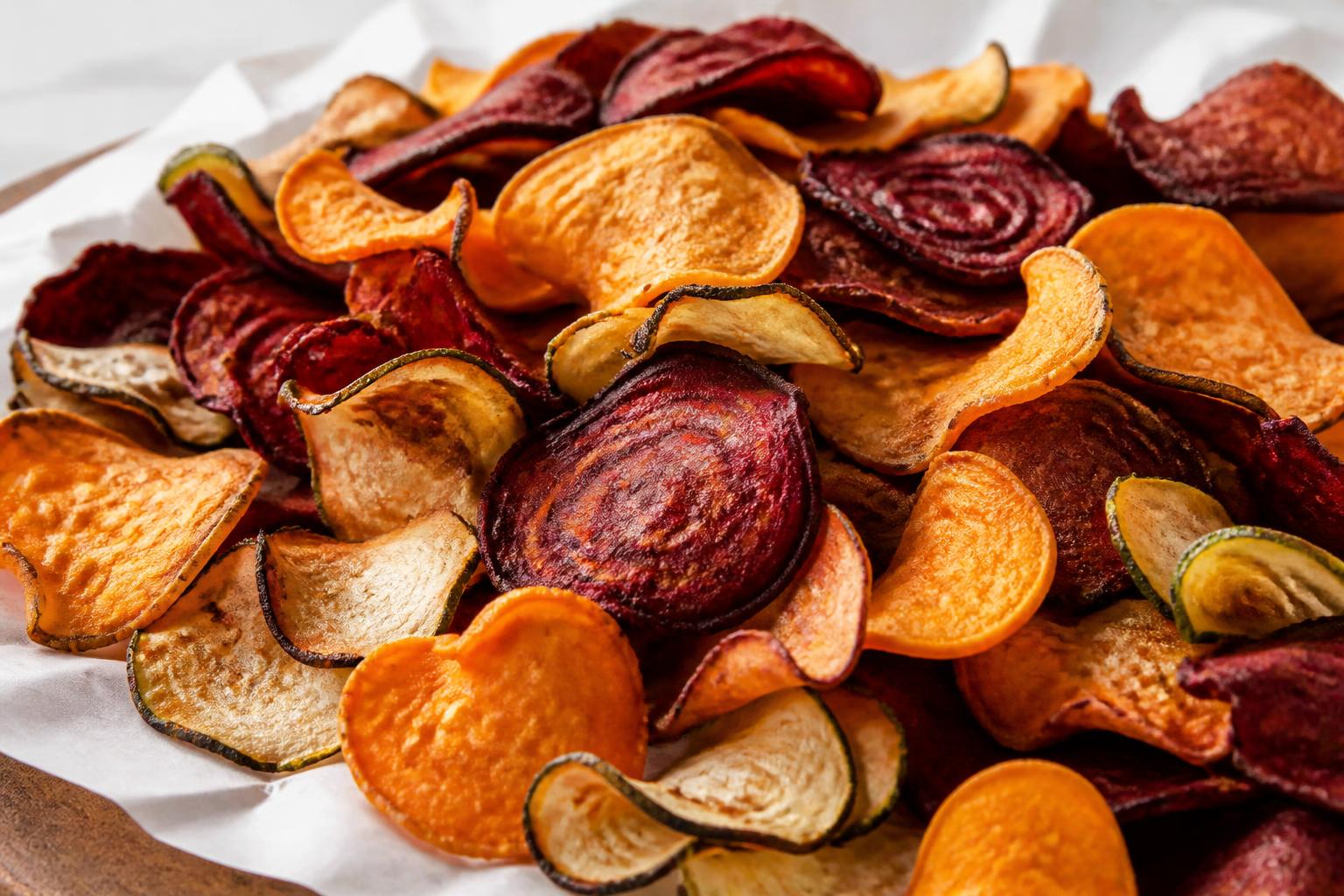
Environment design matters more than motivation. If the easier option is the one in front of you, you are far more likely to take it. Keep a bowl of fruit visible. Store satisfying snacks where you can reach them quickly. Put chopped veg at eye level in the fridge. Keep a few desk-friendly options in a drawer or your work bag. If you like making your own crunchy bits, batch-prepping can help, and our guide on how to make vegetable crisps that stay crisp covers the practical side.
It also helps to build for your pressure points. If mornings are chaos, sort breakfast the night before. If the commute home turns you into a vending machine magnet, pack a 4 pm snack. If evenings are when you drift, decide in advance what your default dinner is for low-energy days. Beans on toast with a side of tomatoes counts. So does soup and a sandwich. So does a freezer meal with added veg.
One of the biggest differences between people who keep going and people who give up is how they respond to disruption. Busy days will happen. Meals will get missed. Sleep will wobble. The answer is not to wait for Monday. It is to restart at the next opportunity.
That can be as simple as:
- drink some water
- eat the next balanced meal
- take a short walk
- go to bed a bit earlier
- pack tomorrow's snack before you forget
No drama, no punishment, no compensating. Just back to normal.
Finally, make your habits pleasant. Use a water bottle you like drinking from. Buy snacks with textures you genuinely enjoy. Walk somewhere that gives you a bit of daylight and headspace. Healthy habits last longer when they feel like support, not correction.
A busy day does not need perfect routines. It needs practical anchors. A decent breakfast. A proper lunch. Snacks that do a job. Water within reach. A little movement. Enough sleep when you can get it. Repeated often, those ordinary choices are what healthy habits really look like, and they are more than enough to make a difference.

Questions about this article or a correction to suggest? Get in touch. Read more about our editorial approach.