A healthier savoury snack is usually one that gives you something useful back for the crunch. That might be fibre that keeps you going, protein that makes a snack feel more substantial, or ingredients you can recognise without needing a magnifying glass. Just as important, it tends not to pile on salt, saturated fat and calories so quickly that a small handful quietly turns into a full extra meal.
There is no single gold-medal option, though. Some days a pot of edamame or roasted chickpeas makes sense because you want something filling. Other days a few wholegrain crackers with hummus, or plain popcorn with a salty edge, does the job beautifully. The trick with healthy savoury snacks is not finding one perfect packet for life. It is learning how to spot the better fit for the moment, then keeping a few reliable options around so the easy choice is also a decent one.
What makes a savoury snack a healthier choice?
In practical UK terms, a healthier savoury snack usually does three things well. First, it satisfies the craving for something crisp, salty, toasty or savoury. Second, it brings a sensible balance of energy for the portion you are likely to eat. Third, it offers some nutritional value, rather than relying almost entirely on refined starch, oil and seasoning.
That means we look for snacks built from ingredients such as pulses, whole grains, nuts, seeds, vegetables, dairy or soya, rather than only white flour or potato starch. It also means paying attention to how much salt and fat come with the crunch.
There is still no single formula. A roasted broad bean snack may be higher in protein and fibre than a standard crisp, but if it is heavily salted it may not be the best pick for every day. A handful of nuts can be rich in unsaturated fats and genuinely satisfying, but they are also energy-dense, so the portion matters. Popcorn can be surprisingly light and airy, but sweet coatings or buttery flavourings can change the picture quickly.
Context matters too. A snack eaten at 11 am to bridge the gap to lunch has a different job from the one you grab at 5 pm on the train home. If you often end up ravenous, a snack with some protein and fibre will usually carry you further than something that is all crunch and no staying power. If you simply want a nibble while working, a lighter option may suit you better.
We find it more useful to think in tiers than in absolutes. Some savoury snacks are everyday staples. Others are better as occasional treats that happen to be savoury rather than sweet. Neither needs moral drama. The aim is simply to make routine choices a bit easier, and a bit better.
Which ingredients and nutrients are worth noticing?
You do not need to turn every snack aisle into an exam hall. A quick scan of a few key points is usually enough.
Fibre is one of the most helpful things to notice. It is often what separates a snack that disappears instantly from one that feels properly worthwhile. Pulses, whole grains, nuts, seeds and vegetable ingredients tend to help here. If two similar products sit side by side, the one with more fibre is often the more satisfying choice.
Protein matters too, especially if your snack is standing in for part of a meal or getting you through a long afternoon. Roasted chickpeas, lentil snacks, edamame, nuts, cheese portions and some seed crackers can all contribute. “High protein” is not automatically healthier, but a reasonable amount of protein can make a savoury snack feel less flimsy.
Salt is worth keeping an eye on because it adds up quickly in crunchy foods. In UK labelling, salt is listed as salt, not sodium, which makes life easier than on some imported packs. If a snack tastes punchy, savoury and moreish in a very hard-to-stop way, salt may be doing a lot of the work. That does not mean it is off limits, but it is useful to know whether a product is lightly seasoned or a salt-delivery vehicle wearing a lentil costume.
Saturated fat is another useful marker, especially in cheese-flavoured bakes, pastry-based snacks and some fried products. Not all fat is the same. Nuts and seeds naturally contain fat, but much of it is unsaturated. That is different from a snack that gets a large share of its richness from palm oil, butter powder or other ingredients that push up saturates.
Energy, meaning calories, is worth noticing without becoming obsessed by it. Some healthier savoury snacks are naturally more energy-dense because they contain nuts, seeds or cheese. That does not make them poor choices. It just means the sensible portion may be smaller than a giant bag suggests.
A simple shortcut is to ask four questions.
- Is there a useful ingredient base here, such as pulses, whole grains, nuts, seeds or vegetables?
- Does it offer some fibre or protein?
- Is the salt level reasonable for something I might eat regularly?
- How much would I actually eat in one sitting?
That last question matters more than people think. A tiny listed portion can make almost any label look neat. Real life is less polite.
If protein is the main thing you want from a snack, our guide to healthy high-protein snacks that actually fit real life goes into more detail on formats that do not feel like gym fuel in disguise.
How can you compare common savoury snack formats?
Comparing savoury snack formats is useful because “healthier” can mean different things in different aisles. One format may win on fibre, another on protein, another on portion control.
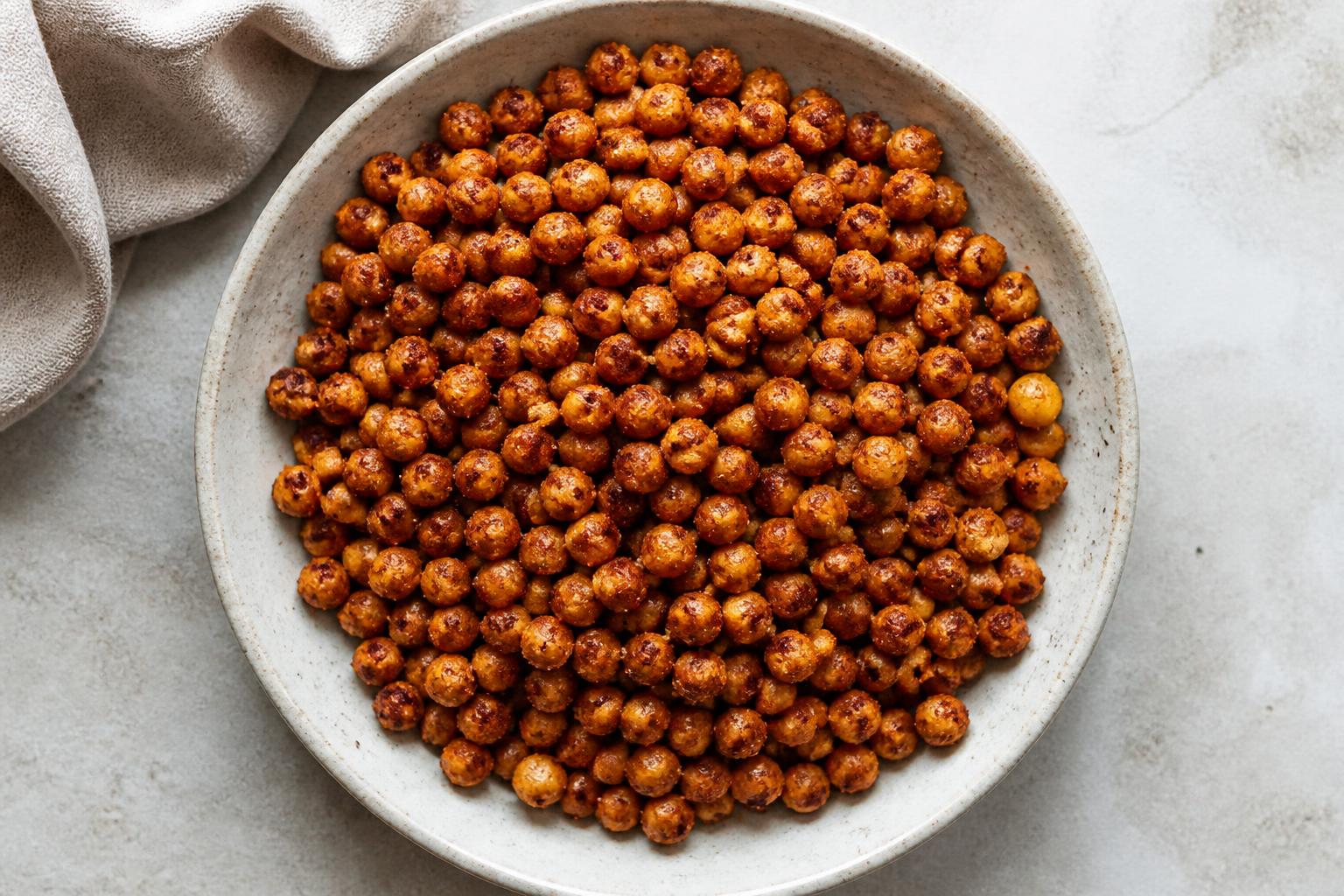
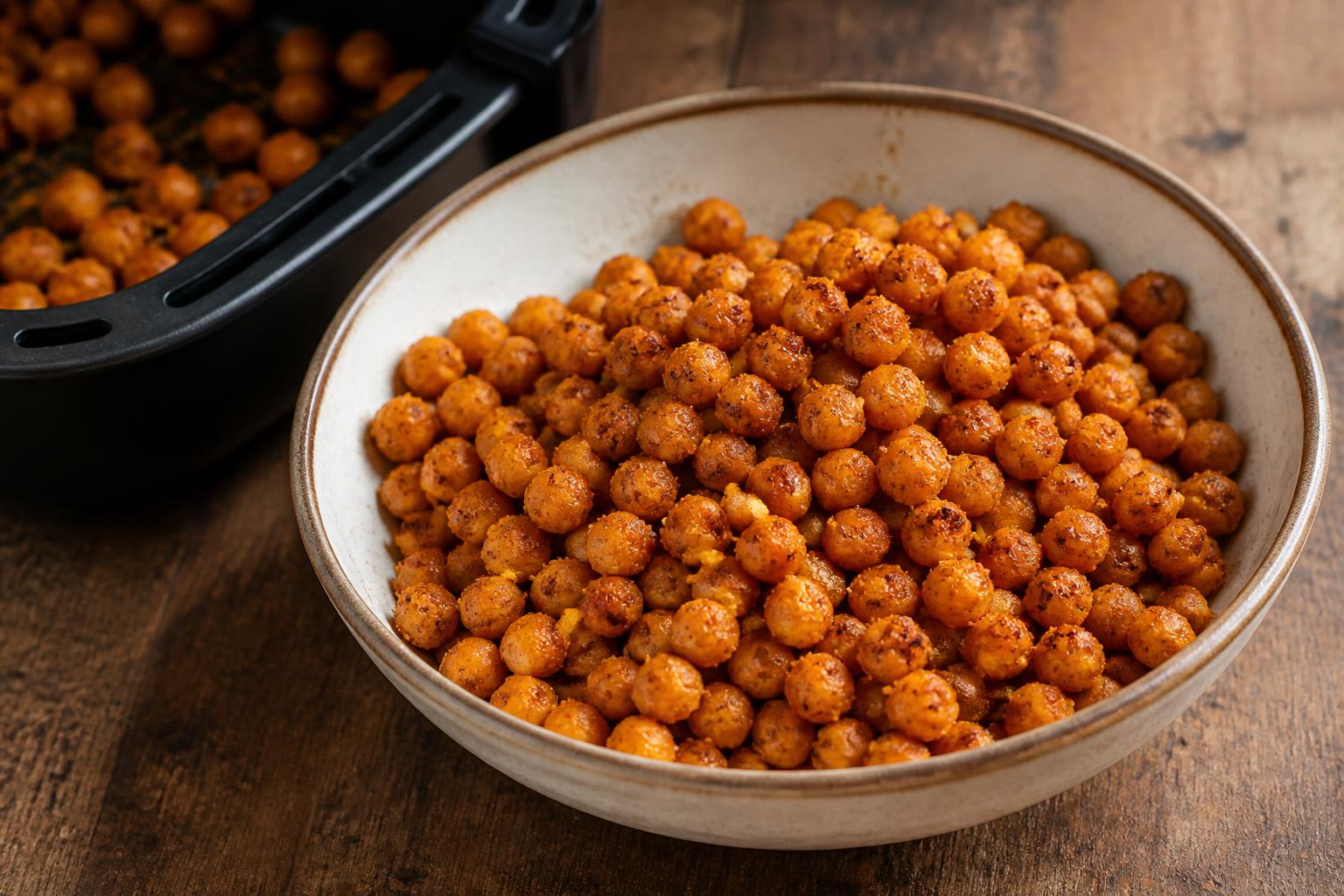
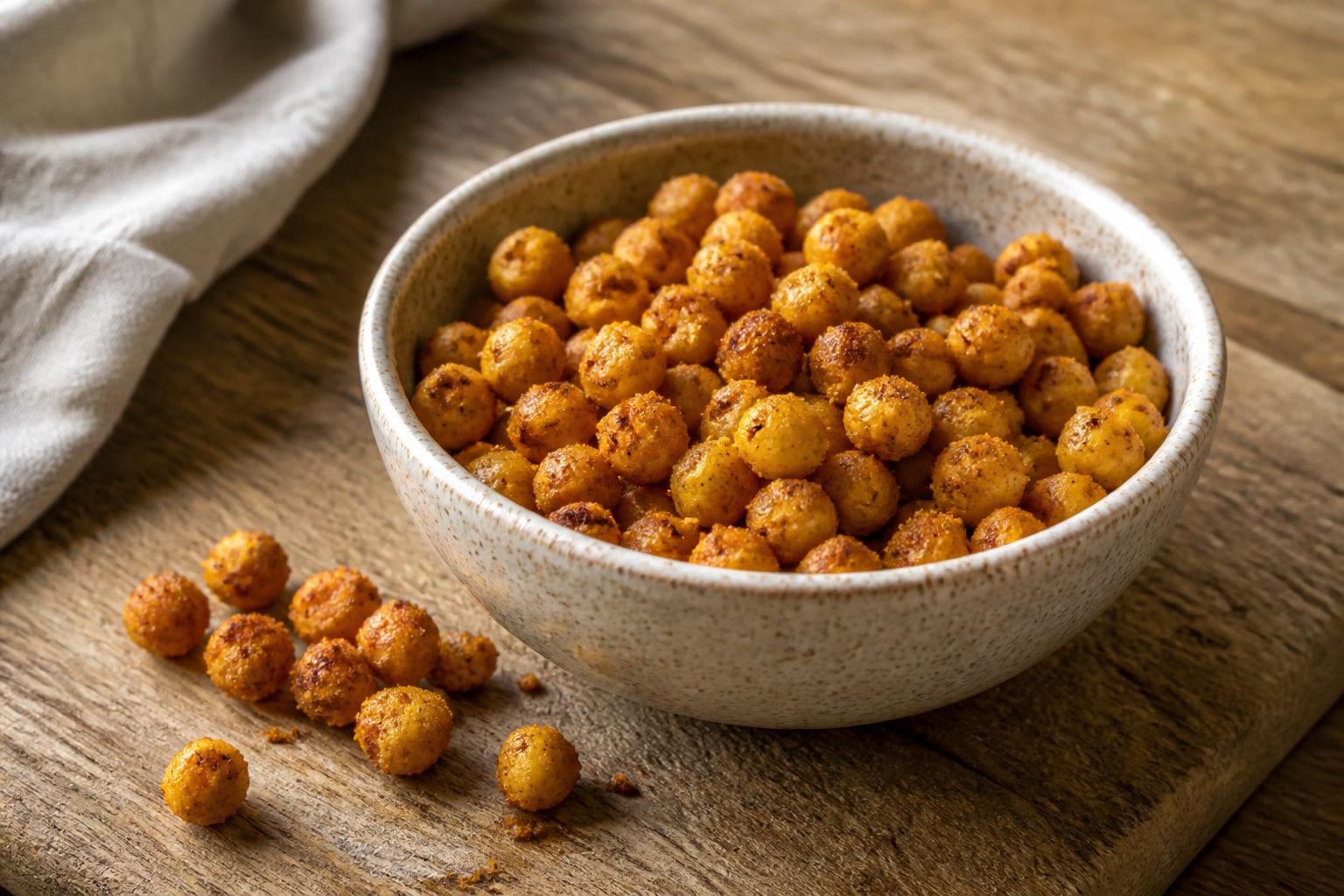
Roasted pulses, including chickpeas, lentils and broad beans, often score well for fibre and protein. They tend to feel hearty and properly crunchy, with a toasted, nutty character that can stand up to bold seasoning. The trade-off is that some are heavily salted, and some have more oil than you might expect. They can also be easy to overeat because they feel virtuous. If you enjoy making your own, our method for air fryer roasted chickpeas that stay crisp for longer is a useful starting point.
Popcorn is a different creature. Plain or lightly seasoned popcorn can be relatively light for the volume, which makes it appealing if you want a generous-looking portion. Wholegrain corn also contributes some fibre. But flavour matters. Toffee popcorn is a different category entirely, and savoury popcorns can still carry plenty of salt or saturated fat depending on the coatings used.
Crackers range from genuinely useful to nutritionally flimsy. Wholegrain or seed-based crackers can add fibre, texture and a slower, more substantial crunch. Refined white crackers are often milder and lighter, but may offer less staying power on their own. Crackers also depend heavily on what sits on top. A plain cracker is one thing. A cracker with hummus, cottage cheese or peanut butter becomes a more balanced snack. For a closer look at one of the more confusing corners of the shelf, we have a guide on how to compare seed crackers without guesswork.
Nuts are classic for a reason. They are crunchy, savoury-friendly and satisfying in a way many packet snacks never quite manage. They also bring healthy fats, and some protein and fibre. The catch is portion size. A small handful can be spot on. A distracted desk-eating session from a family bag can run away from you. Dry roasted or plain nuts are often easier to fit into everyday snacking than heavily salted, honey-roasted or coated versions.
Seeds, whether eaten alone or in clusters and crackers, can also be useful. Pumpkin and sunflower seeds bring crunch and nutrients, but like nuts they are compact and energy-dense. We tend to think of them as best in measured portions or built into another snack rather than poured freely from a large pouch.
Vegetable-based snacks need a bit more caution than the name suggests. “Vegetable crisps” can mean anything from lightly dried veg slices to products that are mostly starch with vegetable powders for colour. Beetroot, parsnip and carrot crisps may sound automatically superior to potato crisps, but nutritionally they are not always dramatically different. The ingredient list and nutrition panel tell the real story.
Rice cakes and corn cakes can be useful if you want a plain, crisp base, but they are usually more satisfying with a topping. On their own, they often vanish without much impact. Add hummus, smashed avocado, cream cheese or cottage cheese and they become much more practical.
The uncertainty comes from formulation. Two lentil snacks can look almost identical and differ noticeably in salt, fat and fibre. Two popcorn brands can both say “sea salt” and still be worlds apart in how much seasoning and oil they use. That is why format is only the starting point. The label finishes the comparison.
What do food labels and front-of-pack claims really tell you?
UK food labels can be genuinely helpful once you know where to look. The front of pack often gives energy, fat, saturates, sugars and salt, usually per 100g and sometimes per portion. Many products also use traffic light colours.
Per 100g is the best way to compare similar products fairly. If you are choosing between two roasted pulse snacks or two savoury popcorns, ignore the marketing for a moment and compare per 100g first. Portion information can then tell you what your likely serving looks like in practice.
Traffic lights are a quick guide, not a full verdict. A green or amber for salt and saturates can be useful. A red is a prompt to look closer, especially if it is a food you plan to eat often. But some naturally energy-dense foods, such as nuts and seeds, can still be sensible choices despite not looking saintly on the label.
In the UK, front-of-pack traffic lights are widely used but not mandatory for every product. Imported products may use different systems or none at all. This is one area where UK and EU practice can differ in presentation. The core nutrition declaration is required in both, but the familiar UK traffic light format is not the standard across the EU generally.
Claims deserve a calm reading.
“Baked” does not automatically mean light. A baked snack can still be high in salt or fat. It simply tells you something about the cooking method.
“High protein” has a specific legal meaning in both the UK and EU derived systems. Broadly, at least 20 per cent of the food’s energy must come from protein. “Source of protein” is a lower threshold. Useful, yes. Proof of overall healthiness, no.
“Source of fibre” and “high fibre” also have set thresholds. In practical terms, these claims can be meaningful because fibre is often genuinely lacking in snack foods. Still, it is worth checking what else comes with the fibre.
“No added sugar” tells you nothing much about a savoury snack’s salt content, fat content or overall balance. Likewise, “gluten-free” may be essential for some people, but it is not shorthand for healthier.
Ingredient order can tell you a lot. Ingredients are listed by weight, from most to least. If the first ingredients are chickpeas, oats, seeds or wholegrain flour, that is often a good sign. If the first ingredients are starches, refined flours and oils, the product may be more ultra-processed filler than nourishing snack.
Portion language also needs a raised eyebrow. If a packet says it contains two portions but you know perfectly well you will eat the lot while answering emails, assess it on that basis. Healthy savoury snacks work best when the label and real life are on speaking terms.
How do you build a satisfying savoury snack routine?
A good savoury snack routine is less about willpower and more about structure. If the only things within reach are random multipacks and a mystery crumb at the bottom of your bag, the choice has already been made for you.
Start with a few formats that cover different moods. We like keeping one airy crunch, one hearty crunch and one build-your-own option. That might mean plain popcorn for volume, roasted chickpeas for staying power, and wholegrain crackers for pairing with dips or toppings. Variety keeps things interesting and stops every snack from tasting like a nutritional compromise.
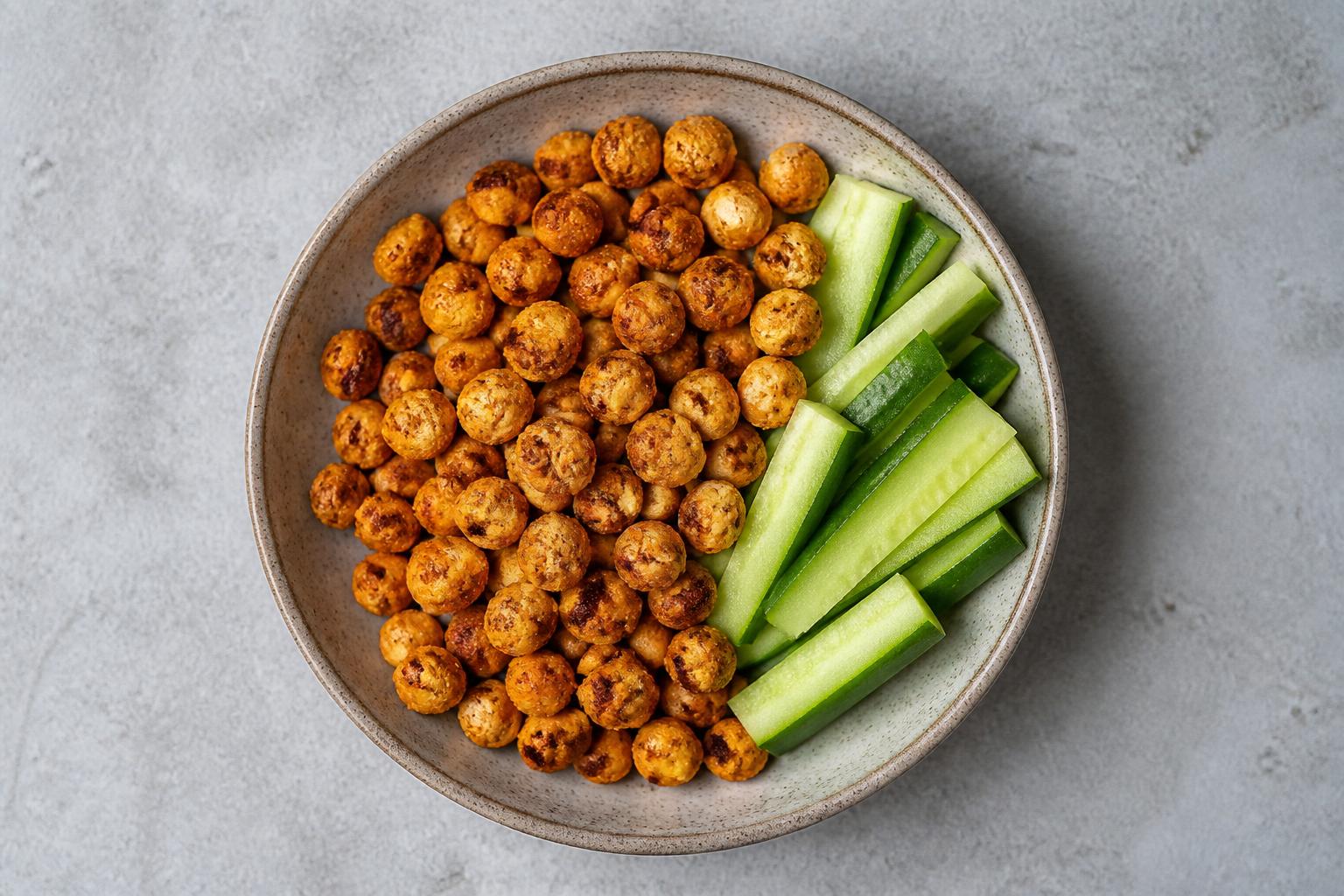
Pairing textures helps more than people expect. A dry crunchy snack often feels better with something cool or creamy beside it. Crackers with hummus, cucumber and a sprinkle of seeds. Popcorn with a yoghurt dip seasoned with herbs. Roasted broad beans with cherry tomatoes and a chunk of cheese. Crunch plus creaminess, or crispness plus freshness, usually makes a snack feel more complete.
Protein and fibre together are especially useful if you want a snack to last. Think oatcakes with cottage cheese, seed crackers with houmous, roasted edamame with a piece of fruit, or a small handful of nuts with crunchy veg. If you need more ideas beyond the savoury shelf, our round-up of healthy snack ideas for adults that actually fit real days covers combinations that work when time and attention are both in short supply.
Portion management does not need to be joyless. The easiest method is to decant. Put a serving into a bowl, tub or small jar, then put the main bag away. Large packets are designed to be eaten casually and quickly. A portion in a proper container feels more deliberate, and oddly enough, more satisfying.
Timing matters too. If you regularly go too long between meals, no crispbread on earth will save you from the 4 pm slump. A planned snack in the middle of the gap works better than waiting until you are ravenous. Savoury options can be particularly useful here because they often feel grounding and practical rather than dessert-like.
It also helps to match the snack to the setting. Desk snack, commuting snack, post-gym snack and sofa snack are not always the same thing. For travel, choose tidy options that survive a bag and do not need refrigeration. For home, use the chance to add fresh bits and proper plating. Even a very ordinary savoury snack feels better when it has a bowl, a dip and a few crunchy extras instead of being eaten one-handed over the sink.
Finally, allow room for preference. If you hate plain popcorn, forcing yourself to eat it because it looks tidy on a label is not a winning routine. The best healthy savoury snacks are the ones we will actually keep buying, portioning and enjoying. Useful nutrition matters, but so does the pleasure of a good crackle, a roasted note, a salty edge and a snack that feels like a choice rather than a punishment.
That is the simplest way to keep everyday choices simple. Pick formats with a decent ingredient base. Glance at fibre, protein, salt and portion size. Treat front-of-pack claims as clues, not commandments. Then build a small rotation of savoury snacks that fit your habits well enough to become the easy default.

Questions about this article or a correction to suggest? Get in touch. Read more about our editorial approach.