A healthy snack for adults is not a moral victory in a tiny packet. It is something that gets you from one meal to the next without leaving you ravenous, distracted, or rifling through the biscuit tin half an hour later. In real life, that usually means a mix of fibre, protein, or both, a portion that suits the moment, and ingredients you can actually keep in the house, desk drawer, car, or bag.
That is why the best healthy snack ideas for adults are rarely the flashiest ones. They are the ones that work on a wet Tuesday in the office, after a late train, or at 9.30 pm when you want crunch more than a lecture. A practical snack should taste good, feel satisfying, and fit UK eating guidance without turning every break into a nutrition exam.
What makes a snack feel healthy as well as satisfying?
For adults, a healthy snack is usually doing one of three jobs. It is bridging a long gap between meals, taking the edge off hunger before you get home, or giving you something structured so “just picking” does not turn into a full extra meal.
The “healthy” part is not about chasing trends. It is about a few steady principles from UK nutrition guidance that are easy to use in ordinary kitchens.
First, look for fullness. Foods that contain fibre, protein, or a bit of both tend to satisfy better than snacks built mostly from refined starch, free sugars, or air. An apple on its own can be refreshing, but an apple with peanut butter or a small handful of nuts generally keeps you going for longer. Oatcakes with cottage cheese usually do more work than a plain rice cake.
Second, keep convenience in the frame. If the healthy option takes twenty minutes, three containers, and a shopping trip, it will not survive a busy week. Tinned pulses, yoghurt, bananas, carrots, wholegrain crackers, roasted chickpeas, and nuts all earn their place because they are usable, not because they are glamorous.
Third, think in terms of balance rather than labels. In the UK, nutrition labels typically show energy, fat, saturates, sugars and salt, often per 100g and per portion. For snacks, it also helps to check fibre and protein where listed. We are usually aiming for options that are not excessively salty or sugary, that offer some nutritional value, and that make sense as part of the day rather than as a stand-alone health statement.
A practical rule of thumb is this. If a snack gives you crunch, creaminess, or sweetness you actually enjoy, plus some fibre or protein, it is probably on the right track. If it leaves you wanting another three packets immediately, it may be more “treat food in snack clothing” than useful fuel.
How to build a better snack from everyday ingredients
You do not need a long recipe. Most reliable snacks follow a simple mix-and-match formula, with one part produce, one part staying power, and a format that suits where you are.
Here are a few easy builds.
Fruit + protein or fat
Try apple slices with peanut butter, a pear with a few walnuts, grapes with cheddar, or a banana with Greek yoghurt. The fruit brings sweetness and fibre. The dairy, nuts, or nut butter slows things down and makes the snack feel more complete.
Veg + dip
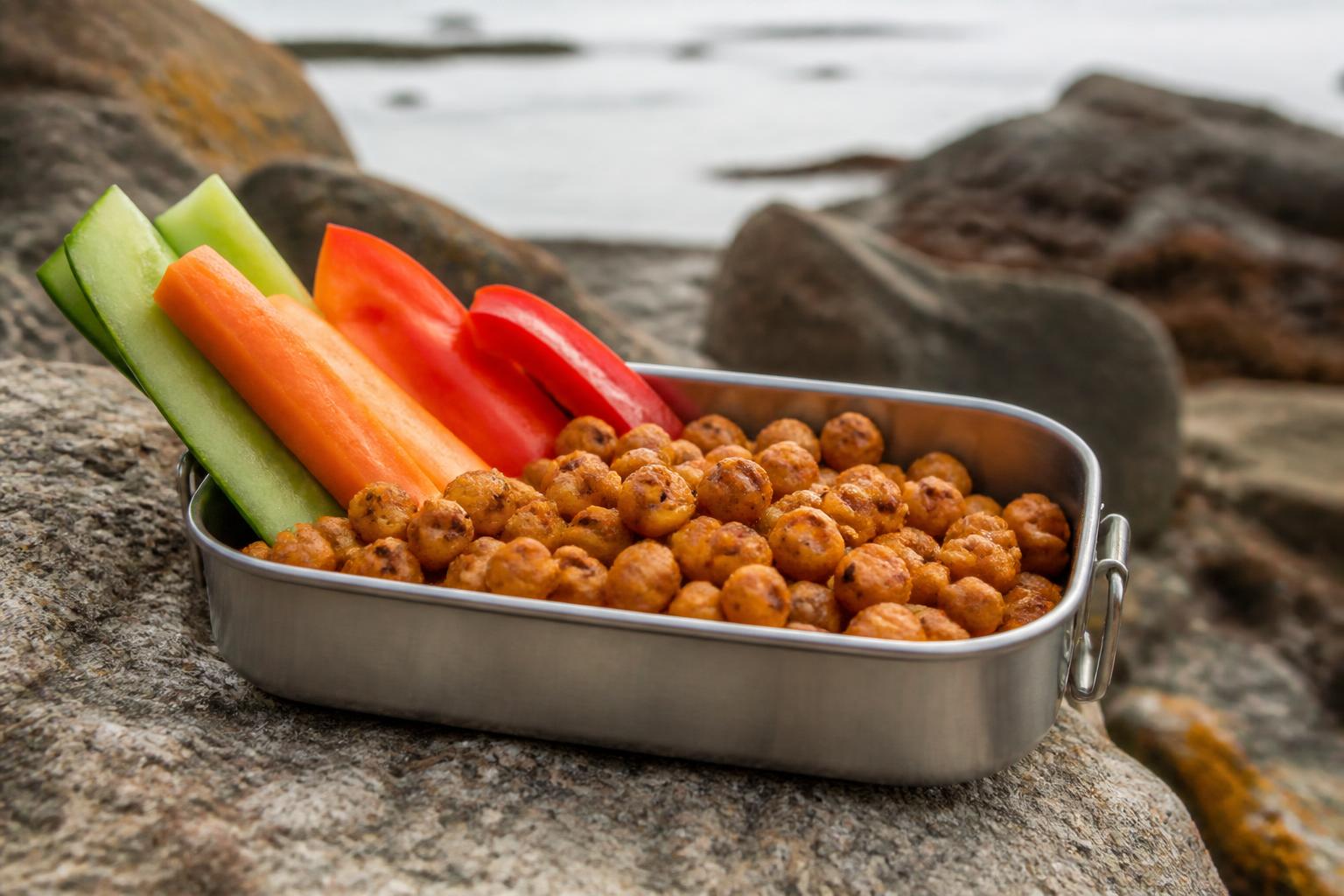
Carrot batons, cucumber, peppers, sugar snap peas, or cherry tomatoes work well with hummus, tzatziki, cottage cheese, or a bean dip. This is one of the simplest ways to get a crunchy, fresh snack that feels substantial rather than worthy.
Wholegrain base + topping
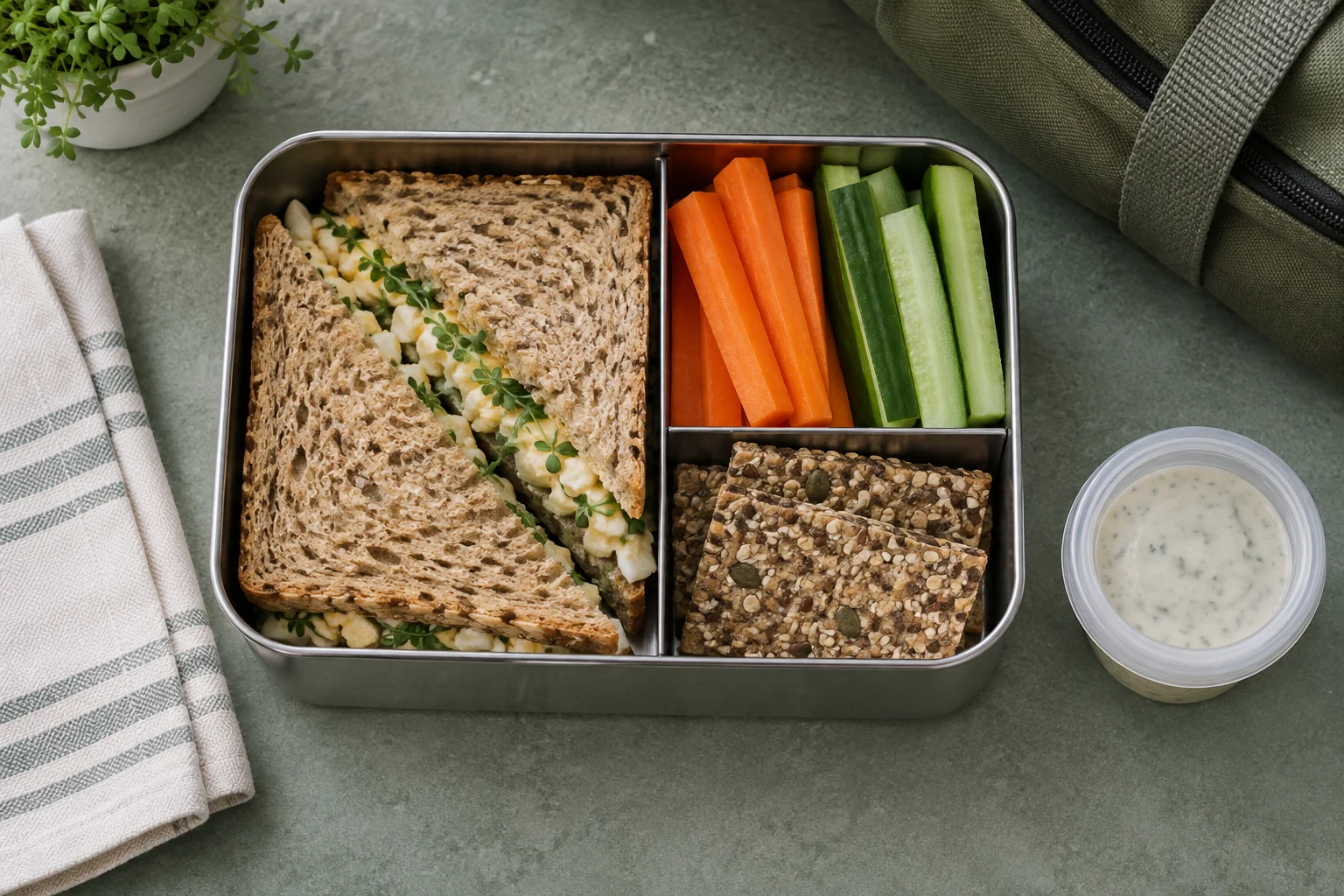
Oatcakes, rye crackers, wholemeal toast, or crispbreads can carry all sorts. Hummus and cucumber, peanut butter and banana, soft cheese and tomato, mashed sardines with black pepper, or avocado with lemon all work. If you like savoury crunch, this category is especially useful.
Pulses + flavour
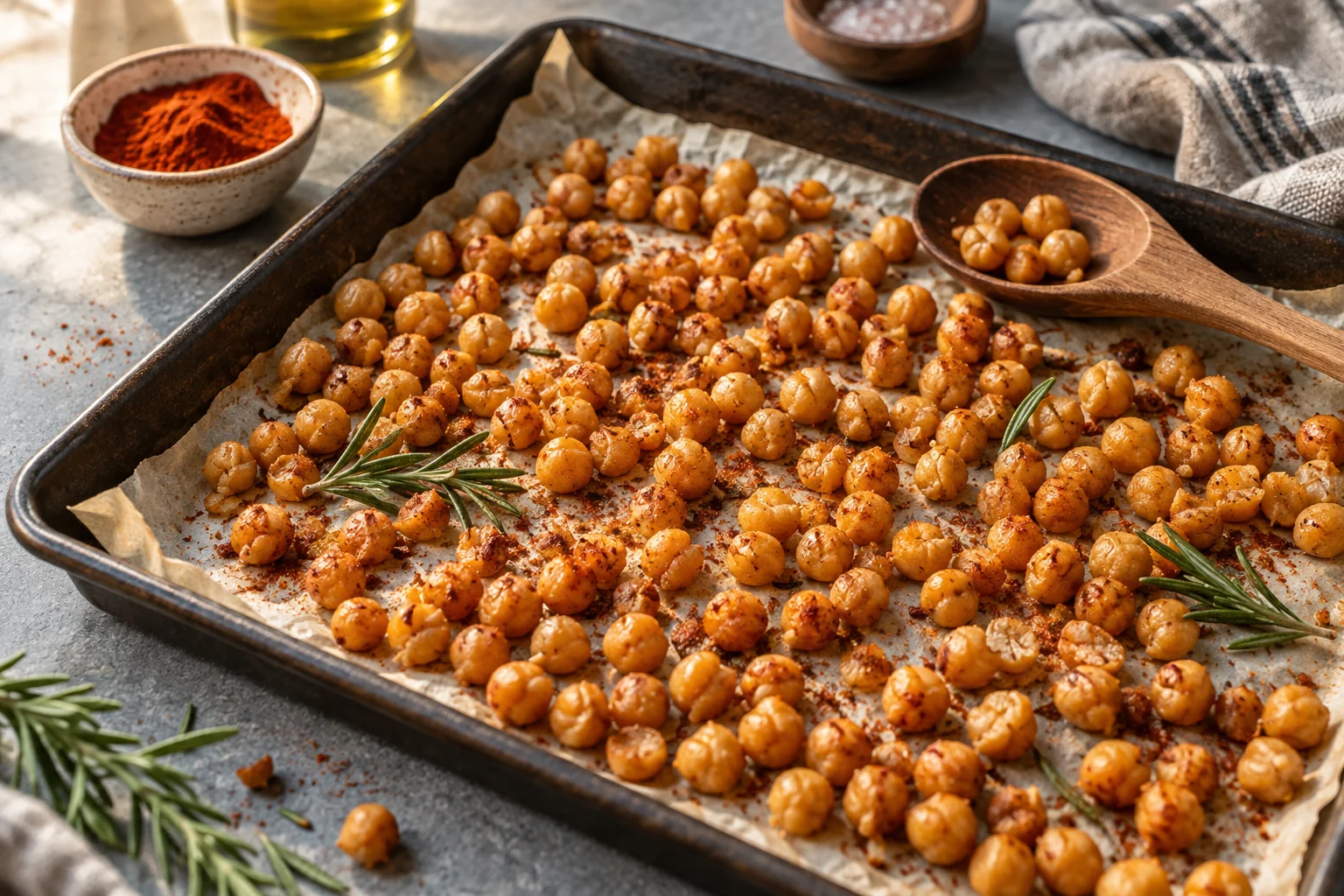
Roasted chickpeas, butter beans crisped in the oven or air fryer, or a simple pot of lentil salad can bridge the gap between snack and mini meal. Pulses are handy because they naturally bring fibre and some protein. If you like a more savoury bite, our guide to crunchy pulse snacks and roasted bean ideas goes deeper into formats and flavours.
Dairy + fruit or grains
Plain or lower sugar yoghurt with berries, kefir with oats, or cottage cheese with pineapple can be quick and satisfying. If you prefer savoury, a pot of cottage cheese with cracked pepper and chopped cucumber is underrated.
Nuts and seeds + something fresh
A small handful of mixed nuts with a clementine, pumpkin seeds sprinkled over yoghurt, or a homemade trail mix with unsweetened dried fruit can all work well. Nuts and seeds are useful, but portion size matters because they are energy dense. A little goes a long way.
Wholegrain cereal formats
Popcorn, plain or lightly seasoned, wholegrain cereal in a small bowl with milk, or oat-based bars with sensible ingredients can all have a place. Popcorn is especially good if what you really want is volume and crunch. For more on texture-first options, we have also covered crispy snacks that still feel balanced.
If you want one simple formula to remember, use this: fruit or veg + protein or healthy fat + crunch.
That could be carrots + hummus + seeded crackers, or yoghurt + berries + pumpkin seeds. You are building a snack with texture and staying power, not just filling a gap with whatever is nearest.
Crunchy healthy snack ideas for work, home and travel
Different settings call for different snacks. The best choice at your desk is not always the best choice on a train.
For work
Desk-friendly snacks need to be tidy, easy to store, and not too fragrant. Good options include:
- Oatcakes with peanut butter
- Wholegrain crackers with a small pot of hummus
- An apple with a handful of almonds
- Roasted chickpeas in a screw-top container
- Plain popcorn with a few seeds mixed through
- A banana and a small pot of Greek yoghurt, if you have a fridge
- Cherry tomatoes and mini cheese portions
- Rye crispbreads with cottage cheese
If afternoons are your weak spot, build in something with a bit more substance. A crispbread and dip combo or fruit plus nuts is often more effective than relying on a sweet cereal bar that disappears in three bites.
For home
At home, the biggest advantage is access. You can use the fridge, the toaster, and leftovers. Good crunchy options include:
- Carrot, cucumber and pepper strips with hummus
- Wholemeal toast with peanut butter and sliced banana
- Air-fried chickpeas with smoked paprika
- Apple slices with cheddar
- Greek yoghurt topped with chopped nuts and seeds
- A small bowl of high-fibre cereal with milk
- Popcorn with a dusting of cinnamon or nutritional yeast
- Leftover roasted veg on crispbread with soft cheese
Home is also where boredom eating tends to creep in. If what you want is the ritual of reaching for something while the kettle boils or the television starts, choose a snack with real texture. Crunch matters. It slows you down and makes the snack feel like an event rather than background grazing.
For travel
Travel snacks need to survive being carried around and eaten without much fuss. Useful choices include:
- Bananas, apples, satsumas
- Unsalted or lightly salted nuts
- Roasted broad beans or chickpeas
- Wholegrain crackers
- Seeded flapjacks with modest sugar content
- Plain popcorn
- Small cartons of milk or long-life protein yoghurt drinks, if you like them
- Homemade trail mix with nuts, seeds and a small amount of dried fruit
For longer days out, pair two formats. Fruit plus nuts. Crackers plus nut butter sachet. Popcorn plus a yoghurt drink bought on the way. Travel snacking goes wrong when everything is beige and sweet, or when nothing has enough staying power.
If crunch is what keeps you satisfied, our round-up of practical savoury snacks for busy days has more ideas that travel well.
Which shop-bought snacks are worth a closer look?
Shop-bought snacks can be useful. The trick is knowing what to compare, especially when packaging does a lot of the talking.
Start with portion size. In the UK, labels usually give values per 100g and often per serving. Per 100g is useful for comparing products side by side. Per portion is useful for reality. A snack that looks “light” per serving may only be light because the serving is tiny. Equally, a bag sold as one pack can contain more than one portion.
Then look at fibre and protein. Not every product shouts about fibre on the front, but it is often a good clue to whether the snack will actually satisfy. Wholegrain crackers, roasted pulse snacks, seeded bars, and some cereals often do better here than puffs or crisps made mostly from refined starch.
Check free sugars in practical terms. UK guidance focuses on limiting free sugars across the day. On labels, you will usually see “sugars” rather than “free sugars”, so context matters. In plain yoghurt, some sugar is naturally occurring lactose. In fruit, sugars occur naturally within the food. In cereal bars, coated nuts, sweetened yoghurt, and flavoured popcorn, sugars are often added. That does not make them forbidden, but it does change how often they work as an everyday snack.
Salt is worth watching, especially in savoury snacks that seem virtuous. Roasted pulses, crackers, rice cakes, popcorn and nuts can vary a lot. A product can sound wholesome and still be very salty.
Protein can be useful, but do not let it distract you from everything else. A high-protein snack that is also heavily sweetened or very salty is not automatically the best choice. Think about the whole product, not one claim on the front.
Ingredients lists can help too. The shortest list is not always the winner, but it is worth noticing whether the first ingredients are foods you expected, such as oats, chickpeas, nuts, yoghurt, or wholegrain flour, rather than mostly syrups, starches, or flavourings.
One final UK point. Front-of-pack traffic light labels can be genuinely handy when they are present. They are not the whole story, but they give a quick read on fat, saturates, sugars and salt. Use them as a shortcut, not a verdict.
How can adults snack more healthily without overthinking it?
Most snacking problems are not really about nutrition knowledge. They are about timing, habit, and what is easiest at the moment.
If evening snacking is the issue, ask whether dinner was satisfying enough. A meal low in protein, fibre, or sheer enjoyment often leads to prowling later. If you know you like an evening snack, plan one. Popcorn, oatcakes with soft cheese, or yoghurt with berries is often better than starting with “nothing” and ending with half a packet of biscuits.
If boredom eating is the problem, create a pause without making it dramatic. Make tea first. Put the snack on a plate or in a bowl. Choose something with texture, like carrots and hummus or seeded crackers, so the experience feels deliberate. Eating from a large bag while distracted makes it much harder to notice when you are done.
If cost is the sticking point, go back to basics. Carrots, bananas, oats, tinned chickpeas, plain yoghurt, peanut butter, apples, and popcorn kernels are all dependable building blocks. Healthy snacks do not need to come from the “wellness” aisle. Some of the best options are ordinary ingredients in sensible combinations.
If prep time is your barrier, use a two-minute rule. If a snack takes more than two minutes on a weekday, it needs to earn that time. Wash grapes when you bring them home. Portion nuts into small tubs. Keep hummus and veg at eye level. Roast a tray of chickpeas or broad beans once, then use them for several days. Tiny bits of setup make good choices much more likely.
If you get bored easily, rotate by texture rather than by trend. One week, go for crisp and juicy, apples and peanut butter, cucumbers and cottage cheese. Another week, lean savoury and toasty, oatcakes, roasted pulses, popcorn. Variety does not need to mean complicated recipes. It just needs a change in crunch, creaminess, or sweetness.
And if you tend to swing between “super healthy” and “what’s the point”, drop the all-or-nothing thinking. A better snack is still better even if it is not perfect. Adding nuts to fruit, choosing wholegrain crackers over a second pastry, or swapping a sugary bar for yoghurt and seeds all count.
The healthiest snack is often the one we will happily eat again tomorrow. It fits the day, tastes good, and leaves us feeling steadier than we did before. That is a much more useful standard than trying to build every bite around a fad. When healthy snack ideas for adults are practical, crunchy, and genuinely satisfying, they stop feeling like homework and start feeling like part of normal life.

Questions about this article or a correction to suggest? Get in touch. Read more about our editorial approach.