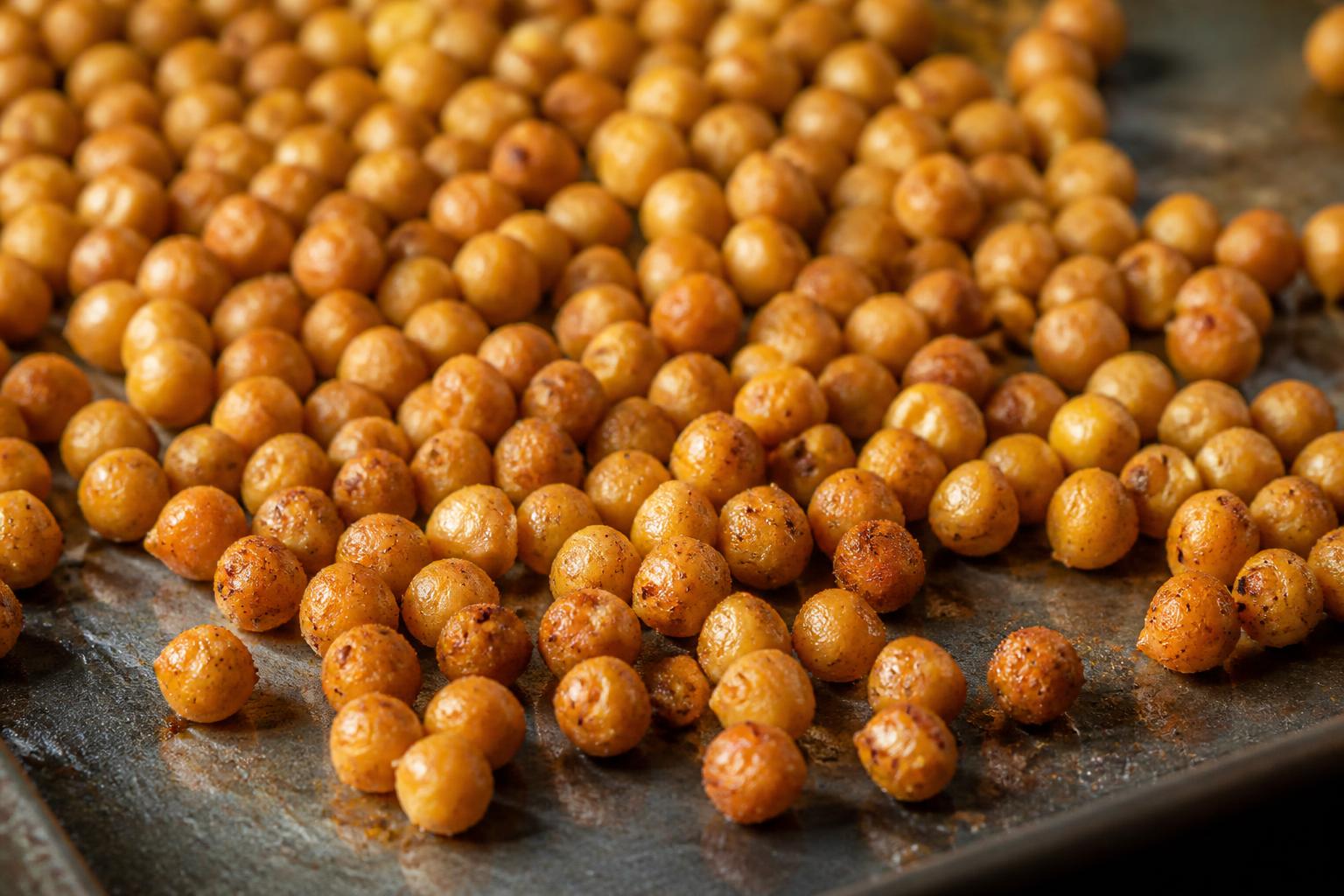
Roasted chickpeas are not especially mysterious on the calorie front, but they do catch people out. A plain roasted chickpea snack is often somewhere around the low to mid 400s in calories per 100g, with the exact figure shifting according to how much oil is used, how dry the chickpeas become, and what else is added. For a more realistic snack portion, a small handful is usually far less dramatic than the per 100g number on the pack makes it look.
That is the key point with roasted chickpeas calories. They can seem high when you compare labels line by line with boiled chickpeas, yet roasting has usually removed water rather than conjured up extra energy. If you know what changes the number, and how to translate a label into the amount you actually eat, they are much easier to judge sensibly.
What changes the calorie count in roasted chickpeas?
Four things do most of the work here, portion size, oil, roasting method, and whether the chickpeas are homemade or packaged.
Portion size sounds obvious, but it matters because roasted chickpeas are light, crisp and very easy to keep nibbling. A bowl can disappear faster than a bowl of boiled chickpeas because crunch changes pace. You are not usually eating them with a fork and a vinaigrette. You are eating them by the handful, often while doing something else.
Oil is the biggest calorie mover. If chickpeas are simply dried well and roasted with a very light coating, the calorie figure stays closer to the chickpeas themselves. If they are tossed generously in oil before roasting, or if oil appears high up the ingredients list on a packaged version, the number climbs. One tablespoon of oil adds a meaningful amount of energy to a batch, so even a homemade tray can vary a lot depending on whether we mean a quick misting or a proper glug.
Roasting method matters because of dryness. The more moisture chickpeas lose, the lighter and crunchier they become, but the calories are then packed into less weight. That is why two products made from the same starting ingredient can end up with different per 100g values. One may be crisp but still slightly dense in the middle, while another is roasted until very dry and shattery.
Homemade and packaged versions can differ for another reason, extras. Packaged roasted chickpeas may include starches, sugar, honey, flavour coatings, or extra seasonings designed to cling to the surface. None of that is automatically a problem, but it changes the final figure. A sweet chilli or barbecue flavour can land differently from plain sea salt. The ingredients list tells that story more honestly than the front of the pack.
There is also a simple baseline issue. Chickpeas themselves are not a negligible food. They contain carbohydrate, some protein and a little fat naturally, so even before oil enters the picture, they are not in the same calorie territory as cucumber sticks or cherry tomatoes. They are a pulse, not a watery vegetable, and it helps to judge them on those terms.
If you roast them at home, your own process creates the spread. Tinned chickpeas that are drained, dried thoroughly, tossed in a teaspoon or two of oil and roasted until crisp will not match a batch made with more oil and a sticky spice coating. If you want a closer feel for the likely range, our guide to air fryer roasted chickpeas that stay crisp for longer shows how method changes texture without needing lots of extras.
How to estimate calories from a realistic portion
Per 100g figures are useful for comparison, but they are not how most people eat roasted chickpeas. Few of us weigh out 100g of a crunchy snack unless we are recipe testing or meal prepping with unusual discipline. In real life, it is handfuls, ramekins, lunch box corners and the last few bits from the packet.
A practical way to estimate is to work backwards from three measures, grams, the labelled serving size, and your own handful.
Start with the pack if you have one. In the UK, the nutrition panel will usually give calories per 100g and may also give them per serving. If the serving size is 30g, that is often in the ballpark of a modest snack portion. If the serving size is 50g, that is a more substantial one. The serving stated by the manufacturer is not a command, but it is a useful measuring stick.
If you are serving from a big bag or a homemade batch, think in rough portions like this:
A small handful is often around 25g to 30g.
A generous handful may be around 35g to 40g.
A small bowl can easily drift to 50g or more.
Those are not exact for every roast, because drier chickpeas weigh less for the same visual volume, but they are good enough to stop the usual label panic.
So if a product is 430 calories per 100g, a 30g portion is about 129 calories. A 40g portion is about 172 calories. A 50g portion is about 215 calories. Suddenly the scary 100g figure becomes a normal snack-sized number.
The easiest mental shortcut is to move the decimal point for 10g. If the pack says 440 calories per 100g, then 10g is 44 calories. From there, 30g is 132, 40g is 176, 50g is 220. You do not need a calculator once you have the 10g number in your head.
For homemade roasted chickpeas, estimate the batch rather than obsessing over each nibble. If you use two tins of chickpeas, a measured amount of oil, and simple spices, you can total the ingredients and divide by the number of portions you are likely to get. That is much more realistic than pretending every chickpea is identical. If you know you made enough for four snack pots, divide the batch by four and call it done.
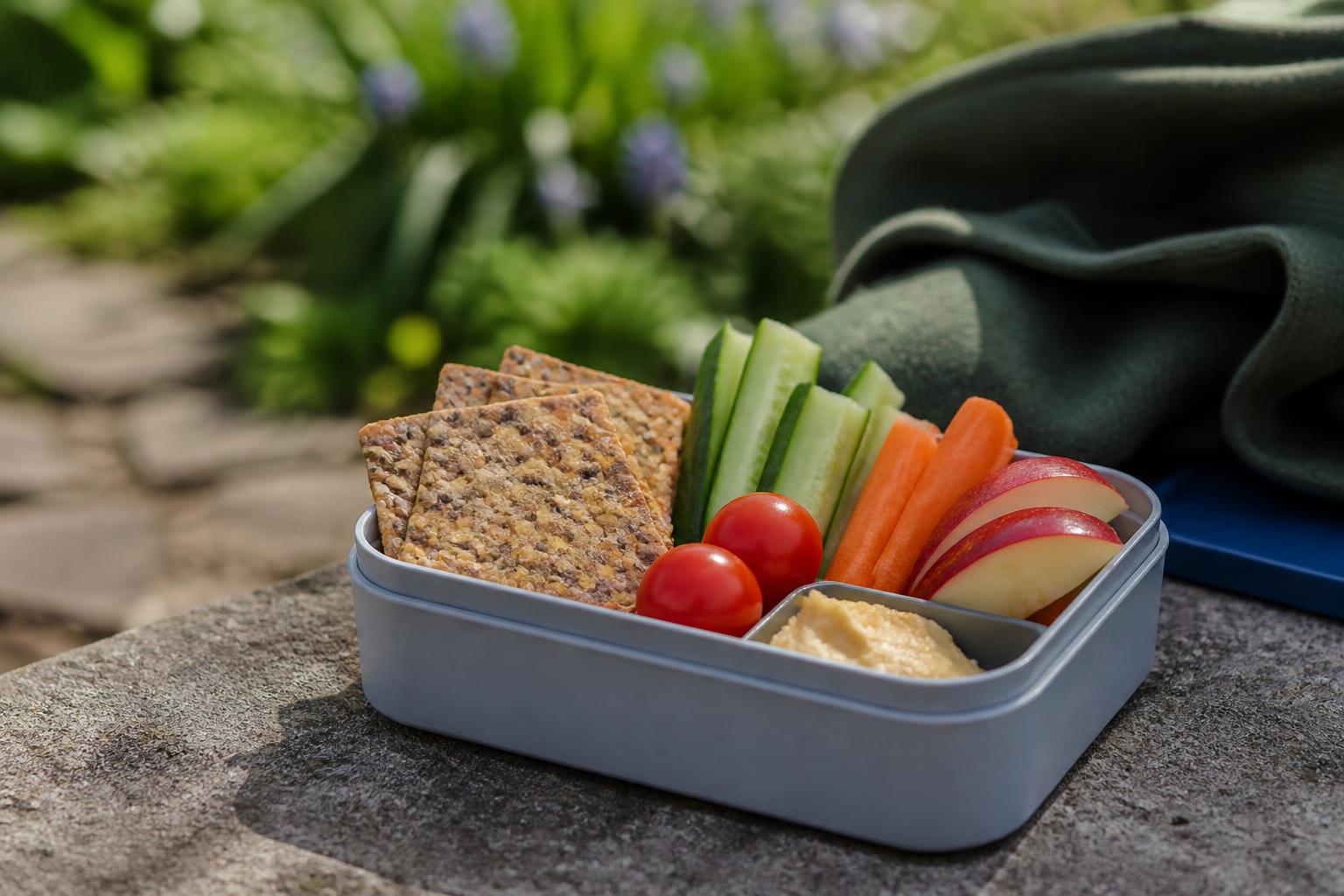
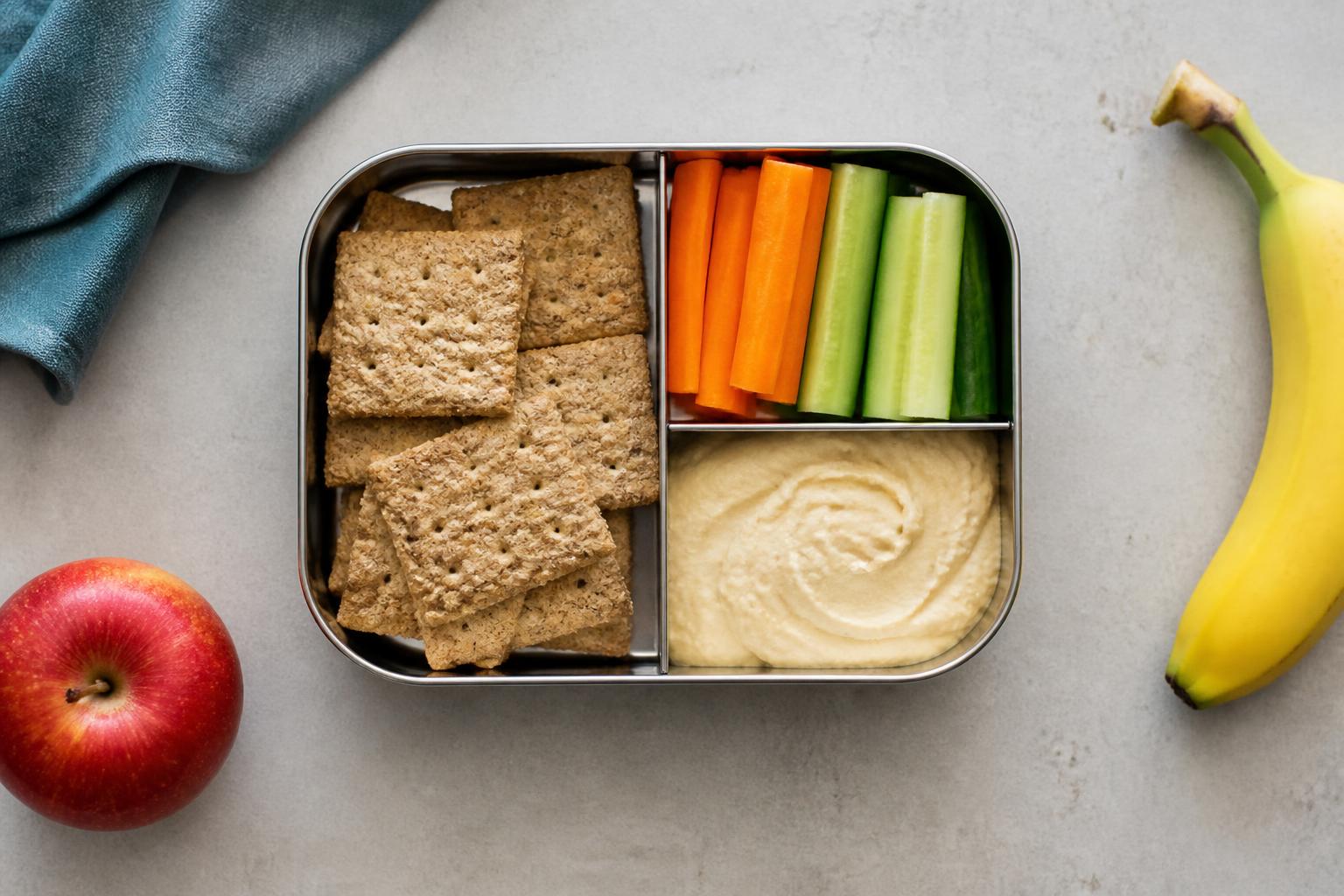
It also helps to decide whether roasted chickpeas are the whole snack or part of one. A 25g to 30g portion scattered into a lunch box with fruit, yoghurt or chopped veg is a different thing from a 70g evening graze in front of the telly. Neither is morally loaded, but they are not the same intake.
If you tend to choose foods for crunch rather than hunger, portioning them out before you start is useful. We cover that broader habit in our guide to crunchy snacks that keep calories in check, because texture is often what drives the hand back into the bowl.
Why roasted chickpeas can look more calorie-dense than boiled chickpeas
This is where a lot of confusion starts. Roasted chickpeas often look much more calorie-dense than boiled chickpeas on a label, especially per 100g. That does not mean roasting has somehow created extra calories out of thin air.
The main difference is water.
Boiled chickpeas contain plenty of water. Water adds weight but no calories. So when you look at boiled chickpeas per 100g, you are looking at a food that is still carrying a fair bit of moisture. Roast those same chickpeas and much of that water leaves in the oven or air fryer. The chickpeas get lighter, firmer and crunchier. The energy from the chickpeas is now packed into a smaller, drier weight.
That means the calories per 100g rise, even if the actual total calories in the chickpeas have not changed much at all.
A simple way to picture it is grapes and raisins. Raisins look more calorie-dense per 100g because they are dried. The fruit did not become magically more energetic. It just lost water. Roasted chickpeas work on a similar principle, though oil can add extra calories as well.
This is why comparing boiled chickpeas and roasted chickpeas purely on the basis of per 100g can be misleading. You are not comparing like with like in terms of moisture. A more useful comparison is the portion you would actually eat. You might comfortably eat 100g of boiled chickpeas in a salad, but 100g of roasted chickpeas is a much larger, denser snack than many people realise.
Texture also changes perception. Crunchy foods often feel light because they are airy and dry, but they can still deliver a lot in a small volume. Boiled chickpeas feel heavier and more filling in the bowl, yet they may look lower on paper because of all that water weight. This is one reason snack foods can be easy to underestimate.
If you are mixing roasted chickpeas into meals rather than eating them straight, this difference becomes helpful. A smaller amount can bring a lot of crunch and flavour to a salad or soup topper. Our piece on how to build a roasted chickpeas salad that stays crisp is a good example of using them as a finishing element rather than treating them as an unlimited scatter.
What to check on a UK nutrition label
For UK shoppers, the most useful place to start is the back or side of the pack, not the health halo on the front.
By law, most prepacked foods sold in Great Britain must show a nutrition declaration per 100g or per 100ml. That standard format lets you compare one brand with another. You will usually see energy in both kilojoules and kilocalories, followed by fat, saturates, carbohydrate, sugars, protein and salt.
For roasted chickpeas, check these points in order.
First, look at calories per 100g. This gives you the comparison point across products. It is especially handy when one brand calls 25g a serving and another calls 40g a serving.
Second, look for calories per serving, if given. In the UK, serving information can be provided in addition to the mandatory per 100g values, but the serving size itself is set by the manufacturer. That means it is useful, not absolute. If the stated serving is tiny compared with what you would actually pour into your hand, adjust accordingly.
Third, read the ingredients list. Ingredients are listed in descending order by weight at the time of manufacture. If chickpeas come first and oil appears later, that usually suggests a lighter use than a product where oil is very prominent. If sugar, glucose syrup, honey or starches appear in a flavoured coating, that can explain why one version is higher than another.
Fourth, check the fat line, and then the saturates line. A higher fat figure often reflects more oil. Saturates tell you more about the type of fat used. If a product uses sunflower or rapeseed oil, saturates may be lower than with some other fats, though the total calories can still be substantial.
Fifth, look at sugars and salt. Plain roasted chickpeas are not usually a high sugar food, but flavoured versions can creep up. Salt matters because these snacks are easy to keep eating. In the UK, labels declare salt, not sodium, which is helpful because it shows the actual figure most people recognise. If you compare with non-UK sources, note that some may talk in sodium instead.
Allergen information is worth checking too, especially on seasoned or coated products made in facilities handling nuts, sesame or cereals containing gluten. Chickpeas themselves are not the whole story once flavourings are involved.
If you are reading a label in Northern Ireland or comparing imported products, the broad structure is very similar under retained and EU-derived food information rules, but front-of-pack schemes and presentation can vary slightly by market. The key practical point remains the same, compare per 100g first, then sense-check the serving.
One final label trap is “high protein” or “source of fibre” language on the front. Those claims may be perfectly legitimate, but they do not tell you the calorie picture by themselves. A snack can be high in protein and still be fairly energy-dense. Roasted chickpeas often do offer fibre and some protein, which is useful, but the rest of the panel still matters.
Are roasted chickpeas a sensible everyday snack?
Yes, they can be, provided we treat them like a proper snack rather than a bottomless garnish bowl.
Roasted chickpeas have a lot going for them. They are crunchy, savoury, portable, and generally offer more fibre and protein than many standard crisp-style snacks. That combination can make them satisfying, particularly when the portion is deliberate rather than accidental. They also work well in lunch boxes, desk drawers and cupboard backup plans, which counts for a lot in everyday eating.
But “sensible” depends on context.
If we want something that feels substantial and crunchy, a moderate portion of roasted chickpeas can make good sense. If we want the lowest-calorie possible thing to mindlessly munch through for half an hour, they are not that. They sit in the middle ground, more nutritious than many ultra-processed crunchy snacks, but still concentrated enough that portions matter.
Their fibre and protein may help with satiety, though not identically for everyone. Some people find a small serving genuinely steadying between meals. Others can crunch through a large packet because the texture is moreish and the seasoning does its job. That is not a flaw in the food, just a reminder that snack format affects behaviour as much as nutrition panels do.
They are often most useful when paired with a bit of structure. A measured portion in a pot. A topping for soup. A crunchy add-on to a salad. Part of a healthy lunch box that still feels like a treat. In those roles, they bring plenty of pleasure without needing to carry the whole eating occasion on their own.
Homemade versions can be especially practical if you like controlling oil and seasoning. Packaged versions win on convenience and consistency. Neither is automatically better. The sensible choice is the one whose portion, ingredients and place in your day actually suit you.
So, how many calories are in roasted chickpeas? Usually enough that they deserve a glance at the label, not enough that they need a dramatic warning label in your mind. Think realistic portions, remember what roasting does to water weight, and use the per 100g figure as a comparison tool rather than a scare tactic. When we do that, roasted chickpeas become what they should be, a crunchy, useful snack with a calorie count that makes sense once you know how to read it.

Questions about this article or a correction to suggest? Get in touch. Read more about our editorial approach.