If you want seed crackers that stay crisp, the key is not a mysterious ingredient. It is controlling water, making a mixture that binds without turning rubbery, spreading it thinly and evenly, and baking it long enough to dry right through. Most disappointing batches are not under-seasoned, they are under-dried, too thick in the middle, or packed away before they are fully cool.
A good seed crackers recipe for UK kitchens can be very simple. You can make a reliable tray with supermarket staples such as sunflower seeds, pumpkin seeds, flaxseed, chia seeds, oats and a little salt. Once you understand what each ingredient is doing, it becomes much easier to get that proper snap instead of a bendy, chewy bite.
What makes a seed cracker crisp rather than chewy
Crispness is mostly about moisture. A cracker feels crisp when enough water has been driven out during baking and cooling. If too much moisture remains trapped in the centre, the cracker may seem firm at the edges but soften as it sits. That is why a tray can look done, then turn leathery an hour later.
The second part is binding. Seed crackers need something to hold everything together, but too much binder can make them dense or tough. In many recipes, ground flaxseed and chia do this job. Once mixed with water, they form a gel that helps the seeds cling together. It is useful, but there is a balance. Too little and the crackers crumble. Too much and they dry into something closer to a hard flapjack than a cracker.
Thickness matters just as much. A thin, even layer dries quickly and bakes evenly. A tray that is thick in the middle and thin at the edges gives you the classic problem of dark rims and a soft centre. If you have ever peeled off the corner pieces thinking they were perfect, only to find the middle still pliable, that is exactly what happened.
Fat also plays a role. Seeds naturally contain oils, which help flavour and texture, but they do not guarantee crispness on their own. In fact, very oily mixtures can feel rich yet still soften if moisture is left behind. The solution is not to strip away the fats, it is to bake and cool properly.
Cooling is often overlooked. Fresh from the oven, crackers may still contain steam. As they cool on a rack, that steam escapes and the texture firms up. If you stack them warm or seal them in a container too soon, that moisture has nowhere to go and the crackers soften themselves.
Which ingredients work best in a UK seed cracker recipe
For a practical seed crackers recipe in the UK, we like ingredients you can find in Tesco, Sainsbury's, Waitrose, Morrisons, Asda, Aldi, Lidl or a decent wholefood shop.
A strong base usually includes sunflower seeds and pumpkin seeds. Sunflower seeds bring nuttiness and a flatter shape that helps the mixture spread neatly. Pumpkin seeds add crunch and a bigger bite, but because they are chunkier, they are best balanced with smaller seeds so the crackers do not become awkward to slice.
Flaxseed is one of the most useful ingredients. In UK shops you will often see it labelled flaxseed or linseed, sometimes golden, sometimes brown. Ground flaxseed is especially helpful because it absorbs water and forms a binding gel more quickly than whole seeds. Whole flaxseed can still work, but it binds less effectively unless there is enough chia in the mix.
Chia seeds are tiny but important. They swell in water and help create a mixture that holds together. They also fill gaps between larger seeds, which helps prevent weak spots that snap apart before baking is finished.
Rolled oats are a smart addition if you want a more even sheet that slices cleanly. They absorb some water, soften the seed-heavy texture and help avoid a tray that feels too loose and gravelly. Use standard porridge oats rather than jumbo oats if you want a finer texture.
Psyllium husk is another optional binder, sold in many UK supermarkets and chemists. It creates a very strong gel, so a little goes a long way. If you use it, reduce other binders slightly. Too much psyllium can make the crackers dry in an odd, fibrous way rather than properly crisp.
Salt matters more than people think. Seed crackers can taste flat without enough seasoning, even if the texture is right. Fine sea salt mixes more evenly than coarse flakes. You can also add black pepper, smoked paprika, cumin, rosemary or garlic granules, but keep the seasoning dry. Wet flavourings add moisture and can shorten the crisp life.
Water is not just filler. It activates the chia and flax and lets the mixture spread. The right amount gives you a thick, spoonable mass that settles under pressure. Too little and it stays crumbly. Too much and it takes forever to dry.
A little olive oil is optional. It can help with flavour and browning, but many seed crackers bake perfectly well without it because the seeds contain natural oils already.
If you want to compare how different seed mixes behave, our guide to comparing seed crackers without guesswork is useful, and if flax is your main ingredient, we have a separate piece on making flax seed crackers simply for everyday snacking.
How to make seed crackers step by step
Here is a reliable base method for one large baking tray.
Use:
- 100g sunflower seeds
- 100g pumpkin seeds
- 75g rolled oats
- 40g ground flaxseed
- 20g chia seeds
- 1 tsp fine sea salt
- 250ml water
- 1 tbsp olive oil, optional
Line a large flat baking tray or roasting tin with baking parchment. Heat the oven to 160C fan, 180C conventional, or gas mark 4.
Mix all the dry ingredients in a large bowl. Stir well so the flax and chia are evenly distributed. This matters, because if all the binder sits in one patch, the tray will set unevenly.
Pour in the water, and the oil if using. Stir thoroughly. At first it may look too wet, then after a minute or two the mixture will start to thicken. Leave it to rest for 10 to 15 minutes. That short rest gives the chia and flax time to absorb water and form a gel.
After resting, check the texture. You want a mixture that is thick and scoopable, not runny, but not stiff like bread dough. If it is dry and crumbly, add water 1 tablespoon at a time. If it is very loose and puddly, leave it another 5 minutes before adding anything else. It often firms up more than expected.
Scrape the mixture onto the lined tray. Put a second sheet of parchment on top and use your hands or a rolling pin to press it into a thin, even rectangle. Aim for about 3mm thick. Thinner gives a crisper result, but if you go much thinner at the edges than in the middle, the tray will bake unevenly.
Remove the top sheet of parchment. Tidy the edges if you like, but perfection is not required. Rustic is fine, provided the thickness is even.
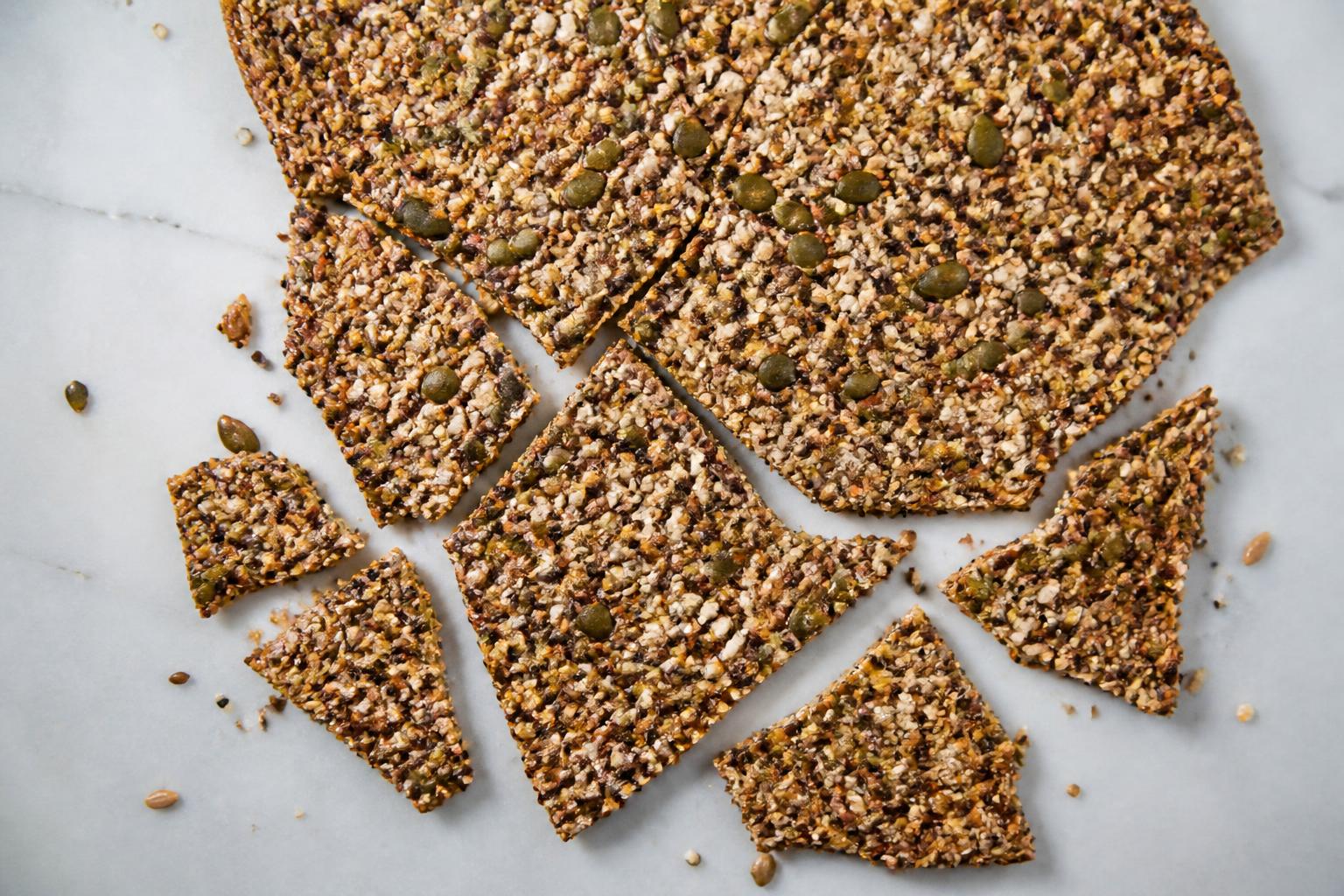
Score the sheet before baking. Use a sharp knife, dough scraper or pizza wheel to mark squares, rectangles or diamonds. Do not cut all the way through the parchment, just press enough to create clear lines. This makes it easier to break or cut the crackers neatly later without shattering them.
Bake for 25 minutes, then remove the tray and, if the score lines are still visible, carefully cut along them or flip sections if needed. If the outer pieces already feel firm, you can separate them and return the softer centre pieces to the oven. This staged approach often gives the best all-over crispness.
Bake for another 15 to 25 minutes, checking every 5 to 10 minutes towards the end. The crackers should feel dry to the touch and look lightly golden, with deeper colour around the edges but not dark brown.
Once baked, transfer the crackers to a wire rack and cool completely. This is non-negotiable if you want them to stay crisp.
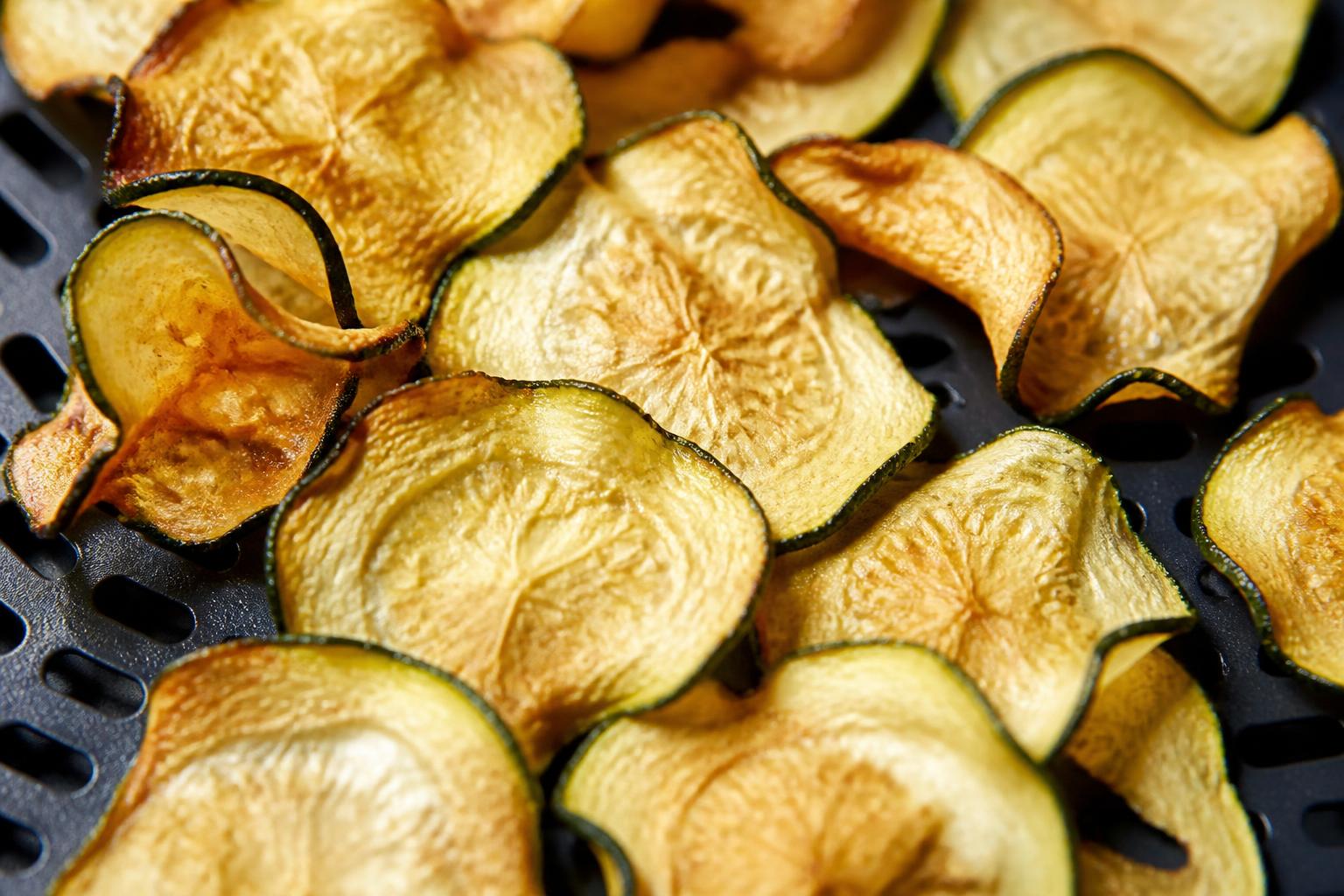
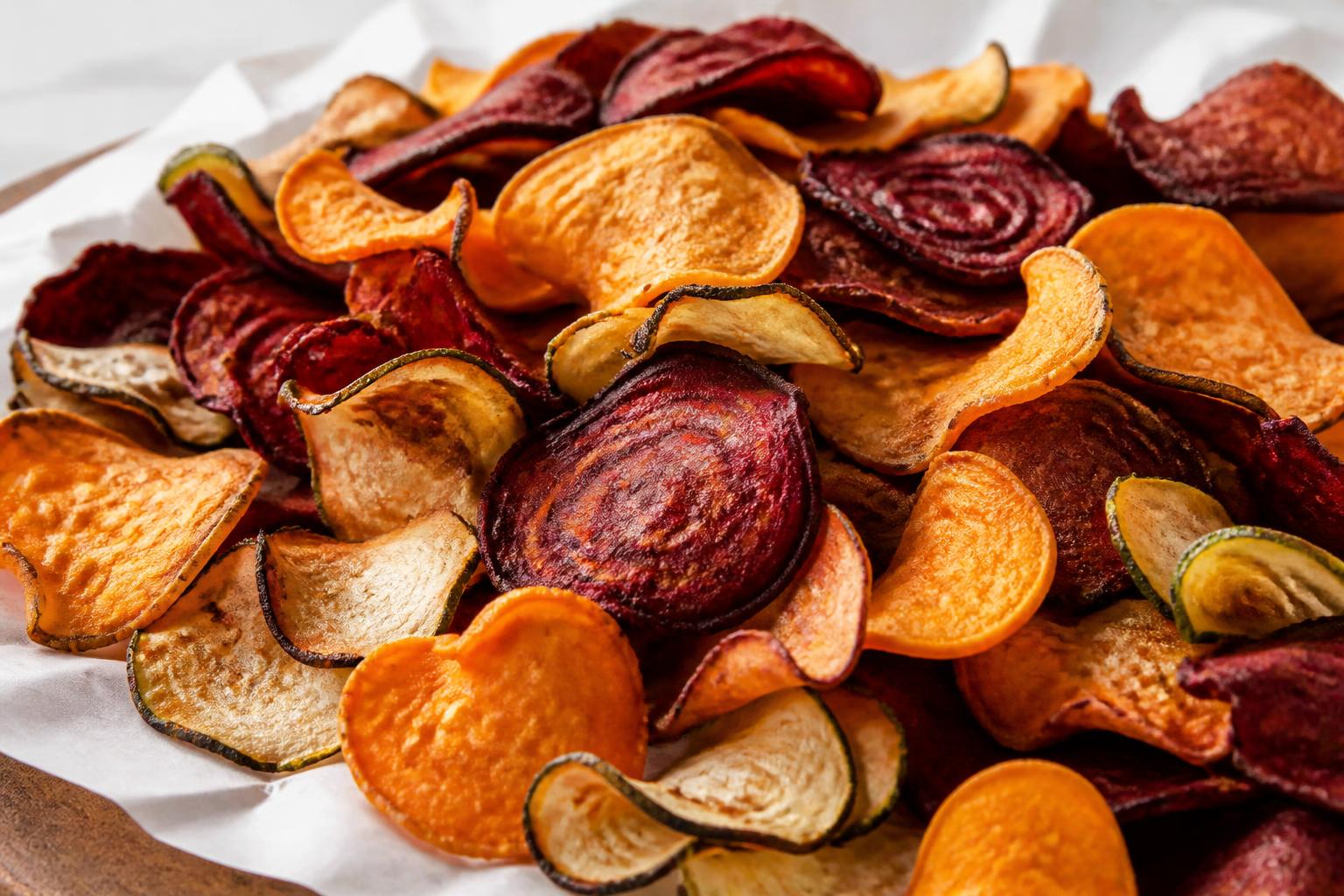
The same principle applies in other homemade crunchy snacks too. Our piece on making vegetable crisps that stay crisp covers the same battle against trapped moisture, just with a different ingredient.
How long should you bake seed crackers?
For most home ovens, seed crackers bake well at 160C fan or 180C conventional. Total baking time is usually 40 to 50 minutes, sometimes a little longer if the layer is thick or your oven runs cool.
The first part of baking sets the structure. The second part dries it out. That is why pulling the tray at 25 or 30 minutes often gives you crackers that seem done but soften later. They have coloured, but they have not fully dried.
Look for these signs that they need longer:
- the centre still feels slightly tacky
- the sheet bends rather than snaps
- the underside feels damp when lifted
- the middle looks paler and shinier than the edges
If the edges are browning too quickly while the centre stays soft, lower the oven by 10 to 20 degrees and remove the outer crackers as they are ready. Then return the middle to the oven on its own. Many ovens have hot spots, so rotating the tray halfway through also helps.
If you prefer a very delicate cracker, bake until fully dry but only lightly coloured. If you want a toastier flavour, leave them until a shade darker, but watch carefully. Seeds can move from nutty to bitter quite quickly, especially sesame or flax-heavy mixes.
A cooling test is helpful. Take one cracker out, let it cool for 5 minutes, then snap it. If it crisps as it cools, you are close. If it stays flexible, keep baking.
Common seed cracker mistakes and how to fix them
If the crackers crumble apart, there are usually two causes. Either there was not enough binder, or the mixture was not pressed together firmly enough before baking. Next time, increase the ground flaxseed or chia slightly, or add a little more water so the gel forms properly. Press the mixture down well between parchment sheets.
If they stick to the paper, they were probably under-baked or the parchment was poor quality. A fully dried cracker usually lifts away cleanly once cooled a little. Bake longer, and use proper baking parchment rather than greaseproof paper, which is not the same thing in UK kitchens.
If the edges burn before the centre dries, the mixture is too unevenly spread or the oven is too hot. Roll it flatter and more evenly, especially at the corners. Lower the heat slightly and remove the outer pieces earlier.
If the crackers taste bitter, they may be over-baked, or the seeds may have been old before you started. Seeds contain oils that can go rancid, particularly if they have sat in a warm cupboard for ages after opening. Give them a sniff before using them. They should smell nutty and fresh, not painty or stale.
If the crackers go soft after a day, they either were not fully cooled before storing or they still contained too much moisture from the bake. The good news is that this is easy to fix. Put them back in the oven at 140C fan for 8 to 12 minutes, then cool on a rack again.
If the mixture seems impossible to spread, it may simply need a bit more water. Seed mixes vary. Different brands of oats, flax and chia absorb differently, so exact quantities can shift slightly from kitchen to kitchen. Add water gradually until the texture is workable.
If the crackers feel hard rather than crisp, the layer may be too thick or the binder too heavy. Crispness should give you a clean snap, not a jaw workout. Spread thinner next time and go easier on psyllium or flax.
How to store seed crackers and keep them crisp
Cool the crackers completely on a wire rack before storing them. Not mostly cool, completely cool. Any lingering warmth creates condensation in the container, and that moisture will undo your careful baking.
Once cool, store them in an airtight container at room temperature. A metal tin with a tight-fitting lid works well, as does a rigid plastic or glass container with a good seal. Avoid paper bags or loosely covered bowls, which let humidity in. In a damp kitchen, this matters even more.
If you want extra insurance, you can add a small piece of kitchen paper to the bottom of the container to catch any trace moisture, but it should not be necessary if the crackers were properly baked and cooled.
For everyday home storage, eat them within about a week for best texture and flavour. They may last longer if kept dry, but because homemade crackers contain natural oils from the seeds, they are best while fresh. UK food safety guidance does not set a special legal rule for homemade seed crackers in your own kitchen, but common sense applies. If they smell stale, look odd, or taste rancid, discard them.
If they soften, refresh them in the oven at 140C fan for 5 to 10 minutes, then cool again on a rack. Do not microwave them. That tends to make them chewy rather than crisp.
Freezing is possible, but it is not ideal for texture. Seed crackers can pick up moisture when thawed, so room-temperature storage in a well-sealed container is usually the better choice if you plan to eat them over several days.
A crisp seed cracker should feel dry, light and snappy, with a toasted aroma and no hint of tackiness in the centre. Once you get the balance right, the method becomes very forgiving. Thin spread, enough binder, a proper bake, and full cooling, that is what keeps a homemade tray crisp instead of chewy.

Questions about this article or a correction to suggest? Get in touch. Read more about our editorial approach.