Freeze-dried fruit powder earns its place in everyday snacks because it gives you real fruit flavour in a dry, easy-to-use form. It can brighten porridge, tint yoghurt, lift a smoothie, or add a sharp berry note to baking without the extra moisture that fresh fruit brings. That makes it especially handy when you want flavour, colour and convenience all at once.
It is not magic, and it is not automatically a nutritional shortcut. What matters is what is actually in the packet, how much you use, and what job you want it to do. Once you know how it is made and how to read the label, it becomes much easier to work out when fruit powder is the clever option and when fresh or chopped dried fruit is still the better choice.
What freeze dried fruit powder actually is
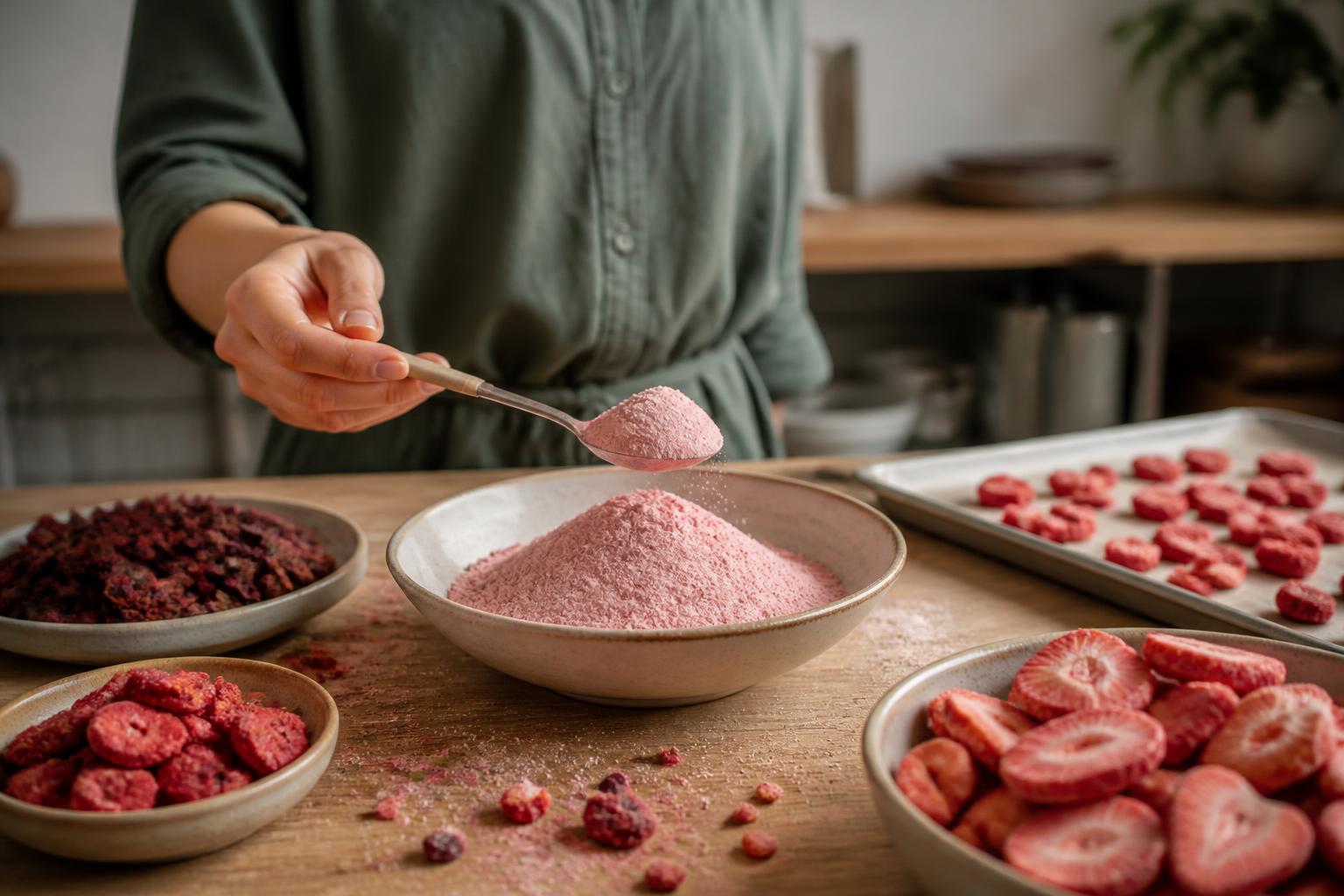
Freeze-dried fruit powder starts life as ordinary fruit. The fruit is frozen, then placed under conditions where the ice turns straight into vapour rather than melting into liquid first. That removes water while keeping much of the fruit’s original structure, aroma and colour. Once the fruit is fully dry, it is milled into a powder.
In plain English, it is fruit with the water taken out very gently, then ground fine.
That process matters because it is quite different from other fruit ingredients you might keep in the cupboard.
Fresh fruit, of course, still contains all its natural water. That gives you juiciness and bite, but it also means a shorter shelf life and more impact on the texture of whatever you are making. Stir fresh strawberries into yoghurt and you get sweetness, but also wetness. Add mashed banana to pancake batter and the whole mix changes.
Ordinary dried fruit, such as raisins, dried apple pieces or apricots, has had water removed too, but usually by warm air drying. It stays chewy rather than crisp, and it is still a piece of fruit rather than a powder. That makes it useful for texture, but less useful when you want a smooth finish or an even flavour through a mixture.
Spray-dried fruit ingredients are another category again. These are often made from fruit juice or purée that is sprayed into hot air to dry it quickly into powder. Because fruit sugars can be sticky, manufacturers often add carriers such as maltodextrin, starch or gum arabic to make the powder flow better and stop it clumping. Spray-dried ingredients can be very useful in food production, but they are not always the same thing as pure freeze-dried fruit powder.
That is why two powders that both look pink can behave very differently in the bowl. One may be nothing but freeze-dried raspberry. Another may be fruit solids blended with carrier ingredients, sugar or flavourings. For home cooks and snack-minded shoppers, that difference is worth noticing.
Texture is another clue. Freeze-dried fruit powder often has an airy, light feel and a vivid aroma when you open the pouch. It tends to taste recognisably of the original fruit, especially tart fruits such as raspberry, strawberry, blackcurrant and mango. Because there is no added water, the flavour can seem surprisingly punchy for a small spoonful.
Why people use it in snacks and home cooking
The simplest reason people use fruit powder is that it is practical. It gives a lot of fruit character without asking you to peel, chop, stew or strain anything.
Flavour is the first draw. A little freeze-dried berry powder can bring a bright, tangy note to overnight oats or energy bites in a way that feels cleaner and less jammy than fruit spread. In recipes where extra liquid would be a nuisance, that is a real advantage.
Colour comes close behind. Powders made from berries, beetroot-blended fruits, dragon fruit or mango can naturally tint frostings, yoghurt, porridge and snack mixes. If you want a pink yoghurt bark or a rosy protein ball, powder does the job without making the mixture sloppy. It is one reason it shows up so often in modern snack recipes and Instagram-friendly bakes, but the appeal is more than cosmetic. Colour often signals flavour, so the visual lift helps the whole snack feel more inviting.
Texture is another reason. Fresh fruit can water down a batter, split a creamy filling, or make a crisp topping go soggy. Fruit powder avoids that. In no-bake snacks, it can even help absorb a bit of moisture from nut butter, dates or yoghurt. That can make mixtures easier to roll, press or crumble.
Shelf stability matters too. A sealed pouch of freeze-dried fruit powder is easier to keep on hand than a punnet of berries that may be past their best by the weekend. For everyday snacking, convenience often decides what actually gets used. If the ingredient sits happily in the cupboard and needs only a teaspoon or two at a time, it has a better chance of becoming part of your routine.
It also helps with consistency. Fresh fruit changes with the season. Strawberries can be fragrant one week and watery the next. A fruit powder product is usually more predictable, which is useful in baking and batch-prepped snacks.
There is also the portability factor. A spoonful of powder stirred into plain yoghurt at work is easier than carrying and preparing fresh fruit. The same goes for porridge at the office, a quick smoothie at home, or homemade snack mixes where you want fruit flavour without sticky chopped pieces.
That said, it is worth keeping expectations tidy. Fruit powder is not a direct stand-in for every fruit job. If you want juicy bursts in a muffin or the bite of apple in flapjack, powder will not do that. It is best thought of as a flavour and colour ingredient first, and only sometimes a texture tool.
We often talk about everyday snacking in the same practical way when we cover ingredients such as sweet snacks that feel satisfying without going overboard or roasted chickpeas that earn a place in the snack cupboard. The useful ingredients are usually the ones that solve a real kitchen problem. Fruit powder does exactly that.
How to read the label before you buy
The front of the pack can make almost any fruit powder sound simple. The back of the pack tells you whether it really is.
Start with the ingredients list. If it says something like “100% freeze-dried strawberry powder” or “freeze-dried raspberry”, you are looking at a pure fruit product. If the list includes sugar, dextrose, maltodextrin, starch, flavouring, colour, silicon dioxide or anti-caking agent, it is a blend rather than pure fruit.
That does not automatically make it bad. It just means you are buying a different kind of ingredient.
Carriers are common in powdered products because they improve flow and reduce clumping. Maltodextrin is one of the most common. In a spray-dried fruit powder, it may be doing a lot of the structural work. If you want the strongest fruit taste for your spoonful, a pure freeze-dried powder will usually deliver more directly.
Watch for wording such as “fruit powder blend”, “fruit preparation”, or “flavoured powder”. Those terms often signal that fruit is only part of the story. Also check the order of ingredients. Under UK food labelling rules, ingredients are listed in descending order by weight at the point of manufacture. If sugar comes before fruit, the product is more sugary blend than fruit ingredient.
The nutrition panel can help too, but read it sensibly. Powders are concentrated, so the values per 100g may look dramatic. That is not how most people use them. If a serving is a teaspoon into porridge, the actual amount eaten is much smaller. Still, the panel can reveal whether a product is largely fruit or padded out with other ingredients.
For allergens, remember that pure fruit powder may be naturally free from many common allergens, but cross-contamination statements still matter. If you are buying for someone with a serious allergy, read both the ingredients and any precautionary “may contain” statement carefully.
If the product is sold in the UK, the food information should follow UK rules. Since Brexit, Great Britain and the EU no longer operate under a single fully shared labelling regime, although many requirements still look familiar. In practice, UK shoppers should make sure the label is suitable for the UK market, shows the food business operator details required for sale here, and gives mandatory information in a clear way. Northern Ireland can differ because of its separate arrangements for some goods, so if you are buying from a small seller shipping across borders, labelling can be one of the details that varies.
Storage instructions are worth reading as well. Once opened, fruit powder usually needs to be kept tightly sealed and dry. Moisture is the enemy. If steam from porridge or wet spoons gets into the pouch, clumps will appear quickly.
Where it works best in the kitchen
The easiest place to start is breakfast. Stir a teaspoon of freeze-dried fruit powder into porridge after cooking and you get fruit flavour without boiling berries into the oats. Raspberry and strawberry work especially well here. Banana powder can add sweetness, though it tends to be softer in flavour. If you want visible fruit as well, use powder for the base flavour and top with fresh slices.
Yoghurt is another natural home. Swirl powder into plain Greek yoghurt or skyr and it turns into something closer to a fruit yoghurt, but with you in charge of the intensity. This is one of the clearest examples of when powder works better than fresh fruit. Fresh berries can release juice and thin the yoghurt. Powder keeps things thick and spoonable.
Smoothies are slightly different. Powder is convenient, but not always better than frozen fruit. If you already want cold, body and bulk, frozen fruit usually wins. Where powder shines is when you want a flavour boost without making the drink larger or more watery, or when the fruit you want is not in season.
In baking, fruit powder can be brilliant. Add it to buttercream, icing, sponge batter, biscuits, meringues or cheesecake filling for flavour and colour without extra liquid. It is particularly useful in recipes where water content affects structure. A lemon drizzle cake can take fresh zest because zest is dry enough. A raspberry icing needs a different approach, and powder is often the easiest answer.
For no-bake snacks, it works beautifully in energy balls, oat bars and yoghurt bark. Mix berry powder into a date and oat base, or dust it over white chocolate-coated nuts for a tart contrast. It can also help in homemade trail mix seasonings, though you need to use it lightly and keep the mix dry.
Snack mixes are where people sometimes overestimate it. Fruit powder is not a substitute for dried fruit pieces if you want chew. It is better as a seasoning note. Think of it as the sharp, fruity accent in a mix of nuts, seeds and crisp elements, not the main event.
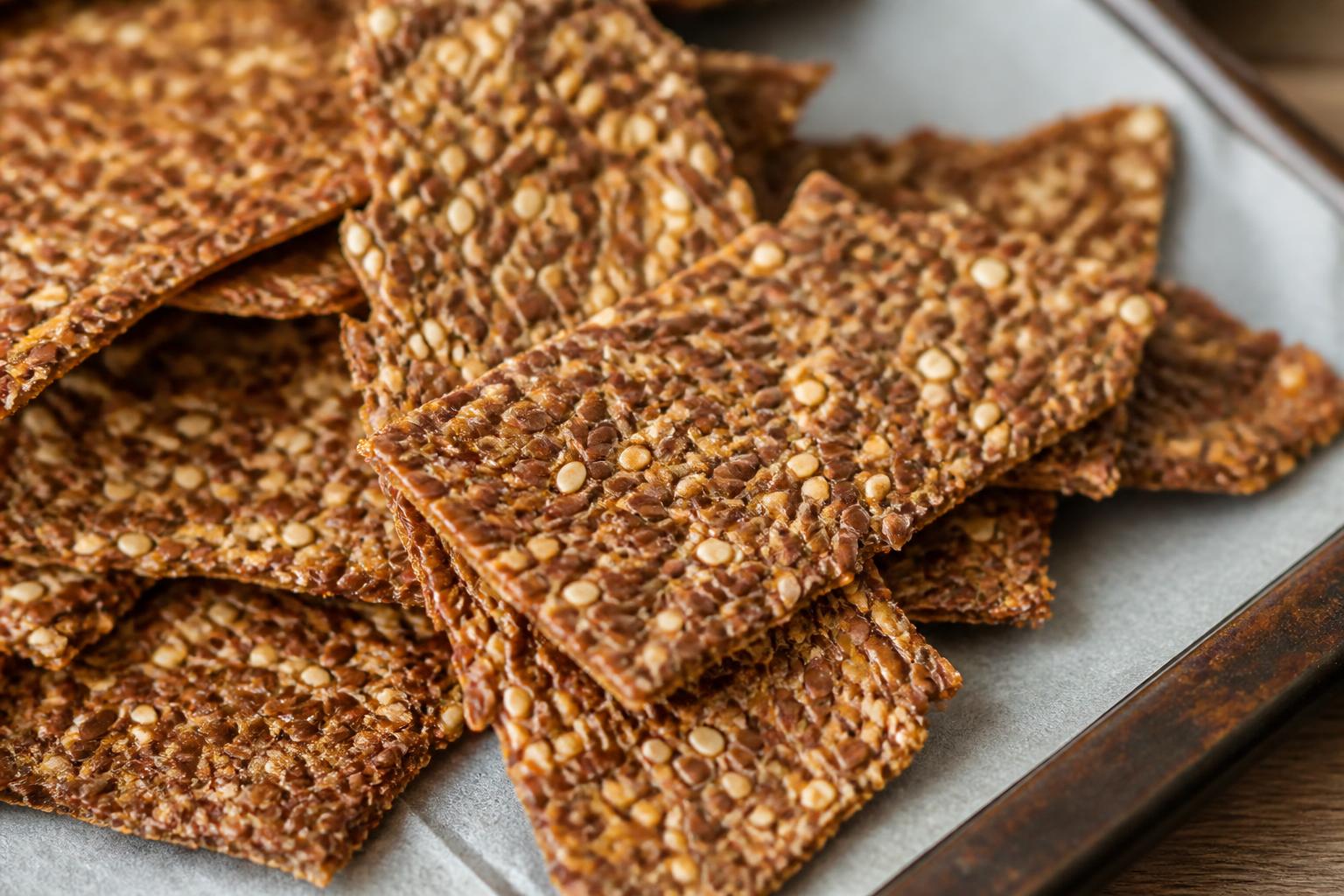
It can also work in savoury-adjacent snacking. A tiny amount of fruit powder in a spice rub or cracker dough can add brightness, especially with beetroot, apple or tomato-based blends. The key is restraint. You are after lift, not pudding. If you enjoy making crunchy pantry snacks, the same practical thinking applies in recipes like flax seed crackers for everyday snacking.
A few kitchen tips make life easier:
Use dry spoons only. One damp teaspoon can turn a fine powder into a sticky corner of regret.
Add gradually. Powders concentrate quickly, especially tart berry ones.
Sieve if needed. In icing or yoghurt, a quick sift avoids little pockets of powder.
Pair thoughtfully. Strawberry and raspberry suit dairy and oats. Mango and pineapple lift coconut-based snacks. Apple works well with cinnamon and nuts.
Store in an airtight container away from heat and light. If the original pouch does not reseal well, decant it.
Most importantly, use it where dryness is an advantage. That is the moment fruit powder really earns its keep.
What it can and cannot tell you about nutrition
Fruit powder often arrives with a health halo. That is understandable. It comes from fruit, it can be vividly coloured, and it feels less processed than many sweet flavourings. But nutrition is not something we can judge from the word “fruit” alone.
What it can tell you is that fruit has been concentrated by removing water. That usually means the flavours, sugars and many other components of the fruit are present in a smaller, lighter quantity. A tablespoon of powder is not nutritionally identical to a tablespoon of fresh fruit, because the weight, water content and portion size are completely different.
This is where broad claims become slippery. It is true that freeze-drying can preserve a good deal of the original fruit character. It is also true that how much of any nutrient remains depends on the fruit, the process, storage conditions and time. Once powdered, exposure to air, light and moisture can also affect quality. So sweeping promises are best treated with caution.
Portion size matters even more. The nutrition panel may show values per 100g, but few people are eating 100g of freeze-dried fruit powder in one go. In a home kitchen, you are more likely to use 5g to 10g, sometimes less. That can still make a difference to flavour, but it may not transform the nutritional profile of the whole snack.
It also cannot tell you whether the overall snack is balanced. A yoghurt bowl with fruit powder, nuts and oats is a different proposition from a frosted biscuit dyed pink with berry powder. The ingredient may be the same. The snack around it is not.
That is why we prefer to treat fruit powder as one ingredient among many, not a nutritional badge of honour. If a product contains added sugar, carriers or flavourings, that should form part of your judgement too. Pure fruit powder may be the simpler choice, but even then, simple does not mean limitless.
For reliable public guidance, UK readers are best served by NHS advice and wider government-backed healthy eating resources, rather than social posts promising miracle benefits from a spoonful of anything. Those sources are better for the bigger picture, including fruit and veg intake, sugar, fibre, and what a sensible portion looks like across the day.
If you want a more grounded take on how freeze-dried fruit fits into real snacking, our piece on freeze-dried fruit in the UK without the health halo goes into that mindset directly.
In everyday use, freeze-dried fruit powder is best understood as a clever pantry ingredient. It can make snacks more interesting, more colourful and easier to pull together. It can help you get fruit flavour into places where fresh fruit would be messy or impractical. What it cannot do is answer every nutrition question by itself.
Used with a clear eye and a dry spoon, it is one of the handiest ways to bring a bit of bright fruit energy into the snack routine.

Questions about this article or a correction to suggest? Get in touch. Read more about our editorial approach.