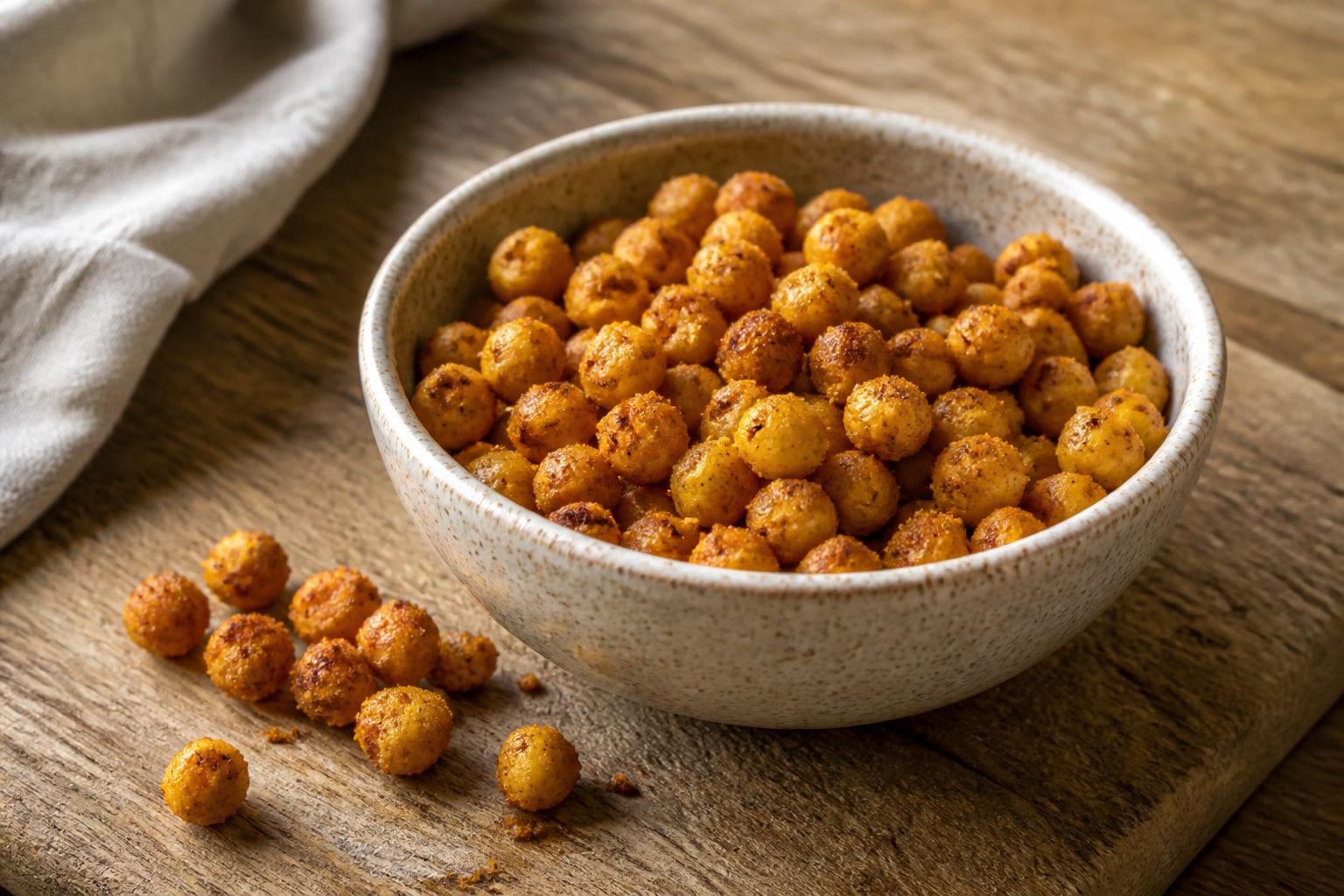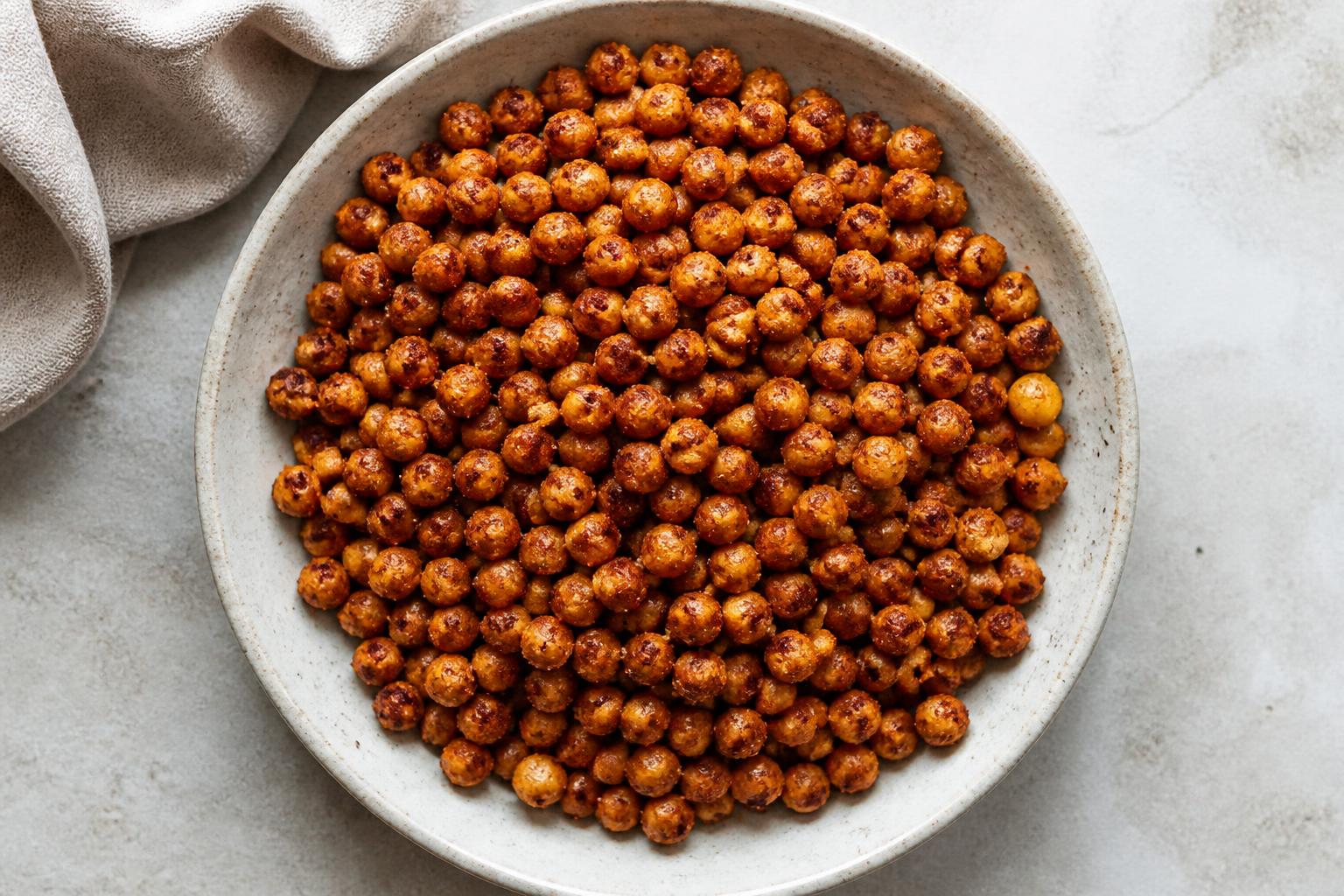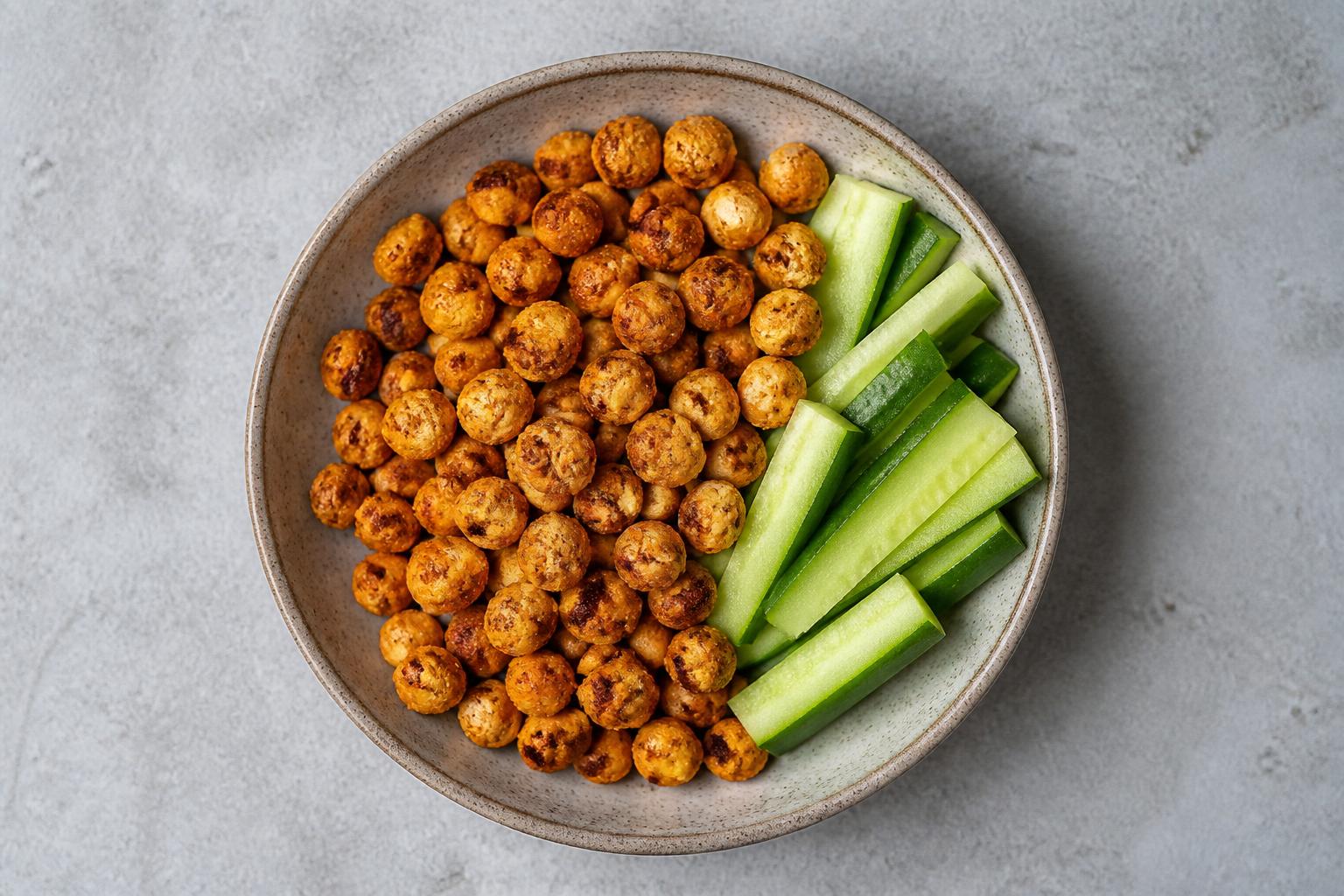
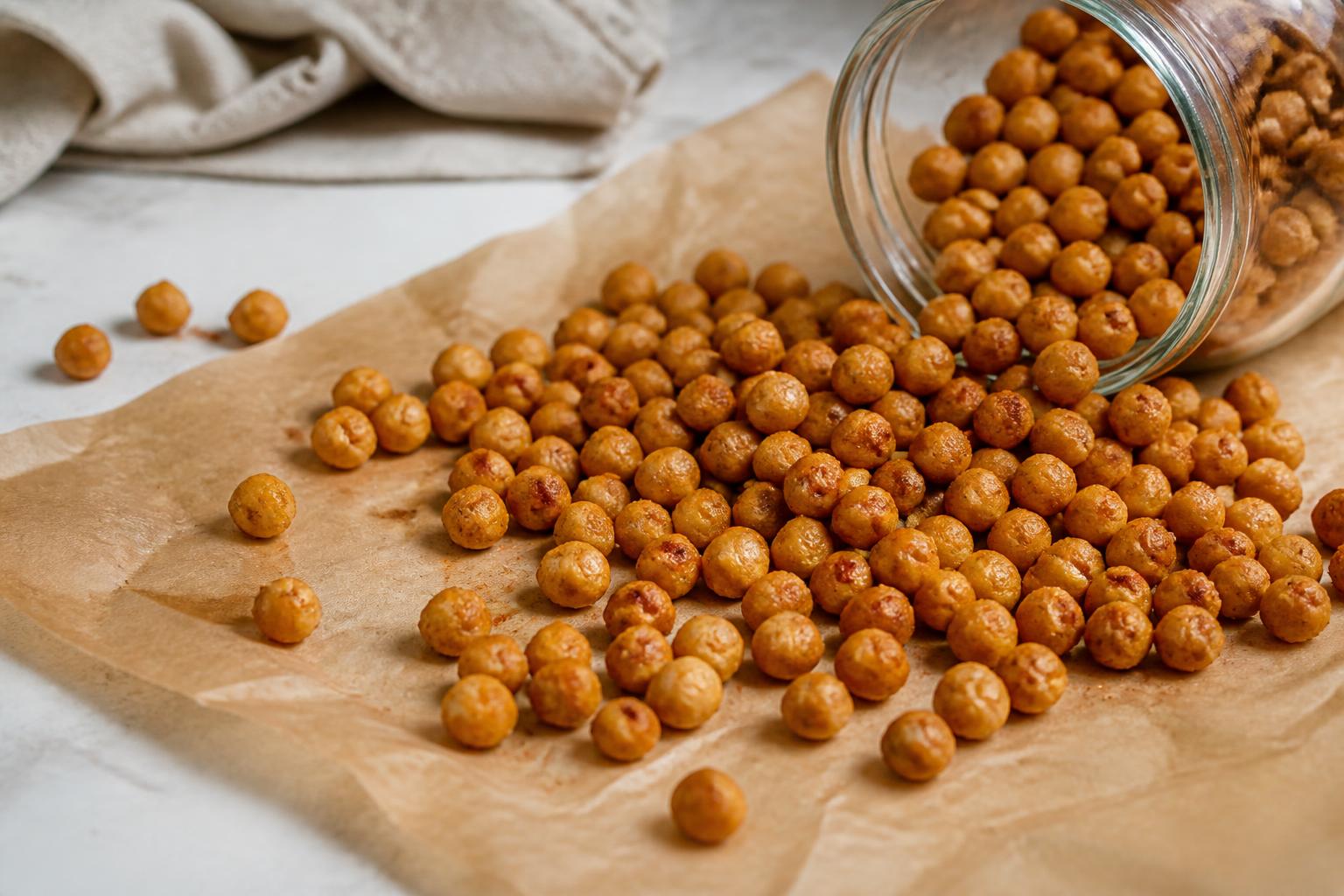
Roasted chickpeas deserve a place in everyday snacking because they do something many snacks fail to manage at once. They bring crunch, fibre, plant protein and a savoury, nutty bite, without leaning entirely on refined starch or sugar. If you are looking into the benefits of roasted chickpeas, the short answer is that they can be a genuinely useful cupboard snack, provided you pay attention to portions and what has been added to them.
They are not magic, and they are not ideal in every situation. A heavily salted, oil-coated bag can feel very different from plain or lightly seasoned roasted chickpeas. But as a format, they are one of the more practical ways to get a crisp snack that has some nutritional substance behind the crunch.
What roasted chickpeas actually offer
Chickpeas start with a strong nutritional base. They are a legume, so they naturally provide carbohydrate, fibre and protein together, rather than giving you only one of those. That combination is one reason they stand out in the snack aisle. Many crunchy snacks are mostly starch and fat. Chickpeas usually offer a bit more balance.
When chickpeas are roasted, much of what makes them useful nutritionally still carries over. The water content drops, which makes them crisp, but the fibre and protein do not disappear because of the roasting itself. In practical terms, that means a roasted chickpea snack can still contribute to your daily fibre intake and can still offer some protein in a portion that feels snackable rather than meal-like.
They also contain naturally occurring micronutrients, including folate and minerals such as iron, magnesium and potassium. The exact amount in a packet depends on the product and portion size, and roasting can affect some heat-sensitive nutrients more than others. Still, the broad picture remains the same. Roasted chickpeas are not just crunchy filler. They come from a whole food with a decent nutritional profile to begin with.
The main thing to remember is that roasting concentrates the chickpeas because moisture is reduced. A handful of roasted chickpeas is denser than the same visual volume of boiled chickpeas. That can work in your favour if you want a compact snack with a bit more staying power. It also means it is easy to eat more than you realise if you are grazing straight from a large bag while answering emails.
This is where the real roasted chickpeas benefits sit. They can bridge the gap between a wholesome ingredient and a snack that actually feels like a snack. They are crisp, portable, shelf-stable and easy to season, but they still carry the fibre and protein people often say they want more of.
If you enjoy building a snack rotation rather than relying on one thing every day, they sit well alongside other options in our guide to healthy high-protein snacks that actually fit real life.
Do roasted chickpeas keep you fuller for longer?
Often, yes, but not in a dramatic or guaranteed way.
Feeling full after a snack depends on several things. Fibre helps by adding bulk and slowing digestion. Protein can support satiety too. Roasted chickpeas offer both, which gives them a better chance of keeping hunger at bay than a snack that is mostly refined carbohydrate. If you usually find that a few crackers or crisps vanish without making much difference, chickpeas may feel more substantial.
Texture matters as well. Crunchy foods usually take longer to chew, and that slower pace can make snacking feel more deliberate. Roasted chickpeas are not something you inhale in three bites unless you are really trying. The dry, crisp texture encourages a bit more chewing, which can help a portion feel more satisfying.
That said, we should not oversell it. Roasted chickpeas are still a snack, not a full meal. If you are genuinely hungry because lunch was hours ago, a modest handful may take the edge off, but it may not carry you all the way to dinner. Pairing them with something else often works better. Think fruit and roasted chickpeas, or a small pot of yoghurt with a side portion of chickpeas if you want a mix of textures and more staying power.
Satiety also depends on what else is in the product. If the chickpeas are coated in sugar or sweet glaze, or if the portion is tiny, the experience changes. A plain or savoury roasted chickpea with a sensible amount of seasoning will usually support fullness better than a highly flavoured version that is easier to overeat.
So, do they keep you fuller for longer? Compared with many standard crunchy snacks, often yes. Compared with a proper meal or a more substantial mini-meal, not necessarily. The sweet spot is using them where they fit best, mid-morning, mid-afternoon, on the commute home, or tucked into crunchy lunch boxes that stay crisp until you eat when you want something savoury with a bit more backbone.
What changes when chickpeas are roasted
Roasting changes chickpeas in ways that matter both nutritionally and practically.
The most obvious shift is texture. Soft, slightly floury cooked chickpeas become crisp outside and, depending on the method, either crunchy through the middle or a little firmer at the centre. That change alone is enough to make them appealing to people who would never choose a bowl of pulses but will happily reach for something crisp and savoury.
Moisture drops sharply during roasting. Less water means more crunch, but it also means the chickpeas become more concentrated by weight. You are eating a drier product, so the portion can look modest while still delivering a fair amount of energy. This is not a problem, it just means portion awareness matters.
Shelf life usually improves too. Once roasted and properly dried, chickpeas keep better than freshly cooked ones, especially if they are packed to stay crisp. Home-roasted chickpeas are a little trickier. They can go from beautifully crunchy to oddly chewy if they pick up moisture from the air or are stored while still warm. If you make your own, the method matters, and so does cooling them fully before sealing them. We cover that in our guide to air fryer roasted chickpeas that stay crisp for longer.
Roasting can also change what gets added. Plain roasted chickpeas may contain little more than chickpeas, a small amount of oil and seasoning. But some products use more oil to improve browning and mouthfeel. Others add plenty of salt, spice blends, sweet coatings or starch-based crisping layers. The result can still be enjoyable, but the nutrition profile moves accordingly.
Fat is the big variable here. Dry roasting with minimal oil keeps the ingredient fairly close to its original character. Oil-roasting or coating can push the snack closer to the nutritional territory of other savoury nibbles. Again, that does not make it bad. It just changes what you are buying.
Salt is another important shift. In the UK, food labels make this easier to judge. If you are comparing products, check the nutrition panel per 100g, not only per serving, because serving sizes can be flattering. A roasted chickpea snack that tastes punchy from chilli, cumin, black pepper or garlic may not need much salt. One that leans heavily on salt for impact can quickly become less everyday-friendly.
Flavourings can be the difference between a useful staple and a novelty snack. Smoky paprika, curry spices, rosemary or tamari-style seasonings can all work well. But if the ingredient list starts reading like a chemistry set, or if sugar appears surprisingly high up for what is meant to be a savoury snack, it is worth asking whether the chickpea is still the star.
When roasted chickpeas are a smart snack and when they are not
Roasted chickpeas are a smart snack when you want crunch with a bit of nutritional heft. They suit that awkward gap between meals, especially if you are trying to avoid the cycle of grabbing something ultra-processed, feeling briefly pleased, then rummaging again half an hour later.
They work well at a desk, in a handbag, in the car, or as part of a packed lunch. They are also handy if you want a savoury option that is less messy than nuts with seasoning dust or crisps that shatter into the bottom of the bag. Their dry crunch makes them practical.
They are particularly useful when a snack needs to do more than entertain. If you know you get peckish mid-afternoon and then overdo dinner, a measured portion of roasted chickpeas can be a sensible bridge. If you want something low in sugar but still satisfying, they often make more sense than products that market themselves as wholesome while relying on syrups or fruit concentrates. We look at that balancing act in how to pick low-sugar snacks that still feel satisfying.
They are less smart when the portion gets away from you. Because they are small, crunchy and easy to keep eating, roasted chickpeas can drift from snack to mindless handfuls if you eat from the pack. Decanting a portion into a bowl is boring advice, but it works.
They are also less ideal if the product is carrying a lot of extras. A chickpea snack that is heavily salted, fried, sugar-coated or bulked out with starches may still be tasty, but it no longer offers the same neat package of benefits. This is where labels matter.
In the UK, prepacked foods must show ingredients and a nutrition declaration, and many products also use front-of-pack traffic light labelling voluntarily. That can help with a quick comparison, especially for salt and fat. If you are choosing between brands, check:
- the ingredient list, to see how much has been added
- salt per 100g, especially if you eat savoury snacks often
- fibre and protein, if satiety is part of the appeal
- portion size, because tiny suggested servings can make numbers look tidier than real life
If you are buying within the EU, labelling rules are broadly similar under EU food information law, but UK front-of-pack traffic lights are a UK-specific voluntary scheme and may not appear in the same way on products sold elsewhere in Europe.
Another point worth making is context. Roasted chickpeas are not always the right fit before exercise if you prefer something very light and easy to digest. Nor are they the obvious choice if you need a quick source of carbohydrate before a long run. They tend to suit everyday snacking better than sports fuelling.
Who should be a bit more careful?
Most adults can enjoy roasted chickpeas perfectly happily, but a few groups should take a bit more care.
The first is anyone with a sensitive digestive system. Chickpeas contain fibre and fermentable carbohydrates that can cause bloating, wind or discomfort in some people, especially if they are not used to eating pulses regularly. Roasted chickpeas may feel easier for some because the portion is smaller than a full bowl of chickpea curry, but they can still be a trigger. If legumes tend to unsettle you, start with a small amount and see how you get on.
People with irritable bowel syndrome may find tolerance varies a lot. Some manage small portions well. Others do not. There is no need to force it because a snack is fashionable. If chickpeas repeatedly leave you uncomfortable, move on.
Anyone with a legume allergy should obviously be cautious. Chickpea allergy is less common than peanut allergy, but it does exist. Cross-reactivity can also matter for some people who react to other legumes. Always check labels for allergen information and manufacturing statements if you have a diagnosed allergy or have been advised to avoid certain foods.
Texture is another consideration. Roasted chickpeas are small, hard and round enough to be a choking hazard for young children, and they are not ideal for anyone who has swallowing difficulties. For adults this is rarely an issue, but if you tend to eat quickly while walking, driving or talking, they are not the most forgiving snack.
There are also situations where medical advice matters. If you have been told to follow a low potassium diet, a low fibre diet, or a medically restricted eating plan because of bowel disease, kidney disease or another condition, do not assume roasted chickpeas are automatically suitable because they are sold as healthy. A dietitian or clinician who knows your case can tell you how they fit, if at all.
Finally, keep an eye on dental comfort. Very crisp roasted chickpeas can be hard on sore teeth, recent dental work or braces. Not a dramatic health warning, just a practical one.
For most people, though, the verdict is straightforward. The benefits of roasted chickpeas are real, but they are best understood in everyday terms. They are a crunchy, convenient way to get fibre and some protein into a snack. They can help with satisfaction, they travel well, and they often compare favourably with standard savoury nibbles. Choose versions with sensible seasoning, watch the salt and extras, and treat them as one useful option in a wider snack routine. That is where they earn their place.

Questions about this article or a correction to suggest? Get in touch. Read more about our editorial approach.