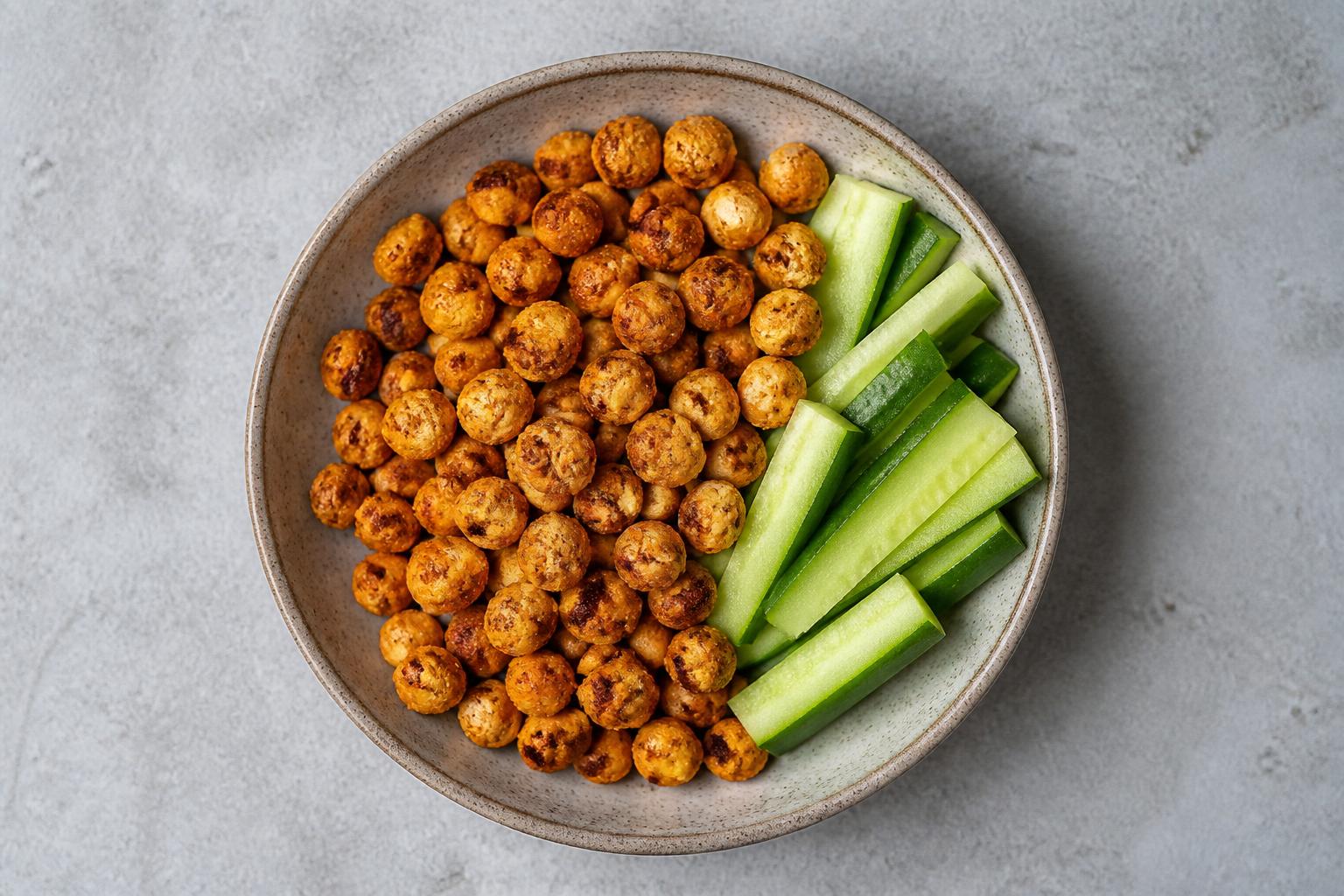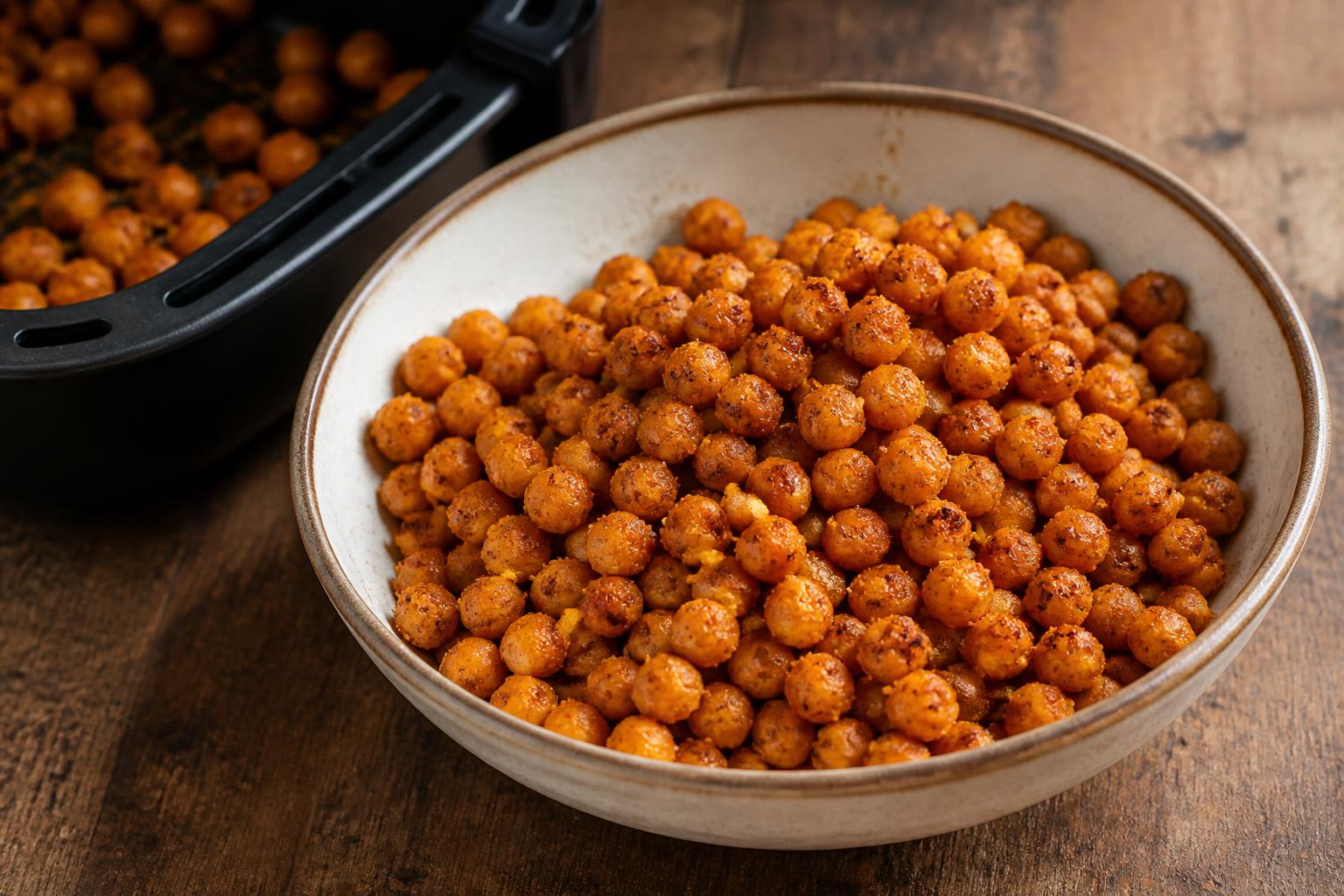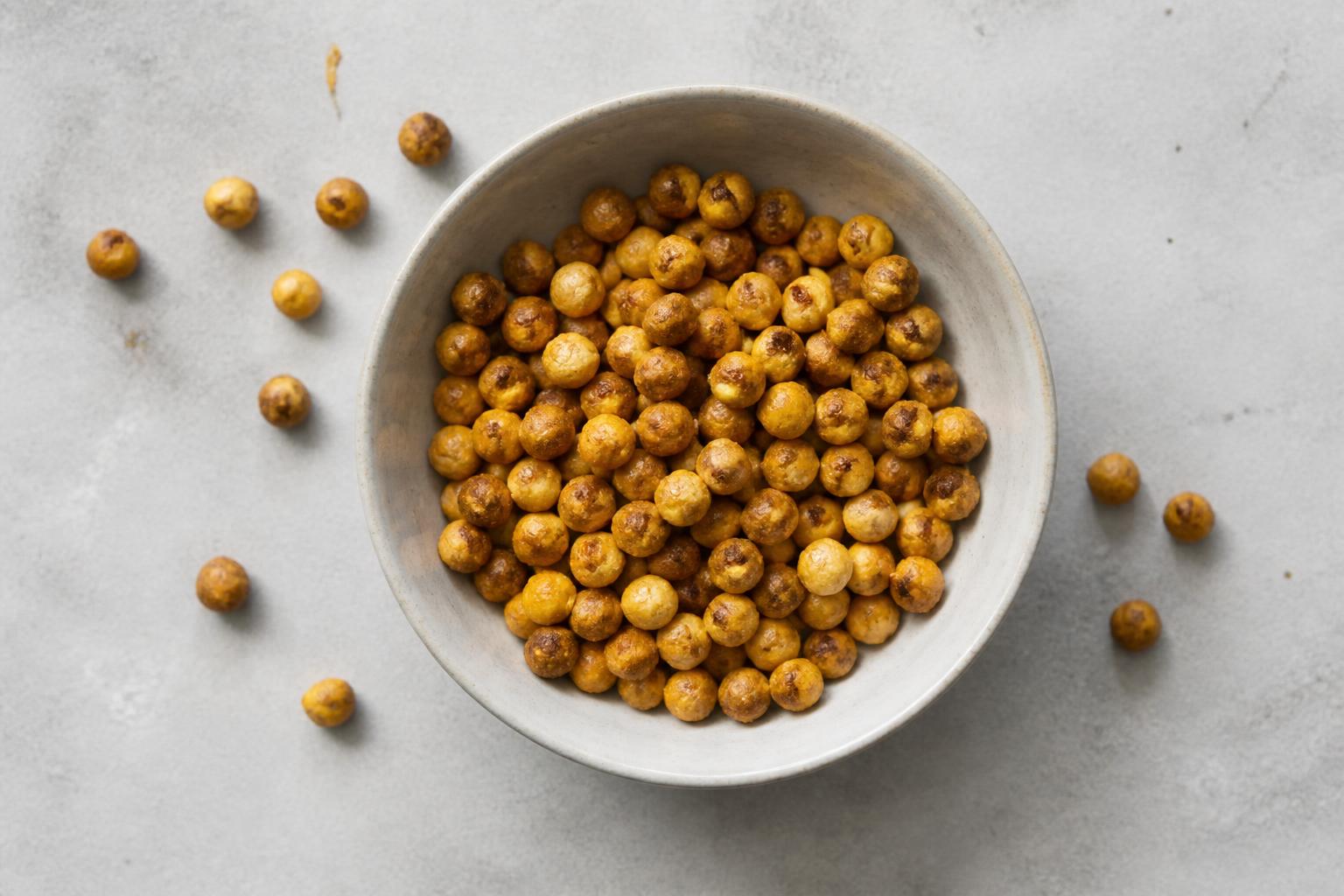
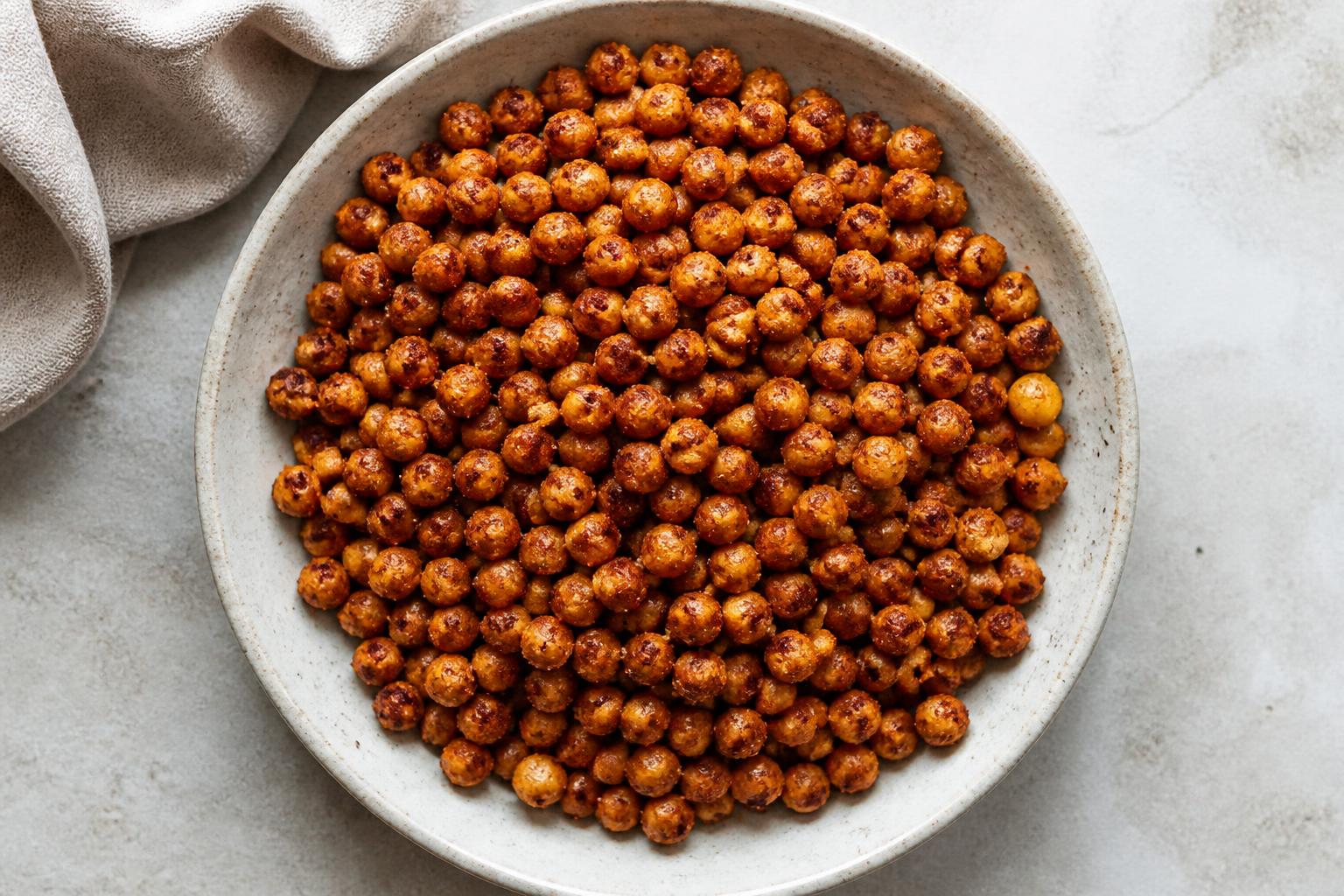
If you want roasted chickpeas to stay crisp longer, the key is not a secret spice mix. It is moisture control. Dry the chickpeas thoroughly, roast them with enough space and airflow, use just enough oil to carry flavour, and let them cool completely before storing. Most chewy batches fail because they go into the oven damp, sit too close together, or get sealed up while still warm.
Spiced chickpeas roasted well should be crackly on the outside, firm in the middle, and properly savoury rather than dusty or bitter. The good news is that the method is simple once you know what affects texture. A few small changes make a bigger difference than another five minutes in the oven.
What makes roasted chickpeas crisp rather than chewy
Crispness comes from driving off water. Chickpeas, whether tinned or home-cooked, hold a surprising amount of moisture inside and on the surface. If that moisture lingers, the skins steam, the centres stay soft, and the finished chickpeas turn leathery rather than crunchy.
There are three things doing most of the work, moisture, heat, and airflow.
Moisture is the first hurdle. Tinned chickpeas are convenient, but they come packed in liquid and need more drying than many recipes admit. Even after draining, water clings to the skins and sits in the creases. If you season them immediately, that dampness gets trapped under the oil and spices. The result is often patchy browning and a softer bite.
Heat matters because chickpeas need enough oven power to evaporate moisture before they overcook. Too low, and they slowly dehydrate into chewy little beans. Too high, and the outside can darken before the middle dries out. A hot oven gives you the best chance of a crisp shell without burnt spices.
Airflow is the part people miss. If the tray is crowded, hot air cannot move around each chickpea properly. They steam each other. A single layer with visible gaps is not fussy styling, it is practical oven physics. The same is true if you use a deep roasting tin instead of a shallow tray. Low sides and open space help moisture escape.
The skins play a part too. Loose skins can crisp up nicely, but too many detached skins on the tray tend to burn before the chickpeas are done. We do not usually strip every skin off. It is enough to rub the chickpeas dry and remove the ones that fall away easily.
One more thing affects texture after roasting, cooling. Chickpeas continue to firm up as steam escapes. Straight from the oven they may seem slightly soft in the centre. If you pile them into a bowl while hot, that steam condenses and undoes your good work. Spread out cooling is part of the crisping process, not an optional extra.
Which chickpeas, oil and spices work best
Both tinned and cooked dried chickpeas can work. The better choice depends on how much control you want.
Tinned chickpeas are the easiest and most consistent for everyday snacking. Choose standard chickpeas in water, without added flavourings. Drain them well and rinse if you want a cleaner flavour and less surface starch. Some cooks skip rinsing for better browning, but for spiced roasting we find a rinse followed by very thorough drying gives a more even result and stops the seasoning tasting muddy.
If you cook chickpeas from dried, do not overcook them. For roasting, they should be tender but not split or waterlogged. If they have gone very soft in the pan, they are more likely to collapse or stay mealy rather than crisp. Home-cooked chickpeas often have a slightly nuttier flavour, but they can vary more from batch to batch.
As for size, medium chickpeas usually roast more evenly than very large ones. Giant chickpeas can be good, but they need longer drying and roasting, and their centres stay softer.
Oil helps with heat transfer, browning, and adhesion of spices, but more is not better. Too much oil coats the chickpeas heavily and can leave them rich yet less crisp. Use enough to lightly gloss them, not enough to pool on the tray. Olive oil works well for flavour, especially if you like a savoury Mediterranean profile. Rapeseed oil is also an excellent choice in the UK because it has a clean taste and handles roasting well. Coconut oil can work, but its flavour is more noticeable and not always welcome in savoury spice blends.
Dry spices should be chosen with roasting in mind. Robust ground spices such as cumin, coriander, smoked paprika, garlic granules, onion granules, and mild curry powder tend to behave well. Fine herbs and delicate powders can scorch more easily. Sweet spices with a high sugar content, or blends containing a lot of cinnamon and sugar, brown very fast and are better added with care.
Salt is best used lightly before roasting and adjusted after. Too much early on can draw moisture to the surface. A final pinch once the chickpeas are cooked often tastes brighter anyway.
Good flavour combinations include:
- Smoked paprika, cumin, garlic granules, sea salt
- Ground coriander, black pepper, lemon zest added after roasting
- Mild curry powder, turmeric, garlic granules
- Chilli powder, cumin, a little oregano, with salt added at the end
If you like sweeter snack flavours, keep the sugar low during roasting. For that sort of nibble, our guide to healthy dessert snacks that feel like a treat is useful, because crisp texture and sweet coatings do not always get on well in the oven.
How to roast them for better crunch
For reliably crisp chickpeas, we use a simple tray-roasting method.
Start with drained chickpeas. A standard tin is a manageable amount for one large tray. Tip them into a colander, drain well, then spread them onto a clean tea towel or kitchen paper. Pat them very dry, then let them sit out for a few minutes if you have time. Roll them gently under the towel to loosen surface moisture. Remove any skins that come away easily.
Heat the oven first. You want it fully hot before the tray goes in. A hot oven helps the outside dry quickly. Line a large baking tray with parchment if you like easier clean-up, but an unlined metal tray can give slightly better direct browning. Use whichever helps you keep the layer thin and even.
For the first stage, toss the dried chickpeas with a small amount of oil and, if you like, just a little salt. Hold back most of the spice mix at this point if it contains powders that burn easily. Spread the chickpeas in a single layer with space around them. If they are touching all over, use two trays.
Roast until they look drier, firmer, and lightly coloured, shaking the tray or stirring once or twice so they cook evenly. The exact time varies with the chickpeas, your oven, and how dry they were to begin with, so look for visual cues rather than relying blindly on the clock. They should sound a little harder when the tray moves, and the skins should look taut rather than wet.
Then add the spices. Tip the partly roasted chickpeas into a bowl, toss with the remaining seasoning and, if needed, the tiniest extra drizzle of oil to help it cling. Return them to the tray and roast again until aromatic and crisp. This two-stage approach protects the spices and gives better flavour.
When they come out, taste one only after it has cooled for a minute or two. Fresh from the oven, they can seem softer than they will end up. If they are nearly there but not quite crisp enough, give them a little longer and check again.
Cooling is the final step. Leave the chickpeas on the tray or transfer them to a cool, dry plate in a single layer. Do not cover them. Do not tip them into a jar yet. As they cool, steam escapes and the texture sets. Once fully cool, adjust the salt or add extras such as finely grated lemon zest.
If you prefer a gadget method, we have a separate guide to air fryer roasted chickpeas that stay crisp for longer, where basket size and shaking matter even more because space is tighter.
A few practical details make a real difference:
- Use the biggest tray you have, not the smallest one that technically fits.
- Avoid heavy sauces or wet marinades.
- Do not add citrus juice before roasting. Use zest after, or a squeeze at the moment of eating.
- If your oven runs cool, give the tray a few extra minutes rather than crowding or over-oiling to compensate.
- If you want a drier, crunchier finish, switch the oven off and leave the tray inside with the door slightly ajar for a short spell, as long as the spices are not already getting too dark.
Why spices sometimes burn and how to avoid it
Burnt spices usually come down to timing, particle size, and oil balance.
Ground spices are much finer than chickpeas, so they toast and darken faster. If they go into the oven from the start at a high temperature, they can turn bitter before the chickpeas are crisp. Paprika, garlic powder, onion powder, and chilli are especially prone to catching if they are sitting dry on the tray rather than clinging to the beans.
That is why adding most of the seasoning partway through works so well. The chickpeas get a head start on drying, and the spices spend less time exposed to direct heat.
Oil level matters too. Too little oil, and the spices fall off and scorch on the tray. Too much, and the coating can feel greasy, with uneven browning. You want enough to lightly bind the spice mix to the chickpeas. If the bowl has a puddle at the bottom, it is too much.
Spice choice also matters. Coarse spices and crushed seeds often roast more gently than very fine powders. Cumin seeds, lightly crushed fennel, or cracked black pepper can be more forgiving than a heavy dusting of delicate powdered seasoning. If you are using a commercial blend, check whether it contains sugar. Sugar catches quickly and can make chickpeas look done before they are truly crisp.
Another common mistake is using fresh garlic or fresh ginger in the coating. They bring water with them, which slows crisping and creates little burnt bits before the chickpeas have dried properly. For roasting, dried granules are usually better. Fresh aromatics are best added elsewhere in the meal.
If your spice mix keeps turning bitter, try this order:
- Roast the oiled chickpeas plain until nearly crisp.
- Toss with spices and a whisper more oil.
- Return to the oven briefly to set the seasoning.
- Finish with salt, zest, or a pinch of chilli flakes after roasting.
This is especially useful if you like bold savoury flavours but still want a clean crunch. It is the same balancing act we look for in other practical snack choices, whether you are building crunchy lunch boxes that stay crisp until you eat or trying to keep texture interesting through the day.
How to store roasted chickpeas and when to eat them
Roasted chickpeas are at their best on the day they are made. That is the honest answer. The fresher they are, the crisper they feel. Even a well-roasted batch gradually pulls moisture from the air, especially in a British kitchen where humidity is rarely on your side.
Once the chickpeas are completely cool, store them in a loosely covered container if you want to preserve crispness for the rest of the day. A jar with the lid clamped tight can actually trap residual moisture if they were not fully cooled. For short-term storage, a bowl or container with the lid resting on top rather than sealed can work better. If they are genuinely bone dry and fully cooled, an airtight container is fine, but only then.
For food safety, treat them as you would other cooked foods made from pulses. Cool them promptly, keep them clean, and do not leave them sitting for days at warm room temperature if they have become soft or oily. Texture usually fails before safety becomes the issue, but common sense still applies. If they smell stale, feel tacky, or have picked up moisture, they are past their best.
Expect the crunchiest texture within several hours of roasting, and a decent snack life into the next day if the batch was very well dried. After that, many batches become firmer-chewy rather than properly crisp. They are still useful. Scatter them over soup or salads, or warm them briefly to freshen them up.
If they soften, you can often rescue them. Spread them back on a tray and return them to a hot oven for a short re-crisping spell, then cool them again before storing. Do not keep reheating the same batch over and over, though. Each cycle dries the flavour as much as the chickpeas.
Portion size helps too. Store them in small amounts so you only open what you plan to eat. Repeatedly opening a large container invites moisture in. If you are making them as part of a higher-protein grazing habit, our guide to healthy high-protein snacks that actually fit real life has more ideas that travel and store well.
The final expectation to set is this, roasted chickpeas are never quite the same as a factory-dried crunchy pulse snack. Homemade ones have a more natural variation. Some will be extra crisp, some a touch nuttier in the centre. That is normal. The aim is not identical little pellets. It is a deeply savoury, properly crunchy snack that tastes of real chickpeas and real spice, and stays that way long enough to be worth making.
If you focus on drying, spacing, sensible seasoning, and full cooling, your spiced roasted chickpeas will stay crisp far longer than the usual hurried trayful. And they will be much nicer for it.

Questions about this article or a correction to suggest? Get in touch. Read more about our editorial approach.