If you are wondering whether popped lotus seeds are healthy, the short answer is yes, they can be. They are often lighter than many fried savoury snacks, and they can offer a useful mix of crunch, fibre and a bit of protein. But they are not automatically a virtuous choice just because they come from a seed and look airy in the bag.
The real answer depends on what has been done to them. Plain or lightly seasoned popped lotus seeds can fit neatly into an everyday diet. Versions coated in lots of oil, sugar or salt can drift closer to the same territory as other moreish packet snacks. As with most things in the crisp aisle, the label tells the proper story.
What popped lotus seeds actually are
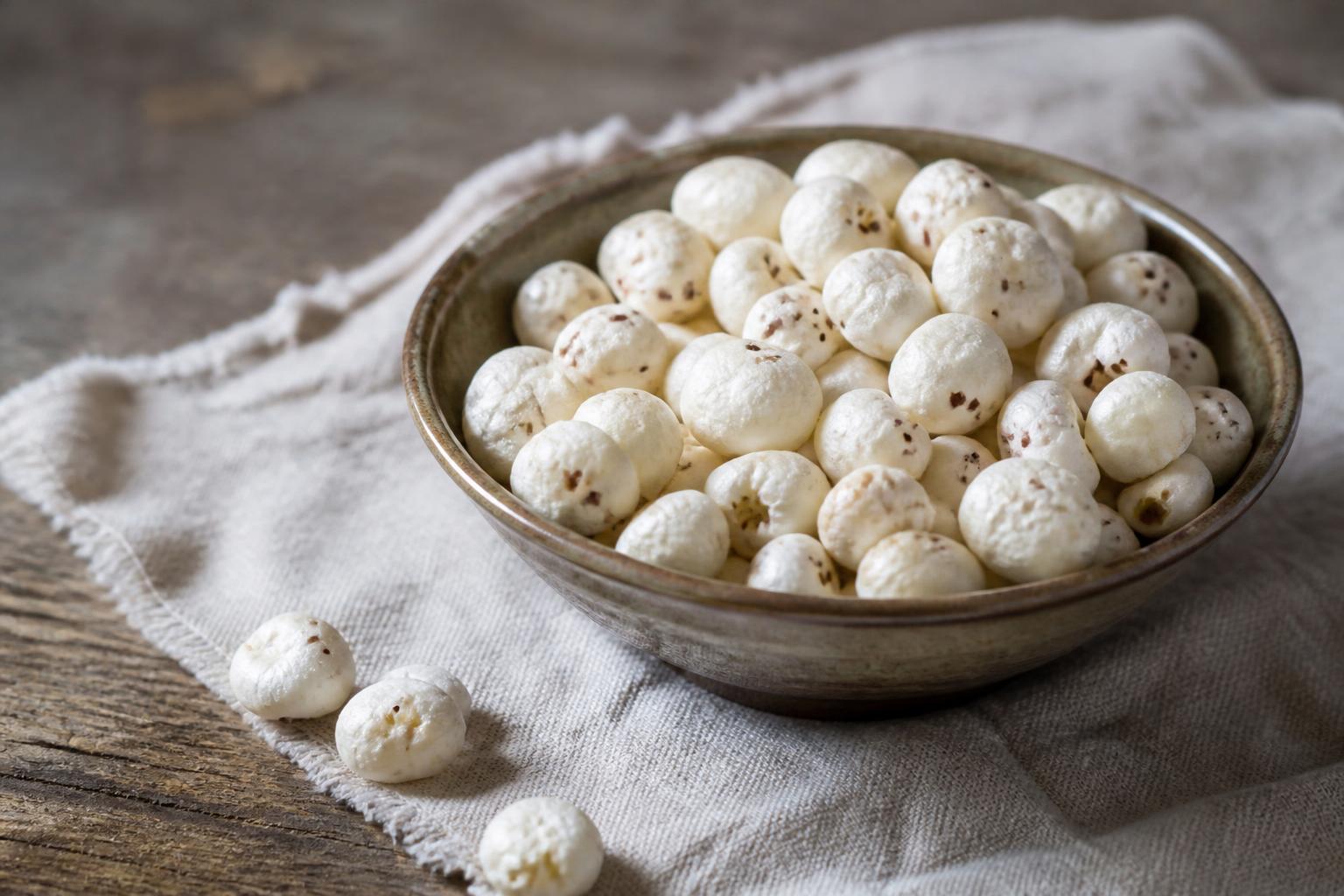
Popped lotus seeds usually come from the seeds of the lotus plant, often known in snack form as fox nuts or makhana. The seeds are dried, heated and made to puff, which gives them that pale, rounded appearance and a texture that sits somewhere between a crisp, a toasted corn snack and a very light nut.
That process matters. A food can sound healthy in theory, then become something quite different once it has been fried, glazed or heavily seasoned. With popped lotus seeds, the basic ingredient is fairly simple. The question is how far the finished snack has moved from that starting point.
Some brands dry roast or hot air pop the seeds, then tumble them with a small amount of oil and seasoning. Others use more oil for a richer finish, or add flavour coatings that increase salt, sugar or saturated fat. The format matters because these are not usually eaten as loose, plain seeds from the cupboard. They are sold as a ready-to-eat savoury snack, and that means the processing choices shape the nutrition just as much as the ingredient itself.
Texture plays a part too. Because popped lotus seeds are so light, a serving can look generous for its weight. That can be helpful if you want something crunchy that feels substantial without being especially dense. Equally, their airy texture can make it easy to keep dipping into the pack without noticing how much seasoning or salt you are getting through.
So, before we decide whether they are healthy, it helps to separate the ingredient from the finished product. Lotus seeds themselves are one thing. A branded bag of flavoured popped lotus seeds is another.
Are popped lotus seeds healthy in general?
In general, popped lotus seeds can be a sensible snack choice. They often compare well with heavier fried snacks because they may be lower in fat, especially if they are roasted rather than fried. They can also provide fibre and some protein, both of which help a snack feel a bit more satisfying than something made mostly from refined starch.
They can work particularly well if you want a crunchy, savoury option that does not feel greasy. That dry, toasty snap is part of the appeal. For some people, they are also a useful alternative when they want something different from nuts, although they are not nutritionally identical and should not be treated as a straight swap in every sense. If you are comparing them with nuts, our guide to whether nuts are a healthy snack for everyday eating is worth a look.
That said, the healthy halo can be misleading. A bag that says “popped”, “plant-based” or “gluten-free” can still be high in salt or contain more added fat than you might expect. Flavoured versions such as peri peri, cheese-style, barbecue or creamy herb often rely on seasoning blends that push sodium up quickly. Sweet versions can bring added sugar into the picture too.
Portion size matters as well. Because popped lotus seeds are light, a single serving may not be very large in calorie terms, but many packs are designed for easy grazing. If the bag contains two servings and you eat the lot at your desk, the numbers on the front can give a rosier impression than the reality.
There is also a difference between “healthy” and “healthier than what I would otherwise have had”. Popped lotus seeds do not need to be perfect to be a decent choice. If they replace a heavily fried snack that leaves you feeling sluggish and salty, they may be a practical improvement. If they are eaten on top of a full day of random nibbling simply because the bag looks wholesome, that is a different story.
So are popped lotus seeds healthy? Often, yes, especially when the ingredient list is short, the seasoning is moderate and the portion makes sense. But they are best thought of as one crunchy option among many, not a magic packet.
What to check on the label before you buy
In the UK, pack information gives you plenty to work with if you know where to look. Start with the ingredients list, then move to the nutrition table. Front-of-pack colour coding can help, but it is still worth reading the small print.
First, check the ingredients. Ideally, you want lotus seeds near the top, because ingredients are listed in descending order by weight. A simple version may read something like lotus seeds, oil, salt, seasoning. A much longer list with sugars, starches, flavour enhancers and several forms of fat suggests a more heavily engineered snack.
Then look at the nutrition table. UK packs normally show values per 100g and often per portion. Use the per 100g figures for comparing products side by side, because portion sizes vary wildly between brands.
Here is what to focus on:
Calories
Calories tell you how energy-dense the snack is. Popped lotus seeds are often lighter than many crisps, but not always dramatically so once flavourings are added. A puffed texture can make them feel featherlight, yet the calories still count if oil has been used generously. Compare per 100g first, then sense-check the stated portion. If a serving looks unrealistically small, assume you may eat more.
Fat
Total fat is worth checking, especially if you are comparing roasted and fried versions. Lower fat is not always automatically better if the product is less satisfying and leaves you rummaging for another snack ten minutes later, but it is still a useful marker. If one bag is notably higher than another, the method and seasoning are probably doing the work.
Saturated fat
This is where some savoury snacks become less impressive. UK front-of-pack labels use traffic light colours for fat, saturates, sugars and salt, but not every product uses the system in the same prominent way. A lower saturated fat content is generally preferable for an everyday snack. If a creamy or buttery flavour has pushed saturates up, that is worth noticing.
Fibre
Fibre is one of the reasons popped lotus seeds can feel like a more balanced option. A snack with a decent fibre content is likely to keep you going better than one that is all crunch and no staying power. There is no need to turn your snack into a spreadsheet, but fibre is a genuine plus when choosing between similar products.
Protein
Protein can help a snack feel more satisfying, particularly in the middle of a long afternoon. Popped lotus seeds are not a high-protein powerhouse in the way some marketing might imply, but they can contribute a little. Treat protein as part of the overall picture, not the sole reason to buy.
Salt
Salt is the big one for many savoury packets. This is where a snack that seems light and wholesome can become less everyday-friendly. In the UK, salt is listed as salt, not sodium, on most consumer labels, which makes life easier. If a product is heavily seasoned, compare the salt per 100g and per portion. A bag can be airy and still be very salty.
If you want a quick rule of thumb, do not rely on one single claim on the front. “High in protein”, “source of fibre” or “only 99 calories” can all be true while the product is also fairly salty. Read the back.
Also keep an eye on serving language. “Per pack” only helps if the whole pack is realistically a single serving. If the label says two servings but the bag fits in one hand and opens like any ordinary snack, most people will eat it all.
How they compare with other crunchy snacks
Popped lotus seeds sit in an interesting middle ground. They are not as rich and fatty as many fried crisps, but they are usually more savoury and snack-like than plain dried fruit. They can be a useful bridge for people who want crunch without the full oily heft of traditional pub-style nibbles.
Compared with standard potato crisps, popped lotus seeds are often less greasy and may be lower in fat, though this varies by brand and flavour. They also tend to have a firmer, drier crunch. If you love that deep fried, shattery crisp texture, they may not scratch exactly the same itch. If what you want is a savoury bite with less oil on your fingers, they can be a good fit.
Compared with corn-based snacks, they may offer a shorter ingredient list and a less processed feel, though again, that depends on the product. A highly flavoured bag of popped lotus seeds can end up nutritionally quite close to other seasoned snacks, just with a different base ingredient.
Compared with nuts, they are usually lighter and often lower in calories per portion, but nuts generally bring more healthy fats, more protein and a different level of richness. If your goal is satiety, a small portion of nuts may keep you fuller for longer. If your goal is a crisp, airy crunch, popped lotus seeds may be more satisfying in a sensory way.
Compared with vegetable crisps, they can be less oily than some mixed root vegetable snacks, which often sound healthier than they turn out to be. If you enjoy comparing these “better for you” packet foods, our piece on whether kale crisps are a healthy snack choice explores another product with a very similar health halo problem.
Compared with freeze-dried fruit, they are doing a different job entirely. Freeze-dried fruit leans sweet, fruity and often lower in fat, while popped lotus seeds are usually savoury and more akin to a classic snack cupboard option. If you want something crisp but not salty, our guide to freeze-dried raspberries as a healthy snack choice covers that side of the crunchy spectrum.
The fairest conclusion is that popped lotus seeds can compare well, but not automatically. They deserve a place in the conversation, not a crown.
How to fit them into an everyday diet
The easiest way to use popped lotus seeds well is to treat them as a snack component, not a nutritional personality trait. They are handy when you want crunch, but they work best in a routine that includes a bit of structure.
For many UK adults, a sensible portion is whatever the pack defines as one realistic serving, provided it actually looks realistic. If the bag is clearly meant for grazing through a film, portion some into a bowl rather than eating from the packet. That sounds almost comically old-fashioned, but it works. A bowl gives the snack an ending.
Frequency depends on the rest of your week. If you enjoy them a few times a week in place of more heavily fried snacks, they can fit in perfectly well. If every afternoon snack is a flavoured packet food, even a relatively light one, it is worth mixing things up with fruit, yoghurt, nuts or something more substantial.
Pairing helps. On their own, popped lotus seeds can be pleasantly crunchy but not always especially filling. Try them with:
- a piece of fruit for more fibre and volume
- plain yoghurt on the side if you want a more substantial afternoon snack
- a small handful of nuts or seeds for extra staying power
- chopped veg and hummus if you like a savoury desk lunch with texture
They can also work nicely as part of lunch rather than a separate snack. A small portion alongside a sandwich, soup or salad gives that crisp contrast people often want from a packet of crisps, without making the whole meal revolve around the snack aisle. If you are trying to make lunches feel balanced but still appealing, our guide to building a healthy lunch box that still feels like a treat has plenty of practical ideas.
One useful trick is to match the snack to the moment. If you simply want something crunchy while the kettle boils, a modest portion of popped lotus seeds can do that job very nicely. If you are genuinely hungry after a long gap between meals, they may need backup. That is where people can end up disappointed, not because the snack is “bad”, but because they are asking an airy savoury nibble to do the work of a mini meal.
It is also worth noticing flavour intensity. Highly seasoned snacks can wake up the appetite and encourage mindless handfuls. A plain sea salt version may be less thrilling, but it can be easier to stop at a sensible amount. There is no need to choose the blandest option in the shop, but if your favourite flavour leaves you licking every last speck from the bag, that is useful information.
Finally, keep perspective. Healthy eating in ordinary British life is rarely about one miracle snack. It is about patterns that are easy to repeat on busy weekdays, tired evenings and supermarket autopilot. Popped lotus seeds can absolutely have a place in that picture. They are at their best when they bring a satisfying crunch, a reasonable nutrition profile and a portion that leaves you pleased rather than still prowling the kitchen.
So, are popped lotus seeds healthy? They can be, and often are, when you choose a straightforward product and eat them as part of a varied diet. Read the label, keep an eye on the salt, and enjoy the crunch for what it is, a handy snack option, not a free pass.

Questions about this article or a correction to suggest? Get in touch. Read more about our editorial approach.