Kale crisps can be a healthy snack choice, but only some of the time and only on their actual merits. They often keep some of kale’s fibre and micronutrients, and they can feel lighter than many fried snacks. But once kale becomes a crisp, the picture changes. Oil, salt, sweet coatings and very small-looking portions can all shift it from “quite sensible” to “surprisingly easy to overdo”.
So if you are wondering whether kale crisps are healthy, the honest answer is this: they can be, especially when they are simply made and eaten in a sensible portion, but they are not automatically healthier just because the starting ingredient is a leafy green. The method, the seasoning and the serving size matter far more than the halo around the word kale.
What makes kale crisps seem healthy?
Kale has a strong health reputation for good reason. In its fresh form, it is a green leafy vegetable that brings fibre, along with vitamins and minerals that people generally want more of in everyday diets. It also feels unmistakably virtuous. A bowl of curly dark leaves suggests salads, soups and side dishes, not mindless snacking in front of the telly.
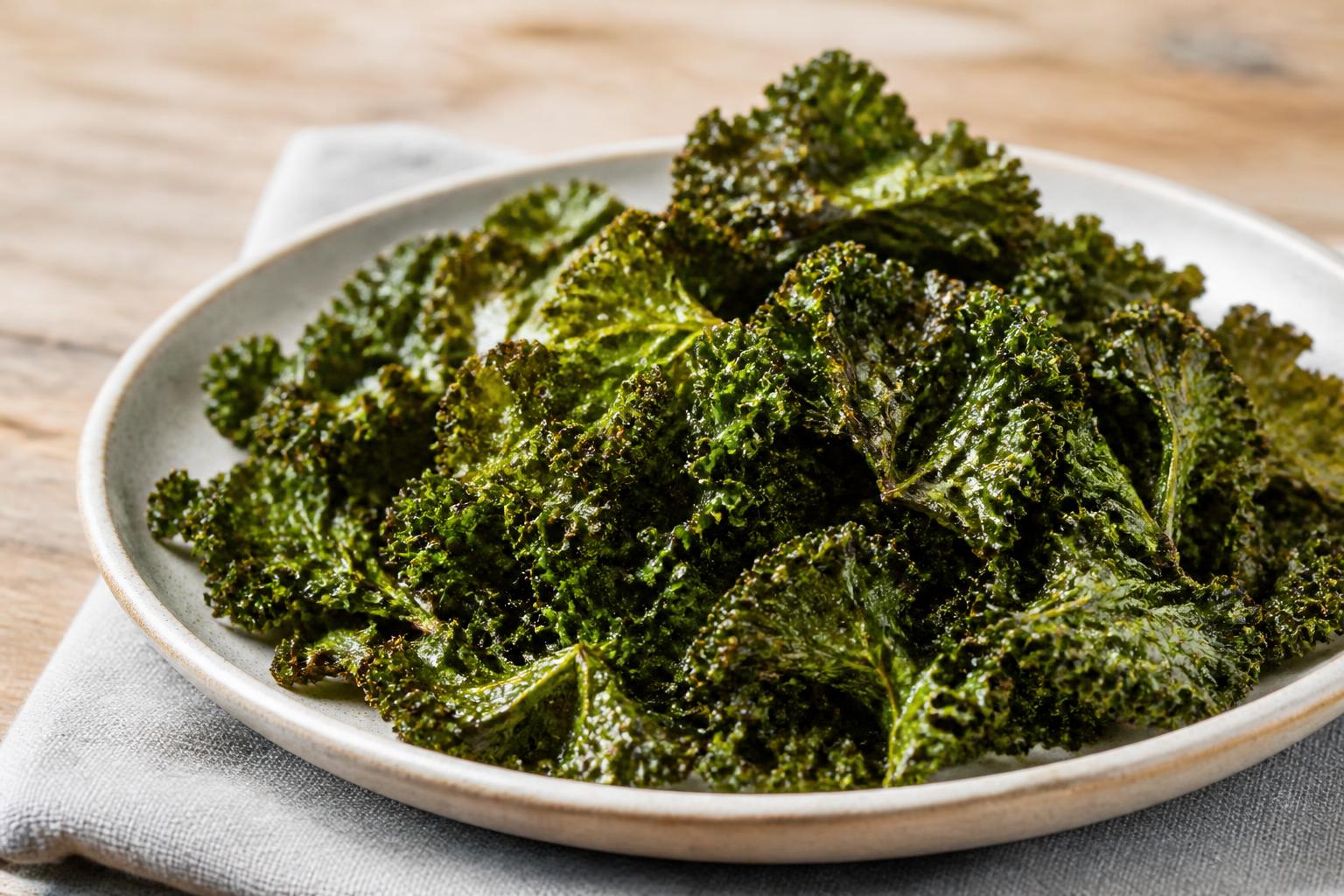
That reputation does not vanish the moment kale is baked or dried. If we make crisps from actual kale leaves, rather than from a starch blend with a bit of kale powder added, the starting point is still a vegetable. That means the finished crisp may still offer some fibre and some micronutrients. It can also be lower in starch than a classic potato crisp, depending on the recipe.
There is also the texture factor. Kale crisps are light, brittle and airy. That makes them feel less heavy than many other crunchy snacks. For some people, that lighter feel is useful. A small bowl can scratch the itch for something crisp and savoury without feeling as rich as thick-cut fried snacks.
But this is where the healthy glow can run ahead of the facts. Fresh kale is mostly water. It is bulky, filling and hard to eat quickly in large amounts. A crisp is the opposite. Remove the water, add oil and seasoning, and suddenly the same ingredient behaves like a snack. It becomes easier to eat absent-mindedly and harder to judge by eye.
That is why broad claims about kale crisps need a bit of restraint. The vegetable itself deserves its good name. The crisp version may still have some of those benefits, but it is no longer the same food in practical terms.
What happens to kale when it becomes a crisp?
The biggest change is water loss. Fresh kale leaves contain a lot of water, which gives them volume and softness. Drying, baking or air-frying removes much of that moisture. The leaves shrink, turn delicate and become crunchy. That is exactly what makes them crisp, but it also concentrates everything else in the leaf.
This concentration works in two directions. On one hand, the flavour becomes stronger and the texture more snackable. On the other, a handful of crisps can represent a much larger amount of kale than it looks like. A tray of leaves can collapse into a surprisingly small bowl. That can be useful if you want a vegetable-based nibble, but it also means portions are easy to underestimate.
The cooking method matters too.
Baked kale crisps are often made by tossing leaves with a little oil and salt, then cooking them at a relatively gentle heat until dry and crisp. Air-fried versions usually follow the same idea, often with even less oil if the machine circulates heat well enough to crisp the leaves evenly. These methods can keep the ingredient list fairly simple.
Fried kale crisps are a different proposition. Deep-frying can produce a dramatic crunch and a richer mouthfeel, but it usually means more fat in the finished snack. That does not make them forbidden, but it does make them closer to the territory of conventional crisps.
Drying, whether in an oven or a dehydrator, can preserve crunch with minimal added fat if little or no oil is used. But a completely oil-free batch can be a bit temperamental. The leaves may dry unevenly, scorch at the edges or taste more papery than crisp. In real kitchens, most homemade versions use at least a small amount of oil because it helps seasoning stick and improves texture.
Heat can also affect nutrients. Some vitamins are more sensitive to heat and storage than others, so the exact nutrient profile of fresh kale will not be identical once it is crisped. We should be wary of pretending otherwise. At the same time, not every benefit disappears. Fibre is still there, and many minerals remain. What changes most obviously, from a snacking point of view, is the balance of water, bulk and energy density.
That is the key shift. Fresh kale takes up space in the stomach for relatively little energy because of its water content. Kale crisps, being dry and concentrated, are less bulky for the same amount of leaf. Add oil, and the energy per mouthful rises further. So the crunch comes at a cost, not necessarily a huge one, but a real one.
Are kale crisps actually nutritious?
Often, yes, to a degree. But “nutritious” is not the same as “healthy no matter how much you eat” and it is not the same as “better than every other crisp in the shop”.
A straightforward kale crisp, made from leaves, a modest amount of oil and simple seasoning, is likely to provide some fibre. It may also contribute useful micronutrients from the kale itself. Compared with snacks built mostly from refined starch, that can be a genuine point in its favour.
The ingredient list tells us a lot here. If the pack says kale, oil, salt and perhaps a few seasonings, we are probably looking at a snack where the vegetable still plays the leading role. If the label starts to read more like a flavour scientist’s notebook, with sugar syrups, starches, maltodextrin-heavy coatings and lots of flavour powders, the nutritional story becomes murkier.
There is also a difference between “contains nutrients” and “supports a healthy pattern of eating”. A food can do both, one, or neither. Kale crisps may contain fibre and still be very salty. They may be made from a good ingredient and still be easy to demolish in a sitting because they are light and moreish.
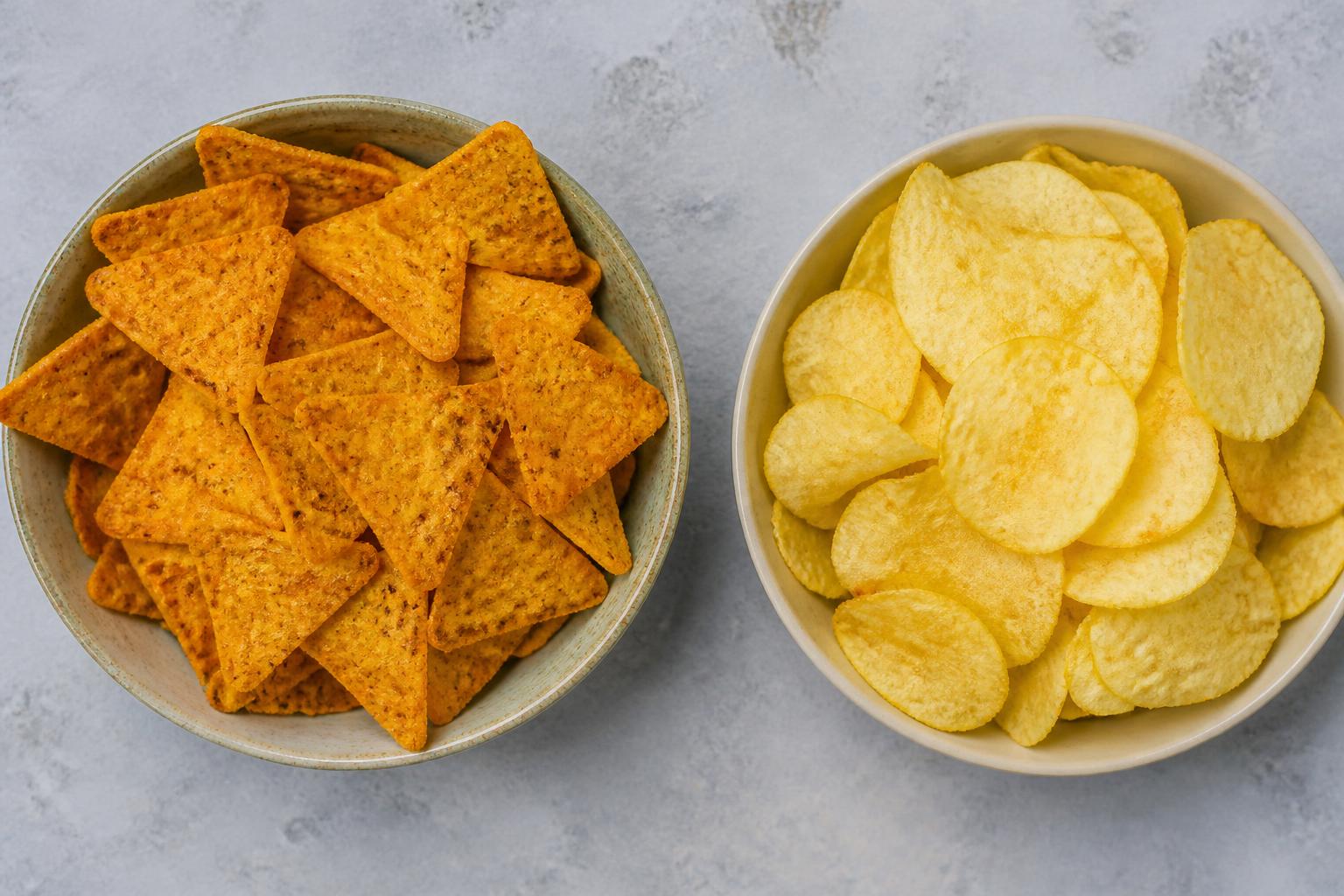
That is why we avoid sweeping rankings. It is tempting to say kale crisps are simply healthier than potato crisps, but that is not always true in practice. One brand may be lightly seasoned and oven-baked, another may be fried and heavily coated. A homemade batch may be restrained with oil, or it may be drenched. The comparison depends on the actual product, not the category name.
If you are comparing broader snack types, our guide on whether vegetable crisps are a healthy swap for potato crisps is a useful companion, because the same principle applies. A vegetable-based snack can be a sensible option, but the processing and recipe still decide a lot.
It is also worth remembering the role of context. A small portion of kale crisps alongside lunch is one thing. A family-size bag eaten as an evening graze is another. Nutritional value is not only about what the food contains. It is also about the pattern in which we eat it.
So yes, kale crisps can be nutritious. They can bring more to the table than empty crunch. But they are best understood as a snack with potential benefits, not as a free pass.
When do kale crisps become less healthy?
The first watch-out is salt. Kale itself is not the problem here. Seasoning is. Because kale crisps are so light and delicate, salt can cling to every surface. A product that tastes pleasantly savoury can still contribute quite a lot of salt over a full bag. In the UK, this matters because packaged foods must show salt on the nutrition panel, and that gives us something concrete to compare.
The second is oil. A little oil can help with crisping and flavour. A lot of oil changes the snack significantly. This is especially relevant with fried versions, but heavily oiled baked batches can end up in a similar place. Since kale leaves are so crinkly, they hold onto oil rather well. What looks like a modest drizzle can spread further than expected.
Then there are coatings and flavour powders. Sweet chilli, barbecue, cheese-style and sour cream style seasonings can be delicious, but they often bring extra salt, sugars or fats, depending on how they are made. None of that is automatically disastrous, but it can move the snack away from “dried leafy veg with a bit of seasoning” and towards “highly flavoured crisp product that happens to contain kale”.
Homemade versions can go off course too. The common trap is thinking that because the tray started with a mountain of leaves, the final batch counts as basically salad. It does not. Once the leaves shrink down, it is easy to keep picking at them without noticing how much oil or salt went in. Another trap is using sticky marinades that sound wholesome but still add plenty of sugar, salt or fat.
Portion size is perhaps the sneakiest issue of all. Kale crisps are feather-light. They shatter, rustle and disappear quickly. That can make them feel almost insubstantial, which is lovely from a texture point of view and not always so helpful from a satiety point of view. If a snack does not feel substantial, we may go back for more.
This is not unique to kale. Many airy snacks have the same trick up their sleeve. If you are trying to build a more balanced snacking pattern overall, our piece on 10 healthy habits that make everyday eating feel easier covers the sort of small routines that help more than any single “good” snack ever will.
Kale crisps also become less healthy when they crowd out more filling foods. If they are replacing a snack that would have offered protein, fruit, or a combination of fibre and substance, they may leave you peckish again quickly. Crunch is satisfying, but crunch alone does not always carry you very far.
How to judge a pack or homemade batch sensibly
Start with the ingredient list. In the UK, ingredients are listed in descending order by weight at the point of manufacture. If kale appears first and the rest is short and recognisable, that is usually a promising sign. If sugar, starches or multiple flavouring components begin to pile up, treat it as a more engineered snack.
Next, check the nutrition table per 100g and per portion. Per 100g lets us compare products fairly, because portion sizes on packs can be optimistic or oddly small. Per portion helps us understand what we are actually likely to eat. With kale crisps, this matters because a pack can look modest but still contain more than one serving.
Pay particular attention to salt and fat. We do not need to turn every shopping trip into a spreadsheet exercise, but these are the two figures most likely to swing a kale crisp from fairly sensible to less so. If you are comparing two packs that both look appealing, the one with less salt and a simpler ingredient list often earns the nod.
Also look for the cooking method if it is stated plainly. “Baked” or “air-fried” does not guarantee a better result, but it may suggest a lighter recipe than deep-fried versions. Still, we would not rely on front-of-pack language alone. Turn the pack over. The back usually tells the more useful story.
For homemade kale crisps, weigh or at least roughly measure the oil before tossing the leaves. That one small habit stops the classic glug-and-guess approach that can turn a light tray into an oily one. Use enough to coat lightly, not enough to slick every frill. Season after crisping if you want tighter control over salt, since some of it falls off during cooking anyway.
Temperature and timing matter as much as ingredients. Too hot, and kale scorches before it dries. Too cool, and it wilts rather than crisps. A moderate oven and close watching usually work better than blasting it and hoping for the best. Remove thick stems if you want a more even texture, and spread the leaves in a single layer so they dry rather than steam.
Portion them into a bowl instead of eating from the tray or bag. That sounds almost laughably basic, but it is one of the easiest ways to keep perspective with a snack that collapses so dramatically in volume. The same trick helps with many crunchy foods, as we mention in our guide to building a healthy lunch box that still feels like a treat.
Finally, judge kale crisps as one snack among many, not as a moral category. They do not need to be perfect to be useful. If a simple kale crisp helps you enjoy something crunchy with a bit more fibre and a bit less heaviness than your usual choice, that is a perfectly good reason to buy or make them. If a particular version is oily, salty and easy to overeat, then the green leaf on the packet does not rescue it.
Kale crisps sit in that very British middle ground of food choices, not saintly, not scandalous, just worth looking at properly. The healthiest version is usually the least showy one: real kale, restrained oil, sensible seasoning, and a portion you can actually see.

Questions about this article or a correction to suggest? Get in touch. Read more about our editorial approach.