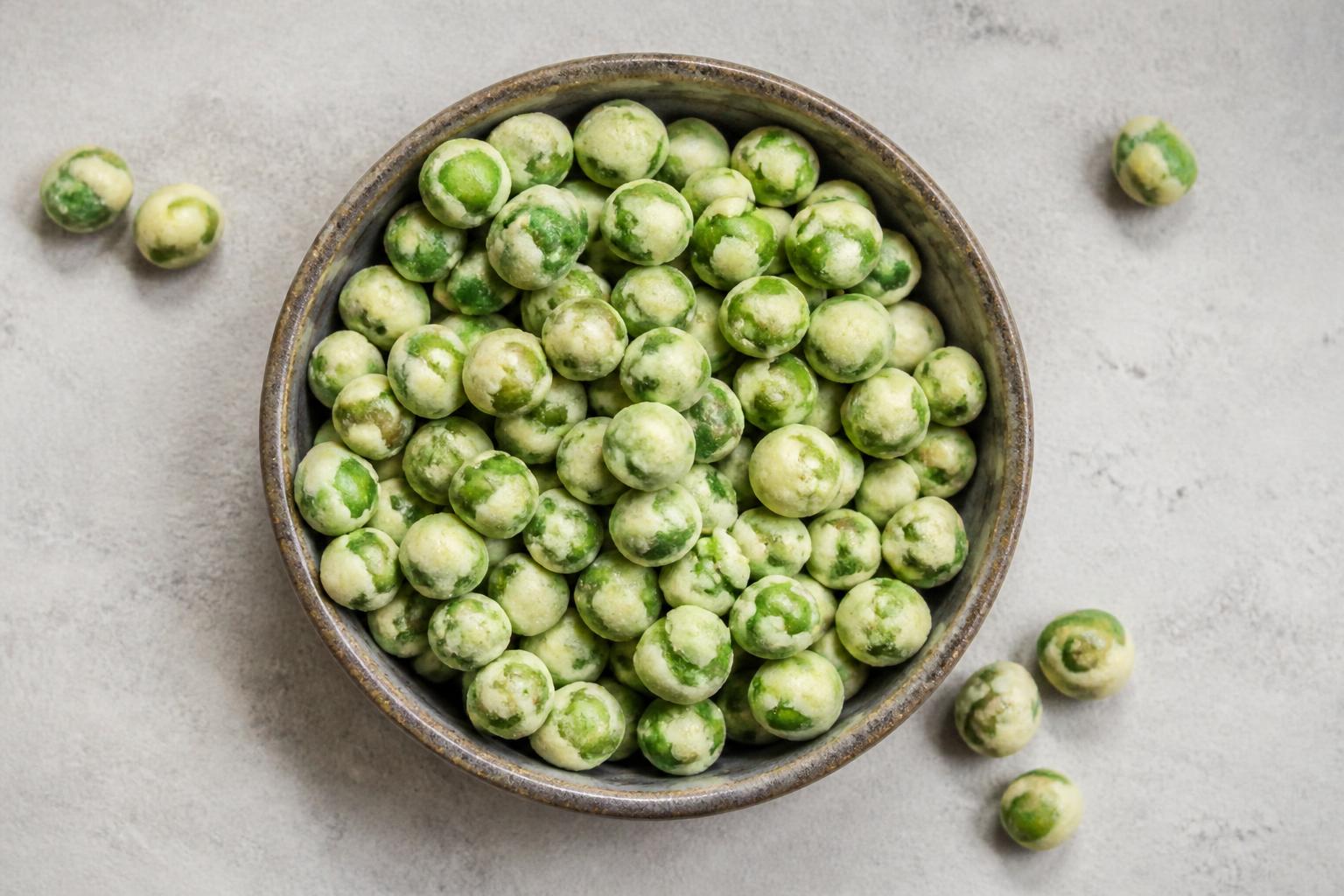
If you are wondering whether wasabi peas are healthy, the short answer is, they can be, but they are not an automatic healthy win. They do offer some useful things, including a bit of protein, fibre and a satisfyingly crunchy texture that can make a small portion feel more substantial than softer snacks. At the same time, many packs are fairly salty, quite easy to overeat, and more processed than the plain green peas underneath might suggest.
That is really the key with wasabi peas. They are not just peas. They are usually dried or roasted peas with a flavoured coating, and that coating changes the nutrition quite a lot. So whether they suit your everyday snacking depends less on the word “pea” on the front, and more on the ingredients list and nutrition panel on the back.
What are wasabi peas made from?
Most wasabi peas start with green peas, usually dried peas rather than fresh garden peas. Those peas are then roasted, baked or otherwise dried until crisp. After that comes the part that matters most for nutrition, the outer coating.
A typical coating may include starches such as wheat flour, rice flour or corn starch, plus sugar, salt, vegetable oil and flavourings. The hot kick often comes from a wasabi-style seasoning blend rather than a lump of fresh wasabi root. In many supermarket and snack-brand versions, the flavour is built with horseradish powder, mustard, flavour enhancers and colourings, alongside a smaller amount of actual wasabi. That does not make the snack fake or unsafe, but it does mean the bold flavour is usually the result of a recipe, not just a naturally fiery ingredient.
This is why the coating matters as much as the peas. Plain roasted peas are one thing. A crisp pea covered in starch, oil, salt and spicy seasoning is another. The pea still brings some nutritional value, but the coating can push up the salt, refined carbohydrate and calorie content. It can also affect allergens. Some brands contain wheat, and some may be made in facilities handling peanuts, sesame or soya.
Texture-wise, wasabi peas are clever little things. The hard crunch and sinus-clearing heat make them feel punchier than many other snacks, which can help some people stop after a small handful. For others, that same moreish combination of salt, crunch and heat makes it easy to keep dipping back into the bowl.
Are wasabi peas actually healthy?
In a balanced, practical sense, wasabi peas can fit into a healthy diet, but they are best thought of as a better-than-some-snacks option rather than a nutritional superstar.
On the plus side, they are usually more interesting nutritionally than standard crisps. Because they are pea-based, they often provide some plant protein and fibre. That can help with fullness, especially compared with snacks that are mostly refined starch and fat. Their crunch also tends to slow eating down a bit. A small serving can feel quite satisfying.
They may also be useful if you enjoy savoury snacks and want something with a bit more substance than puffy maize snacks or plain crackers. If the alternative is a large bag of crisps, cheesy nibbles or repeated trips to the biscuit tin, a modest portion of wasabi peas may come out looking fairly sensible.
But there are limits.
First, they are still a manufactured snack food. Even when the ingredients list is not especially long, they are processed. That word gets thrown around too loosely, so it is worth being specific. Processing itself is not automatically bad. Roasting, drying and seasoning are all forms of processing. The real question is what the processing has added, and whether that works for your usual eating pattern. With wasabi peas, the main things to watch are salt, coating ingredients, portion size and how often you have them.
Second, the nutrition varies a lot between brands. One pack may be relatively restrained on salt and sugar, while another may be much heavier. Some are dry-roasted and lightly coated. Others are thickly crusted and more intense. So if you want a proper answer to whether wasabi peas are healthy for you, there is no single universal verdict. The label matters.
Third, the health halo can be misleading. The word “pea” sounds wholesome, and compared with sweets it probably is. But a spicy pea snack is still a snack. It should not be judged in the same way as a bowl of beans, a portion of vegetables or a balanced lunch.
So, are wasabi peas healthy? They can be a reasonable savoury snack in small amounts, especially when compared with less filling, more heavily fried options. They are less convincing as an everyday free-for-all snack eaten by the mugful.
How salty, calorie-dense and processed are they?
When we are deciding whether a crunchy snack works for ordinary life, three things matter most, salt, calories per portion, and how the product has been put together.
Start with salt. In the UK, food labels may show salt per 100g and per serving. For wasabi peas, the per 100g figure can look startling, but that is because 100g is a lot of wasabi peas. Still, it tells you how heavily seasoned the product is. If you regularly watch your salt intake, compare brands rather than assuming they are all much the same.
Salt matters because this is exactly the sort of snack people eat absent-mindedly, at a desk, in the car, with drinks, or out of a shared bowl. A food that is highly salted and easy to keep grabbing can quietly add up. If you already eat bread, cheese, sauces, ready meals or takeaways fairly often, your daily salt intake may be doing enough work without a spicy snack piling on top.
Next, calories. Wasabi peas are not usually the most calorie-dense snack on the shelf, but they are not especially light either. Because they are dry, crunchy and compact, a small handful can contain more energy than it looks like. The coating often adds starch and sometimes sugar, while the roasting process may involve oil. That means the “just peas” idea can be misleading.
This is where pack size becomes important. A small measured portion can be perfectly manageable. Eating straight from a large sharing pouch while answering emails is a different story. If you have ever looked down and found a bowl mysteriously empty, you already know how that one ends.
Then there is processing. Again, no need for melodrama. Wasabi peas are not unusual in being processed. But they are a blend of base ingredient plus coating plus flavour system. The more heavily coated and seasoned they are, the further they move from a simple legume snack and the more they behave like a classic moreish nibble.
The front of pack can also distract from the useful detail. “Roasted” sounds virtuous, and sometimes it does mean less fat than a fried snack. But roasted does not tell you the salt level, the amount of coating, or whether sugar appears high up the ingredients list. Turn the pack over. Check the ingredients list, then the nutrition table. Look at serving size with a slightly suspicious eye, because some brands choose very modest portions that few people would naturally stop at.
If you like comparing snack formats, it can help to see where peas sit next to other crunchy options. Our guide to roasted chickpeas in the UK made simple is useful here, because chickpea snacks raise many of the same questions about roasting, seasoning and portion size.
Who might want to be more careful with wasabi peas?
Some people can enjoy wasabi peas without a second thought. Others may want to pause before making them a regular fixture in the snack drawer.
Anyone watching salt intake should be more careful. That includes people who have been advised by a GP or dietitian to keep an eye on sodium, as well as those simply trying to eat less heavily seasoned food day to day. UK labels list salt, which is the figure most shoppers will use here. That is helpful, because advice and packaging in some other countries may focus more on sodium instead.
People with sensitive digestion may also find wasabi peas a bit punchy. The heat can irritate some stomachs, especially if eaten quickly, on an empty stomach, or in larger amounts. The same goes for anyone prone to reflux, indigestion or a generally touchy digestive system. It is not that wasabi peas are inherently a problem, but they are one of those snacks that can feel fun in the mouth and less fun an hour later.
Those with coeliac disease or a wheat allergy need to be particularly label-aware, because many wasabi pea coatings contain wheat flour. Gluten-free versions do exist, but they are not the default. If you need to avoid gluten for medical reasons, do not assume a pea snack is naturally gluten-free.
People who tend to eat mindlessly may want to be honest with themselves too. Wasabi peas are a classic “one more handful” snack. They are small, dry and intensely flavoured, which makes them very easy to nibble through while distracted. If that sounds familiar, portioning them out before you start is likely to help more than lofty intentions.
Children may need a bit of caution as well, simply because the heat can be too much and the hard crunch may not suit younger eaters. For family snack ideas with a gentler profile, our piece on healthy kids’ snacks that work on ordinary UK days is a better starting point.
And finally, anyone using wasabi peas as a stand-in for meals may want to rethink the role they are playing. A savoury snack can certainly bridge the gap between meals, but it is not doing the same job as a proper lunch or a more balanced mini-meal.
How can you enjoy wasabi peas in a healthier way?
The easiest way to make wasabi peas work better is to treat them as a strong-flavoured accent, not the whole event.
Start with portioning. Instead of eating from the bag, tip a small amount into a ramekin, mug or little tub. That sounds almost insultingly simple, but it works. A measured portion gives the crunch and heat room to do their job. You get the full sensory hit without accidentally ploughing through several servings.
Pairing helps too. Wasabi peas are intense, so they work well alongside milder foods. Try them with a piece of fruit, some plain yoghurt, or a lunch that needs a crunchy side rather than another packeted extra. They can also be sprinkled over a salad or grain bowl in place of croutons, which spreads the flavour further and naturally keeps the amount sensible.
Frequency matters more than perfection. If you love wasabi peas, there is no need to banish them dramatically from your life. It is usually enough to think about rhythm. Every now and then is different from several times a day. If they are one of a few savoury snacks you rotate, that is a very different picture from relying on them as the default answer to every 4 pm slump.
It is also worth comparing brands. Look for options with simpler ingredients, less salt, and a lighter coating where possible. You may still want the proper nose-tingling kick, but you do not necessarily need the saltiest version on the shelf to get it.
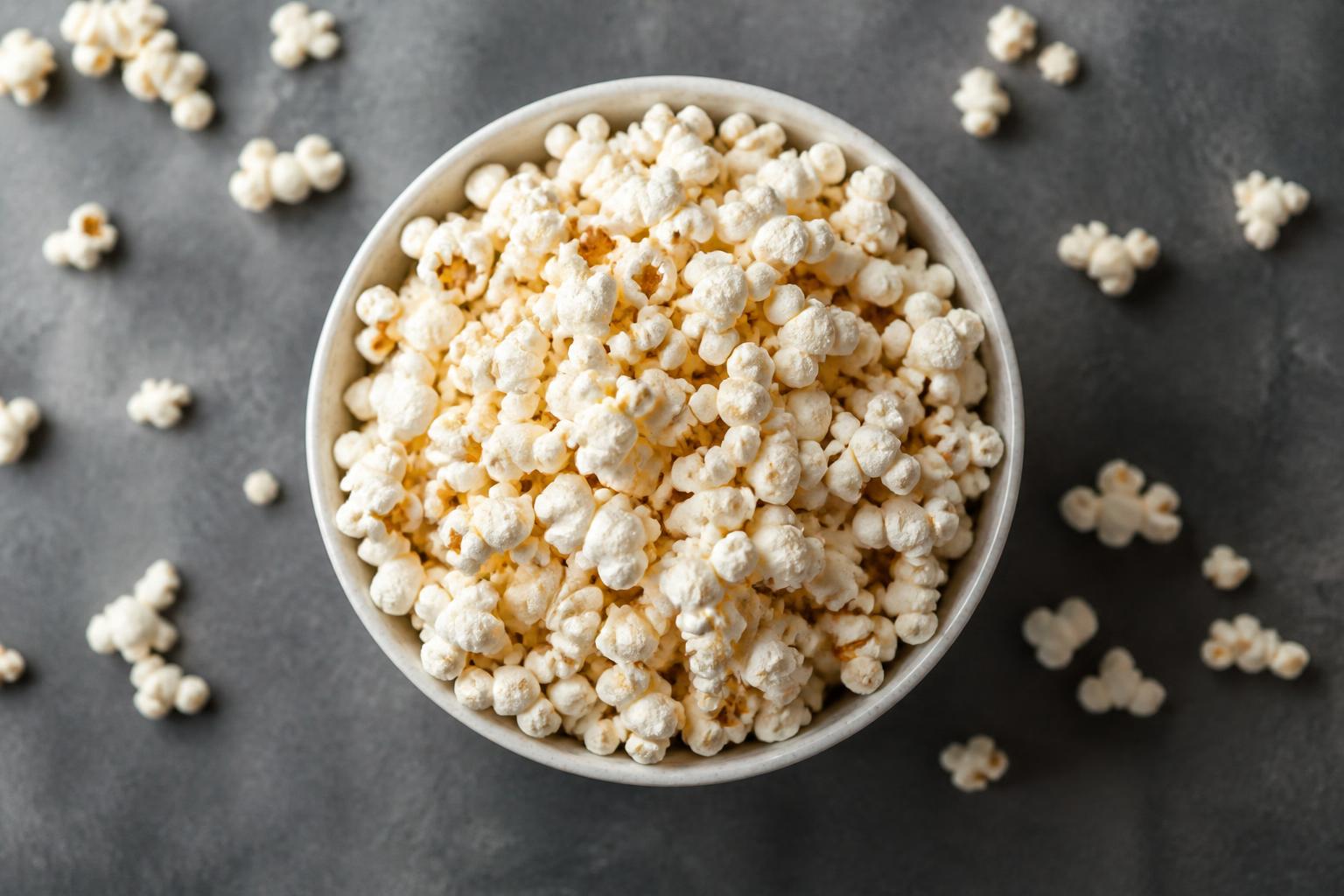
Another handy trick is to combine them with less intense staples in a homemade snack mix. A small amount of wasabi peas mixed with unsalted nuts, plain roasted chickpeas or air-popped popcorn can create variety while keeping the overall saltiness in check. You still get the occasional spicy hit, but not in every single bite.
If you are trying to build better everyday habits, context matters. Snacks are often chosen when we are busy, tired or underfed. Planning something satisfying earlier in the day can stop every crunchy craving turning into a random cupboard raid. Our guide on building a healthy lunch box that still feels like a treat covers the sort of practical combinations that make snack decisions easier later on.
So where do we land? Wasabi peas sit in the middle ground. They are not health food in a halo, and they are not nutritional villains either. They can be a lively, satisfying option with a bit of protein and fibre, but the salt, coating and portion size deserve attention. If you enjoy them, choose carefully, serve yourself a sensible amount, and let their bold flavour do the heavy lifting. That way, they can stay what they are best at being, a fun, crunchy snack with a bit of fire, rather than a stealthy habit that gets away from you.

Questions about this article or a correction to suggest? Get in touch. Read more about our editorial approach.