If you want a low carb cracker with a proper snap, seed crackers are often the first place people look. The good ones deliver crunch, a savoury flavour and enough substance to feel like a snack rather than a dietary placeholder. The less good ones can be oddly soft, oily, or far higher in digestible carbohydrate than the front of the pack suggests.
That is why keto seed crackers attract so much attention. They sit in the gap between crispbread, crackers and snack biscuits, but they are built around seeds rather than flour. For UK shoppers trying to keep carbs lower without giving up texture, they can be a genuinely useful cupboard staple, provided you know what you are actually buying.
What keto seed crackers are and why people buy them
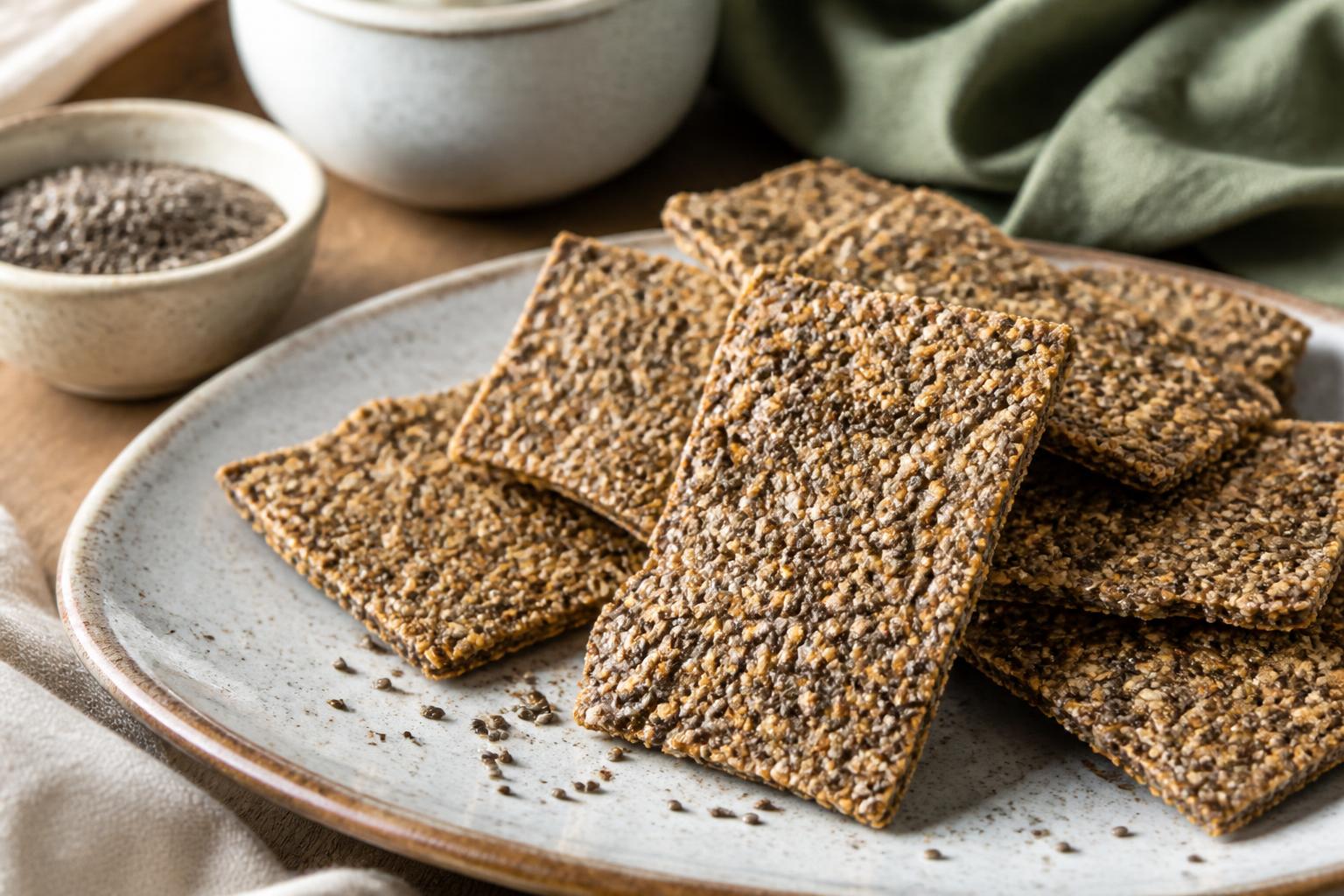
Keto seed crackers are crackers made mainly from seeds, usually flax, chia, sunflower, pumpkin or sesame, with just enough binder to hold everything together. Instead of relying on wheat flour or oat flour for structure, they get their body from the seeds themselves. That changes both the texture and the nutrition.
In plain terms, they are bought by people who want crunch with fewer digestible carbs than standard crackers. A typical wheat cracker gets much of its structure from starch. A seed based cracker gets more of its structure from fibre, fat and protein, depending on the mix. That is why the carbohydrate story can look very different.
The appeal is not only about macros. Many UK snackers simply want something savoury that feels more substantial than a rice cake and less fiddly than making a full plate of food. Seed crackers often work well with cheese, soft cheese, hummus, smoked fish, egg mayo or sliced avocado. They can also stand up on their own, which matters when you need a desk snack or something to carry in a bag.
They also attract people who are not following a strict ketogenic diet but still prefer lower carb choices. Plenty of readers are not counting every gram. They just want a cracker that does not turn into a floury mouthful, and that leaves room in the day for other foods they enjoy.
The phrase itself covers a wide range. Some are thin and brittle, almost like a seeded crispbread. Others are denser and more biscuit like. Some are baked until very dry and snappy. Others stay slightly chewy because of the seed gel used as a binder. If you have tried one pack and disliked it, that does not tell you much about the whole category.
If you want a closer look at specific seed styles, our guides to chia seed crackers for everyday snacking and flax seed crackers made simple break down how those ingredients behave.
What makes one cracker more keto-friendly than another
Not every seed cracker is especially keto friendly. The name on the front can sound promising while the recipe tells a different story.
The first thing that matters is how much of the cracker is actually seed based. If the ingredient list starts with wheat flour, rice flour, tapioca starch or oats, you are not looking at the same kind of product as a cracker built mainly from flax, chia or sunflower seeds. Seeds may still be present, but they are not doing the main structural work.
The second factor is the binder. Seed crackers need something to help them set. In a very simple recipe, ground flax or chia can form a gel with water and act as their own binder. In commercial products, you may also see psyllium husk, egg white, cheese powder, or fibre ingredients. Those can keep digestible carbs lower. On the other hand, some products use potato starch, tapioca starch, honey or malt extract to improve texture or browning. Those ingredients can push carbs up quickly, even when the pack still looks health minded.
Net carb claims need a bit of caution in the UK. You will often see US style language online, where net carbs are calculated by subtracting fibre from total carbohydrate. UK nutrition labels already list carbohydrate separately from fibre. In other words, on a standard UK label, the carbohydrate figure is usually the one most lower carb shoppers need to watch. You do not need to subtract fibre again. That is one of the easiest ways to misread a product.
Fibre still matters, just not in the same way. A cracker with plenty of fibre often feels more substantial, and fibre rich seed mixes can support the crisp, dry texture many people want. But high fibre alone does not make a product keto friendly if the carbohydrate figure is still high.
Portion size is another quiet trap. A cracker can look low carb per cracker while the serving size is tiny. If a serving is two small pieces, but you will realistically eat eight with lunch, the practical carb total is very different. We find it more useful to compare both per 100g and per realistic portion. Per 100g helps you compare products fairly. Per portion tells you what will happen on your plate.
Oil content also plays a part. Seeds naturally contain fat, but some crackers add extra oils to improve mouthfeel or reduce brittleness. That does not automatically make them less suitable, but it can affect how satisfying they feel. A very lean, dry cracker may seem virtuous and still leave you rummaging for something else ten minutes later. A richer one may feel more complete, especially if you are using it as a snack rather than a vehicle for toppings.
If you want a practical framework for side by side comparisons, our guide to comparing seed crackers without guesswork is worth keeping open when you shop.
How to read the label without getting misled
The ingredient list is where we start, not the front of pack claims. In the UK, ingredients are listed in descending order by weight at the time of manufacture. That means the first few ingredients tell you what the cracker is mostly made from. If seeds dominate those top positions, you are probably in the right area. If floures and starches appear first, the product may be more of a conventional cracker with seeds added.
Look closely at the different forms of the same ingredient. Whole flaxseed, milled flaxseed and flaxseed flour all behave differently. Whole seeds add crunch. Ground seeds help bind and create a more even bite. Chia can create a gel that changes the texture from brittle to slightly chewable. Psyllium husk can increase structure and fibre, but too much can make a cracker feel dry in a very particular way.
Then move to the nutrition table. For UK labels, the key lines are energy, fat, saturates, carbohydrate, sugars, fibre, protein and salt. For lower carb eating, the carbohydrate line is the main one to focus on. As noted above, UK carbohydrate figures are not the same as some US labels. Fibre is shown separately, so do not subtract it again.
Per 100g values are best for comparison. Per serving values are useful only if the serving makes sense. If the pack defines a serving as a very small amount, treat that as a marketing convenience rather than a meal planning tool.
Salt deserves more attention than it usually gets. Seed crackers often need seasoning because seeds can taste flat on their own once baked dry. A little salt can make them far more enjoyable. Too much can turn a small snack into something that leaves you thirsty and makes toppings less pleasant. If you are pairing crackers with salty foods such as hard cheese, smoked salmon or cured meats, a heavily salted cracker can tip the whole snack out of balance.
Allergen information matters too. Sesame is a common ingredient in this category and one of the 14 major allergens that must be emphasised on UK labels. Some products also include nuts, egg or milk powders. If you buy from small producers, check whether they state cross contamination risks clearly.
There is still some uncertainty even when the label looks tidy. You cannot tell everything from the pack. Texture, freshness and oil quality are harder to judge in advance. Terms such as natural, artisan or wholesome are not much help. Even a short ingredient list does not guarantee a cracker you will enjoy.
One more UK specific point, if you read imported products or overseas recipes. In Great Britain, food labelling rules broadly follow retained EU style structures in many areas, but there can be differences in presentation and claims depending on where the product is sold. If you are comparing advice from US or general international sources, always come back to the actual UK nutrition panel in front of you.
Why texture, flavour and freshness vary so much
Seed crackers are deceptively simple. Small changes in recipe and handling can make the difference between a cracker that shatters neatly and one that bends, crumbles or tastes stale a day after opening.
Crispness comes down to moisture. A cracker stays crisp when enough water has been baked off and kept out afterwards. Seeds complicate this because they contain oils and, in the case of chia and flax, ingredients that hold water very effectively. That is useful for binding, but it can leave a cracker leathery if the drying stage is not right.
Thickness matters too. A very thin cracker can feel brilliantly crisp at first bite but may turn fragile and dusty. A slightly thicker one may keep a more satisfying crunch and hold toppings better. The trade off is that thicker crackers are harder to dry evenly. The centre can stay a touch soft while the edges become overbaked.
The seed mix affects flavour more than people expect. Flax can taste earthy and slightly nutty. Chia is milder but changes texture. Sunflower seeds bring a rounder, more familiar savoury note. Pumpkin seeds add heft and a greener, deeper flavour. Sesame can make a cracker taste toastier and richer, but it can also dominate. If you dislike one seed in particular, you will notice it.
Oiliness is another variable. Some crackers feel pleasantly rich. Others leave a film on the fingers or taste heavy. That can come from added oil, from the natural oil content of the seeds, or from storage conditions. Once oils start to turn, the flavour loses its fresh nuttiness and moves towards cardboard or paint like notes. Seed crackers are not unique in this, but they are more exposed to it than dry flour crackers.
Freshness depends on packaging as much as recipe. Resealable pouches help, provided they actually close well. Trays can protect shape but do less for staling once opened. A very crisp cracker can soften surprisingly fast in a damp kitchen. If you have ever left a pack open on a humid evening, you will know how quickly the snap disappears.
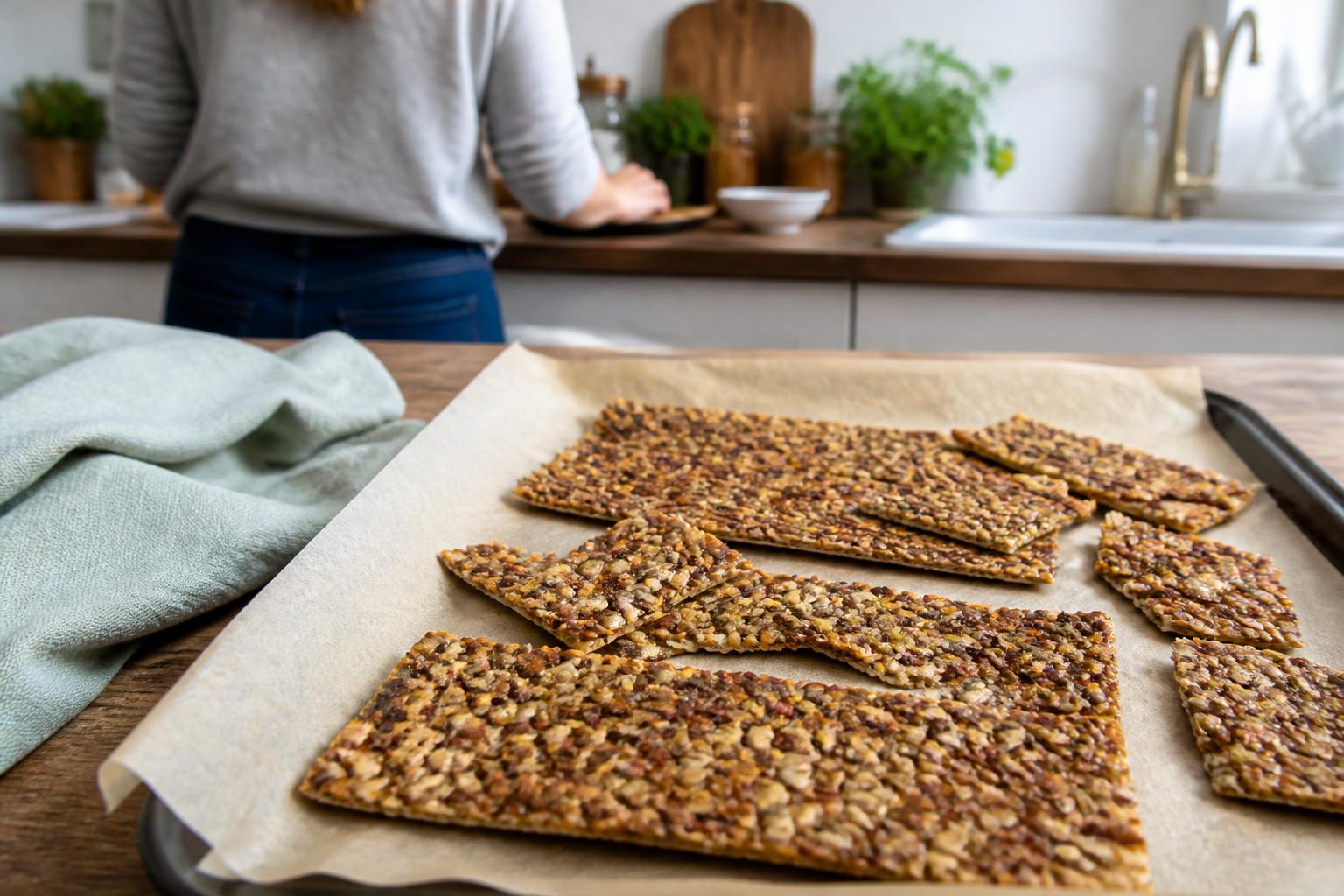
That is one reason homemade versions can be brilliant one day and disappointing the next. If you are making your own, our guide on how to make seed crackers that stay crisp covers the drying and storage details that matter most.
Flavourings also change the experience. Rosemary, black pepper, smoked paprika, garlic and nutritional yeast can all work well, but strong seasoning can mask whether the base cracker is actually good. If you mainly want a carrier for toppings, a simpler flavour often gives you more flexibility. If you want something to eat straight from the packet, a seasoned version may feel more satisfying.
How keto seed crackers can fit into everyday eating
The most useful way to think about seed crackers is as a format, not a miracle food. They can make lower carb eating easier because they offer crunch and convenience, but they do not automatically create a balanced snack on their own.
For a quick snack, we like pairing them with something that brings either protein or freshness. Cream cheese and cucumber, cheddar and slices of tomato, cottage cheese with cracked pepper, or a boiled egg on the side all make more sense than eating a pile of dry crackers and hoping for the best. The crackers bring texture. The rest of the snack needs to do the work on satiety and balance.
They also work well in light lunches. A handful alongside soup can replace bread if that is what you are trying to reduce. Topped with mackerel pate, egg mayo, or smashed avocado and lemon, they can become a simple plate rather than an afterthought. Because many seed crackers are sturdy, they cope better with moist toppings than delicate water biscuits do.
They are useful in the car, at a desk, or in a bag because they are less messy than many crunchy snacks. That said, they are not always as filling as they look. Seeds are dense, and crackers can disappear fast. If you are hungry, portioning them onto a plate with the rest of your snack usually works better than eating from the pack.
It is also worth keeping expectations realistic. A lower carb cracker may fit your eating pattern better than a standard cracker, but it is still easy to overdo a very moreish savoury snack. Texture can encourage mindless eating just as much as flavour does. Crispness is part of the appeal, and part of the risk.
For everyday routines, the best approach is usually simple. Keep a pack for the moments when you genuinely want crunch. Pair it with foods that make the snack feel complete. Pay attention to how a given cracker leaves you feeling, not just to the headline carb figure. A product can look perfect on paper and still not satisfy you.
That broader point applies beyond crackers. Practical habits beat perfect ones, especially on busy weekdays. If you are trying to build a snack routine that actually works in real life, our piece on healthy habits that fit a busy UK day is a sensible next read.
The best keto seed crackers do three things well. They stay crisp, they taste of something more than dry seeds, and they fit naturally into the way you already eat. Once you know how to read the label and what affects texture, it gets much easier to spot the packs that will earn a place in the cupboard, rather than lingering there until they go soft.

Questions about this article or a correction to suggest? Get in touch. Read more about our editorial approach.