Pregnancy snacks do not need to be worthy, fussy or photogenic. The best ones are usually the ones you can actually face eating, keep nearby, and finish without feeling either too full or suddenly ravenous an hour later. A sensible snack in pregnancy can help steady energy, take the edge off nausea, and bridge the gap between meals, especially on days when appetite is all over the place.
When people search for healthy snacks in pregnancy, they often want something much simpler than a perfect meal plan. They want ideas that feel easy on the stomach, filling enough to matter, and practical for real life in the UK, whether that means a commute, a desk drawer, a toddler in tow, or a morning when toast is the only thing that sounds remotely possible.
What makes a good pregnancy snack?
A good pregnancy snack does three jobs. It helps with hunger, it is easy enough to eat when appetite is unpredictable, and it adds something useful to the day without trying to replace a proper meal.
That usually means thinking in pairs rather than single foods. A carbohydrate food can give quick energy. A protein or fat source can help it last a bit longer. A crisp apple on its own can be refreshing, but an apple with peanut butter or a few cubes of cheddar is more likely to keep you comfortable until lunch. Plain crackers may be the only thing you can manage first thing, but crackers with hummus later in the day are more sustaining.
Texture matters too. Pregnancy can make people oddly specific about what they can tolerate. Some days that means cold, crunchy foods like cucumber, apples or dry cereal. Other days it means soft, bland options like yoghurt, toast or rice cakes. There is no prize for forcing down a snack that sounds “healthy” on paper but turns your stomach in practice.
Portion size also matters. Snacks are there to support meals, not crowd them out. If you are eating little and often because larger meals feel uncomfortable, snacks may become more important for a while. If meals are going well, a snack might just be something modest at mid-morning or mid-afternoon. Both can be sensible.
It can help to think of a snack as a mini-combination from a few familiar categories:
- Fruit or vegetables
- Starchy foods such as oatcakes, toast, crackers, cereal or pitta
- Protein foods such as yoghurt, eggs, cheese, hummus, beans or nuts
- Extras that add satisfaction, such as nut butter, avocado or seeds
That does not mean every snack must tick every box. Sometimes “easy to swallow and not offensive at 8am” is the main criterion. But over the course of a week, these combinations can make snacking feel more useful and less random.
Which nutrients are worth thinking about between meals?
Snacks are not the only place to get key nutrients in pregnancy, but they can help top things up, especially when meals are patchy.
Fibre is one of the most useful things to think about. Constipation is common in pregnancy, and snacks built around fruit, vegetables, oats, pulses, wholegrain crackers or nuts can help. An oatcake with hummus, a pear with a handful of walnuts, or yoghurt with oats and berries all pull their weight here. Extra fibre works best alongside enough fluid, so a snack and a drink often make sense together.
Protein can help with fullness and can be easier to spread across the day than to cram into one meal. Yoghurt, milk, cheese, eggs, nut butter, hummus, roasted chickpeas and nuts are all practical snack options. If you want more ideas in that lane, our guide to healthy savoury snacks that keep everyday choices simple is a useful place to browse.
Calcium is worth keeping in mind too. In the UK, dairy foods such as milk, yoghurt and cheese are common sources, and fortified alternatives can contribute if they are unsweetened and calcium-fortified. A pot of yoghurt, a small bowl of fortified cereal with milk, or cheese on wholegrain crackers can all help between meals.
Folate matters in pregnancy, and UK guidance is clear on taking a folic acid supplement before conception and through the first 12 weeks of pregnancy. Food still plays a part, though. Snacks with foods such as leafy greens, beans, oranges and fortified cereals can contribute, even if they are not a substitute for supplementation where that is advised.
Vitamin D is a slightly different case. In the UK, guidance commonly advises a daily vitamin D supplement during autumn and winter for everyone, and many pregnant people are advised to consider it throughout pregnancy because food sources are limited. A snack is not the main answer here, but fortified dairy or plant drinks and fortified cereals may contribute a little.
Iron is another nutrient people often think about. Needs rise in pregnancy, but not everyone is advised to take iron routinely. UK advice generally focuses on eating iron-rich foods and checking for anaemia as part of antenatal care. Snack-friendly options include fortified breakfast cereals, hummus, beans, dried apricots in modest portions, nuts and seeds. Pairing plant sources of iron with something containing vitamin C, such as fruit or peppers, may help absorption. A small pot of hummus with red pepper strips is a neat example.
Iodine supports normal thyroid function and fetal development, and in the UK it is often obtained from dairy and fish. A yoghurt, a glass of milk, or a snack based on tinned fish can contribute. If you avoid dairy and fish, this is worth discussing with your midwife or dietitian rather than guessing.
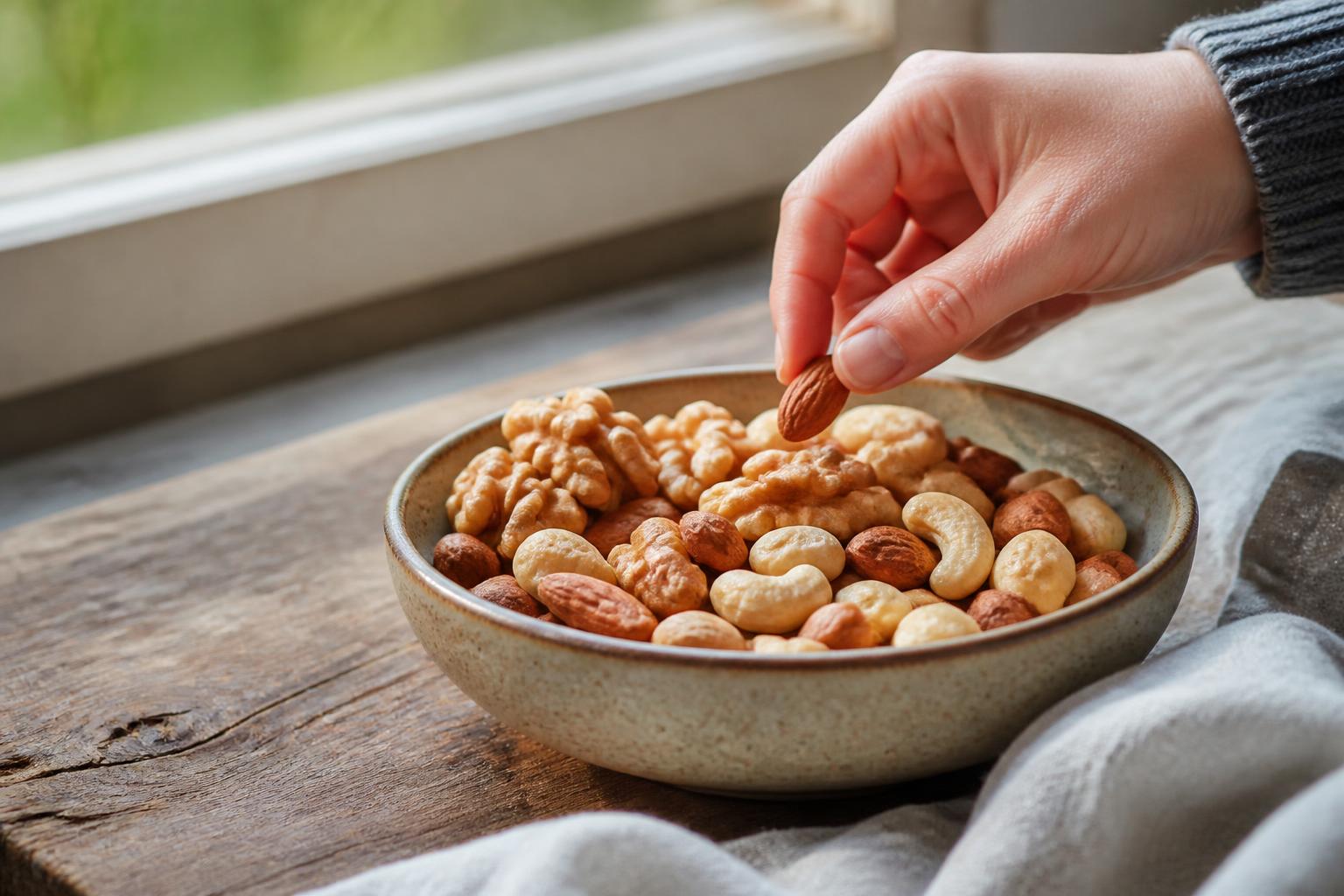
One note on nuts. They can be a useful source of protein, fibre and healthy fats, and UK advice does not tell pregnant people to avoid peanuts or nuts unless they are personally allergic. If nuts are already part of your diet, they can make an excellent snack base. We cover the practical side in our look at whether nuts make a healthy everyday snack.
Easy snack ideas for nausea, sudden hunger and busy afternoons
Pregnancy snacking gets much easier when you match the snack to the moment.
For nausea, plain and dry often wins. Keep a few low-effort options within reach of the bed or sofa, such as plain crackers, oatcakes, dry cereal, breadsticks or a rice cake. A banana, a cold apple, or a slice of toast can also be gentler than richer foods. Some people find that a small snack before getting out of bed helps with morning sickness. Others prefer cold foods because warm smells are too much.
If food aversions are strong, stop aiming for textbook perfection at every snack. A beige snack is still a snack. Toast with butter, a plain bagel, crackers with cream cheese, or cereal with milk may be what gets you through a rough patch. You can build back in more variety when the idea of food feels less hostile.
For sudden hunger, the best snacks are the ones with enough staying power to prevent the second raid on the cupboard 20 minutes later. Try combinations like:
- Apple slices with peanut or almond butter
- Greek yoghurt with berries and a spoonful of oats
- Wholegrain toast with scrambled egg
- Oatcakes with cheddar and cherry tomatoes
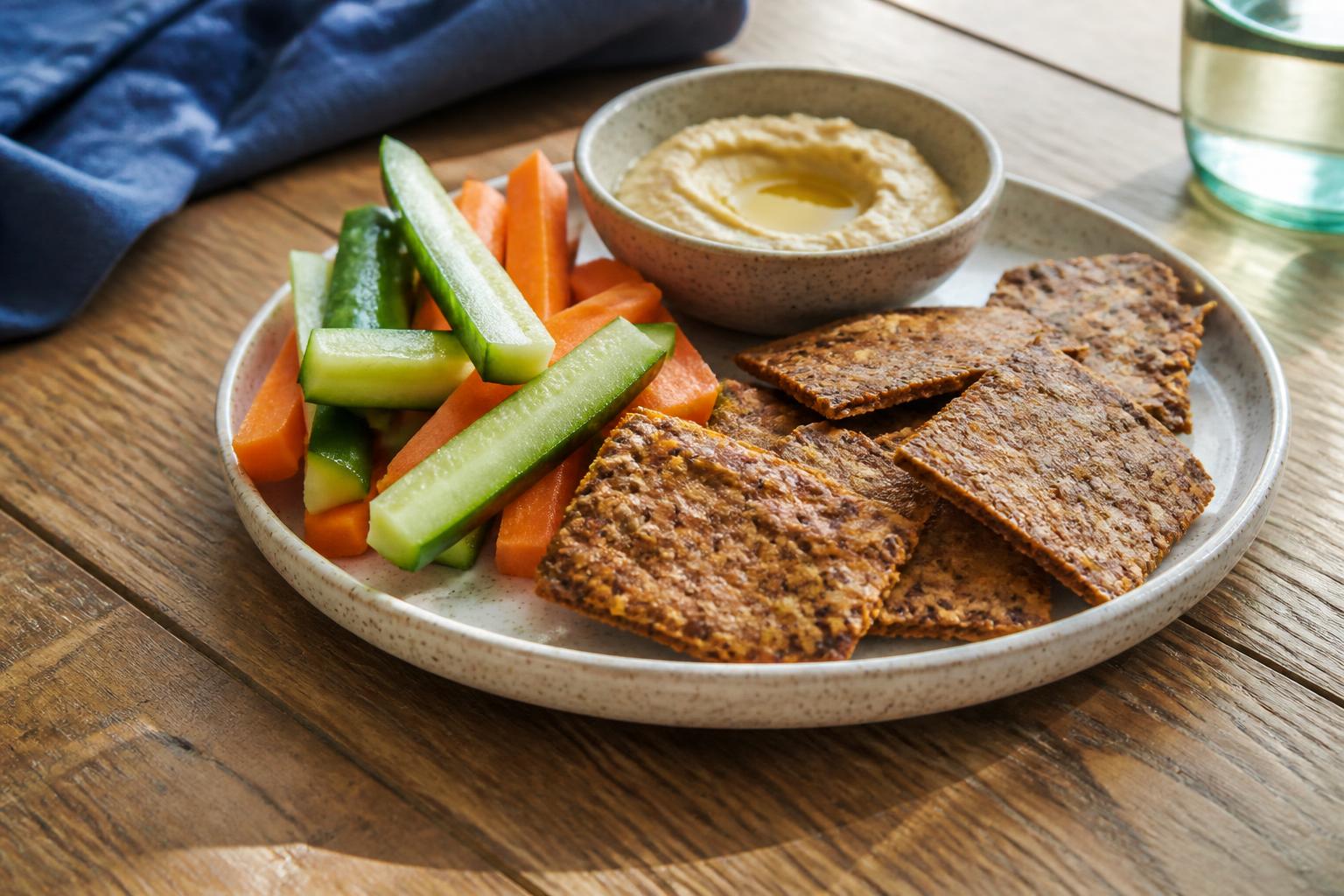
- Hummus with pitta and cucumber
- Cottage cheese with crackers and grapes
- A small bowl of fortified cereal with milk and sliced banana
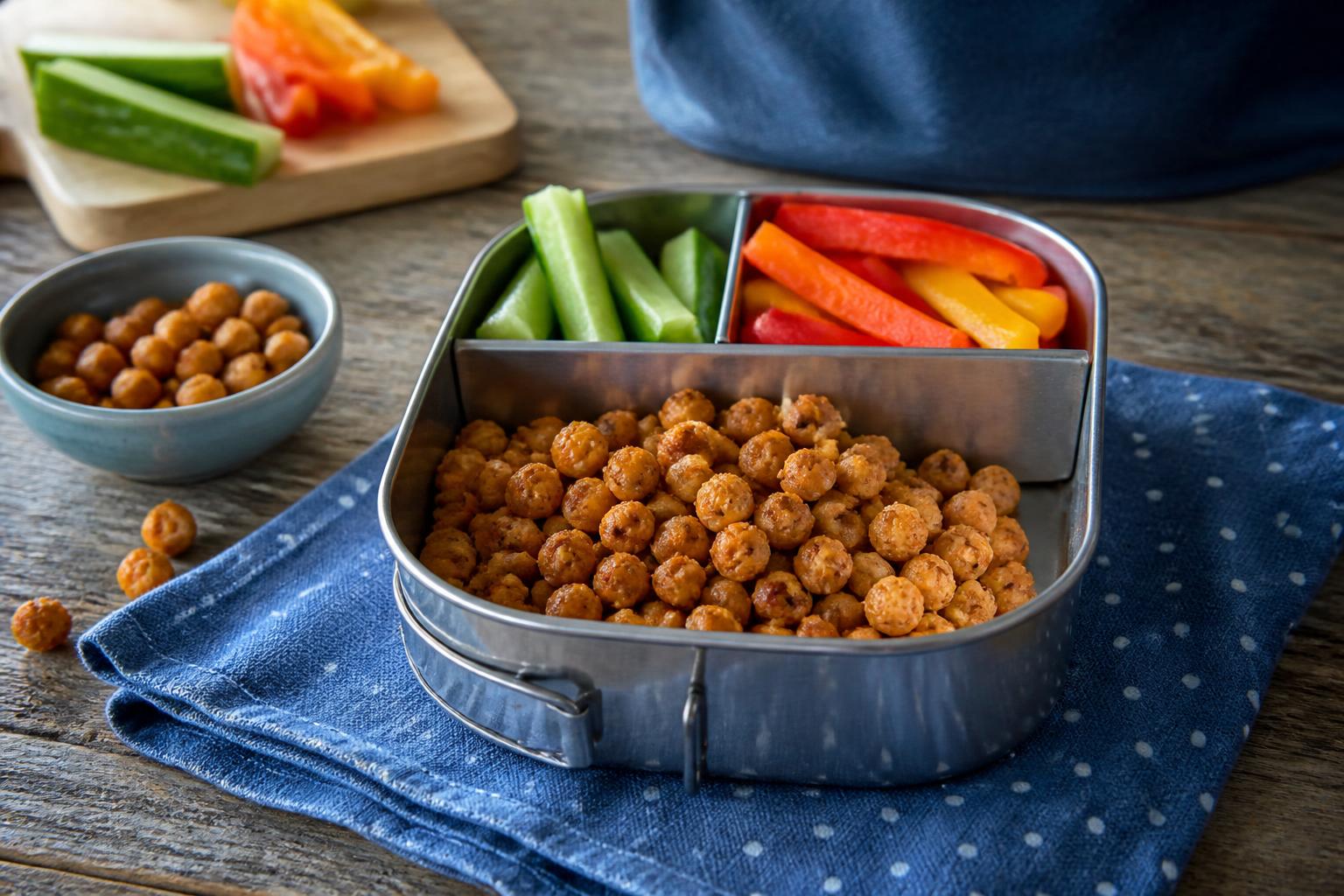
For busy afternoons at work, think neat, portable and not too crumbly if possible. A yoghurt pouch or pot in a cool bag, a banana with a small bag of nuts, roasted chickpeas, cheese portions with wholegrain crackers, or a homemade trail mix can all work. If you like fruit in a crisp, dry format, our piece on whether freeze-dried fruit is a healthy snack choice may help you decide where it fits. It can be handy, but it is easier to eat a lot quickly than fresh fruit, so pairing it with nuts or yoghurt often makes more sense than nibbling it endlessly.
For on-the-go days, build a “car snack” or “bag snack” that can survive being forgotten for a few days. Good candidates include oatcakes, plain crackers, nut butter sachets, unsalted nuts, roasted broad beans, cereal bars with straightforward ingredients, and long-life milk cartons if you tolerate them. Then add one fresh item when you leave the house, such as a banana, satsuma or yoghurt.
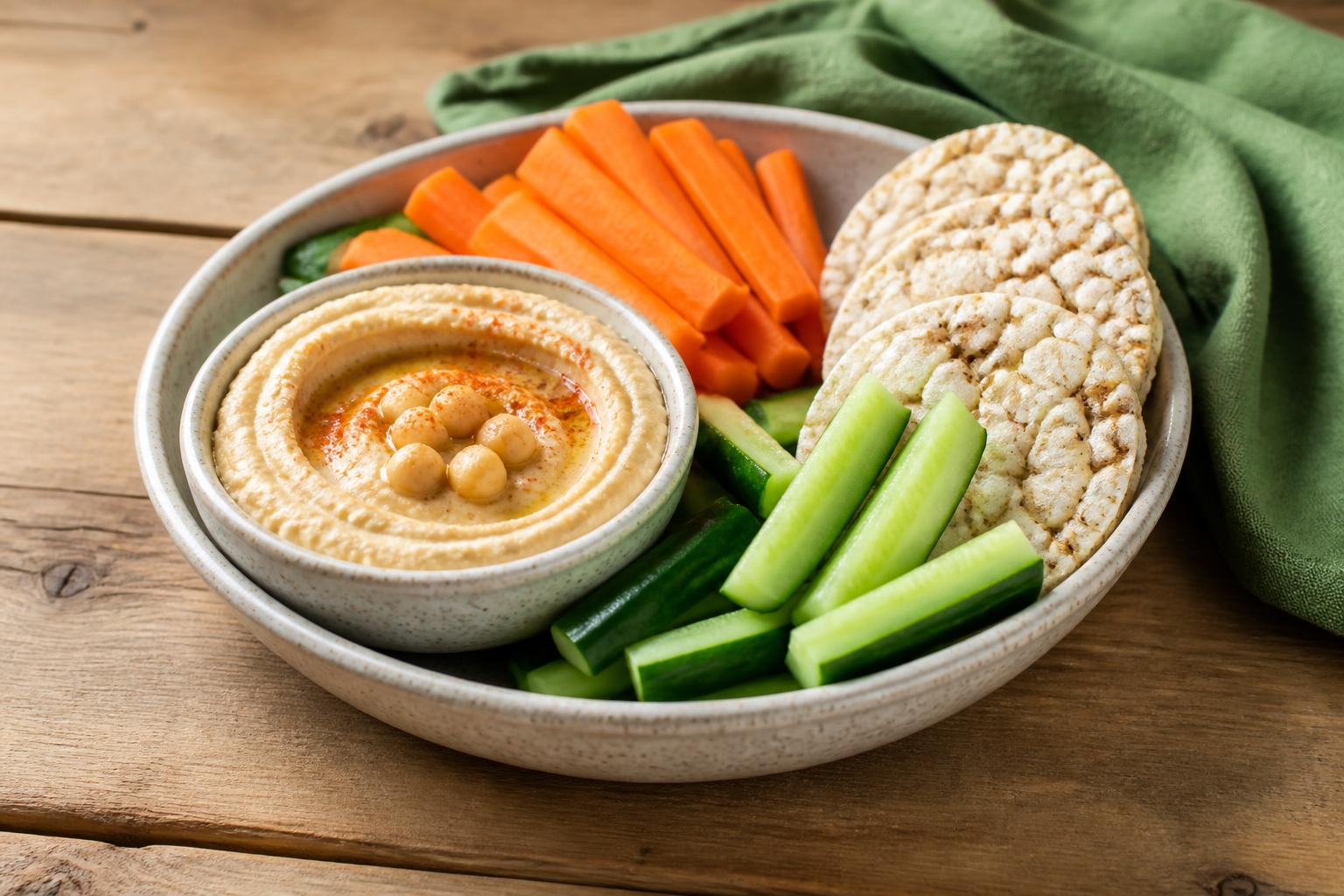
For a more savoury mood, crunchy vegetables can be surprisingly appealing, especially if richer foods are putting you off. Carrot batons, sugar snap peas, cucumber and peppers with hummus or tzatziki have that cool, fresh snap that can feel more manageable than something sweet.
For evenings, when heartburn or fullness can creep in, smaller snacks are often better. Yoghurt, a slice of toast, a banana, or a few crackers with cheese may sit more comfortably than a large bowl of anything.
Which snacks are best to limit or avoid in pregnancy?
This is where “healthy” needs to include food safety as well as nutrients.
In the UK, some foods are best avoided in pregnancy because of the risk of infections such as listeriosis, salmonella or toxoplasmosis. That matters for snacks just as much as for meals. Avoid mould-ripened soft cheeses such as Brie and Camembert unless they are thoroughly cooked until steaming hot. Avoid soft blue cheeses unless cooked. Be cautious with unpasteurised dairy products. If a yoghurt or cheese is made from pasteurised milk, that is generally fine.
Pâté should be avoided in pregnancy, including vegetable pâté, because of listeria risk. Cold cured meats can also need caution unless cooked until steaming hot, depending on the product and current guidance. Pre-packed smoked fish may be treated differently from raw fish products, so it is worth checking the latest NHS advice if that is something you snack on.
Egg advice differs a little by country, so it is worth being specific. In the UK, eggs produced under the British Lion Code can be eaten runny or lightly cooked in pregnancy. Eggs without that mark should be cooked until the white and yolk are solid. That is more permissive than advice you may see from some other countries or general EU sources, so UK readers should follow UK guidance.
Fish can be a useful snack ingredient, but there are limits. Tuna should be kept within UK pregnancy guidance because of mercury. Shark, swordfish and marlin should be avoided. Oily fish is nutritious but should not be eaten in unlimited amounts during pregnancy, so it is sensible to vary your choices rather than leaning on one fish-based snack every day.
Caffeine also counts. In the UK, pregnant women are advised not to have more than 200mg of caffeine a day. That total includes tea, coffee, cola, energy drinks and chocolate. A coffee and a cola, plus a couple of chocolatey snacks, can add up faster than people expect. If you rely on a snack bar with chocolate or a caffeinated iced drink to get through the afternoon, it is worth keeping the whole day in view.
High-sugar grazing is another one to watch. Pregnancy can bring intense cravings, and there is room for enjoyable foods, but constant sweet snacking can leave energy peaky and hunger oddly unsatisfied. It can also be tough on teeth, which deserve a bit of extra care in pregnancy. Pairing sweet foods with something more substantial often works better than picking at biscuits all afternoon. For example, have a couple of digestives with a yoghurt, or a small flapjack with milk, rather than turning the biscuit tin into a workstation companion.
Finally, keep an eye on foods that have been hanging around too long. A half-eaten yoghurt from the bottom of a changing bag, a homemade egg mayo sandwich that has spent all morning in a warm car, or cut fruit that has gone a bit tired are not worth the gamble. Safe storage is part of sensible snacking.
How to build a snack routine that actually works
The easiest snack routine is the one that expects real life, not a fantasy version of it.
Start with timing. Many people do well with one snack between breakfast and lunch and another between lunch and dinner. If nausea, reflux or early fullness are issues, three smaller snacks may suit you better. The point is not to eat by the clock no matter what, but to notice your own danger zones. If 11am and 4pm are when hunger turns feral, those are the moments to plan for.
Next, build a short list of repeat options. Not 25 ideas pinned on a board, just five to eight snacks you genuinely like and can buy without a special trip. For example:
- Yoghurt with fruit
- Oatcakes with cheese
- Banana with peanut butter
- Hummus with crackers or veg
- Fortified cereal with milk
- Toast with egg
- Nuts and a satsuma
- Rice cakes with cottage cheese
Then split them into where they live. Some belong in the fridge, some in the cupboard, some in your bag. That matters because the best-planned snack is useless if it is two bus rides away when you need it.
A practical setup might look like this:
Cupboard:
- Oatcakes
- Plain crackers
- Nut butter
- Unsalted nuts
- Roasted chickpeas
- Fortified cereal
Fridge:
- Yoghurt
- Cheese
- Hummus
- Eggs
- Fruit
- Washed cucumber or peppers
Bag or desk:
- Crackers
- Nuts
- A cereal bar
- Dried fruit in small portions
- A spoon
- Tissues, because life
It also helps to do a tiny bit of prep when you get home from the shop. Wash grapes. Portion nuts. Put crackers in a small tub. Slice peppers if you know you will not do it later. We are big fans of reducing friction. If the snack takes three steps instead of ten, it is much more likely to be eaten.
Portions do not need to be weighed or fussed over, but enough matters. A snack should feel like a bridge, not a tease. A single rice cake on its own often disappears without making much difference. Two rice cakes with cottage cheese and cucumber is another story.
If you are trying to make your whole day feel steadier, not just your snack drawer, our guide to healthy habits that actually fit a busy UK day pairs well with this one.
The final thing is permission to be flexible. Some weeks, your ideal snack is Greek yoghurt with berries and seeds. Other weeks, it is dry toast and a carton of milk because that is what you can manage. Pregnancy is not a season for all-or-nothing eating. Sensible snacks are the ones that help you feel a bit better, a bit more fuelled, and a bit more prepared for the next part of the day.

Questions about this article or a correction to suggest? Get in touch. Read more about our editorial approach.