The best after-school snacks do a simple job. They take the edge off hunger, steady energy after a long school day, and bridge the gap to tea without spoiling it. That usually means a mix of fibre, protein and a little fat, with enough carbohydrate to refuel, rather than a quick hit of sugar that disappears by homework time.
In practical terms, healthy after school snacks in the UK do not need to be elaborate, expensive or photogenic. A banana with peanut butter, toast with beans, yoghurt with oats, or cucumber and cheese with crackers can all do the job beautifully. The trick is knowing what makes a snack useful, and keeping a few reliable options within easy reach.
What makes an after-school snack genuinely useful
An after-school snack is not just something to keep small hands busy while the kettle boils. It has a very specific role. Children often come home hungry, a bit tired, and ready to eat the first thing they spot. If that first thing is all crunch and sweetness, they may wolf it down, ask for more ten minutes later, then arrive at tea either still peckish or oddly uninterested in proper food.
A useful snack sits in the middle ground between a treat and a second meal. It should be enough to satisfy, but not so big that supper gets pushed aside. It should also offer something nutritionally, rather than simply filling space.
That usually comes down to three things.
First, it should provide energy that lasts. Foods with fibre, protein or both tend to do this better than snacks built mostly around sugar or refined starch. An apple on its own may be refreshing, but an apple with cheese or a spoonful of peanut butter usually lasts longer.
Second, it should be easy to eat in real life. The best intentions disappear quickly at half past three when school bags are on the floor and everyone is asking what is for tea. If a snack takes twenty minutes and three pans, it is not an after-school snack, it is a hobby.
Third, it should fit the rest of the day. If lunch was light, or there is a club after school, children may need something more substantial. If tea is in half an hour, a smaller option is probably enough. We find it helps to think of snacks as flexible, not fixed. The job is to bridge the gap, not follow a rulebook.
This is also where treats fit in. There is nothing wrong with a biscuit, flapjack or a few crisps now and then. The difference is that these are usually better as part of a snack, or as an occasional extra, rather than the entire plan. If you want more ideas on balancing familiarity with better choices, our guide to healthy school snacks that actually get eaten goes into that in more detail.
How to build a filling snack without overcomplicating it
The easiest way to make a snack more satisfying is to stop thinking in terms of individual foods and start thinking in combinations.
A very workable formula is:
fruit or veg + protein or dairy + something starchy or hearty, if needed
You do not need all three every single time, but this is a useful starting point.
Fruit or veg brings freshness, fibre and colour. This could be an apple, pear, satsuma, banana, carrot sticks, cucumber slices, cherry tomatoes or pepper strips.
Protein or dairy adds staying power. Think yoghurt, milk, cheese, eggs, hummus, peanut butter, or a small portion of beans.
Something starchy or hearty can help if children are especially hungry, have been active, or tea is still a while away. Good options include toast, oatcakes, wholemeal crackers, a small bowl of porridge, pitta, rice cakes, or leftover cooked oats turned into flapjack-style bars with less sugar.
Here is how that looks in ordinary UK kitchen terms.
A pot of plain or lower sugar yoghurt becomes more filling with oats and berries.
Toast becomes a proper snack with baked beans, mashed banana, peanut butter or soft cheese.
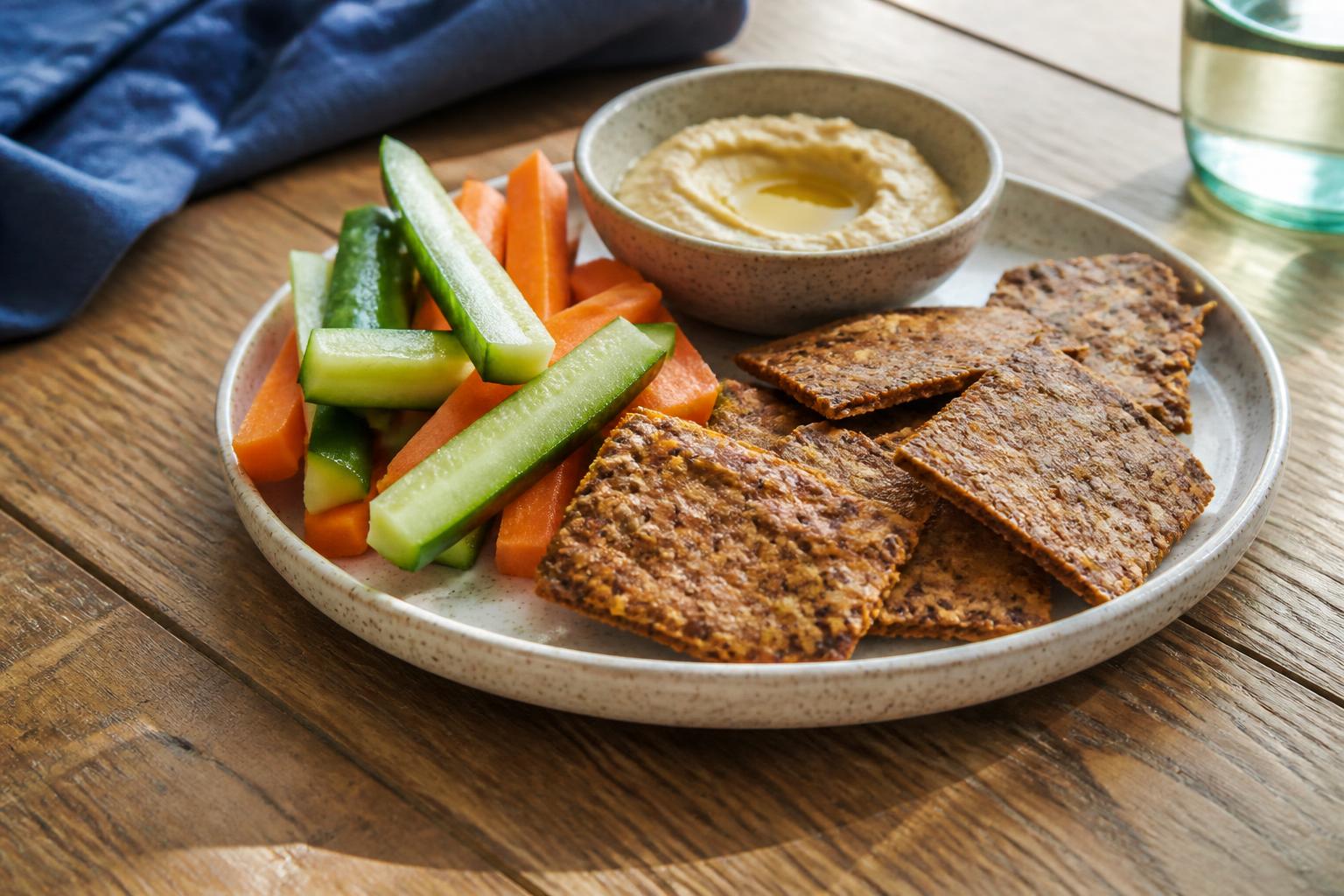
Raw veg becomes much more appealing with hummus, cream cheese or a yoghurt dip.
A hard-boiled egg and a slice of toast can carry a child to tea far better than a cereal bar that vanishes in three bites.
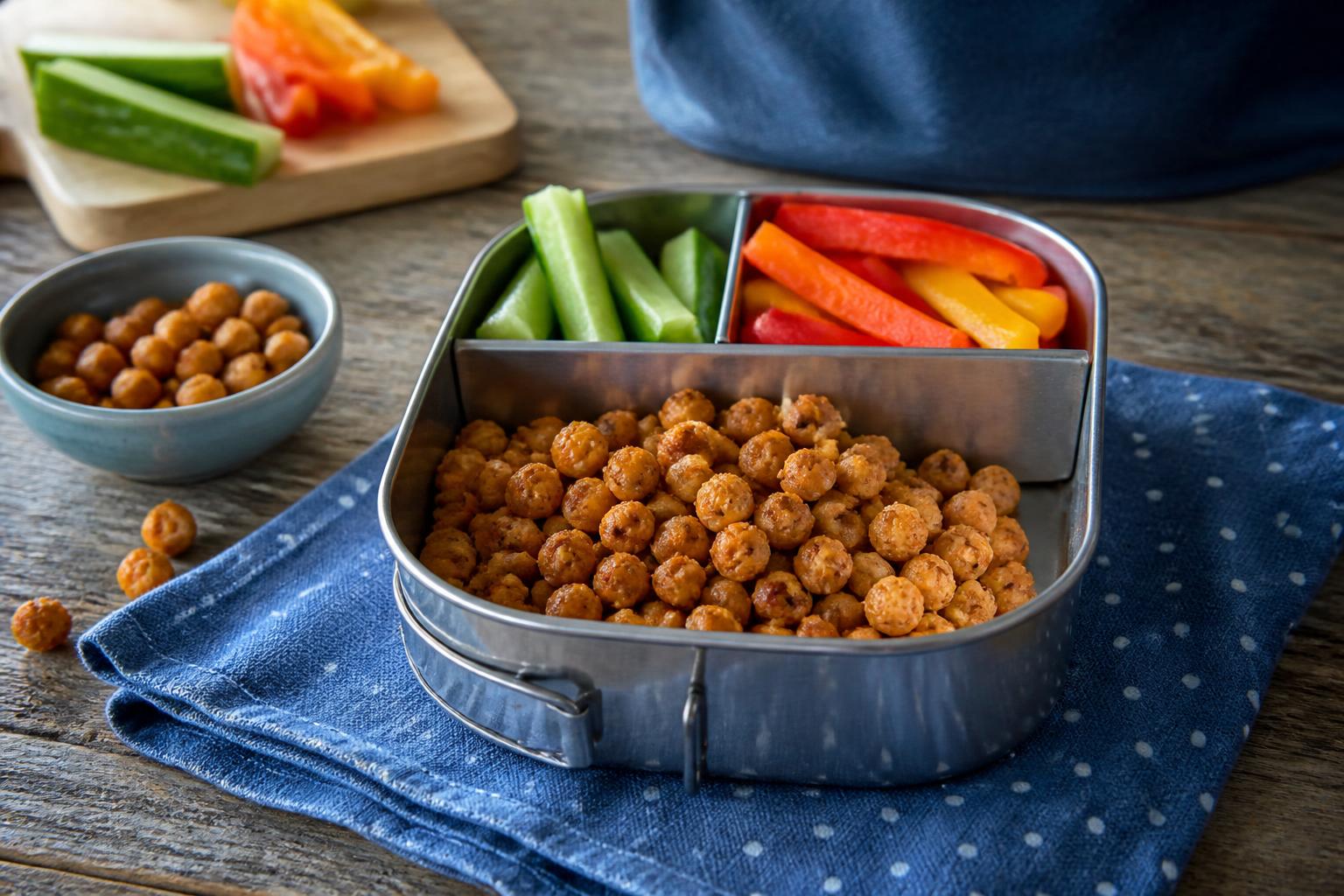
Pulses are especially handy and often overlooked. Hummus, roasted chickpeas, bean spread on toast, or leftover lentils folded into a little soft cheese all add substance without much effort. Eggs are another workhorse. Boiled, mashed on toast, or sliced into a mini sandwich, they are quick, familiar and genuinely filling.
Oats deserve a place too. They are inexpensive, easy to store and useful in several forms. Porridge is obvious in winter, but oats also work stirred into yoghurt, blended into muffins, or made into simple oat bars for the fridge.
The point is not to build a perfect plate every day. It is to avoid the kind of snack that is all air and no anchor. If you want a few more protein-forward ideas that still feel normal and family-friendly, our piece on healthy high-protein snacks that actually fit real life is a good next read.
Easy healthy after-school snack ideas for busy UK homes
This is where healthy after school snacks for UK families need to earn their keep. They must be quick enough for weekdays, cheap enough to repeat, and flexible enough for changing appetites.
Here are some combinations we come back to again and again.
Apple slices with cheddar and wholemeal crackers. Crisp, sweet, salty and very easy to throw on a plate.
Banana on toast with peanut butter. Soft, filling and particularly good on days with sport or swimming.
Greek-style yoghurt with oats and chopped pear. Creamy, sturdy and easy to adjust depending on what is in the fruit bowl.
Carrot and cucumber sticks with hummus and pitta fingers. A reliable savoury option when children are tired of sweet things.
Mini bowl of porridge with cinnamon and raisins. Ideal for colder afternoons, and surprisingly soothing after a busy school day.
Boiled egg with buttered soldiers or toast fingers. Simple, warm and more substantial than it looks.
Rice cakes topped with soft cheese and sliced tomato. Light but still satisfying.
A small baked potato, or leftover potato wedges, with beans. This is one for hungrier children or later tea times.
Cottage cheese or soft cheese on oatcakes, with grapes on the side. Good for a no-cook option.
Homemade popcorn with a glass of milk and a clementine. Popcorn on its own can be a bit wispy, but paired with something more substantial it works well.
Plain yoghurt with frozen berries that thaw as they sit. Cold, colourful and useful when fresh fruit is running low.
Cheese quesadilla triangles made from a folded tortilla, dry-fried and cut up. Fast, toasty and portable enough for car journeys to clubs.
Toast with mashed cannellini beans and a little grated cheese. A gentle, creamy pulse-based option that is often accepted more readily than it sounds.
Half a bagel with cream cheese and cucumber. Handy when children want something that feels more like "proper food".
Homemade oat and banana muffins, served with milk. Better when they contain actual fruit and oats rather than behaving like cake in disguise.
For portable options, think in terms of what can sit in a lunchbox or be handed over in the car. Cheese cubes, crackers, sliced peppers, a banana, a small yoghurt pouch, mini sandwiches, flapjack made with oats and nut butter, or roasted chickpeas all travel well.
For cupboard back-up, keep tins of beans, oatcakes, porridge oats, nut or seed butter, popcorn kernels, and pulses. In the fridge, yoghurt, cheese, eggs and chopped veg do a lot of heavy lifting. In the freezer, berries, bread and homemade muffins can rescue the witching hour.
Some families also like crispier options, especially when children want crunch. If that is the mood in your house, our guide to healthy savoury snacks that keep everyday choices simple has more ideas that do not rely on defaulting to standard crisps every time.
What to watch for on sugar, salt and portion size
It helps to keep this sensible. The goal is not to turn every label into homework. It is to spot when a snack is likely to do the job well, and when it is mostly selling convenience with a health halo.
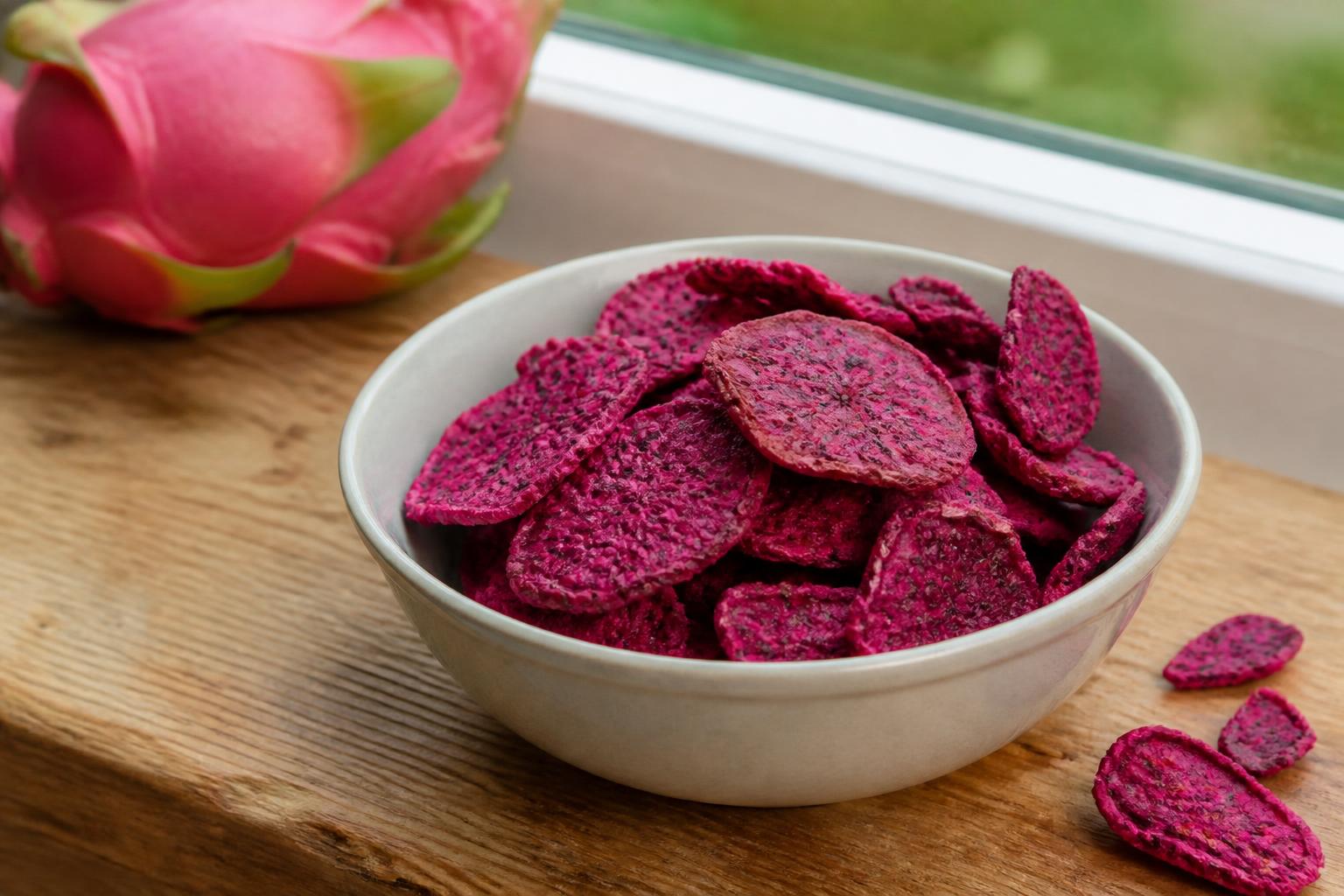
For sugar, pay attention to foods that look wholesome but are still quite sweet, such as some cereal bars, flavoured yoghurts, smoothies, fruit snacks and bakery items. Dried fruit can be useful, but it is sticky and concentrated, so it is best kept to mealtimes where possible because of tooth health. Whole fruit is usually the easier everyday choice for snacks.
In the UK, traffic light labelling can be a useful shortcut on packaged foods. It is voluntary rather than mandatory, so not every product has it, but many do. A lot of shoppers find it easier to compare yoghurts, crackers or bars at a glance this way. Salt matters particularly for savoury snacks aimed at children, because some can be surprisingly punchy. Vegetable crisps, flavoured crackers and baked snacks are not automatically low in salt just because they sound wholesome.
For homemade options, sugar and salt are easier to moderate because we are in charge of the spoon. A banana-oat muffin does not need much added sugar if the fruit is ripe. Yoghurt dips can be flavoured with herbs, lemon or paprika instead of loads of salt. Popcorn can be lightly seasoned rather than drenched.
Portion size depends on age, appetite and timing. A four-year-old and an eleven-year-old obviously do not need the same amount. Neither does a child heading to football training and a child coming home to eat tea in half an hour. We prefer to think in rough portions, not rigid ones. One piece of fruit plus a dairy or protein food is often enough. If tea is later, add toast, crackers, oats or pitta.
It is also worth noticing how quickly a snack is eaten. Foods that are very light, very sweet or very salty can encourage fast, mindless eating, after which children may still feel unsatisfied. Snacks with a bit of texture, crunch and chew often work better. They slow things down naturally.
Where UK guidance differs from EU-wide generalities, labelling is the main practical point for shoppers. Front-of-pack traffic light labels are a familiar UK tool. Across the EU, other front-of-pack systems may appear depending on the country, and they are not used in exactly the same way. If you are shopping in the UK, use the label in front of you, but also read the ingredients and nutrition panel when a product seems too good to be true.
How to make snack time easier through the week
The easiest healthy snack is usually the one that is already washed, portioned or visible.
A little planning goes a long way here. You do not need a full prep session with matching tubs. Just make the useful choice the easy choice.
Start with a short snack list for the week. Choose three or four fruit and veg options, two protein-rich staples, and a couple of hearty extras. For example, apples, satsumas, cucumbers and carrots, plus yoghurt and eggs, plus bread and hummus. That gives enough variety without buying half the supermarket.
When you unpack the shop, do a few tiny jobs straight away. Wash grapes. Slice cucumber. Boil some eggs. Grate cheese if that helps. Put yoghurt where children can reach it. Freeze spare bread before it goes stale. These are five-minute tasks that make weekday afternoons much smoother.
Storage matters. Clear tubs at eye level in the fridge work better than beautifully hidden produce drawers that nobody opens. Keep a fruit bowl visible. Store crackers, oatcakes and popcorn where they are easy to grab. If you make muffins, egg bites or flapjacks, freeze some in portions so they can come out as needed.
Timing helps too. If children come home ravenous and tea is still an hour away, offer the snack fairly promptly rather than letting them circle the kitchen grazing. If tea is nearly ready, go smaller. A few cucumber sticks and cheese cubes may be enough to take the edge off.
It can also help to separate "everyday snacks" from "sometimes snacks" in a calm, matter-of-fact way. Not as a moral judgement, just as kitchen logistics. Fruit, toast, yoghurt, eggs and veg with dips are easy to offer regularly. Crisps, biscuits and sweeter bars can still appear, but they do not need to be the automatic answer to every hungry moment.
Reducing waste is part of making this sustainable. Soft bananas can go into muffins or porridge. Slightly tired apples can be stewed. Leftover roast vegetables can be folded into mini frittatas. Extra hummus can go into wraps. The more uses an ingredient has, the easier it is to keep buying it.
Most of all, keep your standards realistic. Children do not need a picture-perfect snack board every day. They need food that tastes good, fills the gap and fits the rhythm of a normal week. A slice of toast with beans eaten at the kitchen counter can be just as successful as anything packed into a bento box.
If you want snack ideas that fit into a bigger weekday routine, our article on healthy habits that actually fit a busy UK day ties the whole thing together.
After-school hunger is predictable, which is good news because predictable problems are the easiest ones to solve. Keep a few dependable combinations on hand, build snacks from ordinary foods, and use treats as treats rather than emergency fuel. That is usually all it takes to keep children cheerful, fed and still ready for tea.

Questions about this article or a correction to suggest? Get in touch. Read more about our editorial approach.