Pistachios can be a healthy snack, and often are. If you want the short answer, they usually make more nutritional sense than a bag of crisps, a sugary biscuit, or many puffed savoury snacks because they bring protein, fibre and mostly unsaturated fat along with their crunch.
But they are not automatically the right choice in every situation. Portion size matters, salt levels matter, and the format matters more than people think. A small handful of shell-on pistachios is a very different snack from a large bag of heavily salted roasted kernels eaten absent-mindedly at a desk. So if you have ever wondered whether pistachios are a healthy snack, the honest answer is yes, often, but not by default.
What makes pistachios different from many crunchy snacks
Pistachios stand out because they are not just crunchy, they are nutritionally substantial. Many classic crunchy snacks are built mainly around refined starch, added fat, flavourings and salt. Pistachios, by contrast, are a whole food. Even when roasted, they still arrive with a more complete nutritional package.
That matters because a snack does more than fill a gap in the day. A useful snack should either keep you going until your next meal, stop you arriving at dinner ravenous, or add something worthwhile nutritionally. Pistachios often do all three.
The main difference is density of nutrients, not just density of calories. Pistachios contain protein, fibre, vitamins, minerals and fats that are mostly unsaturated. In practical terms, that means they tend to be more satisfying than airy, highly processed crunchy snacks that disappear in six handfuls and leave you scanning the cupboard again 20 minutes later.
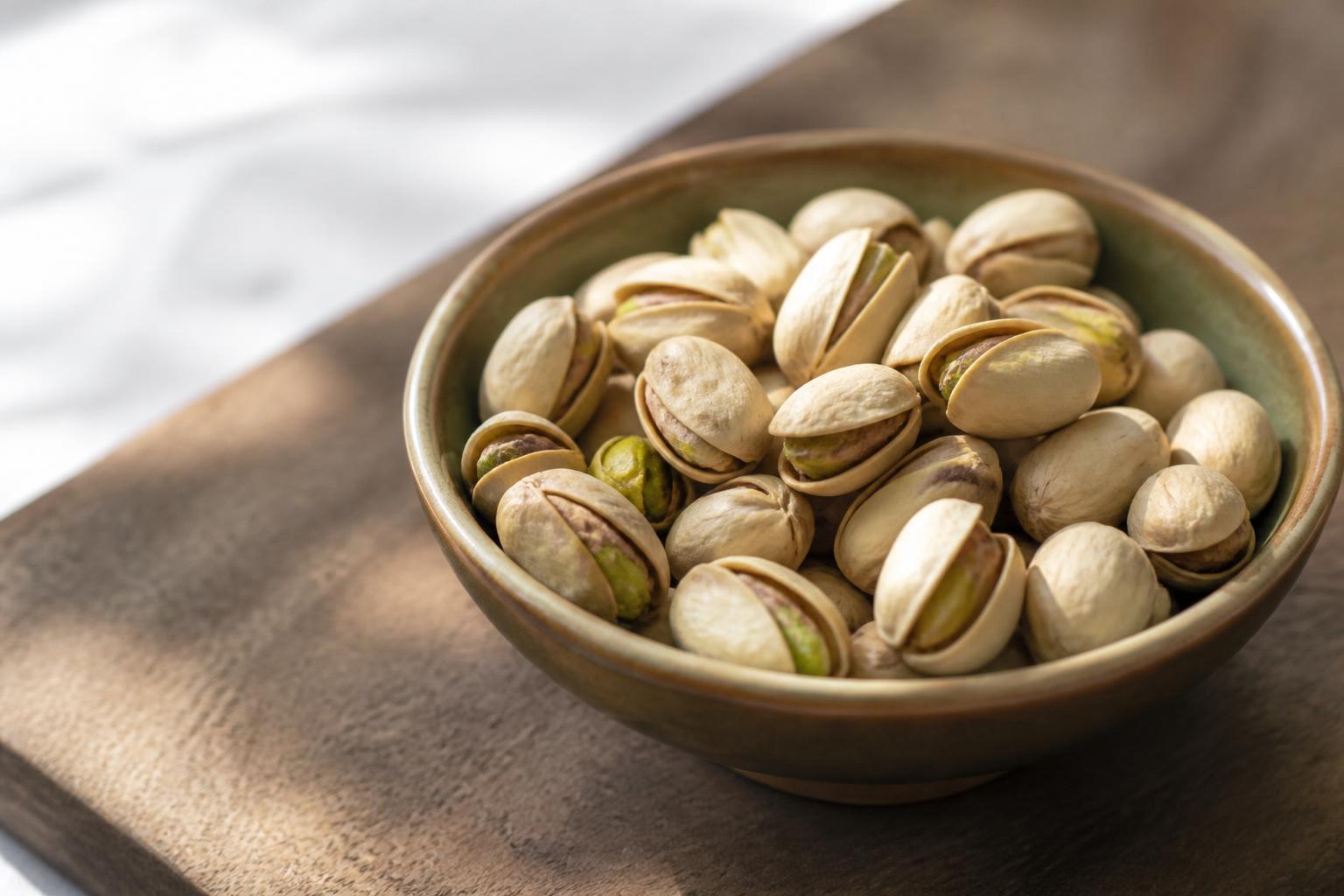
They also have a built-in pace, especially in shell-on form. That sounds trivial, but it is not. Snacks that slow you down can help you notice what you are eating. A bowl of shell-on pistachios creates a natural pause between bites, with the shells acting as a visible reminder of how much you have had. A giant bag of coated crunchy nibbles does the opposite.
This does not make pistachios magic. They are still energy-dense, as nuts generally are. But compared with many savoury snacks, they usually offer more than crunch, more than salt, and more than a quick burst of flavour.
If you like comparing snack formats side by side, our guide to healthy snacks you can keep in a desk drawer covers where pistachios fit among other practical options.
What you actually get in a portion
This is where things become more useful than broad claims about “good fats” and “natural snacking”.
A realistic portion of pistachios for most adults is around 25g to 30g of edible nuts, roughly a small handful. If they are shell-on, the total weight in your hand will be higher because the shells are included, so packet portions can look confusing at first glance. Always check whether the nutrition panel refers to the product as sold, or the edible portion.
In a portion around that size, you can generally expect:
- roughly 150 to 180 kcal
- about 5g to 6g of protein
- around 2g to 3g of fibre
- a meaningful amount of fat, mostly unsaturated
- relatively little sugar, unless they are sweetened or coated
Those figures vary by brand, roasting method and whether the pistachios are plain kernels or still in shell. They are close enough for everyday decision-making, but not so fixed that every pack will match exactly.
The important practical picture is this. Pistachios are not a low-calorie snack in the way cucumber sticks or plain strawberries are. What they offer instead is staying power. The mix of fat, protein and fibre makes them more likely to tide you over than a snack with the same calories but very little substance.
That is why pistachios can work well in the middle of the afternoon, especially if lunch was light or a bit beige. A cereal bar that is mostly syrup and crisped grains may clock in at a similar energy level, but it often does less to keep hunger at bay.
The flip side is portion creep. Because pistachios are small, moreish and easy to keep eating, the nutritional picture changes quickly if your “small handful” becomes several. There is nothing unhealthy about eating more on purpose, for example after a long walk or as part of a larger snack plate, but it is worth knowing that the benefits do not cancel out the calories.
For people watching fibre intake, pistachios can help, though they are not a miracle fix on their own. For people trying to include more protein in snacks, they also contribute, though not as much as something like Greek yoghurt, edamame or a higher-protein dairy snack. They sit in a useful middle ground, more substantial than crisps, less protein-heavy than some purpose-built snacks.
Shell-on, roasted or salted? The format changes the answer
This is where the answer to “are pistachios a healthy snack?” becomes more nuanced.
Shell-on pistachios
Shell-on pistachios are often the easiest version to snack on sensibly. The shell slows you down, creates a small bit of effort, and makes the snack feel more tactile and deliberate. For people who tend to graze while working, watching television or driving, that can be genuinely helpful.
They are especially good when your goal is a measured, satisfying snack rather than speed or convenience. The obvious drawback is mess and practicality. They are less ideal when you need something neat for a commute or a quick bite between meetings.
Unsalted pistachios
Unsalted pistachios are usually the most straightforward choice if you want the nut itself to do the work. No added sodium, no flavouring dust, no need to second-guess what is going on in the ingredients list.
They suit people who already eat plenty of salty foods elsewhere in the day, or who are trying to keep an eye on blood pressure. In the UK, salt intake is a familiar concern, and snacks can quietly add to it. A plain unsalted nut is often the cleanest route.
The only downside is that some people find unsalted nuts less exciting, and if a snack is so joyless that you immediately chase it with biscuits, it has not solved much.
Dry roasted pistachios
Dry roasted pistachios can be an excellent middle ground. Roasting deepens flavour and sharpens crunch without necessarily adding oil. If the ingredients list is simply pistachios, or pistachios and salt, that is usually a good sign.
Dry roasting can make pistachios feel more snack-like in the best sense, toastier, warmer and more savoury, without turning them into a heavily processed nibble. For many people, this is the format that makes healthy-ish snacking feel realistic rather than virtuous.
Salted pistachios
Salted pistachios are not automatically a bad choice. For some people, a lightly salted version is more satisfying and may even help them stick to a sensible portion because the snack feels properly enjoyable.
The issue is degree. Lightly salted and heavily salted are worlds apart. Some packs are simply seasoned enough to wake up the flavour. Others leave your fingertips dusty and your mouth dry. If salt is high on the nutrition panel, or if you know you are sensitive to salty foods becoming compulsive, the trade-off becomes less attractive.
In the UK, the nutrition label often uses the familiar traffic light system on the front of pack, though not every product will. That can help for a quick comparison between brands. If one pistachio pack is markedly higher in salt than another, that is worth noticing, especially if you eat them often.
Flavoured and coated pistachios
Once you move into sweet chilli, barbecue, honey-roasted or sugar-coated territory, pistachios can still be enjoyable, but they stop being the simple, minimally altered snack many people have in mind. Added sugar, starch coatings and stronger flavouring can push them closer to party-snack territory.
That does not make them forbidden. It just changes the category. They may be a treat with some nutritional upside, rather than a straightforward everyday staple.
When pistachios are a healthy snack choice for real life
Pistachios shine in ordinary moments, not just in idealised “wellness” scenarios.
One of the best uses is bridging a long gap between meals. If lunch was at noon and dinner is not happening until half seven, a small portion of pistachios at four can stop that hollow, irritable feeling that sends you into the kitchen hunting for toast, crisps and whatever else is nearest.
They also work well as desk snacks because they are shelf-stable and do not need refrigeration. A small tub of pistachios in a drawer is far more useful than relying on whatever the office vending machine has left by mid-afternoon. If you want other ideas in the same vein, our piece on healthy snacks you can keep in a desk drawer looks at options that survive the working week.
Another strong use is pairing pistachios with fruit. This is one of the simplest ways to make a snack feel complete. An apple, pear, satsuma or a handful of grapes adds freshness and volume, while pistachios bring richness and staying power. The fruit gives you water and natural sweetness, the nuts add crunch and substance. It is a more balanced snack than either item on its own for many people.
They can also be handy in a lunch box, especially for adults who want something crunchy that does not feel childish or flimsy. A measured portion in a small container works better than tossing in the whole bag and hoping for restraint. If you are building a lunch that actually keeps you going, our guide to a healthy lunch box that still feels like a treat covers combinations that feel satisfying rather than sparse.
Pistachios can also be useful after exercise, though context matters. If you have done something light, such as a brisk walk, a normal snack portion may be plenty. If you have done more demanding exercise and need quicker carbohydrate replenishment, pistachios alone may not be the best fit. Pairing them with fruit or yoghurt often makes more sense.
They are also a sensible option for people trying to move away from ultra-processed crunchy snacks without giving up crunch altogether. Texture matters. Plenty of healthy eating advice fails because it ignores the fact that people are not just hungry, they want something crisp, savoury and satisfying. Pistachios can meet that need in a more balanced way than many packet snacks.
When pistachios may not be the best pick
First, the obvious one. If you have a nut allergy, pistachios are off the table. For anyone with a diagnosed tree nut allergy, or anyone under investigation for one, this is not a food to experiment with casually. Cross-contamination also matters, so check allergen labelling carefully.
Second, pistachios are not always ideal when you need a truly low-salt snack. If you have already had a salty lunch, or if you are specifically trying to reduce sodium intake, a heavily salted bag can work against that goal. The answer is not to fear pistachios altogether, just to choose the unsalted or lower-salt version.
Third, they are easy to overeat. This is especially true with shelled kernels in large bags. Because they are small, pleasant and not particularly filling bite by bite, it is easy to keep reaching in. The fact that they are nutritious does not remove the need for portion awareness. A healthy food can still be unhelpful if the amount drifts far beyond what you intended.
They may also be a poor fit when you need convenience without fuss. Shell-on pistachios are brilliant at slowing you down, but terrible in situations where you need one-handed, mess-free eating. On a train, in a car, or between appointments, another snack may simply be more practical.
For some moments, pistachios are not the most effective snack nutritionally either. If you are genuinely hungry and have hours until your next meal, a tiny handful may be too small to do the job. You may need a more substantial snack with both protein and carbohydrate, or just an earlier proper meal. Pistachios are useful, but they are not a substitute for eating enough overall.
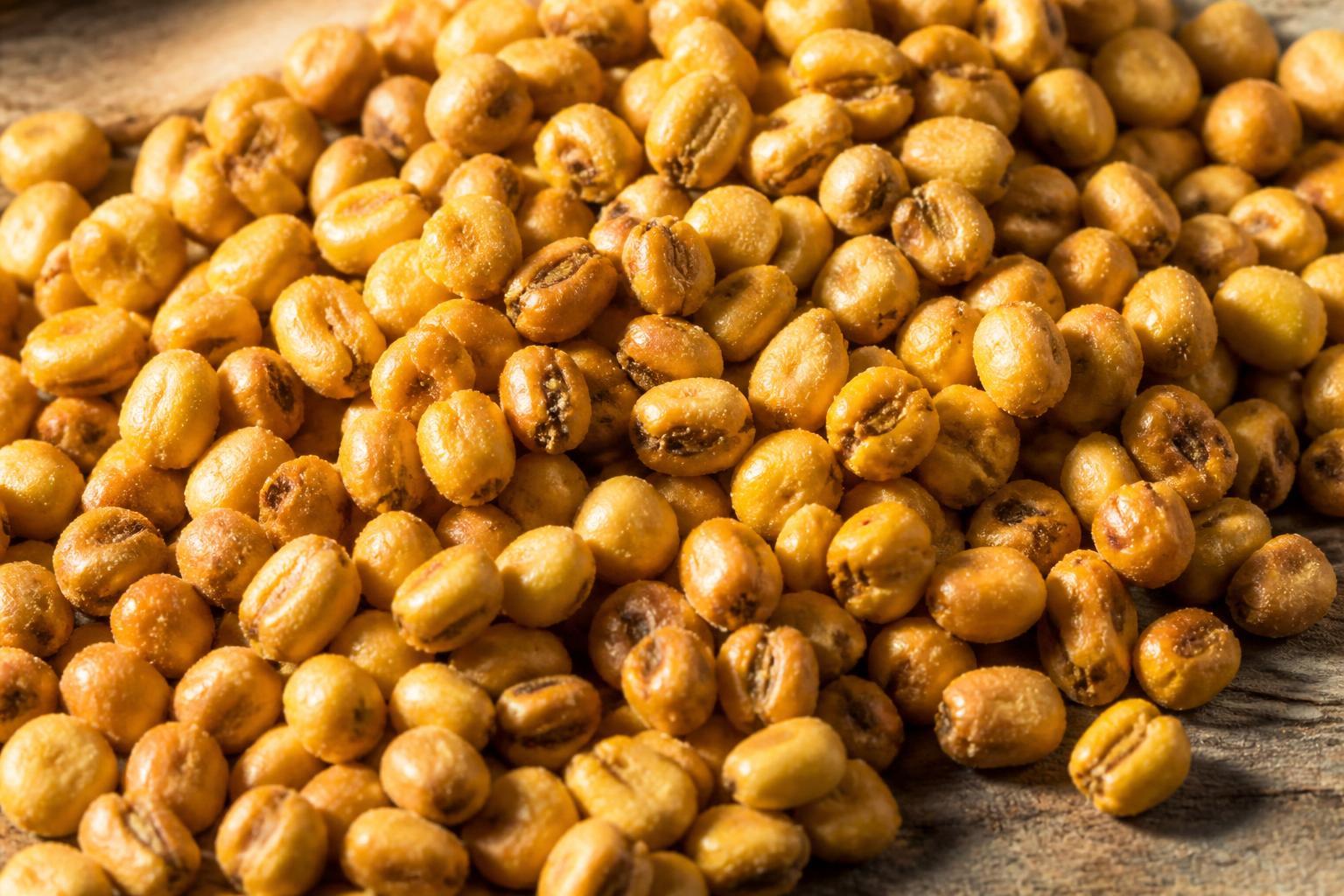
And if you are choosing between crunchy snacks mainly on taste and salt-hit, pistachios may not always scratch the same itch as something punchier like wasabi peas or corn nuts. In those cases, it helps to be honest about what you want. If you are curious about where other crunchy options sit, our pieces on whether corn nuts are a healthy snack choice and whether wasabi peas make a healthy snack unpack those trade-offs too.
How to judge a bag of pistachios in seconds
You do not need to stand in the supermarket aisle doing mental arithmetic for ten minutes. A quick scan will usually tell you enough.
Start with the ingredients list.
The simplest bags will say just pistachios, or pistachios and salt. That is usually the clearest sign you are buying a straightforward snack. If the list runs into flavourings, sugars, starches, syrups or oils, you are moving into a more processed product.
Next, check whether they are shell-on or shelled.
This affects how quickly you are likely to eat them, and how easy it is to overshoot your intended portion. Shell-on often suits slower, more mindful snacking. Shelled suits convenience, but needs a bit more restraint.
Then look at the salt.
On UK labels, compare salt per 100g between products, and if the front of pack uses traffic light labelling, note whether the product falls into a higher-salt category. Since nuts are often eaten regularly, small differences matter over time. If you know you already eat plenty of salty foods, this is the first number to care about.
After that, glance at the portion information.
Manufacturers may list a suggested serving, but treat it as a guide, not gospel. What matters is whether you can realistically picture that amount. If the bag contains multiple servings and you know you will eat it in one sitting, judge it as one sitting, not as the tidy little portion on the back.
Finally, ask what job the snack needs to do.
If you want an everyday staple, plain or lightly salted pistachios make the most sense. If you want a treat with a bit more swagger, roasted and flavoured versions may still suit, just not in the same way. The healthiest choice is not always the plainest item on the shelf. It is the one that fits your real habits without quietly turning into three portions and a thirst the size of Kent.
So, are pistachios a healthy snack? In most everyday UK shopping and snacking situations, yes, they can be. Choose a sensible portion, keep an eye on salt, and match the format to the moment. Done that way, they are one of the more satisfying crunchy snacks you can keep in regular rotation.

Questions about this article or a correction to suggest? Get in touch. Read more about our editorial approach.