If you want roasted chickpeas to stay crisp, the goal is simple. Keep moisture away from them at every stage, especially after roasting. That means cooling them completely, storing them in the right container, and keeping them somewhere dry rather than simply chucking them into the nearest tub and hoping for the best.
When people ask us how to store roasted chickpeas, they are usually not asking whether they will still be technically edible tomorrow. They are asking how to keep that proper brittle, snackable crunch for as long as possible. That is a different question, and the answer is mostly about texture management, not just storage in the broadest sense.
What storing roasted chickpeas properly actually means
Proper storage for roasted chickpeas is not just about putting them away safely. It is about preserving the thing that made them worth roasting in the first place, that dry, crisp shell and firm bite. Chickpeas are not like a flapjack or a brownie that can sit happily in a tin and merely go a bit stale. They are far more sensitive to moisture in the air, residual steam from roasting, and damp seasonings.
So when we talk about storing them properly, we mean storing them in a way that slows down softening. If they lose crunch, they have not necessarily gone off. They have simply absorbed moisture and become disappointing.
That is also why storage advice needs to be separated from roasting advice. Roasting time, oil level and seasoning all affect how well chickpeas keep, but once they are out of the oven, the storage job is about protecting the texture you have already created. If you want to improve the roast itself, start with our guide to roasted chickpeas in the UK made simple or, if you are using that method, air fryer roasted chickpeas that stay crisp for longer.
The real benchmark is not, “Can I still eat these in three days?” It is, “Will these still crunch nicely when I grab a handful?” That shift in mindset makes the rest of the storage decisions much easier.
Cool them fully before they go anywhere near a lid
This is the step most likely to undo all your good work. Roasted chickpeas may feel dry on the outside when they first come out, but they still hold heat. If you seal that heat into a container, it turns into condensation. Condensation means moisture, and moisture means softened chickpeas.
In practice, fully cooling them usually takes longer than people expect. Spread them out in a single layer on the tray, or move them onto a cool plate or rack, and leave them alone until they are completely at room temperature. For a typical home batch, that often means at least 20 to 30 minutes, sometimes longer if they were roasted heavily or piled too closely together.
A good sign they are ready for storage is that they no longer feel warm at all when you pick one up from the middle of the batch, not just the edge. The surface should feel dry, not tacky. If you tip them into a bowl and see even the slightest fogging under cling film or a lid, they were packed too early.
It is worth resisting the urge to “get them put away” while the tray is still warm. Warm chickpeas in a sealed container create their own little humid climate. That is exactly what you do not want.
If you are making a seasoned batch, cooling matters even more. Salt, spice blends and powdered flavourings can cling to a hot surface, but if there is still steam trapped inside the chickpeas, that seasoning can start drawing moisture back onto the crust. Let them settle fully before they go anywhere near a cupboard.
The best container for crunch
The best container is one that protects the chickpeas from outside humidity without trapping moisture inside. For most kitchens, that means a clean, dry container with a reasonably tight seal, but not necessarily one snapped shut the moment the chickpeas leave the tray.
Airtight tubs are practical and easy. They are usually the best everyday option for short term storage because they keep out ambient moisture and are less fragile than glass. The catch is that they only work well if the chickpeas are genuinely cool and dry before the lid goes on.
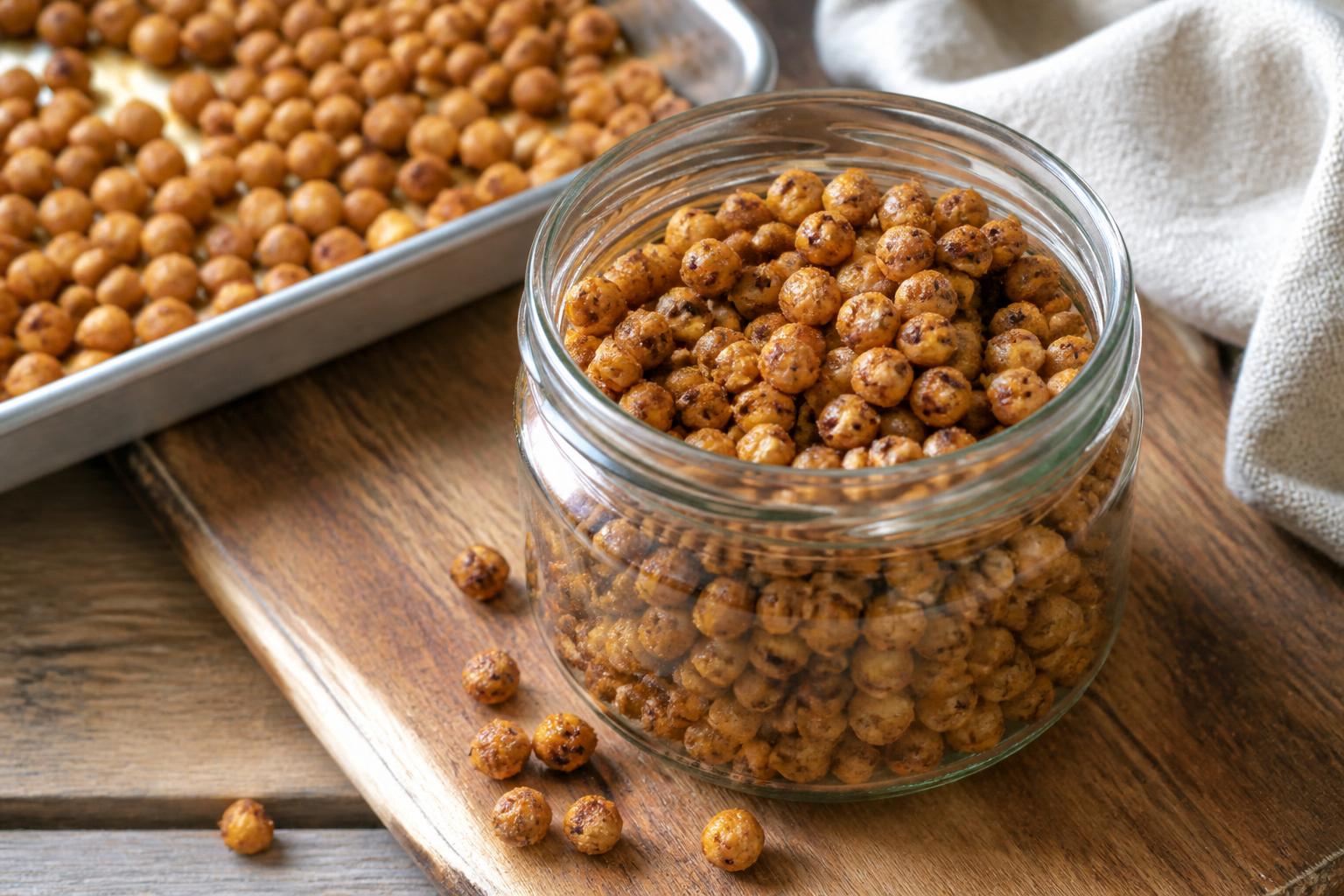
Glass jars can work just as well, sometimes better, because you can see what is happening inside. If you spot misting, you know straight away that they were stored too warm. The downside is that jars are often opened more often and can be less forgiving if you keep them near the hob or kettle, where warm, damp air is common.
Bags are the weakest option for keeping crunch unless you are using them only for a day and the chickpeas are very dry. Even zip bags tend to hold onto a bit of trapped air and can encourage slight softening, especially if the bag gets shuffled about in a lunch bag or drawer. They are fine for transport. They are not our first choice for texture.
There is one exception to the “airtight is best” rule. If you suspect the chickpeas still have a touch of residual moisture, a loosely covered container for the first few hours can help. A lid rested on top, rather than clipped fully shut, allows a little moisture to escape instead of condensing inside. Once they feel properly dry, you can seal them. This is not a long term storage method, just a short settling phase when needed.
To avoid humidity build-up, make sure the container itself is bone dry. Not mostly dry, bone dry. A jar fresh from washing, even if it looks clear, may still hold moisture around the rim or base. Dry it thoroughly before use. Then keep opening to a minimum. Every time the lid comes off, humid kitchen air goes in.
Where to keep them and how long they usually stay at their best
For texture, a cool, dry cupboard usually beats the fridge. The fridge is cold, but it is also a moist environment. That is not ideal for anything you want to stay crisp. Roasted chickpeas stored in the fridge often lose their crunch more quickly, even if they remain perfectly fine to eat.
A cupboard away from the cooker, dishwasher and kettle is usually the best place. Think dry pantry, larder shelf, or a cabinet that does not heat up during the day. If your kitchen gets very warm or steamy, that matters. A chickpea that stays crisp for a couple of days in one home may soften by the next afternoon in another simply because the air is more humid.
Freezing is rarely worth it if crunch is the priority. Frozen roasted chickpeas can be thawed and re-crisped, but they do not usually come back exactly as they were. Freezing is more useful if you are trying not to waste a batch than if you are hoping to preserve peak texture.
As for timing, we prefer to talk about “best” rather than “safe”. In a dry kitchen, well-roasted chickpeas stored properly may stay nicely crisp for a few days. In a humid kitchen, they may start softening within a day. They are often still enjoyable after that, but not at their absolute best.
That is why blanket claims about exact shelf life are not very helpful. Texture is affected by room warmth, weather, how much oil was used, whether the batch was flavoured, and how often the container is opened. If you live through a muggy British summer spell, results will be different from a cool, dry winter week.
If you are making them for salads or lunchboxes, it often makes sense to roast only what you will use soon. For ideas on keeping them crisp once they leave the container, our guide to a roasted chickpeas salad that stays crisp is worth a look.
Why roasted chickpeas go soft so quickly
Roasted chickpeas soften quickly because they are excellent at pulling moisture back in. Sometimes that moisture comes from the room. Sometimes it comes from the chickpeas themselves.
One common cause is too much oil. A light coating helps browning and flavour, but an oily batch can feel crisp at first and then turn chewy rather than brittle. The fix is simple, use less oil and coat evenly rather than generously.
Another culprit is seasoning choice. Fine salt is usually fine, but wet marinades, liquid flavourings, honey, maple syrup, lemon juice or vinegar-based coatings all make crispness harder to keep. Even some spice mixes contain sugar, which can attract moisture and make the surface tacky. If long lasting crunch matters, season with dry spices and add any wetter flavour element after re-crisping or just before serving. We cover that balance in our piece on how to roast spiced chickpeas that stay crisp longer.
Under-roasting is another big one. Chickpeas can look done on the outside while still holding too much moisture within. Then, as they sit, that internal moisture moves outward and softens the shell. The practical fix is to roast until they are genuinely dry and crisp, not merely golden.
Frequent opening also makes a difference. If you keep dipping into the same jar throughout the day, warm kitchen air keeps cycling in. In a busy kitchen, especially one with lots of boiling, baking or dishwashing, that matters more than people think. Decanting a portion into a small bowl and keeping the main batch sealed helps.
And then there is the classic mistake, storing them while warm. This one causes immediate softening because steam has nowhere to go. If your chickpeas seem mysteriously soft despite a decent roast, that is the first thing to check.
A final point, canned chickpeas that were not dried thoroughly before roasting often struggle to stay crisp for long. Surface moisture and excess interior water make them harder to dry out fully. A very thorough pat dry before roasting helps, but some batches simply have more moisture to drive off than others.
How to bring back the crunch without overdoing them
If roasted chickpeas have gone a bit soft, you can often rescue them. The best method is a short blast of dry heat, enough to drive off absorbed moisture without taking them from revived to rock hard.
For the oven, spread them in a single layer on a tray and heat at around 180C in a preheated oven for 5 to 8 minutes. Then take them out and let them cool fully before judging the texture. They crisp as they cool, so testing them while hot can be misleading.
For the air fryer, use a slightly shorter time, often 3 to 5 minutes at around 180C, shaking once if needed. Keep an eye on them. Small chickpeas and heavily spiced batches can catch quickly.
This works best when the problem is moisture absorption after storage. It works less well if the chickpeas were under-roasted from the start, very oily, or coated in sticky ingredients. In those cases, you may improve them a bit, but you may not get that really clean crunch back.
Avoid repeated cycles of cooling, storing, re-heating and cooling again over several days. From a quality point of view, the texture usually gets worse each time. From a food handling point of view, it is also better not to keep fussing with the same batch endlessly. Re-crisp once, enjoy them promptly, and move on.
If you are storing a large batch, only re-crisp the portion you plan to eat. Reheating the whole container every time is the quickest way to dry some pieces out too much while the rest still soften again later.
The sweet spot is simple. Roast them well, cool them completely, store them dry, and only revive what needs reviving. That is the practical answer to how to store roasted chickpeas so they stay crunchy for longer, not forever, but long enough to still feel worth reaching for.

Questions about this article or a correction to suggest? Get in touch. Read more about our editorial approach.