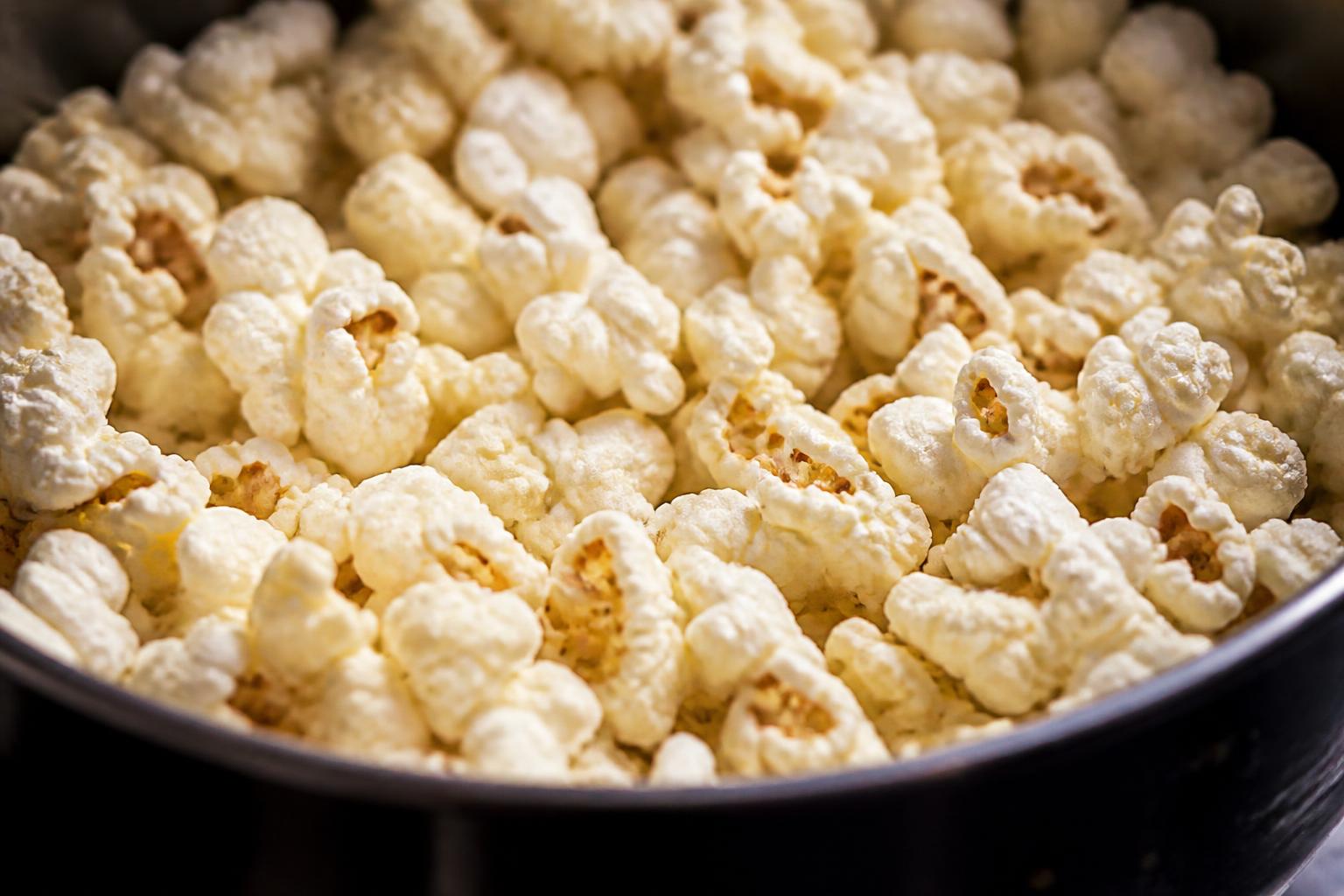
Good stovetop popcorn is mostly about control. If you want popcorn in a pan that turns out light, crisp and properly popped, you need a steady heat, a sensible amount of oil, and enough room for the kernels to move. Most burnt batches come from rushing the heat or trapping too much steam. Most chewy batches come from the opposite problem, moisture lingering where it should not.
The good news is that this is one of the easiest snack methods to improve quickly. With an ordinary lidded pan and a few small habits, you can get fluffy popcorn with very few scorched bits and far fewer stubborn old maids at the bottom.
What this article covers that other popcorn guides do not
This piece is specifically about making popcorn on the hob, in a pan, and getting the mechanics right. We are not going deep into cinema-style flavours, whether popcorn helps with weight loss, or every health claim that gets attached to a bowl of it. We have covered those separately, including whether popcorn can be a smart snack for losing weight, why popcorn can leave you feeling bloated, and popcorn flavour ideas that actually suit how you snack.
Here, the focus is practical. Which pan works best in a UK kitchen. How much oil is enough. Why the lid position matters. What the popping sounds should tell you. When to pull the pan off the heat. And how to season the finished popcorn without turning it limp five minutes later.
If you have had batches that go from silent to burnt in a flash, or popcorn that tastes fine but feels a bit leathery, the answer is usually not a fancy ingredient. It is method.
The simplest pan method for light, evenly popped kernels
For most home cooks, the easiest reliable method is a medium to large heavy-based saucepan or sauté pan with a lid. A pan around 20 to 24 cm wide is a useful size for a modest batch. You want enough floor area for the kernels to sit in roughly a single layer.
Start with:
- 2 to 3 tablespoons of kernels
- 1 tablespoon of oil
- a pinch of fine salt for later, not for the pan at the start
That quantity makes a bowlful without overcrowding the pan. If you try to fill the base too heavily, the kernels heat unevenly and the popped corn struggles for space.
Use a medium heat, not high. Add the oil and let it warm for a short moment. A simple test is to drop in 2 or 3 kernels and put the lid on. When those test kernels pop, the oil is hot enough for the rest.
Take the pan briefly off the heat, add the remaining kernels, and shake the pan so they are coated lightly in oil. Put the lid back on, leaving it very slightly ajar if your lid is not vented. Then return the pan to the hob.
From this point, keep the pan moving every few seconds. A gentle shake forwards and backwards is enough. You are not trying to toss the kernels dramatically. You are keeping them from sitting too long on one hot patch and helping unpopped kernels make contact with the base.
Listen carefully. At first there will be a pause, then a few isolated pops, then a rapid burst. This is the point where people often turn the heat up because they get excited. Do not. Hold steady.
Once the popping is in full swing, crack the lid slightly if steam is collecting heavily. A little gap helps moisture escape, which keeps the popcorn crisper. Just keep the opening facing away from you and continue to shake the pan.
The right moment to stop is when the popping slows to about 2 to 3 seconds between pops. At that point, remove the pan from the heat straight away. Waiting for every last kernel nearly always means a handful of burnt ones and a toasted layer of oil on the bottom.
Tip the popcorn into a wide bowl immediately. Do not leave it sitting in the hot pan, where residual heat continues cooking it and steam softens it from underneath.
That is the simplest route to good popcorn in a pan. If your first batch is not perfect, resist changing everything at once. Adjust one variable, usually the heat or the quantity of kernels, and try again.
Why pan popcorn burns or stays chewy
When popcorn burns, there is usually a very ordinary reason behind it.
The first is heat that is too high. Kernels need enough heat to build pressure inside, but not so much that the oil smokes and the hulls scorch before the centres fully expand. A fierce flame or a hob ring on full power often gives you dark, bitter spots and a smell that moves from nutty to acrid very quickly.
The second is uneven heat. Thin pans create hot spots, so one patch of kernels may burn while another patch has barely started. This is why heavy-based pans are worth using. They spread heat more gently and buy you a bit more margin for error.
The third is overcrowding. If too many kernels are piled in, some sit away from the base and heat more slowly. Others pop and trap the rest. You end up keeping the pan on the heat longer to chase the laggards, and the first wave burns.
Chewy popcorn is usually about steam. Popcorn releases moisture as it pops. If that moisture stays trapped under a tightly sealed lid, it condenses and settles back onto the popped corn. Instead of staying crisp and airy, the popcorn softens. This is why a vented lid, or a lid left slightly ajar, can make such a difference.
Old kernels can also be a problem. Popcorn needs the right amount of internal moisture to pop well. If kernels have been sitting in a cupboard for a very long time, especially in a loosely closed packet, they may dry out. Then you get more unpopped kernels, smaller blooms, and a tougher bite.
Heat that is too low causes its own issues. If the pan never gets hot enough, the kernels warm slowly, the oil can seep in more than you want, and the popped corn may feel denser and less crisp. Low heat also drags out the cooking time, which gives steam more opportunity to hang around.
If your batches are a bit of a mix, crisp at the top and leathery at the bottom, the likely culprit is leaving the popcorn in the pan after cooking. The bottom layer sits in trapped steam while the upper layer cools. Pour it out straight away.
How to choose the right pan, oil and lid setup
A heavy-based saucepan, stockpot, or sauté pan is the most practical choice for UK home kitchens. Stainless steel with a solid base works well. Hard-anodised aluminium is also good. Cast iron can make excellent popcorn, but it is heavy and retains heat strongly, so it is less forgiving if you are still learning your timing.
Non-stick pans are convenient, but they are not essential. If you use one, keep the heat moderate and avoid overheating an empty pan. Popcorn does not need screaming-hot oil.
Size matters. Too small, and the popped corn crowds the lid before the rest has finished. Too large, and a very small quantity of kernels can spread so thinly that they heat less evenly unless your hob ring matches the pan well. For an everyday batch, medium to large is usually best.
The lid setup matters more than many guides admit. A fully sealed lid keeps the kitchen cleaner, but it also traps steam. If your lid has a steam vent, that often does the job nicely. If it does not, leave the lid slightly ajar. A small gap is enough. You want steam to escape, not popcorn to fly across the cooker.
As for oil, choose one with a neutral flavour and a reasonably high smoke point. In a typical UK kitchen, rapeseed oil is an easy, sensible option. Groundnut oil works well too if there are no allergy concerns in the household. Sunflower oil is another common choice. Olive oil can be used, but its flavour is more noticeable, and extra virgin is less suited to this style of cooking because of its lower smoke tolerance and stronger taste.
You do not need much oil. The aim is to coat the kernels lightly and help transfer heat, not to shallow fry them. Too much oil can make the finished popcorn feel heavy and can leave seasoning sliding off in greasy patches.
If you cook on gas, keep the flame under the base of the pan rather than licking up the sides. If you cook on induction or ceramic, medium power is still the right place to start. Every hob behaves a bit differently, so the sound of the popping will teach you more than the number on the dial.
Seasoning pan-popped popcorn without making it soggy
Seasoning is where many good batches lose their crispness.
Salt works best when it is fine, not coarse. Large flakes tend to bounce off. Add it after the popcorn is out of the pan, while it is still warm, and toss straight away. If you want very even coverage, you can grind salt a bit finer first.
Butter is delicious, but it is also full of water, and water is the enemy of crisp popcorn. If you pour melted butter straight over a bowl, especially in one spot, you can end up with soggy clumps and a greasy bottom layer.
A better method is to melt a small amount of butter separately, drizzle it lightly while tossing constantly, and use only enough to coat. Clarified butter is even better because it contains less water. If you do use ordinary butter, add it just before serving rather than letting the popcorn sit.
Dry seasonings are the easiest route to a crisp finish. Think smoked paprika, a little garlic powder, nutritional yeast, curry powder, or a touch of caster sugar with cinnamon if you want something sweet. Add them while the popcorn is warm and toss in a roomy bowl so the seasoning distributes rather than settling in one patch.
Avoid adding wet sauces directly to the bowl unless you are happy to eat it immediately and accept a softer texture. Soy sauce, hot sauce, honey and similar ingredients can taste good, but they turn crisp popcorn limp very quickly.
If you want stronger flavour without sogginess, use layers rather than volume. A tiny drizzle of fat, a toss, a dusting of seasoning, another toss. That gives better coverage than one heavy-handed pour.
And do not season in the pan over the heat. Powders can catch, butter can brown too far, and sugar can scorch. The pan has done its job already.
Storage, safety and sensible portions at home
Freshly made popcorn is at its best soon after cooking, when the shells are crisp and the centres still feel airy. If you have leftovers, let them cool fully before storing them. Warm popcorn put into a sealed container traps condensation, and that softens it quickly.
For short-term storage, keep it in an airtight container at room temperature and eat it within a day or two for the best texture. If it loses some crispness, a short spell on a baking tray in a low oven can help revive it, provided you have not drenched it in butter.
Safety is straightforward but worth respecting. Popping kernels are forceful, lids get hot, and steam escaping from the pan can catch your hand or face if you lift the lid carelessly. Open the lid away from you. Keep the pan handle turned inwards so it cannot be knocked. And do not fill the pan with oil as though you are deep frying. You need only a light coating.
Children often love the sound and theatre of stovetop popcorn, but this is still a hot-oil job. If they are helping, keep them to measuring kernels, choosing seasoning, or tossing the finished popcorn once it is safely in a bowl.
On portions, popcorn can fit very comfortably into everyday eating when you keep the extras sensible. Airy volume can make it feel substantial, but butter, sugar and lots of oil change the picture quickly. In the UK, general public health guidance focuses on overall dietary balance, saturated fat, salt and energy intake rather than treating one plain food as automatically virtuous. That is the useful way to think about it at home too. A moderate bowl of simply cooked popcorn is a different snack from a large bowl heavily coated in sweet or salty toppings.
If you are thinking about popcorn as part of a broader snack routine, it helps to compare format as much as ingredient. A pan-popped bowl with light seasoning sits differently in the day from chocolate-coated bites, heavily salted crisps, or handfuls of nuts that are easy to overpour. We find the most practical approach is not to label foods as good or bad, but to match portion, toppings and frequency to what the rest of the day looks like.
The main thing, though, is this. Good stovetop popcorn should smell warm and toasty, not burnt. It should sound lively in the pan, then quieten before you stop. And when it lands in the bowl, it should be crisp, light and ready for seasoning, not damp with trapped steam. Once you have that rhythm, making popcorn in a pan stops feeling fiddly and starts feeling like one of the handiest snacks in the cupboard.

Questions about this article or a correction to suggest? Get in touch. Read more about our editorial approach.