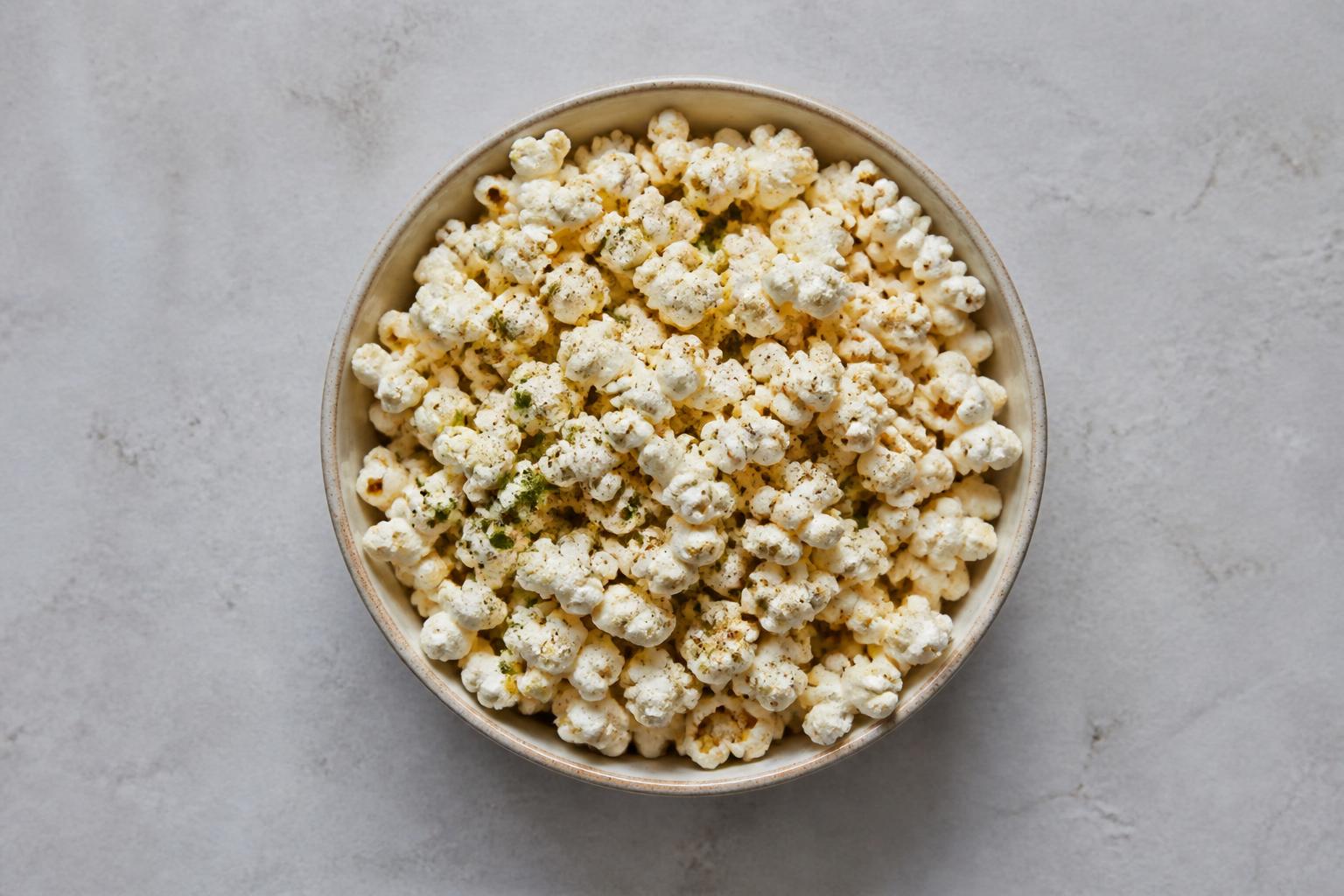
Popcorn is one of the easiest snacks to bend to your mood. The same bowl can go buttery and salty for a film, lightly spiced for an afternoon pick-me-up, or sweet enough to feel like a treat without turning into full pudding. That is why popcorn flavours seem almost endless. The base is mild, dry and toasty, so it takes on seasoning quickly and happily.
The trick is not just dreaming up combinations. It is knowing which flavour family you are actually in, how to make the coating cling, and which extras quietly change the nutrition far more than the popcorn itself. Once you get those basics right, choosing a flavour becomes much simpler and much more fun.
What counts as a popcorn flavour, and why the options feel endless
A popcorn flavour is any combination of seasoning, fat and topping that changes the taste, aroma and mouthfeel of plain popped corn. That can be as simple as sea salt shaken over warm kernels, or as layered as smoked paprika, garlic powder, nutritional yeast and a little rapeseed oil.
The options feel endless because popcorn itself is neutral enough to sit in several flavour families at once. Most ideas fall into a few clear groups.
First, there are classic savoury flavours. Think salt, butter-style coatings, cheese powders, black pepper, barbecue seasoning, roast chicken-style blends and herb-led mixes. These work because popcorn already has a gently roasted note, so savoury seasonings taste rounded rather than harsh.
Then there are sweet flavours. Sugar, cinnamon, cocoa, caramel, vanilla and honey-style coatings all sit here. Sweet popcorn usually needs more structure to the coating, because dry sugar alone falls to the bottom of the bowl. That is why many sweet versions use syrup, melted sugar or a sticky glaze.
There is also the spicy family. Chilli powder, cayenne, chipotle, hot sauce powders, curry blends and pepper-heavy seasonings all bring heat. Some are sharp and direct, others are warm and fragrant. Popcorn handles both well, especially when the spice is balanced with salt, a little sugar, or a savoury base.
A fourth group is what we would call umami or depth-led flavours. These include nutritional yeast, mushroom powder, miso powder, soy-style seasoning, seaweed flakes and parmesan. They are less about obvious heat or sweetness and more about making popcorn taste fuller and more moreish.
Finally, there are hybrid flavours, which is where things get especially broad. Sweet-salty, spicy-sweet, cheesy-hot, herb-citrus and chocolate-chilli all borrow from more than one family. Once you realise a popcorn flavour is not a single ingredient but a balance of taste, aroma and texture, the category opens up very quickly.
The most popular flavour directions from classic to adventurous
If we start with the best-known route, salted popcorn still earns its place. It is clean, familiar and easy to eat by the handful. Fine salt works better than coarse crystals because it lands more evenly. Flaky salt can taste lovely, but much of it drops off unless there is enough fat on the surface to hold it.
Buttery popcorn is the next classic. In the UK, this often means either real melted butter used sparingly, or a butter-flavoured coating for a cinema-style finish. The appeal is obvious. Butter brings richness, aroma and that soft savoury note people associate with warm popcorn. The downside is practical, not sensory. Too much and the popcorn loses its crispness.
Cheese flavours are consistently popular because they make popcorn feel more substantial. Mature cheddar-style powders, parmesan and nutritional yeast all bring savoury punch. Cheese powder gives that familiar tangy snack-food hit. Parmesan is nuttier and saltier. Nutritional yeast is different again, with a toasty, almost cheesy quality that works well for people who want a dairy-free option.
Barbecue seasoning sits in the sweet-savoury camp. It usually combines salt, sugar, paprika, onion and garlic, sometimes with smoke flavouring. The reason it works so well on popcorn is that it gives a lot of character without needing much moisture. You get sweetness, savouriness and a faint sticky-lip feeling, even when the popcorn stays crisp.
Salt and vinegar is beloved in crisps, but trickier on popcorn. Liquid vinegar makes kernels soggy, so the better route is vinegar powder or a dry seasoning blend built around acidity. When it works, it gives a sharp, mouth-watering finish that cuts through the natural starchiness of the corn.
For herb-led flavours, rosemary, thyme, oregano and dill can all work, but they need a light hand. Dried herbs that are too coarse tend to sit awkwardly in the bowl. Finely crushed herbs mixed with salt, garlic powder and a little oil are more successful. Lemon zest can lift these blends, though fresh zest adds moisture and is best used for immediate eating rather than storing.
Spicy popcorn has several directions. Straight chilli powder gives quick heat. Cayenne is sharper. Smoked paprika is gentler and more rounded, adding colour as well as flavour. Chipotle brings smoke and warmth. Curry powder gives a completely different profile, fragrant rather than fiery, especially if it includes coriander, cumin and turmeric. A little sugar often helps spicy coatings taste less dusty and more complete.
Sweet popcorn starts with the obvious favourites. Cinnamon sugar is simple and comforting. It suits home snacking because the ingredients are familiar and the flavour is easy to control. Caramel popcorn is far richer and more confectionery-like. It coats the kernels fully and adds crunch, but it also moves popcorn away from everyday snack territory and into treat territory very quickly.
Chocolate flavours can be done in a few ways. Cocoa powder mixed with icing sugar gives a dry, lighter coating, though it can be messy. Melted chocolate drizzled over popcorn gives a more dramatic result but creates clusters and changes the texture entirely. For many people, chocolate popcorn is best in small portions because the richness builds fast.
More adventurous ideas often rely on contrast. Chilli and lime, maple and smoked salt, miso and sesame, cocoa and cayenne, or parmesan and truffle-style seasoning all work because popcorn is a blank enough canvas to carry a bold top note. The key is restraint. One or two dominant flavours usually taste more deliberate than five competing ones.
How to get seasoning to stick without turning popcorn soggy
This is the practical problem that decides whether homemade popcorn feels brilliant or disappointing. Dry seasoning needs something to grip, but too much liquid ruins the texture.
The simplest approach is to use a very light coating of oil. A neutral oil spray, or a teaspoon or two of rapeseed oil tossed through a large bowl, is often enough. Rapeseed oil is a sensible choice in the UK because it has a fairly neutral flavour and is widely available. Olive oil works too, though extra virgin can taste assertive with delicate seasonings.
If you want a buttery flavour, melted butter can be used, but sparingly. Butter contains water as well as fat, and that water is what can soften the popcorn. Clarified butter or ghee reduces that problem because the water content is lower. If you are using standard melted butter, drizzle lightly, toss quickly and season straight away.
For very even coverage, a fine mist is better than a pour. An oil spray gives more control and helps avoid greasy patches. Tossing the popcorn in a large bowl rather than seasoning it on a tray also helps, because the kernels move freely and coat more evenly.
The texture of the seasoning matters just as much as the fat. Fine powders stick far better than coarse granules. If your salt is chunky, crush it. If your seasoning blend contains dried herbs or sugar crystals, pulse it briefly or grind it finer. This is especially useful for homemade cheese blends, spice mixes and sweet toppings.
Layering helps. Instead of adding all the oil, then all the seasoning, try a light spray, some seasoning, toss, then repeat if needed. That way the first layer grips and the second layer has something to cling to.
Sweet coatings are the hardest to keep crisp because sugar usually needs moisture or heat to stick. For a light sweet popcorn, a small amount of oil or butter with very fine sugar and cinnamon can work if eaten straight away. For proper caramel popcorn, the sugar is cooked into a syrup or caramel and then baked or cooled to set. That gives a crisp shell, but it is a different process from simple seasoning.
If you are making popcorn for later, keep wet ingredients to a minimum. Fresh lime juice, liquid hot sauce and runny honey all taste good at first, but they shorten the crisp window. Powdered versions, such as dried vinegar, chilli blends or cinnamon sugar, are more storage-friendly.
Which ingredients change the nutrition most
Plain air-popped popcorn is a wholegrain snack, and that matters. It naturally contains fibre and is relatively light for the volume it gives. What changes the nutritional picture most is not the corn. It is what we add to it.
Salt is the most obvious shift. A small sprinkle is one thing, but it is easy to oversalt popcorn because the bowl is large and the seasoning is light. In the UK, salt intake guidance is set nationally, and packaged products are labelled per 100g and often per portion. Homemade popcorn does not come with that guardrail, so it is worth seasoning gradually and tasting as you go.
Sugar changes both energy density and how quickly the snack starts to resemble confectionery rather than a simple grain snack. A dusting of cinnamon sugar adds less than a full caramel coating, but both move the snack away from its plain nutritional profile. Sticky sweet popcorn also tends to encourage larger additions because the coating needs enough syrup or sugar to be noticeable.
Fat is the other big variable. A light mist of oil is very different from generous butter, chocolate drizzle or toffee coating. Oils and butter add richness and improve flavour delivery, but they also raise the calories of each handful. That is not a moral issue, just a practical one. If you are trying to keep popcorn as an everyday snack, the amount of added fat matters more than whether the base is air-popped or microwave-popped.
Cheese, nuts, seeds and chocolate all change the profile too. Cheese powders add sodium and sometimes saturated fat, depending on the product. Nuts and seeds add fats and energy, but also some protein and micronutrients. Chocolate adds sugar and fat together. Nutritional yeast can be useful because it brings savoury flavour with less fat than cheese, though products vary and some are fortified while others are not.
For packaged flavoured popcorn, nutrition labels are essential because two bags that sound similar can be very different. “Sweet and salty” or “butter flavour” tells you the direction, not the full picture. Under UK food labelling rules, prepacked foods must show ingredients and nutrition information. If you are comparing products sold more widely across Europe, labels are broadly similar, but formulations and front-of-pack claims can differ.
One sensible point on uncertainty, homemade portions are hard to measure accurately. A teaspoon of oil spread across a large bowl is modest. A free-poured glug is not. The same goes for sugar and salt. If nutrition is a key concern in your household, measuring additions for a few batches can be surprisingly useful.
How to choose a flavour for film night, lunchboxes or everyday snacking
The best popcorn flavour is not the most dramatic one. It is the one that suits when and how you are eating it.
For film night, bigger, more indulgent flavours make sense. Butter-style coatings, cheese, caramel and sweet-salty combinations all feel right because the snack is part of the event. You are less worried about neat fingers or perfect portability. This is where cinema-style popcorn earns its keep, whether that means savoury and glossy or sticky and sweet.
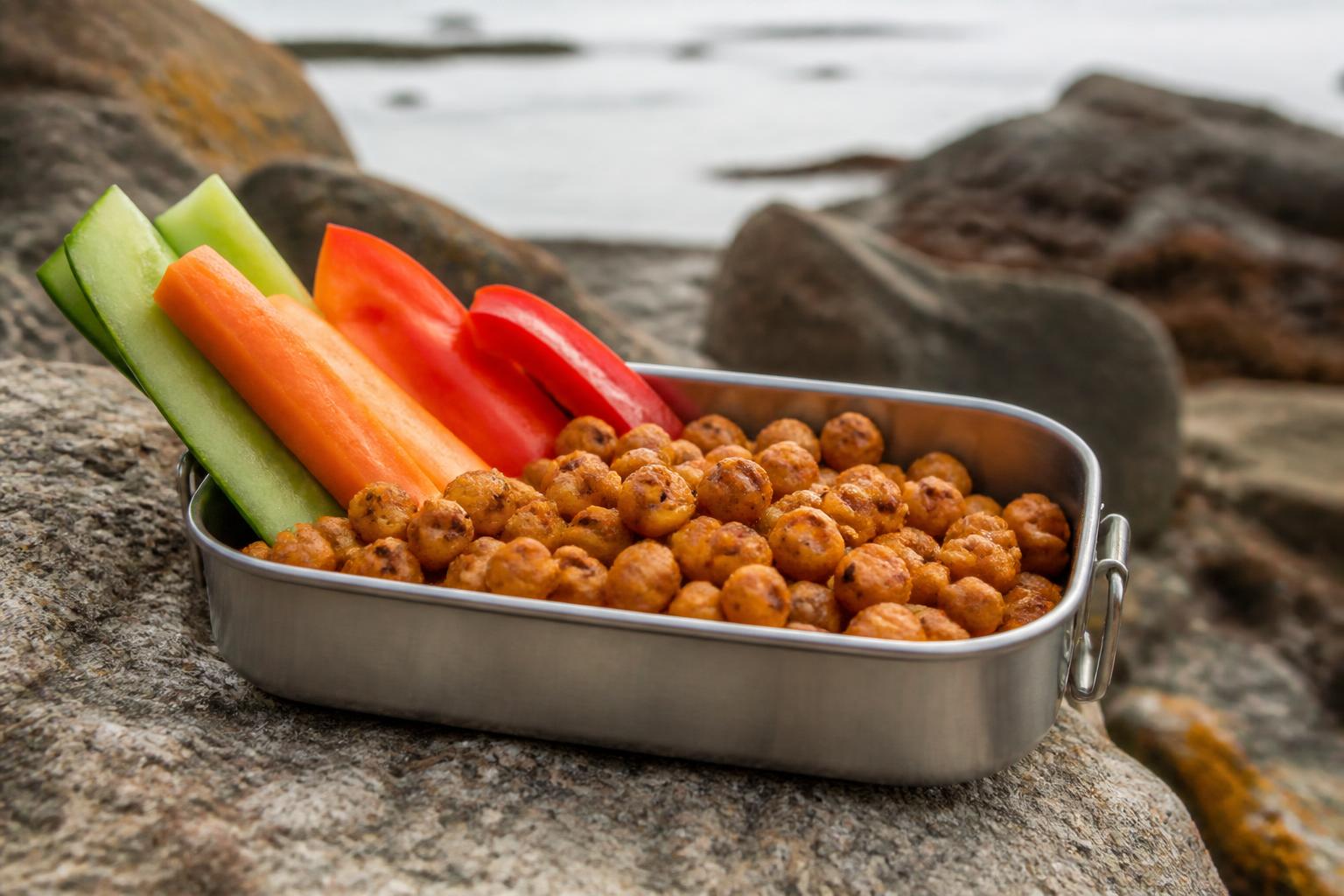
For lunchboxes, practicality matters more. You want flavours that stay crisp, travel well and do not leave greasy residue on everything else. Dry savoury blends are ideal, such as lightly salted, smoked paprika, mild cheese powder or cinnamon sugar if you want a sweet version. Avoid wet glazes, melted chocolate and anything too pungent if the popcorn is going to sit in a bag for hours.
For everyday snacking, restraint usually wins. Lightly salted, black pepper, nutritional yeast, herb and garlic, or a gentle paprika blend all give enough character without making the snack feel heavy. If you are trying to build better snack habits, it helps to keep a couple of lower-fuss options in rotation rather than saving popcorn only for treat-style flavours. We cover that broader balancing act in our guide to healthy snack ideas for adults that fit real days.
Household preferences matter too. If children and adults are sharing, a split bowl approach often works best. Make one plain or lightly salted base, then divide and season separately. That avoids the all-or-nothing problem of one person wanting chilli heat while someone else wants sweet.
Texture preference is another overlooked factor. Some people want clean, dry kernels that stay loose in the bowl. Others want clustered caramel popcorn with a crunchier bite. Neither is better, but they need different methods. Dry seasonings suit the first camp. Syrups and glazes suit the second.
Think about where the popcorn is being eaten as well. At a desk or on the move, tidy flavours are easier. Strong cheese dust, sticky caramel and dark cocoa all have a habit of ending up on fingers, keyboards and coat sleeves. If that is the setting, our piece on crunchy work snacks that cope without a fridge is useful alongside popcorn-specific ideas.
In the end, the joy of popcorn flavours is not that there are hundreds of them. It is that a few simple ingredients can push the same humble bowl in completely different directions. Start with the occasion, choose your flavour family, use just enough fat for the seasoning to cling, and keep an eye on the extras that change the nutrition most. Once those pieces are in place, popcorn becomes one of the easiest snacks to make feel exactly right.

Questions about this article or a correction to suggest? Get in touch. Read more about our editorial approach.