Freeze-dried and dehydrated foods both have water removed, but the words do not describe exactly the same process. That difference can matter when you are choosing a crunchy fruit topping, a chewy dried ingredient or a vegetable snack.
It does not create a universal ranking in which one method is always best. The useful choice depends on what you want the food to do, how it has been made and what else is in the packet.
What freeze-drying does
Freeze-drying begins with a frozen product. Under reduced pressure, ice is removed as vapour through a process called sublimation. Further drying reduces remaining moisture.
University of Bradford's description identifies low-temperature sublimation as the central feature. Specialist equipment controls the conditions; putting sliced fruit in a household freezer is not the same process.
For the home cook, the key point is that freezing and freeze-drying are different. Frozen berries still need frozen storage according to their instructions. A commercially freeze-dried product has been through an additional process and has its own packaging and storage requirements.
What people usually mean by dehydrated
Dehydration is a broad term for removing water. In ordinary food shopping, it often refers to products dried using warm air, such as those made in a food dehydrator.
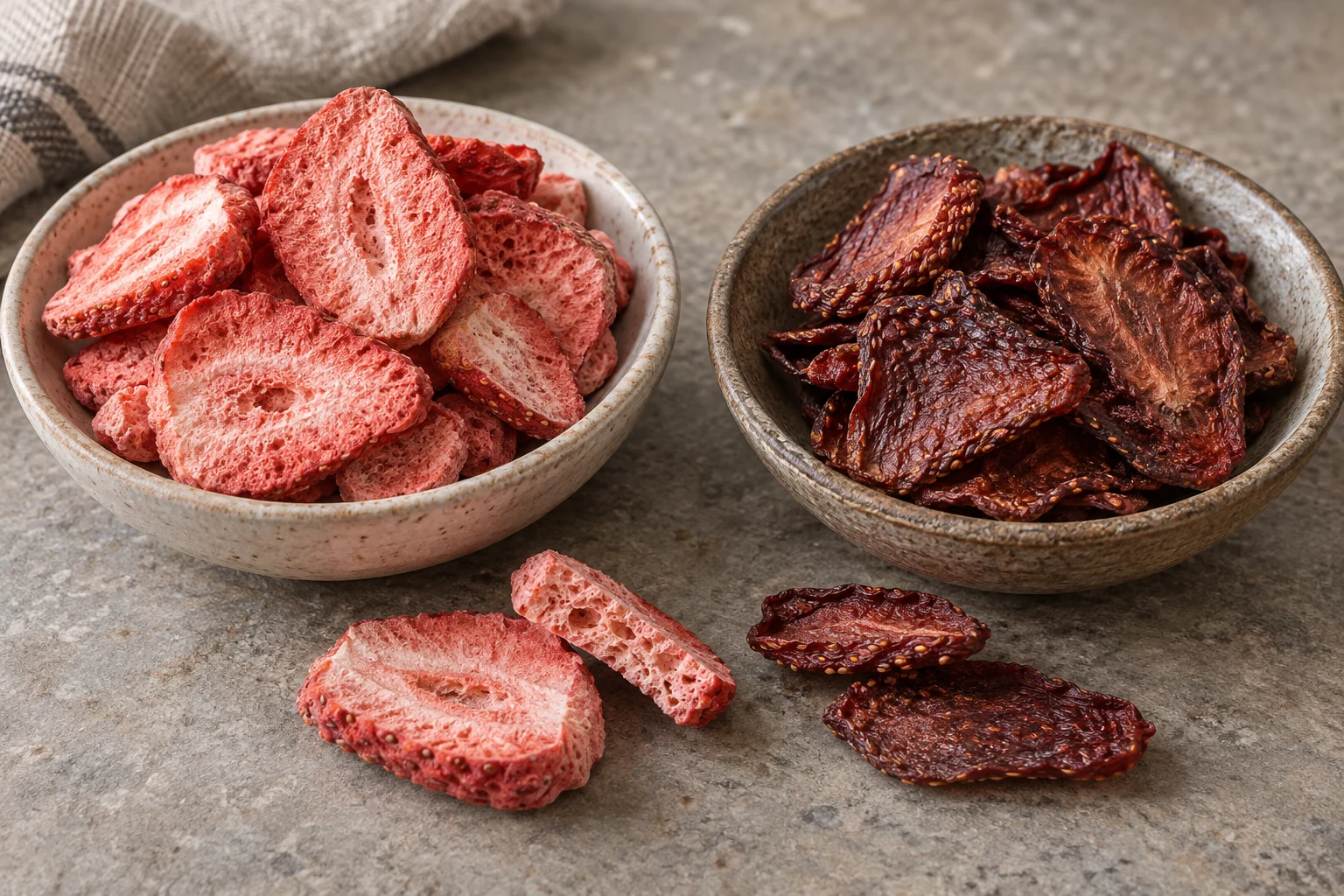
Strictly speaking, freeze-drying is also a way of dehydrating food. In product descriptions, however, the two terms are often used to distinguish the methods. Read the fuller explanation if the method matters to you.
A University of Birmingham food-drying research summary discusses air drying and freeze-drying as different approaches. It also illustrates why the process is more complicated than simply describing a food as dry.
Think in terms of the result you want
A chewy piece of dried fruit may be exactly what you want in a fruit loaf. A brittle fruit piece may be more appealing as a last-minute topping. A tomato intended for soaking or cooking has a different role again.
Product texture depends on the ingredient, its preparation and the process used. Do not assume a method guarantees that every fruit or vegetable will produce the same result.
Look for descriptions of the actual pieces, and buy a small amount when trying an unfamiliar format. If texture is particularly important, a clear product photograph and preparation directions are more useful than broad quality claims.
Compare ingredients before comparing promises
Two packs may use different drying methods and also contain different added ingredients. If one has a coating or seasoning, you are comparing more than the drying process.
Check whether the product is fruit or vegetables alone, part of a mix or a shaped snack. Then consider what matters to you: taste, allergens, added ingredients, pack size, price or preparation.
Avoid assuming that a drying method establishes a precise percentage of retained nutrients. Any specific claim needs evidence for the actual product and process. This guide does not rank nutrient retention across brands.
Consider how the food will meet moisture
A topping added to yoghurt or soup is being used differently from food eaten directly from a dry pouch. Think about whether you want the ingredient to stay distinct or soften into the dish.
Try a small amount first. For example, add a few pieces to one spoonful of yoghurt before stirring them through a whole bowl. That gives you a quick way to assess the texture without wasting the meal.
If a product needs rehydrating, follow its directions. Do not guess that adding water returns it to the exact properties or storage life of the fresh ingredient.
Keep home drying separate from product shelf life
A commercial packet's date reflects that particular product, process and packaging. It is not a storage period you can copy onto food dried in a home appliance.
For home dehydration, use reliable instructions specific to the ingredient and equipment. Follow any preparation, temperature and storage steps. A dry-looking surface or a crisp bite is not a validated measure of safe shelf stability.
The government's food-date guidance also makes clear that correct storage matters alongside the printed date. Keep instructions after opening, and treat a prepared dish containing dried ingredients according to the whole dish's needs.
Choose by purpose
If you are shopping for a topping, prioritise the format and texture you want. If you are following a recipe, buy the type it specifies. If you are packing food for travel, consider packaging, storage and how easily the pieces break.
Neither method removes the need to read the label or think about the meal. Once you know the intended use, the choice becomes a practical food decision rather than a contest between processing terms.

Questions about this article or a correction to suggest? Get in touch. Read more about our editorial approach.