Freeze-dried fruit can bring a different texture to familiar meals. Whole pieces, slices and powders each lend themselves to slightly different uses, from a last-minute breakfast topping to a colourful addition to a dessert.
The useful starting point is a dish you already enjoy. You do not need a special recipe collection or a promise of extra health benefits to try a new fruit ingredient.
Understand the format you are buying
Freeze-drying removes water from a frozen product under reduced pressure. Loughborough University's research overview describes the process and the porous structure it can produce.
For a shopper, the practical questions are simpler: is the pack made of whole fruit, slices, small pieces or powder, and is it ready to eat? Look at the actual product description rather than assuming every freeze-dried fruit behaves alike.
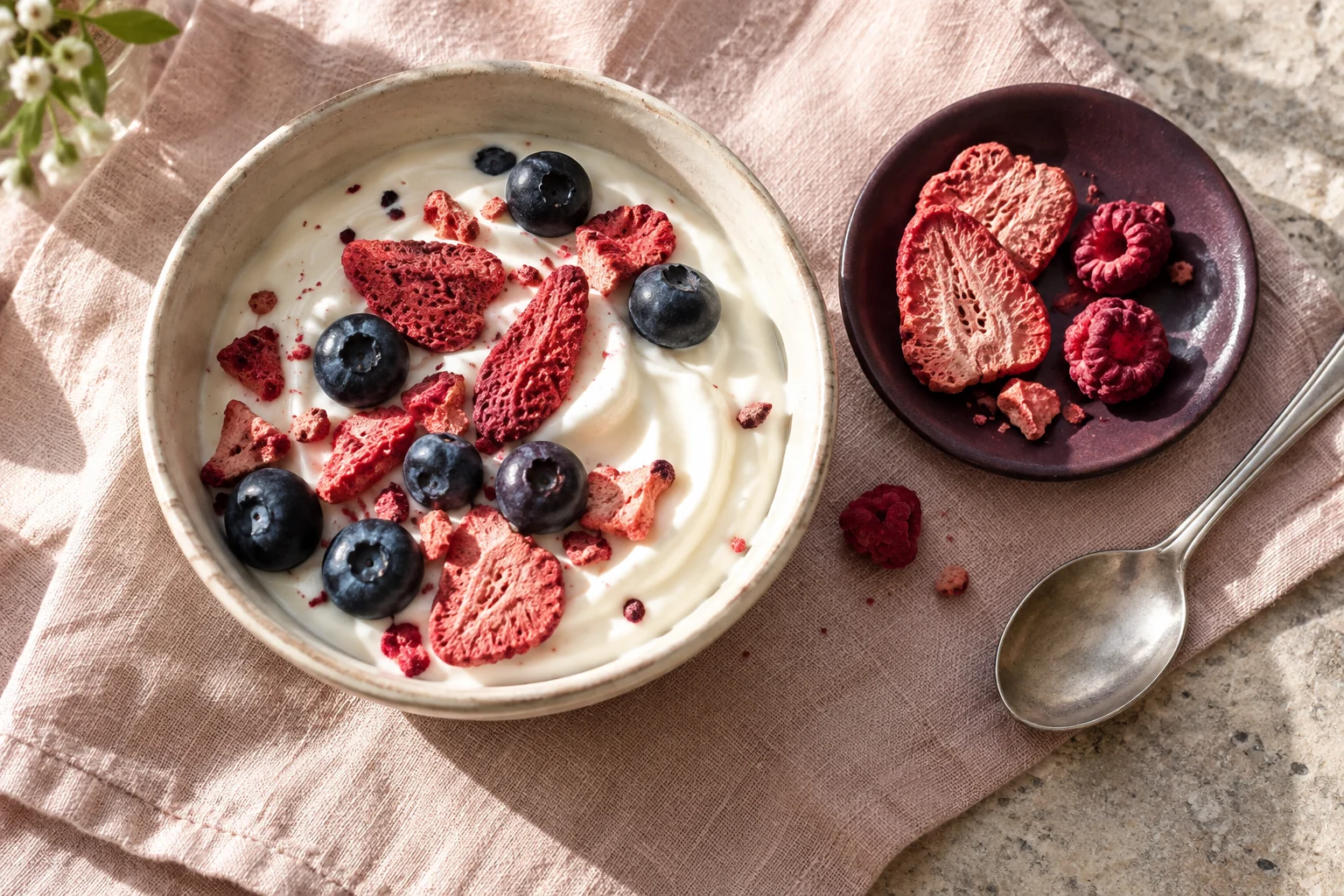
Whole berries can be useful as a visible topping. Smaller pieces may distribute more easily through a bowl. Powder can be useful when you want colour or flavour without large pieces, but check whether it contains other ingredients.
Add it at the point that suits the texture
If you want a crisp contrast in yoghurt or porridge, try adding the fruit immediately before eating. If you prefer it softened, stir it in earlier and see whether you like the result.
Treat your first serving as a small kitchen experiment. You might enjoy one texture more than another, and there is no single correct way to use the ingredient.
For a breakfast taken to work, carry the topping separately if you want to add it at the table. Follow the storage requirements of the yoghurt, milk or other ingredients as well as those on the fruit packet.
Three breakfast directions to try
Oats with a finishing topping: prepare porridge as usual, then add a small amount of freeze-dried fruit when you serve it. Start with a fruit flavour you already like with oats.
Yoghurt with two textures: combine yoghurt with fresh fruit and add a scattering of dried pieces. The point is a contrast you enjoy, not a claim that combining formats makes the meal nutritionally superior.
A familiar cereal bowl: add some fruit alongside your usual cereal and milk or suitable alternative. Keep the rest of the packet closed while you eat.
These are serving ideas, not measured recipes or tested nutrient calculations. Adjust the amount to the bowl and your preference.
Use powder thoughtfully
A little fruit powder can be stirred into yoghurt or used to finish a dessert. Add it gradually, mixing as you go. Colour alone is not a reliable guide to flavour strength.
For baking, use a recipe written for the form of fruit you have. Replacing a quantity of fresh fruit with the same weight of freeze-dried powder can change the balance of moisture and other ingredients substantially.
If you want to adapt a recipe, start with a small batch and record the change. Avoid assuming a freeze-dried ingredient is a direct substitute for fresh, frozen, puréed or traditionally dried fruit.
Keep portion claims in context
Removing water changes the relationship between weight and volume. A light pouch is not automatically a tiny amount of fruit, and a bowlful should not be compared with fresh fruit by appearance alone.
NHS 5 A Day guidance gives 30g as a portion of dried fruit and recommends having dried fruit with meals because of its effect on teeth. For a specific freeze-dried product's portion claim, check the label rather than inventing a fresh-fruit equivalent.
Fresh, frozen and canned fruit can remain useful options alongside dried products. Choose among them according to the dish, price, convenience and what you enjoy.
Read additions and allergen information
Some products contain only fruit; others include coatings, sweeteners or additional ingredients. Neither the word fruit nor an image of berries tells you the whole recipe.
Government allergen guidance explains the information to look for on prepacked foods. This matters especially for mixes containing chocolate, yoghurt-style coatings, nuts or other ingredients.
When sharing a dish, keep the original packaging available and mention what you added. Do not describe a recipe as suitable for an allergy without checking all its ingredients and preparation.
Choose a pack you will finish
Before buying a large pouch, think of two or three meals where you could use it. Follow the manufacturer's storage and after-opening instructions, and keep the label if decanting.
A smaller pack can help you decide whether the texture suits you. If it does, add it to the meals where it works best. The aim is a useful ingredient in an ordinary kitchen, with enough flexibility to enjoy other kinds of fruit too.

Questions about this article or a correction to suggest? Get in touch. Read more about our editorial approach.