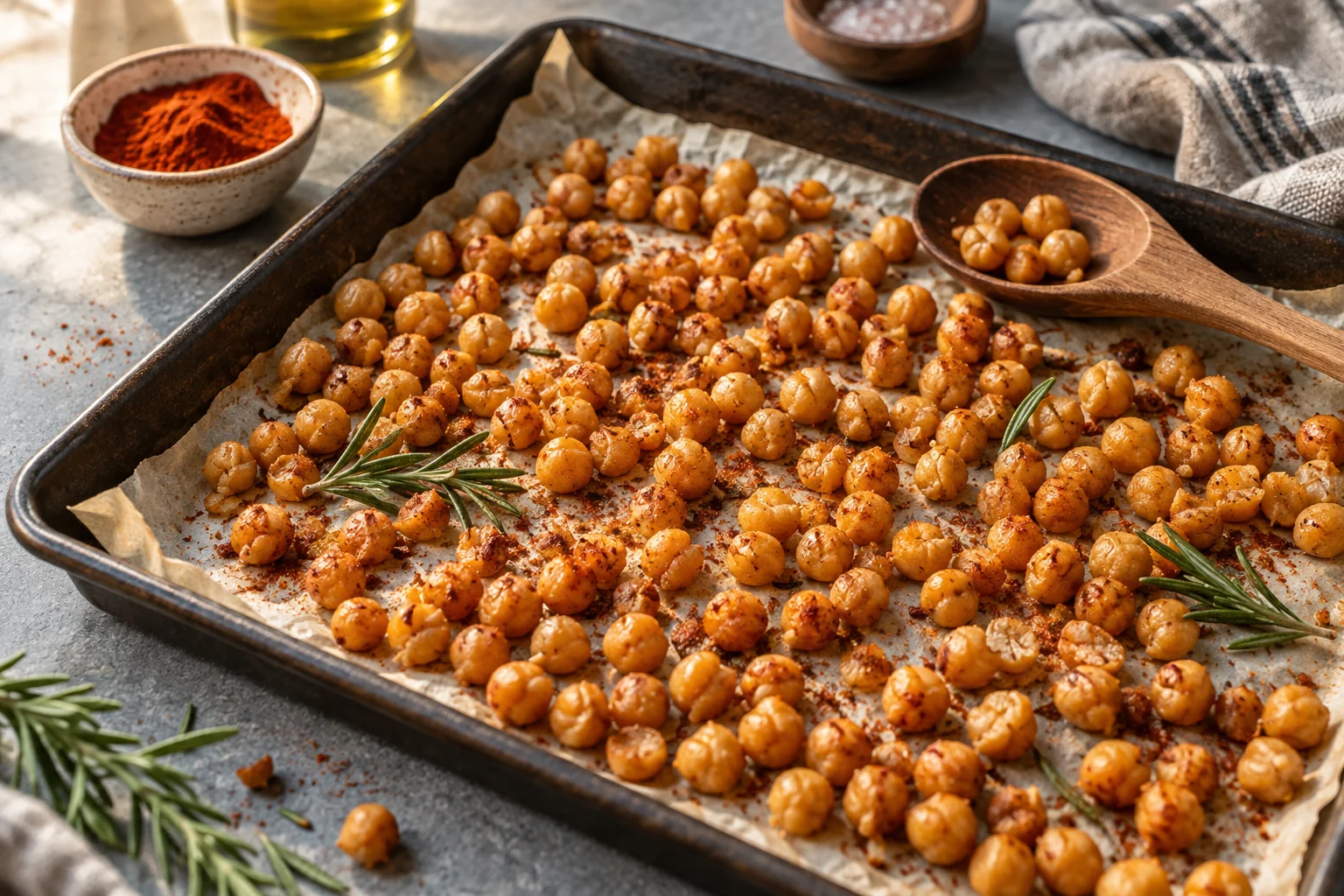
Roasted chickpeas can bring a savoury crunch to a snack bowl, salad or simple lunch. They are also a useful way to try pulses if you usually encounter them only in hummus or a curry.
You can buy them ready to eat or make a small batch at home. The best choice depends on whether you want convenience, a particular seasoning or the freedom to adjust the texture. Start with a use you have in mind, rather than a promise that one snack will transform your diet.
Choose the right starting point
A packet of ready-to-eat roasted chickpeas is different from a tin of cooked chickpeas or a bag of uncooked dried ones. Read the name and instructions before planning what to do with them.
For home roasting, a recipe that uses canned, cooked chickpeas provides a straightforward starting point. Drain and prepare them as directed. Do not swap in uncooked dried chickpeas without completing their required preparation and cooking first.
For a bought snack, check whether it contains whole chickpeas, a mix of pulses or a shaped product made with chickpea flour. All can have a place, but they will not necessarily deliver the same texture or ingredients.
Give them a role in the meal
The British Dietetic Association's snack guide includes roasted chickpeas among its pulse-based snack ideas. You can also use them in an ordinary meal without treating them as a separate kind of health product.
Try a small bowl alongside a sandwich, or add a scattering to a plate of cooked grains and vegetables just before eating. A handful can supply contrast in a softer meal; a larger serving may be what you prefer when eating them on their own.
The amount that works will depend on the rest of the meal and your appetite. A packet's serving suggestion is useful information, not a rule that everyone must follow.
Build flavour in a direction you enjoy
For a smoky flavour, consider paprika. For something warmer and earthier, try cumin. Black pepper and dried herbs offer another option, while chilli suits people who enjoy heat.
Begin with a small amount of seasoning, especially when trying an unfamiliar blend. Check whether the blend already contains salt before adding more. NHS salt guidance recommends using herbs and spices and tasting before adding extra salt.
If sharing, keep a plainly seasoned portion separate so people can choose. Read the ingredients of spice mixes and ready-made coatings, including allergen information. A food based on chickpeas is not automatically suitable for every dietary requirement.
Pay attention to preparation, not just time
When cooking at home, follow a reliable recipe intended for your appliance. The quantity, starting ingredient and tray or basket all affect how useful a stated cooking time will be.
If the recipe directs you to dry the cooked chickpeas before roasting, take time over that step. Spread them as instructed and avoid increasing the batch substantially without considering the available space. A crowded tray is a different cooking situation from the one the recipe describes.
Use the recipe and appliance guidance for temperature, timing and any shaking or stirring. Watch the food as it cooks rather than assuming a timer guarantees the result.
Learn from a small first batch
Decide what you liked about the result. Did you prefer a firm crunch or a softer centre? Was the seasoning too strong? Did the quantity fit the meal?
Write down one change for next time. You might alter the seasoning or choose a recipe designed for a different texture. Changing the ingredient, appliance setting and batch size all at once makes it harder to identify what helped.
There is no need to keep cooking until every piece matches the texture of a factory-made snack. Enjoyable home-roasted chickpeas and a commercial packaged product can be different foods.
Store the version you actually have
Follow the packet for bought snacks. For homemade cooked chickpeas, do not assume that a crunchy exterior makes them suitable for weeks in a cupboard.
Food Standards Agency guidance says to cool and refrigerate cooked leftovers within two hours and use them within 48 hours or freeze them. Refrigeration may change the texture, so making a modest amount for the meal is often practical.
Keep any chilled accompaniments, such as yoghurt dip, stored according to their own instructions. A dry snack does not change the storage needs of the rest of the plate.
Keep variety in the routine
Roasted chickpeas can join a wider set of snacks: fruit, vegetables, crackers, yoghurt, nuts or whatever else suits you. You do not need to replace every familiar food with them.
Buy or cook enough to try a few servings, find the flavour you enjoy and keep the preparation manageable. A useful snack is one that fits ordinary life as well as sounding appealing in a recipe title.

Questions about this article or a correction to suggest? Get in touch. Read more about our editorial approach.