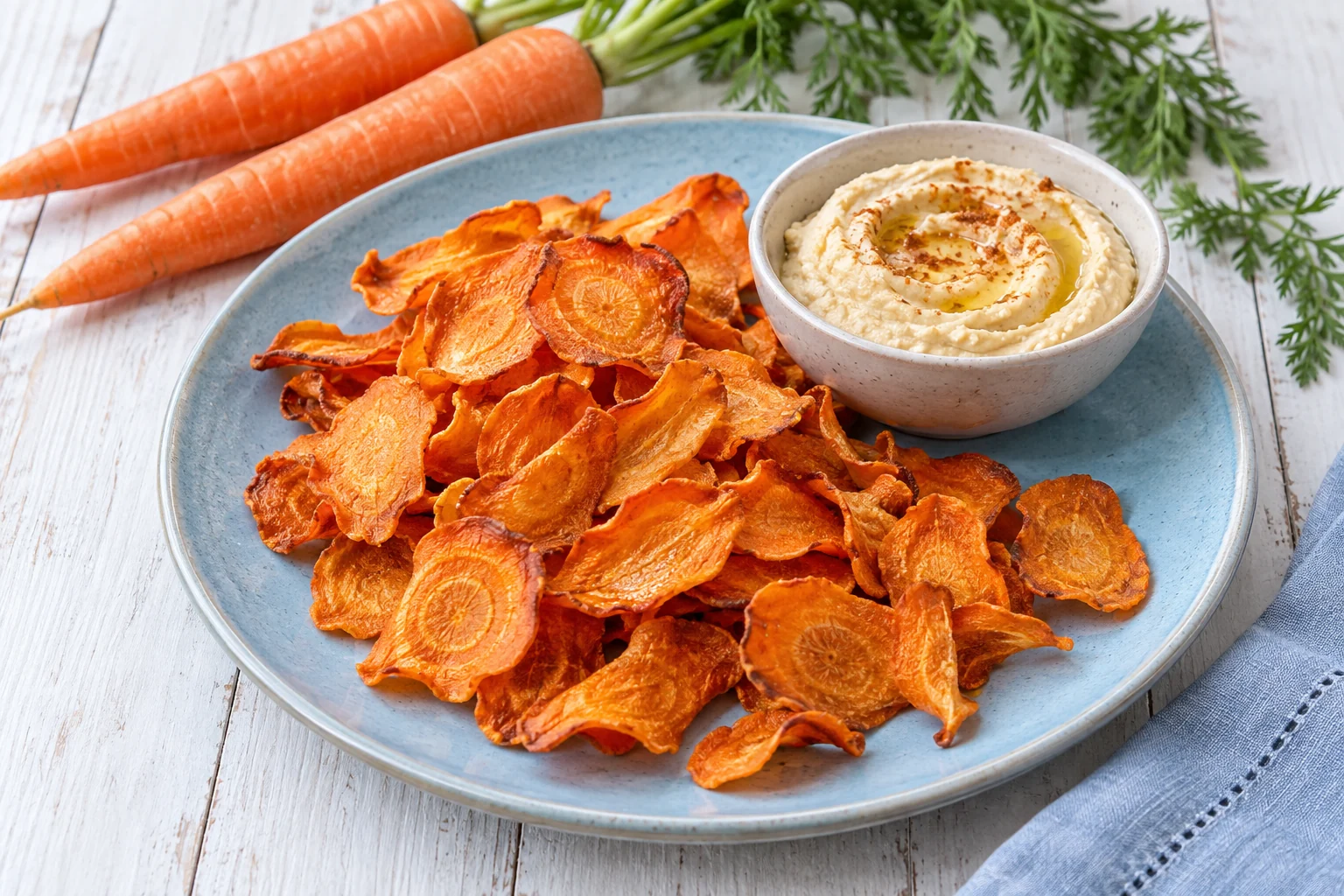
Carrot chips can mean thin roasted slices, a fried snack, a dried vegetable product or a carrot-flavoured crisp made with other ingredients. Before comparing bags, work out which kind of crunch you are looking for.
This is a guide to choosing and serving carrot chips, not a product taste test. It focuses on the questions that make a purchase useful: what is in the bag, how you want to eat it and whether the format suits the meal.
Read past the carrot picture
Start with the product name and ingredient list. Are the pieces made from carrot slices, or is carrot one ingredient in a shaped snack? Does the description say fried, baked, dehydrated or freeze-dried?
Those details tell you more than the colour of the packaging. A photograph of vegetables does not establish the amount of carrot in the product or make different manufacturing methods interchangeable.
Check the current packet, even if you have bought the product before. Recipes and serving sizes can change. For general help, the NHS guide to food labels explains the nutrition information you will see.
Decide what kind of texture you want
Think about the job the chips will do. A robust crisp may work for scooping a thick dip; delicate pieces may be better scattered over a bowl. Fine fragments can still be useful as a topping, but may disappoint if you expected large slices for sharing.
If you are buying online, look for a clear product description and pictures that show the actual format. Words such as crunchy and crispy are not precise measurements, so do not assume two products will feel the same.
Start with a smaller pack when trying an unfamiliar style. That is especially helpful if you have only eaten fresh carrots and are unsure whether you will enjoy a dried or cooked version.
Choose seasoning with the rest of the meal in mind
Carrot is a useful starting point for several flavour directions. You might enjoy cumin with a yoghurt dip, smoked paprika alongside a bean dip, or a simple herb seasoning beside a sandwich.
If a packet is already strongly seasoned, try it before adding another salty topping. NHS guidance on salt suggests checking labels and using herbs and spices as alternatives to extra salt.
Flavour ideas are invitations to experiment, not a tested formula. Add a small amount to one serving first so you can decide whether you like the combination without seasoning the whole packet.
Three ways to serve them
With a dip: put a small bowl of dip beside the chips rather than mixing everything together. Hummus, a yoghurt-based dip or a mashed bean dip offer different flavours. Check allergens in both the snack and the accompaniment.
With lunch: serve carrot chips alongside a sandwich or wrap when you want a contrasting texture. Fresh cucumber or tomatoes can sit alongside them; the foods do not have to compete for the same role.
Over a savoury bowl: try a small scattering on a bean salad, grain bowl or soup immediately before eating. Keep the rest in its pack so you can add more if wanted.
In each case, choose the amount that suits the meal. There is no need to treat the size of the packet as an instruction to finish it.
If you want to make carrot slices at home
Use a recipe intended for your oven, air fryer or dehydrator, and follow the appliance instructions. This guide does not provide a validated drying process or a storage-life calculation.
Start with sound carrots and wash them before preparation. The Food Standards Agency's cleaning guidance covers washing produce and keeping hands, utensils and preparation surfaces clean.
Aim for consistent slices so you can compare the results, and use a cutting tool safely. Record the recipe, slice thickness and result if you plan to try again. Changing several things at once makes it harder to work out what helped.
Homemade cooked slices may be enjoyable without matching a factory-made crisp. Decide whether you like what you made rather than judging it against a texture produced with different equipment.
Treat storage as part of the product
For a bought snack, follow the storage and after-opening directions on the packet. Close it promptly and keep the label if you transfer the contents to another container.
Do not assign homemade carrot chips the shelf life of a sealed commercial product. A crisp surface alone does not establish that a batch is safe to keep in a cupboard.
A useful carrot snack is ultimately one you enjoy and know how to use. Let the ingredient list, the intended serving and your preferences guide the choice; the word vegetable is only the beginning of the description.

Questions about this article or a correction to suggest? Get in touch. Read more about our editorial approach.